Ireland's school libraries: Underfunded, under-resourced, and falling short of international standards
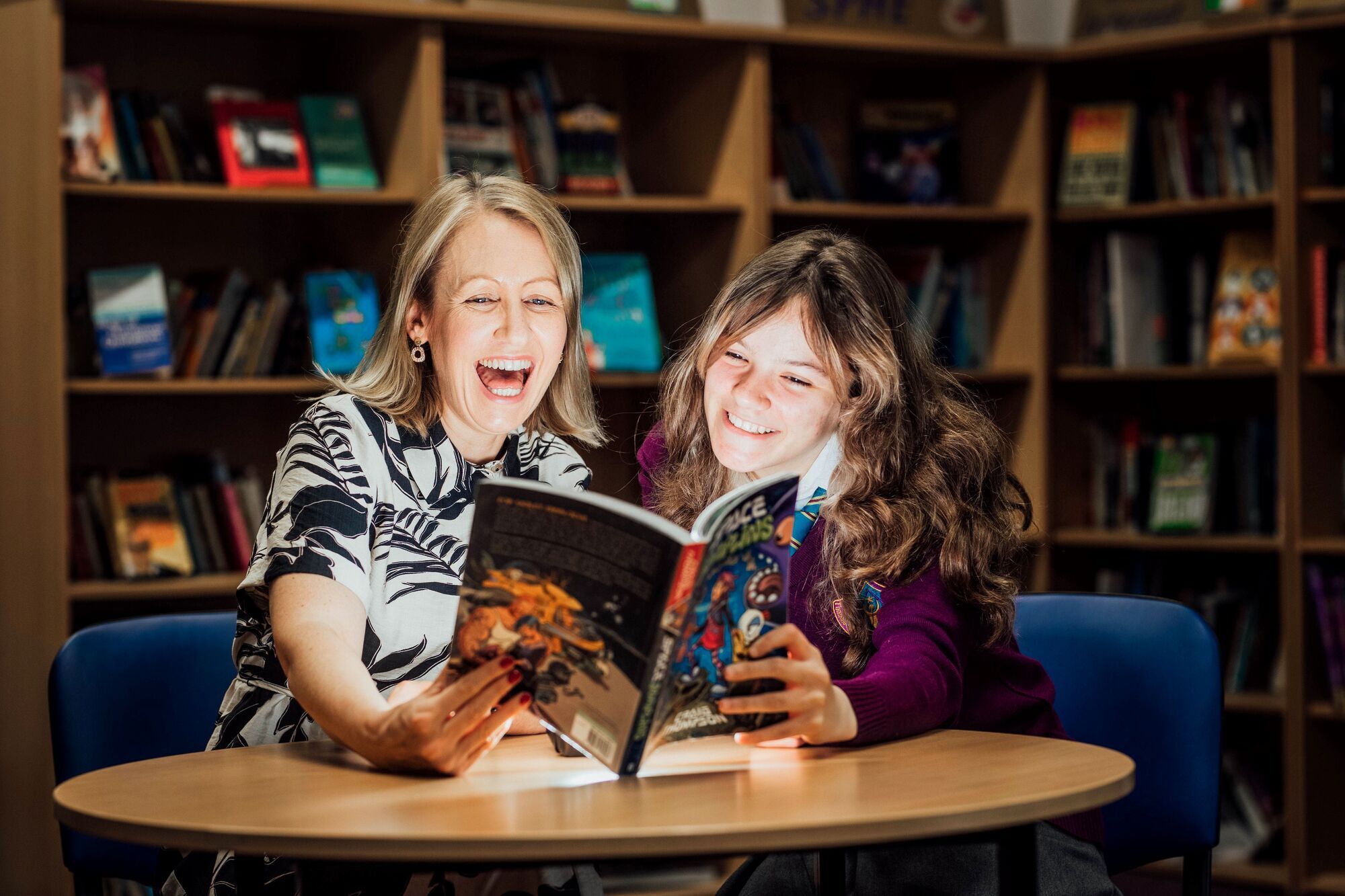
Librarian Jane Bingham Shee and first year student Milena Manska at the JCSP Library at Thomond Community College in Limerick City. Known as the Junior Certificate School Programme (JCSP), these funded school libraries serve schools in disadvantaged areas. Picture: Brian Arthur
For a country with such a proud literary connection, Ireland is an outlier when it comes to our school libraries.
Unlike the UK, where there is a long-established tradition of professionally staffed school libraries, Ireland doesn’t have a national policy or funding model for schools, instead relying mainly on volunteerism from teachers and funding siphoned off from already stretched budgets.
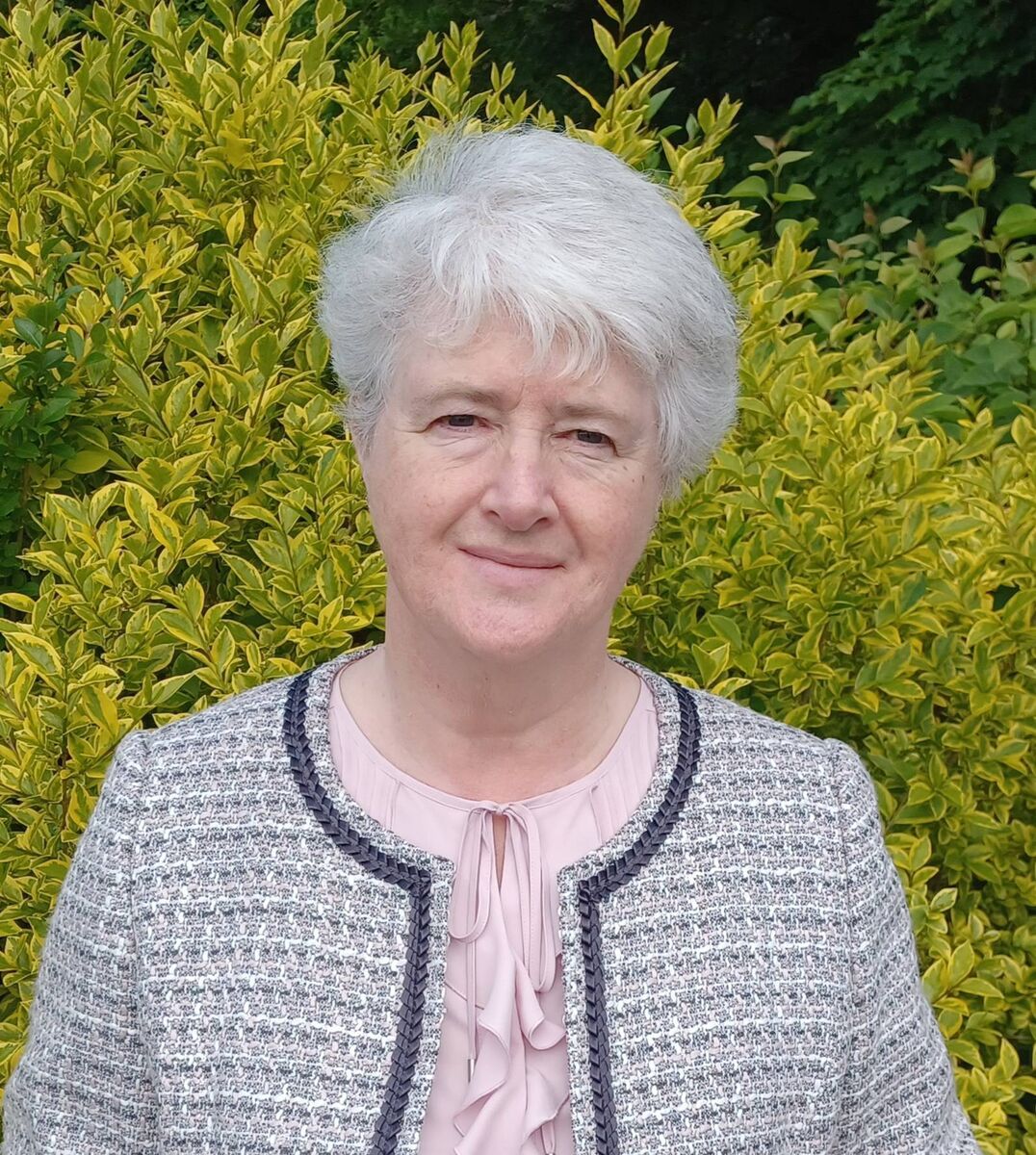
A keen interest in school libraries led sisters Breege and Shivaun O’Brien to research provision here. Breege is a retired teacher of English and French, having worked in the west of Ireland her whole life.
Dr Shivaun O’Brien is an associate professor at the Dublin City University (DCU) Institute of Education, where her research has focused on education policy and development. Last month they published their findings.
“Really, I was open-minded to see what was out there,” said Breege. “I had an idea as to what was out there, and I just wanted to see if that was the case on the ground.”
Focusing on schools in one province, what they found was stark; Many Irish school libraries are underfunded, under-resourced, and falling short of international standards.
The Department of Education funds just 30 (4%) out of 730 post-primary school libraries nationally. Known as the Junior Certificate School Programme (JCSP), these funded school libraries serve schools in disadvantaged areas.
The JCSP libraries are “super” as models of best practice, according to Breege. “But my approach to it would be is that every school in the country should have a school library of that quality and service and there is a need to expand it out, initially maybe to the wider DEIS community but then to all schools really. All schools deserve the well-established benefits of school libraries.”
Unlike countries across Europe like Czech Republic, Croatia, France, and the Netherlands where school library provision is underpinned by law, there is no statutory requirement for schools here to provide library services.
Given the lack of State investment, in their own words, Breege and Shivaun set a “low expectation” in terms of how they defined a school library for the purpose of the study. They sought out school library services that involved any provision for students to access books, reading materials, or items of information in any format and in any space.
Out of a total of 102 post-primary schools, only 55 confirmed they had a library matching this definition. Most were dependent on volunteerism from staff, in particular English teachers. Less than a third provided library access throughout the school day, and in many schools access was occasional or only when supervision was available.
Despite the lack of funding, just under 45% of the schools had a dedicated room for the library, while in all other schools, no such space was available. This figure is well below the average number of dedicated school libraries in England, Wales, and Northern Ireland. Many schools were also not within walking distance of their nearest public library.
"It is very strange to us that the Department of Education seems to just ignore or reject massive literature and findings around school libraries, and how they enhance learning in all kinds of ways," Shivaun said. "You couldn’t call what we found a library service, bar one school that is a JSCP library."
"The solution from the Department of Education is that schools access their public libraries. Public libraries are great, but they are not school libraries. Our research has found how unrealistic it is with distances and various issues for most schools to actually use their public libraries.”
A school library is specifically curated with the learning needs of the community in mind, according to Breege. "In each school, it will differ depending on learning needs and the demographics. If you had effective school library provision, you would have a professionally qualified librarian managing it to the specific needs of students and teachers."
"They would curate the collection with the students and teachers in mind, and make it accessible to 12- to 18-year-olds.” A best practice model would also have the school librarian delivering information skills education and supporting teaching staff specifically in relation to their curriculum needs.
“So if the school teaches German for example, the librarian would ensure that there is a body of resource material there like texts in German or additional texts to help with the teaching of the subject. They would also provide a full programme of events and a learning support structured programme that enhances reading education in the school. Like hosting writers, novelists, and writing workshops, as well as workshops for music and for the arts.”
The researchers are not alone in their call for dedicated school libraries. Children’s Books Ireland told the that funding school libraries is the best way to ensure that every young person has access to books, regardless of whether their family has a culture of reading or the means to buy them.
“Efforts have been made to improve schools’ links with their local libraries, but for some, libraries remain inaccessible, whether due to geographical distance or a feeling that the library might not be for them.”
In 2022, just 16% of the Irish population held a public library membership. “Dedicated, well-staffed school libraries are, realistically speaking, the only way to ensure universal access to excellent books.”
The Libraries Association of Ireland (LAI) also supports this stance, with its School Libraries Group telling the that a school library is “not just books on shelves at the back of a classroom” but rather “a dedicated space in a school for teaching and learning, cultural events and extra-curricular activities which should be run by a qualified librarian.”
The Oireachtas education committee has also recommended that the department develop a national strategy on school libraries with the aim of ensuring there is a school library and school librarian in all primary and post-primary schools by the end of 2024. In the interim, the JCSP should also be expanded.
A spokeswoman for the Department of Education said that once-off funding of €20 million was made available in May 2022 to enable all schools to improve their existing literacy resource banks.
“Support is being provided so as to ensure that schools can make best use of the grant funding within their schools. In this regard, the department is working with the Public Library Service.”
Libraries Ireland provides services and support to schools within local authority areas. “For information on the services and supports available to schools within a local authority area, the local library service can be contacted.” A review of the JCSP Library Project is also underway, she added.
€20m might sound like a lot of money but put it in perspective, Dr Shivaun O'Brien pointed to the number of students here. "That works out to €21 euro per student, and we don’t know when that once-off funding might be given again. Before last year, the last time once-off funding was given was 24 years ago in 1998.”
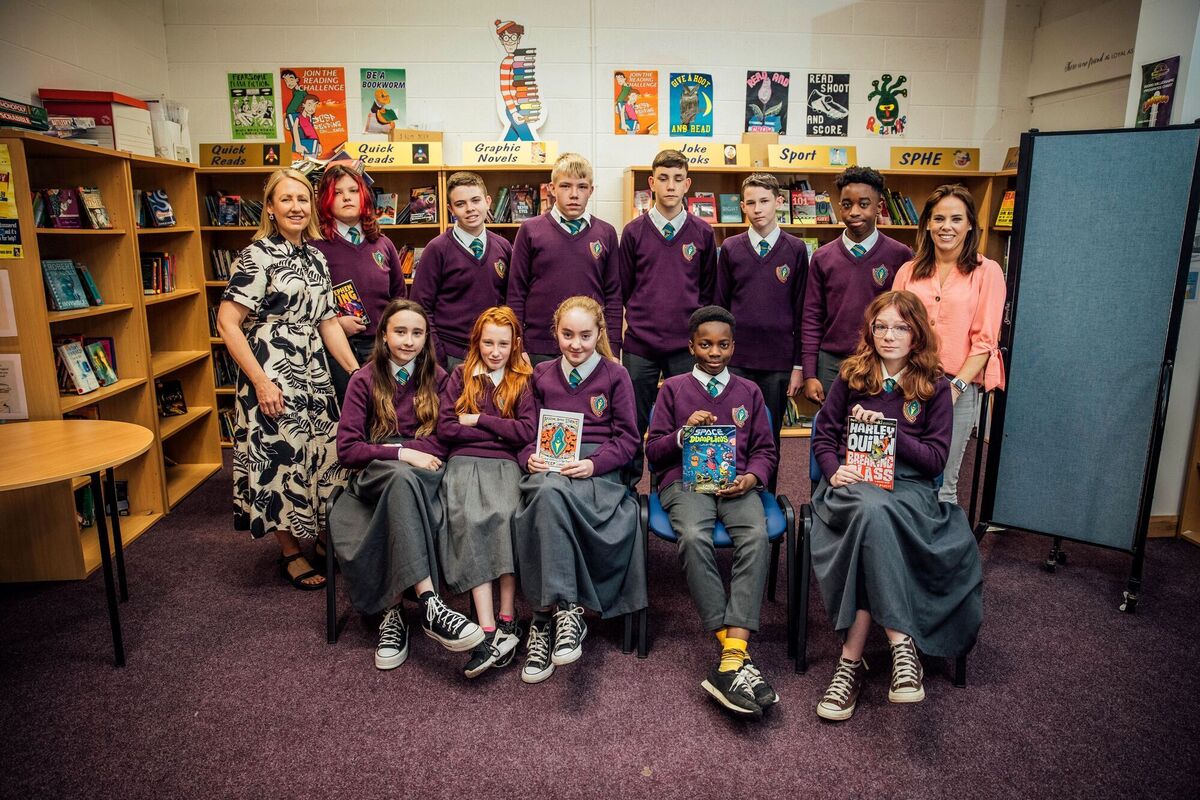
At Thomond Community College in Limerick city, the school library stays around the clock. It’s one of 30 Junior Certificate School Programme (JCSP) libraries in schools around the country.
As a JCSP librarian, Jane Bingham-Shee works with teachers and students, as well as other librarians in the JCSP project, to develop reading and writing skills and nurture reading habits.
“We’re here full time,” Ms Bingham-Shee said. "A very important part of the school day would be coming to the library."
“In the library that we have, we have funding to buy stock and also for activities and to hold events throughout the year for the school. If there’s software that we need or any kind of equipment, it would include that.”
“We would be quite proactive; We have timetabled classes with all the students, where the teachers would bring them to the library. For example, all the first-year classes would come into me for a double period of literacy work. We’d work on stations, so for literacy we’d have a reading station, and a writing station.”
“For maths, we have a computer that I buy maths software games for, that cover the Junior Cert course. It’s a fun way to make maths accessible. We also have a teaching station where students can get maths tutorials in a small group. We’d also have a ‘maths for fun’ games station.”
The school library at Thomond Community College is embedded in school life, often hosting competitions like ‘drop everything and read’ or draws to win book vouchers. It also remains open after school and at lunchtime. “It’s not very quiet,” Ms Bingham-Shee laughed.
“But the students can come in, they can play board games, they can do some quiet reading, maybe catch up on bits of homework.”
“After school, we have different clubs, like homework club for first and second years. On Thursdays we have Dungeons and Dragons club.”
“One of the days we also have our book club for students, we also have a chess club. There’s lot of different activities. Just as how public libraries would have events and activities always going on to get members in, we would do the same.”
It’s important to make sure it's accessible as a resource for students, she added. “You could have the most beautiful library in the world but if you are not bringing students into it, they mightn’t use it.”
"I'll survey the students to see what they like reading. Sometimes a student can come in and say something like ‘oh I hate reading’ so I ask them about their interests. They may love horses, or dogs, or Man United, or Liverpool, or whatever, so I’d make sure there is something for everybody there on the shelf. Just like in a public library, you can order a book if you want to read it.”
The library also has plenty of books for reluctant readers or for who are less able. This includes Barrington Stokes books, which are accessible dyslexia-friendly fiction books.
Through the JCSP, students also have access to a digital library. Membership is free to all students and staff in all JCSP or DEIS schools. “Students can have free access to that free library where they can download loads of e-books or audiobooks and read them on phones or on a device like a tablet.”
She also works closely with teachers. "If students are working on their classroom-based assessments, for example, in history, I'll have research prepared or ask them what they need and help them find the resources."
CONNECT WITH US TODAY



Be the first to know the latest news and updates