Archaeological gems rescued from erosion can enrich our knowledge of climate change

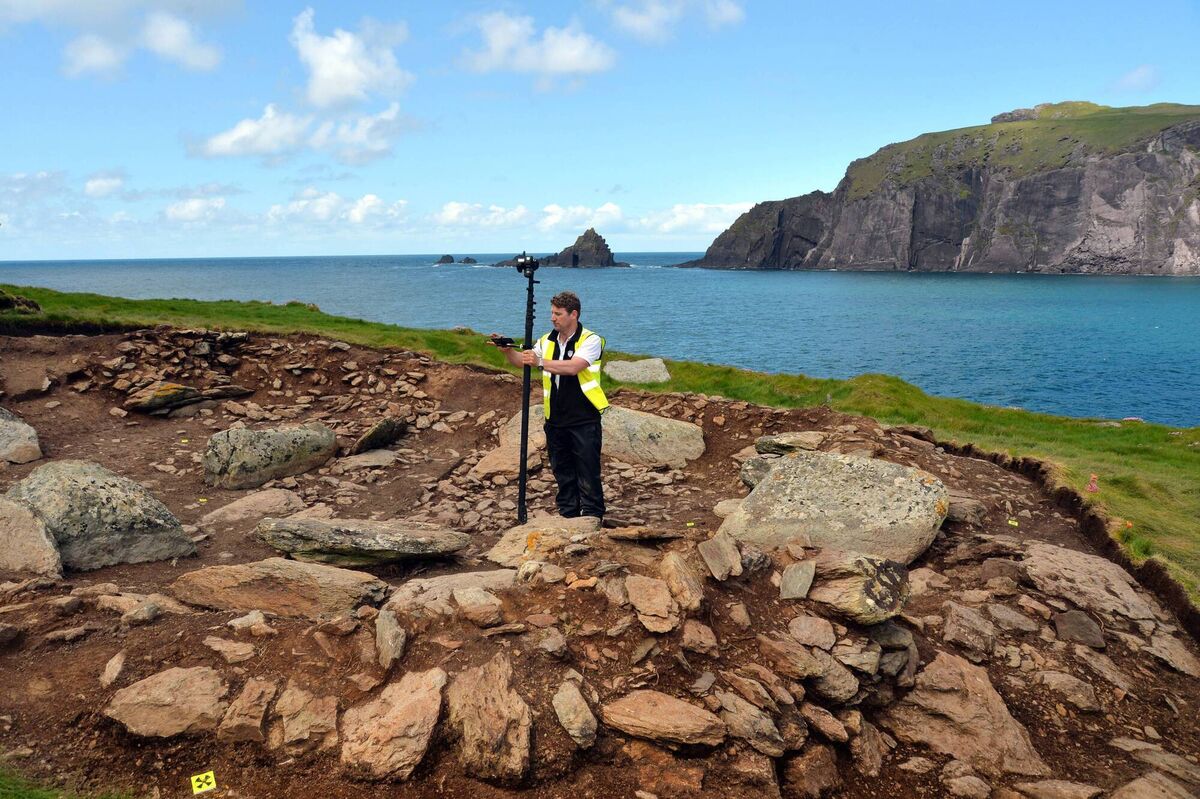
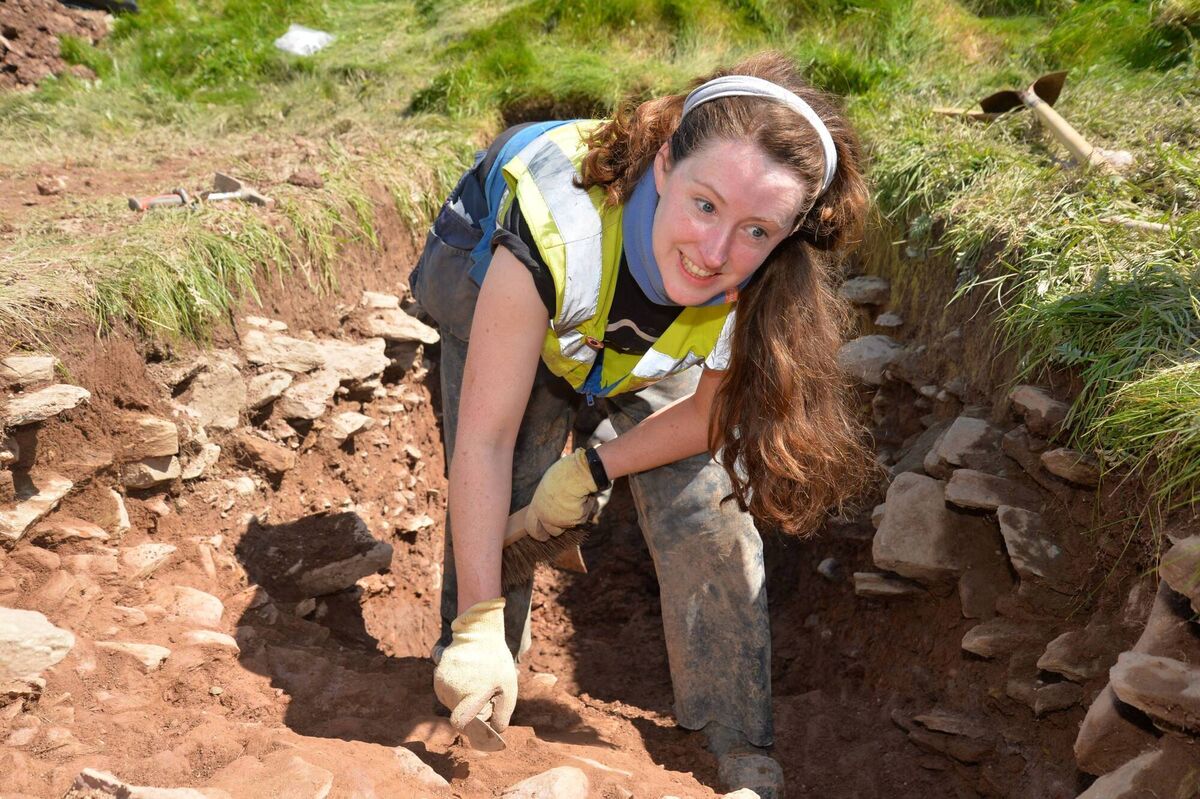
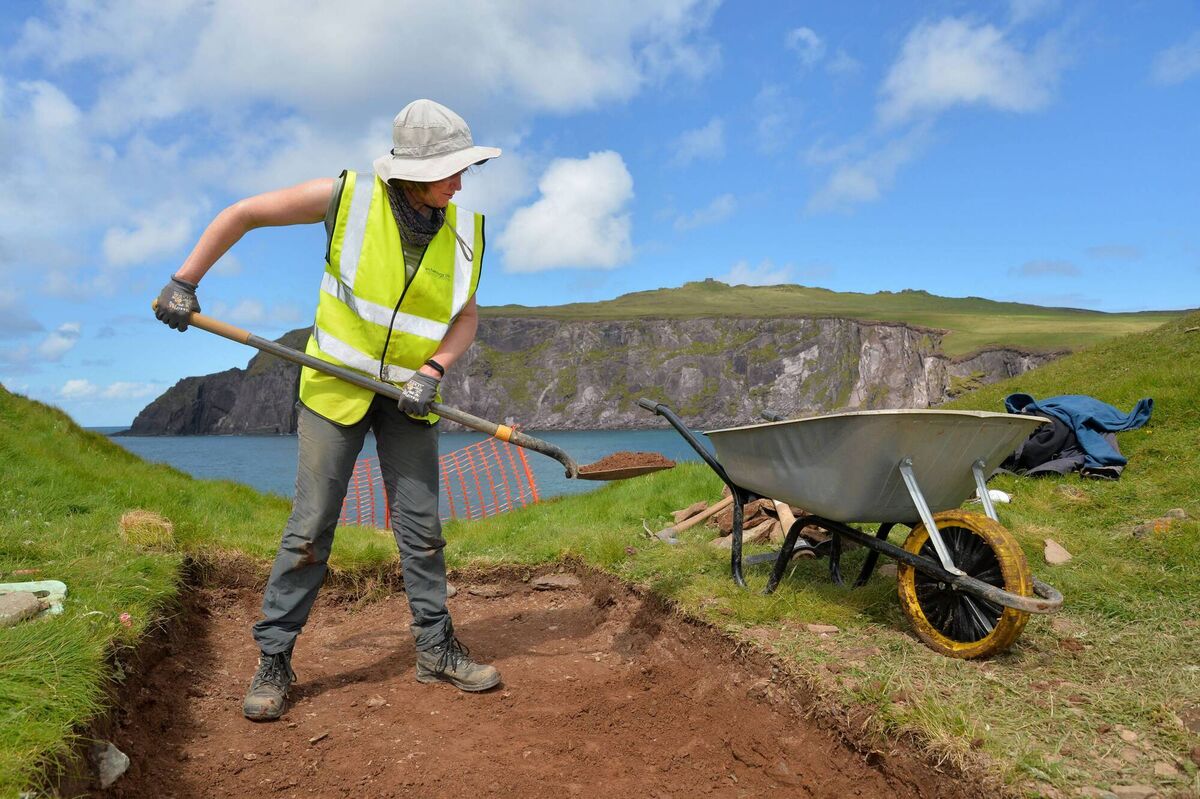
CHERISH (Climate, Heritage and Environments of Reefs, Islands and Headlands) archaeologists excavating a survey trench on an area of the Ferriter's Castle promontory fort at the weekend. CHERISH aims to develop innovative ways of studying the corrosive impact of climate change on maritime cultural heritage around the coast of Ireland and Wales. Photo: Declan Malone
Hoof prints from prehistoric cows. An ancient coastal defence network. Walnut pollen suggesting a European association with Medieval monks in Kerry. Tree stumps from the Bronze Age.
These are just some of the remarkable discoveries unearthed by archaeologists and environmental scientists during a six-year project designed to record some of our coastal cultural heritage before erosion, accelerated by climate change, claims it.
Indeed, in some cases, it is already too late. According to John O’Keeffe, CEO of the Discovery Programme, the national archaeological research body, changes due to climate change are happening right now. “There are monuments that won’t be there when we get older, or for the generations to come,” he says.
The truth of that was demonstrated with unsettling clarity during excavations in west Kerry in May 2021. Rockfalls from Sybil Head, once known as a Star Wars location, came crashing down the cliff into the Atlantic sea below while members of the EU-funded Cherish programme excavated nearby, at Doon Point, west of Dingle.
It is not an exaggeration to say that archaeologists were working against time — and tide — to map and study the promising archaeological features on a narrow strip of land before they literally fall into the sea. That is happening at an alarming pace. Landowner and farmer Dennis Curran said that he has lost about a half-acre of the headland over the last two decades.
At least now there is a chance that some of our cultural heritage will be recorded before it is lost for ever.
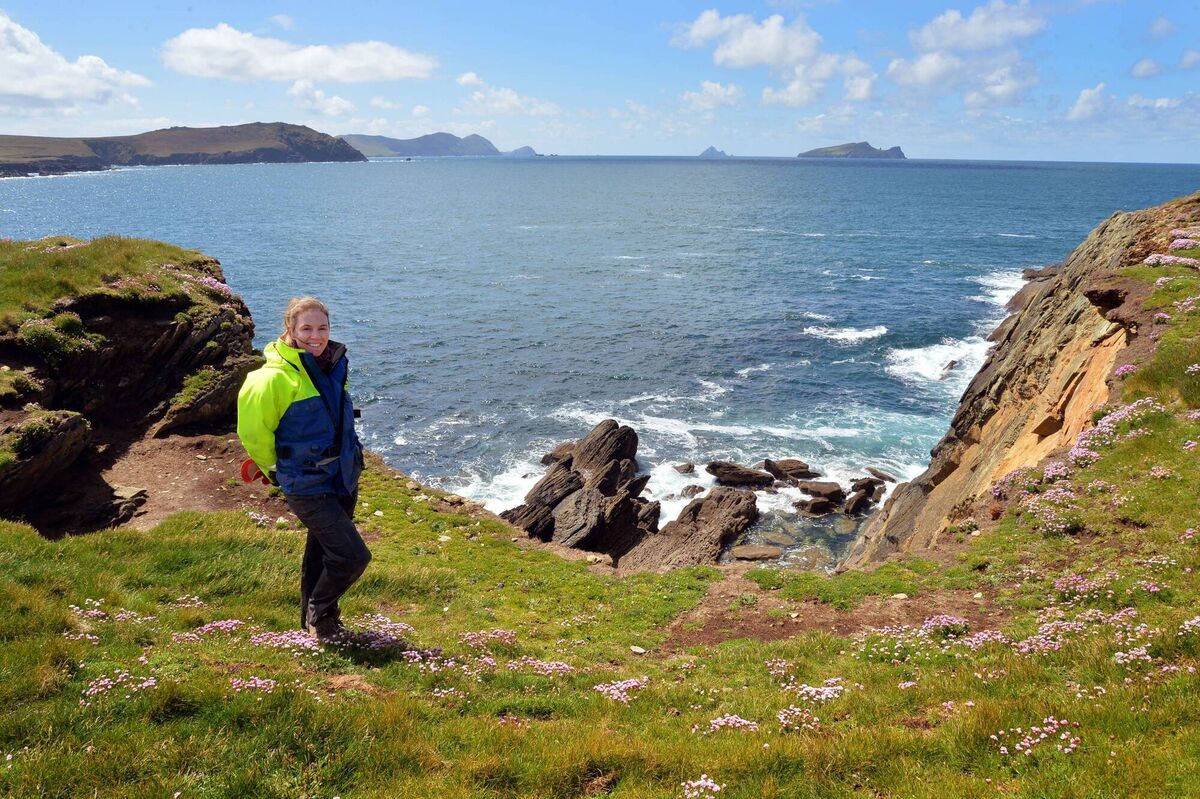
Cherish, which stands for climate, heritage and environments of reefs, islands and headlands, has been working with a team of specialists since 2017 to develop innovative ways of studying the corrosive impact of climate change on maritime cultural heritage around the coast of Ireland and Wales.
It also aims to investigate past climatic and environmental change in order to provide a context to consider the challenges to be faced by future generations.
It winds up in June, but not before collecting invaluable information. For instance, site director Sandra Henry says “very significant” discoveries were made at Doon Point which reveal a lot about Ireland’s ancient coastal networks and, up to now, little-understood promontory forts.
“This is an extremely interesting and important site as it provides information on the dating and usage of promontory forts sites in Ireland. It facilitates a re-assessment of Irish promontory forts and our current understanding of them,” she said.
There are over 500 known examples of such forts in Ireland, all of them at risk from increasing coastal erosion and other climate hazards, but only about 12 have been excavated.
Thanks to the recent dig, we know one of the robust huts on Doon Point, with its entrance way, stone flagging and possible hearth, may have been inhabited some 2,000 years ago by people patrolling the surrounding maritime routeways.
The headland is remote now, but in the Iron Age and probably hundreds of years before, it would have been a bustling place inhabited by a community who may have built a whole system of fortifications.
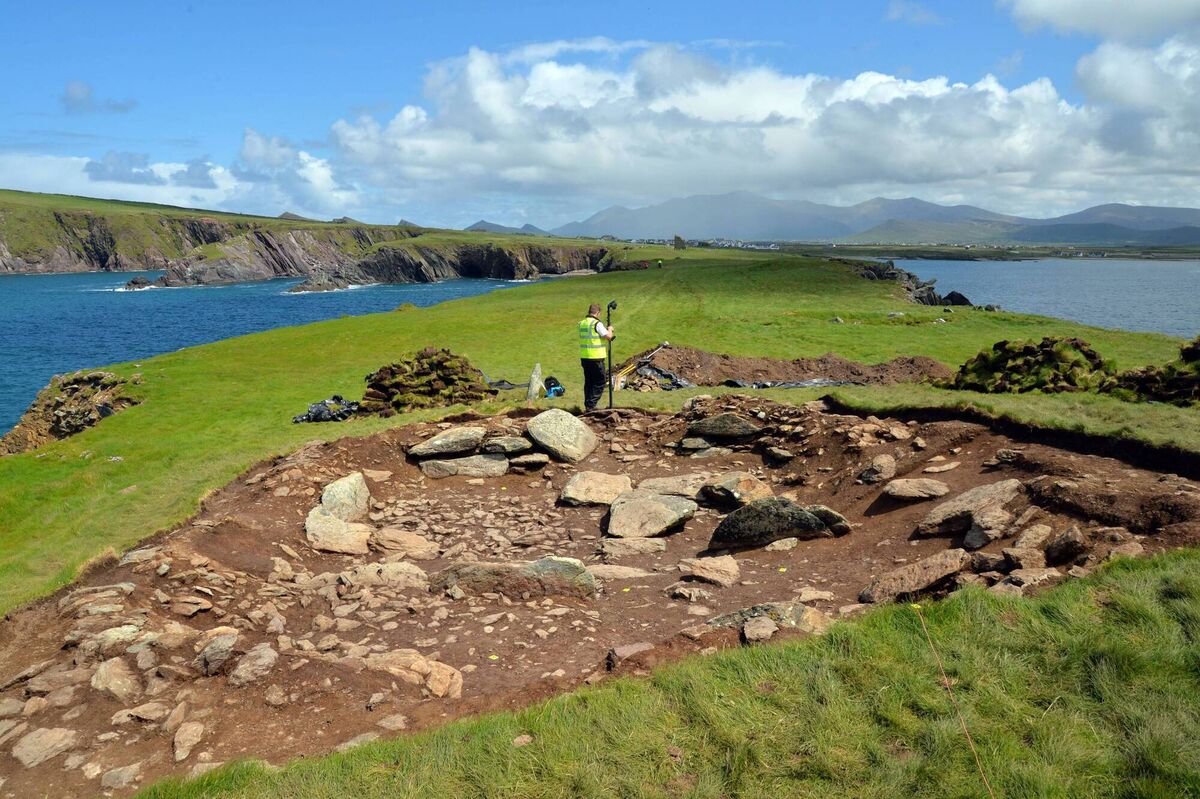
The huts were later re-used in the 10th and 11th century and again around the 15th century when the builders of Ferriter’s Castle re-used the fort’s outer defences. The castle was the ancestral seat of the Ferriters and once home to Piaras Feiritéar (1600-1653), the celebrated poet, harpist and Gaelic lord.
“This is interesting as castles have been built on a number of promontory fort sites in Ireland, and the defences have been re-used,” says Henry. Material spanning almost 4,000 years was unearthed during excavations in May 2021, providing valuable clues about how these enigmatic forts were once used.
And those clues are still coming to the surface. On a recent trip to the site, Cherish research archaeologist Edward Pollard saw that an animal bone was sticking out of one of the huts, along with charcoal, suggesting that cooking once took place there.
Ask him about the benefits of the Cherish project and he provides a fascinating series of snapshots of archaeological discoveries made at various points around the Irish coast. For instance, at Inny Strand on Ballinskelligs Bay in south Kerry, researchers found the remains of a Bronze Age field wall and dated a sample of pine tree that is about 4,000 years old.
Also in the bay, three prints of a cow hoof were revealed in the peat as the cliff section was eroded back during the course of the project. Archaeologists also found walnut pollen dating to the 11th century, showing that well-connected monks had begun to grow trees brought from Europe.
“We are still finding lots of features that we haven’t seen before,” he says, explaining that the coastal environment is changing so rapidly that new evidence is being unearthed all the time.
That cultural heritage is now under increasing threat from extreme weather events, increased precipitation, warmer winters and hotter summers.
Violent weather events are not new, as the Cherish Project Exhibition running at Tralee Library explains.
For example, in 1281, the Annals of Inisfallen noted: “In the same year there was a violent windstorm and ricks and many houses were damaged: also the great church of Achad Deo [Aghadoe, County Kerry] (which has been standing undamaged for six score and four years), its holy cross too, being broken.”
A number of centuries later, John O’Donovan, of the Ordnance Survey of Ireland, described the so-called Night of the Big Wind in 1839 at Glendalough in Wicklow: “At one o’clock a most tremendous hurricane commenced which rocked the house beneath as if it were a ship! Awfully sublime! But I was much in dread that the roof would be blown off the house.”
Now, however, the pace of erosion is exacerbated by rising sea levels (rising by about 3mm a year since 1980), hotter summers (a temperature of 33°C was recorded in Dublin last year) and above-average rainfall.
Edward Pollard was surprised to see how much change had taken place, even in the six years of the Cherish project: “Erosion is not new, but it is increasing more frequently and that will cause a lot of destabilisation.”
He was shocked to see the extent of cliff collapse on the west coast of Ireland in particular, where the rock is much harder. Increased precipitation has weakened it and, in the process, left our coastal cultural heritage exposed and at risk of erosion.
“We need to do more to report what is out there and what is exposed,” he says. The Discovery Programme has plans to introduce an app which will allow local communities report on changes in their own localities.
Meantime, the Cherish project is finalising its findings. It has not only learned a lot about how people lived in the past, but it has used an array of innovative methods — aerial archaeology, remote sensing, paleoecology, geomorphology, maritime survey, underwater archaeology and geo-surveying — to record how our environment is changing in the present day, too.
While there is real reason to be deeply concerned, John O’Keeffe takes a more optimistic view when he considers the legacy of a project that united four partners, two countries (Ireland and Wales), countless experts and several local communities who welcomed researchers on to their land or farms.
“It's not about who is to blame but who is responsible,” he says. “One of the big legacies we have demonstrated in the Cherish project is that we have demonstrated that this work is worthwhile.”
As well as uncovering many heartening archaeological discoveries, Cherish has also shown what is happening and where resources and further study are needed.
“We can respond and we are not at the mercy of the elements. [Our] findings will be important to decision-makers, policy-makers and, vitally, the people who make those policy-makers accountable,” he says.
The project also brings the topic centre stage at a time when the latest report from the IPCC (Intergovernmental Panel on Climate Change) warns that human-induced climate change is already affecting 3.3 billion people around the world.
Every one of us is responsible, John O’Keeffe says, aptly quoting from John Donne’s Meditation no. 17:
“We have had our warnings,” he adds. “We know through the Cherish programme that these things are real and that they are happening, but it’s not necessarily a funeral bell. It may be a bell of alarm, or a bell of awakening.”
The Cherish exhibition at Tralee Library continues to May 27. After that, it will travel to other libraries around the country.
- See more details on the Cherish Project online
CLIMATE & SUSTAINABILITY HUB
CONNECT WITH US TODAY



Be the first to know the latest news and updates