'School is what brings out the best in Leah'
The parents of a child with complex needs are devastated on her behalf that she can no longer attend school, writes Caroline Delaney
'School is what brings out the best in Leah'

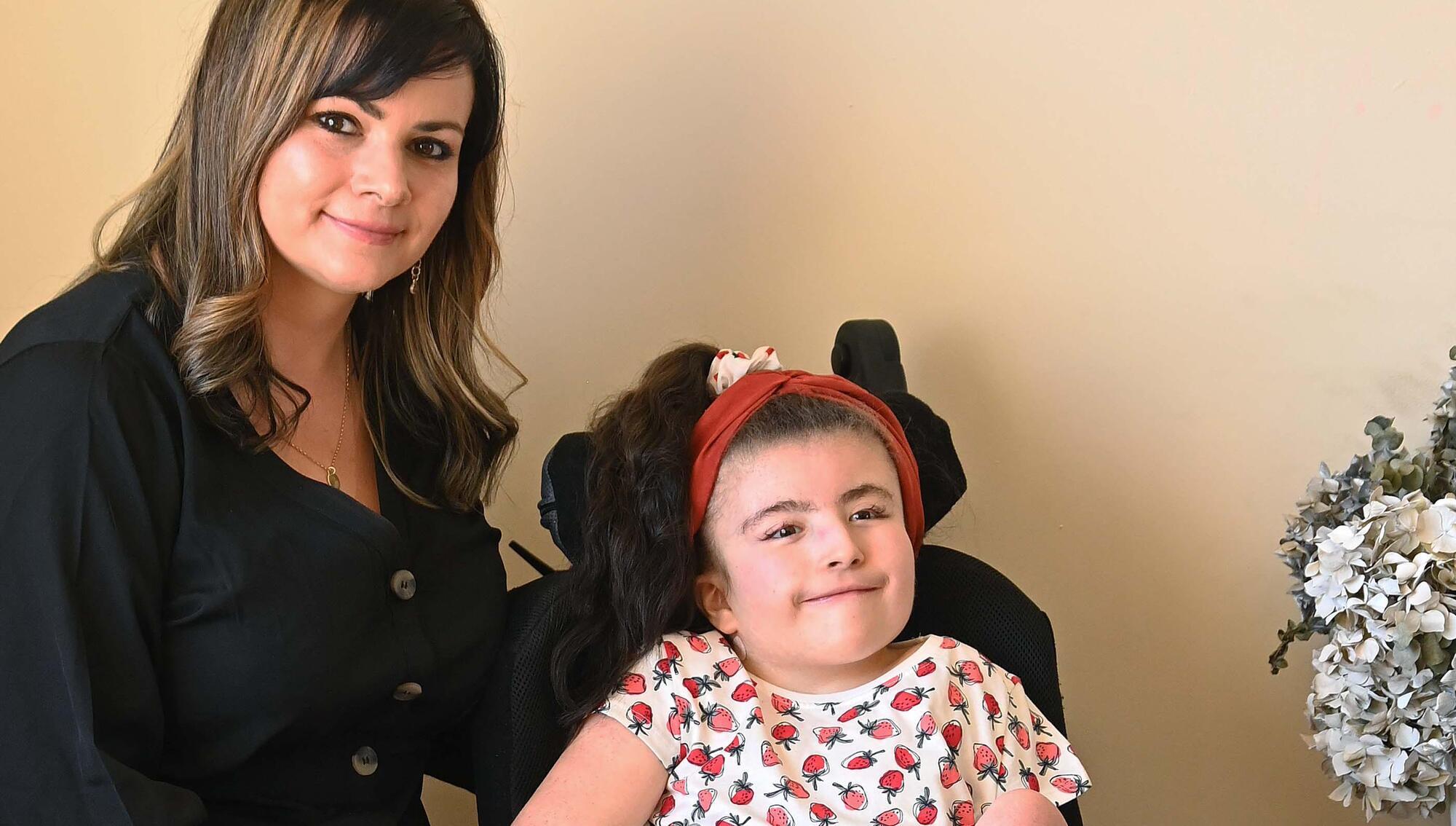
Leah Forde and her mother Michelle at home in Cork. Picture: Denis Minihane

Life has already dealt Leah Forde and her family a tough hand and school was a bright spot in lives that are profoundly affected by health issues relating to the little girl’s severe developmental delay.

That school is St Paul’s Special School in Montenotte, Cork, which specialises in catering for students aged from four to 18 years with moderate, severe, and profound general learning disabilities.

Leah, 10, is not able to walk or talk and is fed on a special blended diet using a tube into her stomach. The National Council for Special Education has noted in its 2018 report that “nursing support should be provided ‘where a number of children present with complex medical needs in one location’. There are high level medical needs that can only be met by a nurse”.

And while the feeding doesn’t take long, the school nurse can’t be committed to the specific time needed each day as they have to be available to tend to more than 90 other children with additional needs at the school.

So Leah’s last day in school was on October 28, 2022. 

Her parents are devastated on her behalf. While the St Paul’s teachers are funded through the Department of Education, school was never about giving Leah an academic education, says her mum Michelle, who works as a planner for a project management company.

“School for Leah is somewhere she can go to be stimulated. It makes her smile and she gets to see people other than her mum, dad, sister, and nurses. 

For Leah, schooling isn’t English, Irish, maths — it’s singing, physio, the sensory stuff, music, and putting on plays. She loves being collected on the bus in the morning. 

"She doesn’t have friends, she doesn’t have one friend in the world. It’s her chance to meet people — she loves being around people and listening to them talk.”

Leah’s dad Declan, who works in maintenance, and her sister Olivia Grace (Gracie), 6, are also on hand at home to look out for Leah — as are her grandparents who live nearby. But Michelle points out: “We don’t have time to do all the lovely play therapy and the singing etc that they do in school. When we are with Leah we just want to spend time with her as a mum and dad.”

There is also a new baby on the way in May.

“Basically, Leah has missed out on a whole year of her life going to school. She’s 10. And school is what brings the best out in Leah. Being at home is not fair on her, it’s like ‘groundhog day’ for her.”

Leah Forde enjoying sensory time when she was attending St Paul’s Special School in Montenotte, Cork.

Leah had been able to go to school before this as she was fed differently when she was younger. 

“She used to be fed a special formula with a pump but it didn’t suit her — there was a risk of vomiting and then a risk of pneumonia. She has severe scoliosis and has had a lot of operations, so as her lungs are particularly compromised we have to be so careful. 

"During covid, I was at my wits end as we didn’t want her having to go to hospital so I tried her on puréed porridge and banana and ‘normal’ milk. I fed her through her tube with a syringe. Then, when that went well, we tried her on soup and brown bread, and stew for dinner. She gained one-third of her body weight and thrived and never got sick.”

St Paul’s principal Anne Hartnett said: “We have 15 class teachers for 97 pupils aged from four to 18 years. We also have two part-time teachers and 44 SNAs and we have one full-time nurse for the eight special classes and 0.3 of a nurse for the seven moderate classes — one-third of a nurse means that worker is shared between St Paul’s and Scoil Eanna and Scoil Bernadette, the primary and secondary schools for children with a mild intellectual disability. These nurses are employed by our service provider, Cope Foundation, which is partially funded by the HSE.”

She said the school’s SNAs and teachers do a great job and are very popular with the children — and she also acknowledged that “Cope are being as supportive as they can given the fact they are under severe pressure for staffing themselves”.

Her main concern is that Leah has been missing out on so much.

“As well as the primary school curriculum for the children’s level, the children also have outdoor trips to local attractions such as Fitzgerald Park and Marina Market and they have in-school fun days too with concerts, the Wobbly Circus, visits from the Easter Bunny.”

Michelle was keen to point out that they have hope that Leah could eventually communicate if she gets back to school.

“Leah’s eyes light up when she is happy. I know she can understand some things I say. Who knows, one day, if she is permitted to go to school, they will see if she is a candidate to learn how to use an eye gaze system. 

One day, Leah might be able to answer yes or no to all the questions I ask her every day, such as ‘did you have a nice sleep?’, ‘do you have a pain anywhere?’, ‘do you love mommy?’, ‘is Leah happy?’” 

Even if the school situation is resolved, there will always be a lot more work involved in caring for a child with Leah’s complex needs but the Fordes have a good support network and have plans for the future too.

“My parents live next door. The reason we bought this house was because we need their support. It was like winning the lotto when the house came up for sale. My parents help to care for Leah when we don’t have one of her Jack and Jill nurses to do it, which allows me to continue working. I love my job and the people I work with.

“Now that Leah isn’t on her school bus at 8am, and I can’t leave her alone in the morning so my dad takes Olivia to school every morning. They help by doing so much for us and we would be so lost without them. Everything would literally fall apart.”

A Department of Education spokesperson said: “Nursing support for children with complex needs in school is provided directly by the HSE or through a HSE-funded provider. Where a school has identified children with complex needs who require nursing support, they are directed to the HSE. Department officials will be meeting with the HSE shortly on the wider issue of the availability of nursing supports in schools.”

The Department of Health said: “The disability function now sits with the Department of Children, Equality, Disability, Integration and Youth rather than Department of Health.”

The HSE and Department of Children have both said they intend to respond.

x

More in this section

Lunchtime News

Newsletter

Keep up with stories of the day with our lunchtime news wrap and important breaking news alerts.

Cookie Policy Privacy Policy Brand Safety FAQ Help Contact Us Terms and Conditions

© Examiner Echo Group Limited