How safe are our hospitals?
Frontline health workers suffering daily assaults, old initiatives such as Hospital Watch rebranded — are our hospitals able to keep us secure when we’re at our most vulnerable? asks Sorcha Crowley
How safe are our hospitals?

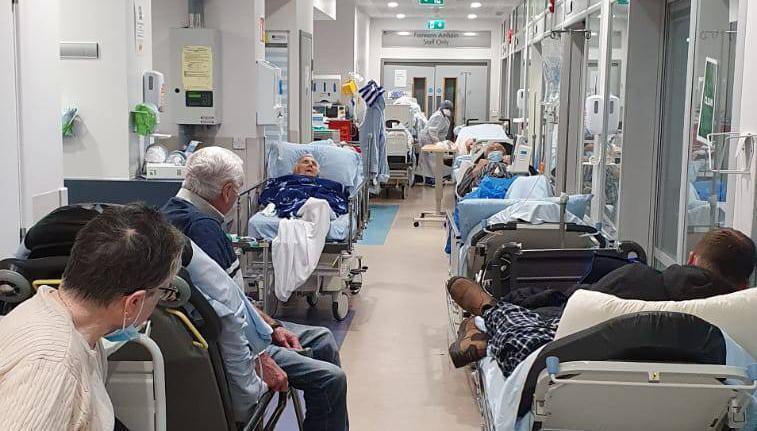
Keeping everybody safe in our often chaotic,  overcrowded hospitals is one of the biggest challenges facing the State today. Nurses and other healthcare professionals are assaulted daily. File picture

“If you put anybody under enough strain, they’re going to be agitated. The emergency department is not a calm environment, it’s the opposite,” says consultant psychiatrist Professor Anne Doherty.

“It’s noisy, there’s bright lights, if we have someone in the ED agitated then you need to think about how we’re going to keep everybody safe,” she tells the Irish Examiner.

Keeping everybody safe in our often chaotic, overcrowded hospitals is one of the biggest challenges facing the State today. Nurses and other healthcare professionals are assaulted daily. 

At the start of February, the Irish Examiner reported that the HSE is investigating 12 major patient safety incidents in emergency departments over the course of this winter alone. A major incident is when a severe or long-lasting harm comes to a patient, including death.

That figure rose after January 22, the day retired farmer Matthew Healy was allegedly beaten to death by another inpatient at the Mercy University Hospital in Cork City. The victim and alleged perpetrator were not known to each other. 

Matthew Healy was allegedly beaten to death by another inpatient at the Mercy University Hospital in Cork City on January 22.

Ironically, just three days before Mr Healy lost his life at MUH, the security company contracted by the hospital, Bidvest Noonan, advertised three full-time security officer vacancies at the hospital for an immediate start. The company did not respond to queries as to whether those vacancies were filled.

Hospital Watch

That same day, on January 19, a little-known crime prevention initiative called ‘Hospital Watch’ was launched at Sligo University Hospital (SUH). The Garda-backed project operates along the lines of Neighbourhood Watch, aiming to reduce crime and boost security at the hospital and improve crime prevention awareness among staff and patients. 

Hospital Watch lead at SUH Sergeant Angela Cummins pointed to “an increase in tension” among patients coming into the hospital while their main security issues were “public order incidents by repeat users”. 

“We have very little incidents of theft. It’s mostly public order matters where people’s anxiety is high, they’re there for four hours and they’re looking for the information and they just need to be settled down,” she said. 

Walking through the corridors at SUH this week, visible signs of the project included a large banner at the outpatient entrance along with the odd poster and sticker on door windows.

“It’s about reducing the fear of crime in a hospital environment. Like any multi-agency approach, one person comes in with a problem but it’ll take us all to come up with a solution to it,” said Sgt Cummins, who had just chaired the first monthly meeting of the working group set up to implement the initiative.

According to An Garda Síochána, Hospital Watch is operating in 31 hospitals around the country. Sgt Cummins seems surprised: “Sligo is the only hospital out of the Saolta group to launch it, while I know it operates in Drogheda, Cork and Tullamore.” 

The Midlands Regional Hospital in Tullamore, meanwhile, contrary to the Garda information, confirmed while its Hospital Watch was indeed launched in February 2020, it had been paused due to the Covid pandemic and has yet to resume.

Hospital Watch was rolled out at Wexford General Hospital as far back as 2005, using the same modus operandi of meetings and leaflets.

Hospital Watch was launched at Mercy University Hospital in September 2021. Picture: Dan Linehan

The project was launched at MUH Cork in September 2021 as if it was brand new, again promising to create a safer environment for both patients and staff by promoting crime prevention awareness with meetings and leaflets. 

An Garda Síochána allocated a liaison garda to the hospital, who “patrols the hospital continually”. It was also launched at the Bon Secours hospital in Cork last December. Is it working? 

In a statement, MUH said its success is measured by “increased visibility” by gardaí around the hospital campus and the number of public order prosecutions and anti-social behaviour orders. It did not reveal what those numbers were however.

Hospital Watch certainly has not registered on the radar of the Cork Joint Policing Committee — minutes of meetings held since September 2021 show no mention of it. 

Several local politicians who sit on the JPC had never heard of it. “Is that the trolley watch?” asked one. “When is it starting?” asked another. The INMO also failed to find an official familiar with the project to comment on its efficacy.

It was reported back in 2021 that a series of security reviews were conducted across the Mercy Hospital as part of the programme launch. 

In the outrage following the death of Mr Healy this January, the Irish Nurses and Midwives Organisation (INMO) and opposition parties called on the Government to review and boost security at hospitals, with the INMO pointing out a major security audit has not been carried out at hospitals since 2016. The Irish Patient Association’s Stephen McMahon has also called for a complete safety audit of injuries and deaths over the last six months.

Security reviews

A spokesperson for MUH, however, maintained that “security reviews are completed on a continual basis by the MUH security manager in conjunction with the An Garda Síochána crime prevention officer, the findings of which are continually discussed with the MUH Hospital Watch working group.” 

Conscious of the focus on security at hospitals in the wake of Mr Healy’s death, for their part, An Garda Síochána insists that Hospital Watch is “not a security operation.” 

It is clear Hospital Watch’s role is limited and while its merits are laudable, it could never be expected to prevent extremely rare incidents of fatal violence. 

MUH has defended Hospital Watch for what it is, claiming since its inception it “has continually addressed complexities in a values-based, multi-agency and collaborative fashion”. It remains “100% committed" to the programme, along with the Garda and the HSE. It did not disclose what the annual cost of the programme is to MUH.

It begs the question, what more could be done to alleviate the above-mentioned “complexities” when dealing with vulnerable patients in stressful environments such as the emergency department? 

The Mercy has confirmed that Bidvest Noonan’s security officers sit with patients as part of the security services they are contracted to provide to MUH. When asked what training these contractor staff are given, MUH replied that “contractor staff can avail of violence and aggression training on a continual basis”. 

The use of security officers to sit with patients is a grey area. Security officers in Sligo, who are HSE in-house staff and not contractor staff, are only pulled in to sit with patients on rare occasions, according to sources there. 

There is a dearth of policy on the practice, according to Prof Doherty, who first came across the practice in Galway in 2016: “I was absolutely horrified, there were elderly people suffering from delirium and agitated and having a security officer with them just looked wrong.” It has since been phased out in Galway.

Agitated patients

“All hospitals have a security team. Originally, they were there to protect staff but they have taken on a wider role,” she says. 

For Prof Doherty, who is consultant liaison psychiatrist and chair of the Faculty of Liaison Psychiatry with the College of Psychiatrists of Ireland, and works at UCD and the Mater, healthcare assistants are the “first port of call” when staff are needed to sit with agitated or psychologically distressed patients. 

Security officers are “not used lightly" and “it certainly wouldn’t be routine practice unless it’s an extreme option. I don’t think there are any policies on that,” she adds.

In Prof Doherty’s experience, the “vast majority” of agitated patients in hospitals are the elderly, who are delirious from an associated infection. 

“They just want to go home and what they need is a kind person and the HCA [healthcare assistant] uniform is much more reassuring. The use of security staff to sit with patients crept in due to staff deficits but we addressed it in Galway. The patients are calmer with HCAs,” she says. 

“Sometimes it can be helpful to keep security staff there, often it’s a horrible situation and so security can be a reassurance for the staff. Of the people who get agitated, only a very small amount have a mental illness. It’s very unusual for somebody with a mental illness to be aggressive. The more over-crowded an area though… it does make them worse,” she says.

Many patients with mental health crises still end up in general emergency departments however, especially those with additional medical emergencies, such as an overdose. 

“We don’t have enough mental health beds so they have to wait in the ED. We don’t recommend that… in a crisis people have nowhere to go except to the ED,” says Prof Doherty.

At the Mater, such patients receive both medical and psychiatric treatment in parallel. A liaison psychiatric team is also on call to back up their healthcare assistants.

Data on assaults on patients are not readily available, leaving stakeholders operating in the dark. While numbers of assaults on staff are published, (8,963 assaults on HSE staff in 2022) the HSE did not provide the Irish Examiner with any data on how many patients are assaulted in hospital, either verbally, physically or sexually.

“I suspect it’s under-reported,” says Prof Doherty. “The hospital risk manager might have the data on their register but that’s predicated on staff reporting it. Often people don’t have the time or energy to sit down and spend 20 minutes filling out a form.

“There is no process for collecting these numbers. We all collect our own numbers and keep them but nobody ever asks us for them. It’s very haphazard,” she adds.

In a statement, the HSE said its recent security assessments focused on emergency departments and a number of security measures were put in place such as controlling access to clinical areas, staff training and the provision of “onsite security services to support staff in dealing with challenging situations”. 

Sinn Féin TD for Cork North Central Thomas Gould said: “Patient and staff safety should be of the utmost importance within our hospitals and programmes like Hospital Watch were developed to ensure this is kept as a priority.” 

“If there are concerns that the Hospital Watch initiative is not working as it should be, or is not resourced adequately, this must be treated very seriously. 

"Hospitals should be safe spaces for patients, staff and visitors. It is vital that there are no barriers to accessing healthcare in the form of safety concerns. Everyone should be safe when they are attending hospital," he added.

A Department of Health spokesperson directed the Irish Examiner's queries on Hospital Watch to the HSE and An Garda Síochána.

More in this section

Lunchtime News

Newsletter

Keep up with stories of the day with our lunchtime news wrap and important breaking news alerts.

Cookie Policy Privacy Policy Brand Safety FAQ Help Contact Us Terms and Conditions

© Examiner Echo Group Limited