Ireland's fishing crisis: ‘Fishermen don’t want free money, they want to be able to survive’
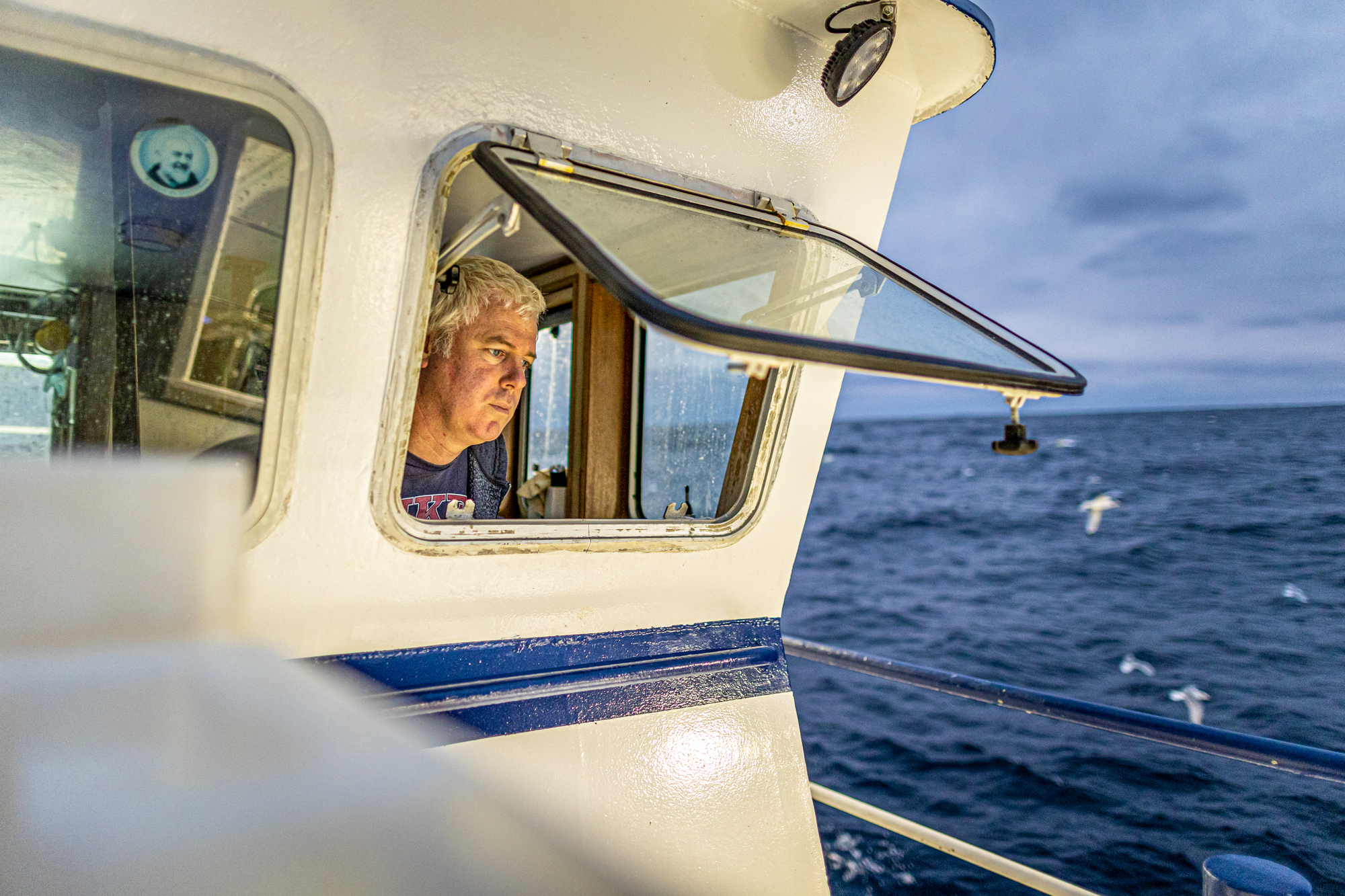
Bosco Mac Gearailt says his industry is at a turning point
Ireland's fishing crisis: ‘Fishermen don’t want free money, they want to be able to survive’

Skipper Bosco Mac Gearailt, from Dingle, aboard the gillnetter Menscoedec that he co-owns, watching fishing nets being hauled in with the catch during a recent trip to the Atlantic. Picture: Neil Michael

Bosco Mac Gearailt stares into the darkness through an open side window of the Menscoedec.

Her diesel engines gently chug as he clears Dingle Harbour’s East Basin, steering the 19m boat towards the narrow channel that will eventually take him out to the open sea.

It is just after midnight, and a slight breeze in the cold night brings the sounds of halyards slapping against the masts of yachts moored in the neighbouring marina inside the harbour’s western breakwater to the right of him.

The odd sudden burst of laughter from a few late-night revellers can be heard echoing faintly from the town behind him.

This is one of four articles in Part 2 of the 'Irish Examiner' special report (in print, ePaper, and online) on Ireland's fishing crisis. Click that link to read the rest, as well as the articles in Part 1.


Somewhere to the left, just a few metres below the water line as he passes Emlagh West, is the wreck of the sailing ship Evangelista which sank on Christmas Eve 1852 during a storm.

Other wrecks lie up ahead, also to the left, notably in the waters below Hussey’s Folly, erected in the mid-1800s as a navigation aid.

The glare from the banks of screens on Bosco’s bridge light up part of his face as he rests one hand on the throttle and stares intently ahead.

He is carefully watching the navigation lights ahead and around him as he eases the boat along the 40m-wide shallow channel out of the harbour.

As he heads out towards open waters, he has to make sure to avoid the dangerous rock crops on either side of him that extend far out from the shores on either side.

As the harbour lights disappear in the distance behind him, and he clears the harbour entrance and heads out into the open sea, he relaxes back into his seat.

Bosco, 42, has been fishing since he was 14.

“It started as a pastime,” recalled the son of two teachers. “I was just very interested. I liked it, and the craic was good and it was good fun.

'Bitten by the bug'

“There would be about three other local lads on the boat, and there would be great banter. I suppose I got bitten by the bug.

“You would, at the time, just walk down to the pier in Ballydavid, west of Dingle, where I grew up and help one of the fishermen and then you’d eventually get to go out with them and you picked it from there.

"My parents didn’t mind as long as I wasn’t causing any trouble. My father didn’t mind me fishing as long as I was working.

“I finished my Leaving Cert and then went to work as a fisherman for two salmon seasons, during June and July, off the coast of Ballydavid.”

He bought his first boat when he was 23, from money he had saved, and he has owned a succession of them since.

Given that he is almost constantly at sea, you wonder how he feels about missing his two small children at home in Dingle with his partner, Melissa.

“You just get on with it. You’re trying to raise your family and you just have to get on with it. No more about it.

“Lots of other people have had to do it before us. We’re not the only ones around doing it.”

While others are leaving or talking about leaving, he has no intention of leaving the industry.

There’s a living in it. It went from a good living to a living, that’s the way it went and I suppose I have hope for the future.”

He adds with a chuckle: “Maybe there is madness too.

“I suppose the boat is in good condition. There’s years left in her, and it would also be nice to have it for your family if they were
ever to follow in my footsteps.”

Also staying in the industry is his business partner, Joe Walsh, with whom he started working around 2015.

The two operate from Union Hall in West Cork.

Joe’s father Richard started his working life as a fisherman, selling the fish he caught at sea on the pier at Ballycotton before setting up Ballycotton Seafood with his wife Mary in 1985.

The company runs a number of boats, has its own smokehouse and a fish processing plant.

They have a shop in Midleton and a stall in the English Market in Cork City.

As well as owning a number of boats, Joe, who also bought his first boat at the age of 23, exports fish to Spain and France through his company Paulona Seafoods.

As much as he sees a future in the fishing industry, he sees much that needs to change.

Decommissioning

“We have a Government that doesn’t support us — and the decommissioning? Is that an excuse and just a kind of willy-nilly thing for the Government to turn around and say, ‘look at all of this support we’re giving you’?

“It’s not good enough. I mean, you know, why should we be selling out our industry?”

He accepts governments have helped the industry, but he questions whether it is the right kind of help for an industry that is struggling to survive.

“Governments have supported the industry, there’s no doubt about that.

“There has been grants out there in terms of safety training and bringing your boat up to a certain modernisation level.

“But you look at the issue around fuel and, say, for example, the French fishing fleet.

“They received a fuel subsidy for their vessels which allowed them to go out and do what they wanted to do, which was to fish.

“But in Ireland, where we also have a fleet of fishermen who wanted to fish, what did we do? The Government refused to pay a fuel subsidy and instead paid fishermen not to fish.

“I just don’t understand how that makes any sense to anybody, and it gives the impression that fishermen just want handouts.

“We don’t. We want to work, we want to fish, and we want the same level of support from our Government that other fishermen in other countries get from their governments.

“I’m sure the department thinks it’s great running the decommissioning scheme and someone there can say how great they are to be giving so many families so much money.

“But people really need to understand that fishermen don’t want free money.

“They want to be able to survive in the industry that they’ve grown up with and they want to continue in that industry.”

While he, like a lot of fishermen, takes issue with how the Government handles, or “mishandles”, the industry, he feels a certain amount of blame for the industry’s woes lies with the industry itself.

“There is little unity there. It barely exists between the processors and the fishermen, or within the producer organisations that represent the industry.

“The big players in the industry are getting bigger and the smaller are getting smaller.

“It is ironic that we’re not united, given the state of our industry and at a stage in its history when it needs more than ever to be united.”

Echoing in Bosco’s ears when he thinks about the fishing industry are comments from an old friend of his, Ger Harrington.
Retired after 50 years of fishing, he was involved in protests against the government in the late 1970s.

At one point, he met and held discussions with Brian Lenihan Sr, when he was minister for fisheries.

“We raised our concerns about the industry and the lack of government support in what was a fairly fraught meeting,” he recalled.

“But he really didn’t seem to care and that was confirmed when he told me and others at the meeting that ‘I don’t give two f***s if the Spanish boats come up to the bridge in Athlone’, which was in his constituency.

“That remark has set the tone for what has happened to our industry since.”


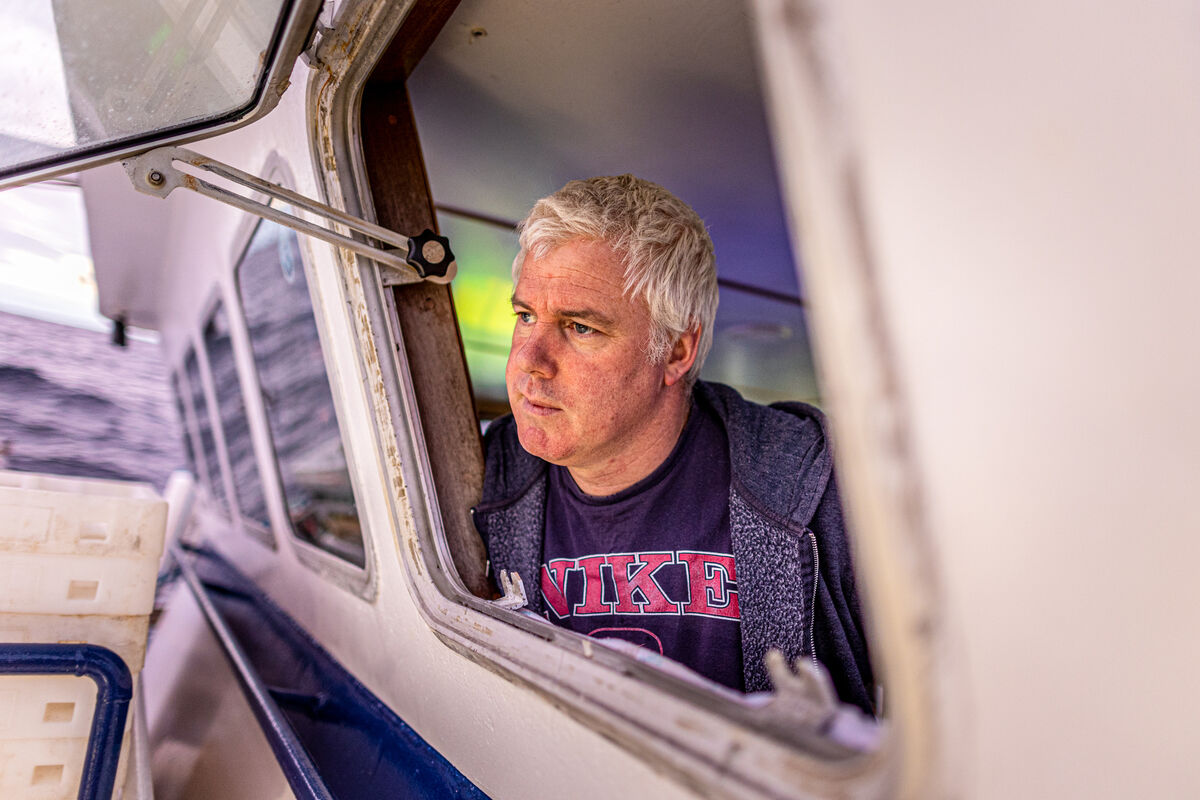
                        Bosco Mac Gearailt: The industry ‘is at a crossroads, it can go either way — into some form of oblivion or get stronger and more secure, and my money is on the latter’. Picture: Neil Michael
Bosco Mac Gearailt: The industry ‘is at a crossroads, it can go either way — into some form of oblivion or get stronger and more secure, and my money is on the latter’. Picture: Neil Michael

He also points to the fact that despite Ireland being an island nation, surrounded by some of the richest fishing grounds in the world, most people are “sea blind”.

“I don’t really know why, as a country, we don’t care more about our fish.

“Is it a religious thing, bearing in mind fish was always a penance food?

“Or is it something else? he asks.

“I do know that if I asked some of my own neighbours to look out to the sea and talk to me about it, they would know more about the dark side of the moon.

“Maybe it is also the fact that so much of this country is based around Dublin, everything is so Dublin-centric.”

The trip back to the mouth of Dingle Harbour is one Bosco has made many times since he started working full time as a fisherman in the late 1990s.

But as precarious as that short journey can be, it is clear that he and the Joe Walshs of this world are going to have to come up with ways to navigate their own way through the current state of flux in the industry.

“It is at a crossroads,” says Bosco at the end of a successful six-day trip out into the Atlantic.

“It can go either way — into some form of oblivion or get stronger and more secure, and my money is on the latter.

“It is certainly where whatever hope I have for the industry lies.”

x

More in this section

Lunchtime News

Newsletter

Get a lunch briefing straight to your inbox at noon daily. Also be the first to know with our occasional Breaking News emails.

Cookie Policy Privacy Policy Brand Safety FAQ Help Contact Us Terms and Conditions

© Examiner Echo Group Limited