Aamun is two. She is literally skin and bone. She lives in Somalia's 'City of death'
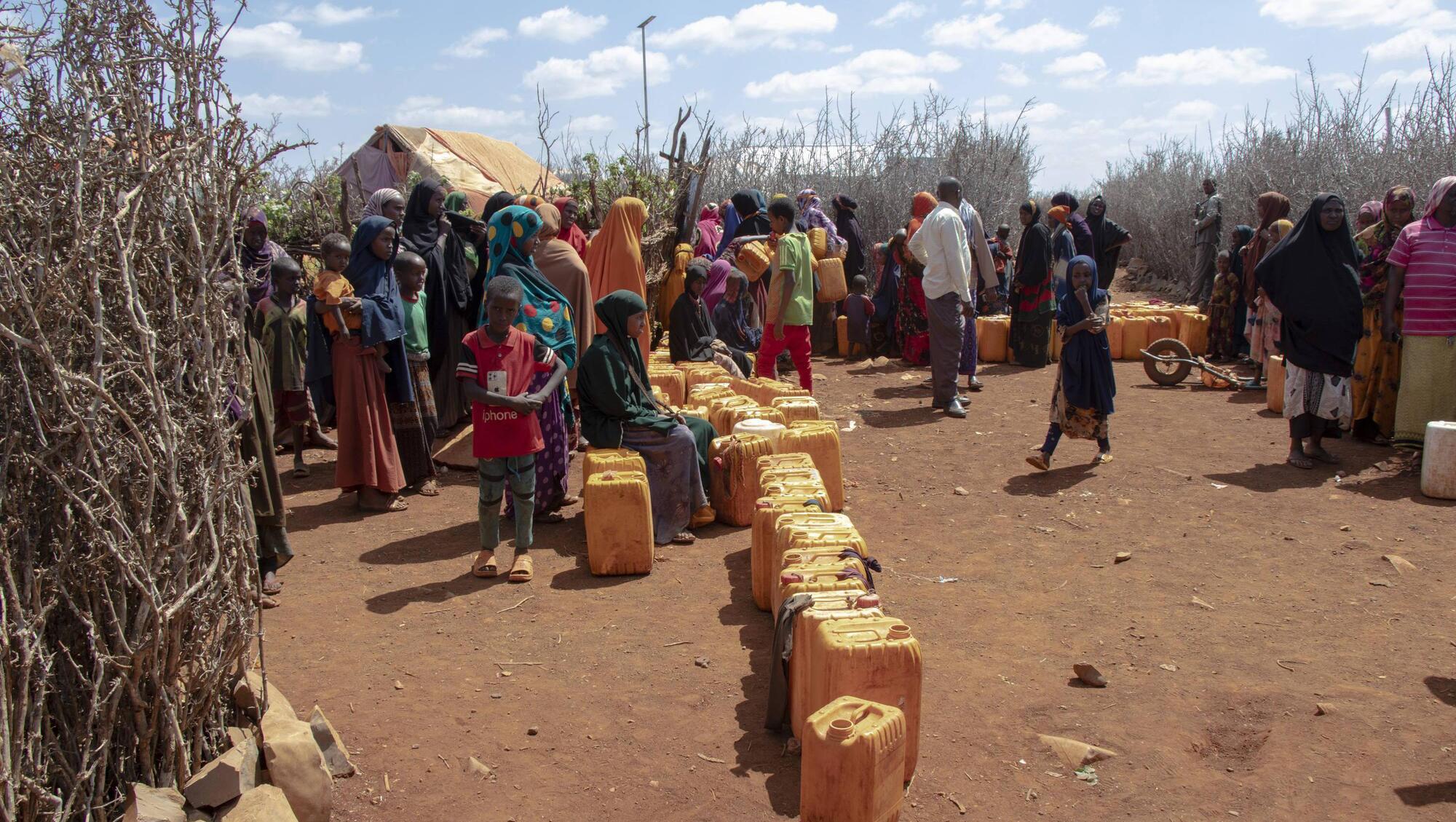
Families queueing for water piped from the borehole rehabilitated and developed by Concern Wordwide at Wadajir Four camp for displaced people outside Baidoa, Somalia. Picture: Eamon Timmins
During the 1992 famine the Somali town of Baidoa earned the grim title among Somalis of “the city of death”. Thirty years later it’s again the epicentre of the worst drought in four decades to hit the Horn of Africa. International aid organisations and the Somalia government are working tirelessly to prevent the drought tipping over into a humanitarian catastrophe.
In 1992, Baidoa was a town of 40,000 people. At the height of the famine a donkey and cart used to tour the town each morning collecting the dead for burial in mass graves. Today, it’s a city of over 700,000 people — 400,000 of whom are displaced people, living in camps of domed tents made from branches, strips of cloth and plastic sheeting.

CONNECT WITH US TODAY



Be the first to know the latest news and updates