'No one is turned away': Meet the Cork Simon team helping the city's homeless
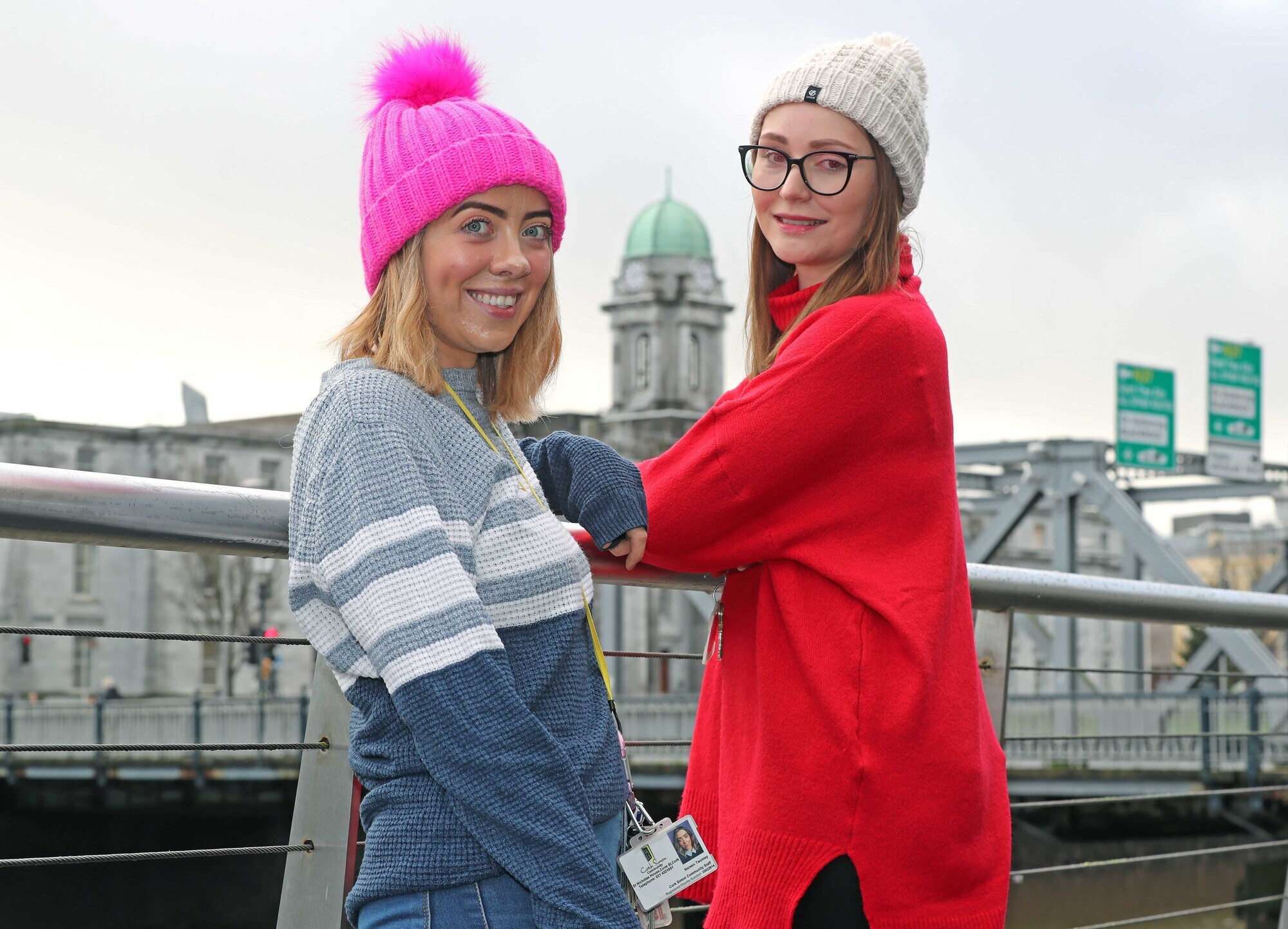
Noreen Twomey and Mirjana Grgic.
A tarpaulin poked through frost-glazed vegetation in a Cork park, the one splash of colour in the frosty white expanse.
Icy spider webs stretched across railings and cascaded over bushes, so heavy with frost they looked like Halloween decorations people forgot to take down.
The tent’s sole inhabitant thanked two Cork Simon outreach workers for the wake-up call when they arrived at his tent before 8am. He said he was warm enough and might call down to the shelter later that day.
“He’s been here a while and people look out for him,” Noreen Twomey, outreach worker with Cork Simon, said.
“The public are a great help to us in finding people, we can’t have eyes everywhere so when we get a call to say they’ve seen a tent somewhere we can go and look for them.”
Earlier that morning, while the city was still shrouded in darkness, Ms Twomey and colleague Mirjana Grgic checked in on every person they could find sleeping in doorways in Cork City. They are two of four outreach workers who check on people sleeping rough across the city and suburbs every weekday.
Armed with a car full of sleeping bags, information, goodwill and Naloxone, in case they stumble on anyone suffering an overdose, Cork Simon’s outreach team head out on their daily rounds.
The previous morning, they found 18 people sleeping rough, despite the sub-zero temperatures.
Muffled refusals of help, uttered by invisible people with their heads still buried in sleeping bags, usually met the women's cheery offers of help at 7am that morning.
But one man they found sleeping in a doorway off St Patrick Street wearing jeans and a jacket with no blanket gratefully accepted two sleeping bags — one to sleep on and one to cover himself with in the icy temperatures. They invited him to come to the centre for hot drinks and food later that day.
Anyone using a lot of alcohol is particularly at risk of freezing to death in this weather, as alcohol can numb people to the cold, leading to longer exposure and hypothermia.
And addiction is a problem for many of Cork Simon’s service users, as is childhood abuse and trauma and mental health problems.
Cork Simon will not turn anyone seeking shelter away in this weather but some people refuse to engage with their services.
“A lot of our work is relationship building. Many people out here have suffered major traumas, they can be suspicious and might find it hard to trust people,” Ms Grgic said.
“You build up good relationships with many of the service users [in the shelters]. They help tidy the beds away in Nightlight [an overflow shelter service], they help you set up, they’re very good.”
While trauma and untreated mental illness is clearly a problem for some people sleeping rough, others want to avoid the bustle of the shelter, and the possibility of encountering drug use among some service users, so they pitch tents on the outskirts of the city.
Others have found shelter in derelict buildings, setting up home in empty, squalid premises that provide some protection at least from the outside world.
For one man we met, his well-cared for dog is his reason for sleeping out in the cold.
Strapped neatly into a warm winter dog coat, she bounds up to Ms Grgic and Ms Twomey, tail wagging furiously to greet them when they go to check on her owner.
He has been clean of heroin for six months and has a job but will not stay at the shelter and has not found accommodation because he refuses to leave his dog.
Dogs are not allowed into the shelter or most B&Bs for health and safety reasons, although a pet rabbit, brought in in a cat travel box, was permitted entry with one female service user recently when she arrived in crisis.
But despite a few people who chose not to avail of Cork Simon’s shelter services, demand for beds there remains very high.
Almost 30 extra people slept at Cork Simon facilities the night before the visited.
The shelter was so full that one service user slept in a stairwell, snuggled in bedding next to a radiator.
“We’re full to the rafters,” Paul Sheehan, campaigns and communications manager with Cork Simon said.
“No one is turned away,” Ms Grgic added.
“Anyone can come to our door. We work with everyone.”
Mental illness, childhood trauma, and addiction are the problems that keep most people trapped in homelessness, they say.
But increasingly people who are working or studying but cannot find somewhere to rent are knocking at their door.
One young UCC student was even referred to their services when her landlord sold the apartment she was renting and she couldn’t find anywhere else.
“She was from up the country, her parents told her to defer the semester and move home until she could find somewhere to rent. She was 19 or 20 and had a normal life of a student before — going to college, going out with her friends, travelling, then she was suddenly in homeless services. That kind of thing never happened before.”
Landlords selling rental accommodation in the middle of an acute housing crisis has been a big problem of late, shrinking the private rental market, they said.
“Now we have people coming in in full-time work who have nowhere to live,” Ms Grgic said.
The Nightlight service — an overflow shelter where 17 beds can be set up in the canteen overnight — began as a ‘temporary’ emergency measure in winter 2017 but continued demand has kept it going since.
The main shelter has 47 beds, while six women are staying in high-support apartments nearby.
A new building is to come on stream soon, providing 25 ensuite beds in a 24/hour service.
And an apartment block is also opening soon, with Cork City Council providing 75 units, some of which Cork Simon’s clients will be able to access.
But a lack of dual diagnosis facilities — where someone can be treated for both mental health problems and addiction — is a major impediment to many service users getting proper medical help, Ms Twomey said.
When people are referred by Cork Simon’s medical team to the hospital for psychiatric intervention, they are turned away if they have medication like Librium — for alcohol addiction — or other drugs in their system.
But addiction and mental health problems are often intertwined, with people self-medicating with alcohol and drugs to numb mental distress, and substance abuse worsening mental health problems.
“One guy who has schizophrenia was hearing voices that were telling him to kill himself. He was begging for medical help. He drinks so he was given Librium to help with withdrawal in hospital and because he was medicated they said they couldn’t assess him and sent him to A&E. Someone who is hearing voices is not going to wait in A&E for nine hours.
“The following day he climbed up the Ferris wheel and tried to kill himself but gardaí found him and took him to Angelsea St. He was sent to A&E again where he waited for nine hours.
“He was eventually admitted and was kept for three days but then he was let out again with no intensive mental health supports.”
“We do our best but we’re not all mental health professionals,” Ms Grgic said.
“We have people with brain injuries coming to us, people with very complex needs.”
Cork Simon does provide clinics with professionals, including a GP and psychiatrist, to help service users hopefully get better.
But sometimes they see homelessness trickling down the generations, with mothers and their adult sons both living off the streets, uncles and their nephews.
Women used to make up about 20% of Cork Simon’s service users, but that number has been creeping up over recent years to 23%, Mr Sheehan said.
Women are particularly vulnerable on the streets, they said.
“You see women on the streets who are always with a man, if that relationship breaks down they find another, they’re too scared to be alone, it’s dangerous for them,” Ms Twomey said.
“Everyone’s at risk on the streets but it’s particularly dangerous for women,” Ms Grgic said.
One service user, who has been staying at Cork Simon’s Nightlight service and whose name has been changed to protect his identity, said he came from South Africa to seek his birth family but ran out of money and wound up sleeping on the streets.
“I was sleeping outside Penneys. It felt degrading but people were kind, they’d leave you €5 when you slept so in the morning you had something,” Michael said.
“My mum, or who I thought was my mum, passed away.
“I was told I was adopted and that my family were from Cork.
“I came here in September to find them but I ran out of money.
“I’ve been in here [the shelter’s Nightlight service] for the past six weeks.”
Mikheil from Lithuania has also been staying at Nightlight. He said he lost his passport and cannot afford to get new documents. And without documents, he cannot work and has become stuck in a spiral of poverty.
George from Romania said a major shoulder injury forced him to leave his job in construction and his injury and ensuing alcohol misuse has left him trapped in homelessness and poverty.
Cork Simon works closely with Cork City Council which Ms Twomey said was very proactively involved in homeless services and tries to keep people off the streets.
Although people must be registered as seeking a home with Cork City Council to get a permanent bed in Cork Simon, anyone can use its Nightlight service.
“Some people are in Nightlight a year, two years, they want to go home but they can’t,” Ms Grgic said.
Ms Twomey and Ms Grgic started work for Cork Simon within weeks of each other five years ago and have stayed with the charity ever since.
“People tend to either stay three months or 20 years. Some people can’t do it but some people love it. It’s quite a big organisation and you can move up the ranks and across different roles, there’s lots of internal recruitment and training so you can really grow here,” Ms Twomey said.
“Keyboard warriors give out that people are sleeping on the streets, but we never turn anyone away who tries to engage with our services,” Ms Grgic said.
“Some people just don’t want to. And it’s not as simple as opening a vacant house and putting people in there. If you put a heroin user alone in a house they may overdose, you need wraparound services in place. You have to provide housing but you also have to provide the supports.”
Mr Sheehan said there was a huge shortage of affordable one-bed accommodation, which makes it harder for their clients to get back on their feet.
“It’s €1,100-€1,200 on average and most people can’t afford that,” he said.
“It’s important that more houses are coming on stream now but it’s nowhere near enough.
“The Covid eviction moratorium reduced homelessness to a trickle, but it went up again when that was lifted.
“There’s another eviction ban in place now until March, which is giving people some breathing space again.”
When asked what lies ahead for Cork’s homeless, Ms Twomey said: “We’re just trying to get through the winter at the moment, it’s hard to think beyond that.”
Donate to Cork Simon here
CONNECT WITH US TODAY



Be the first to know the latest news and updates