Low-emitting countries pay the ultimate price for wealthy nations
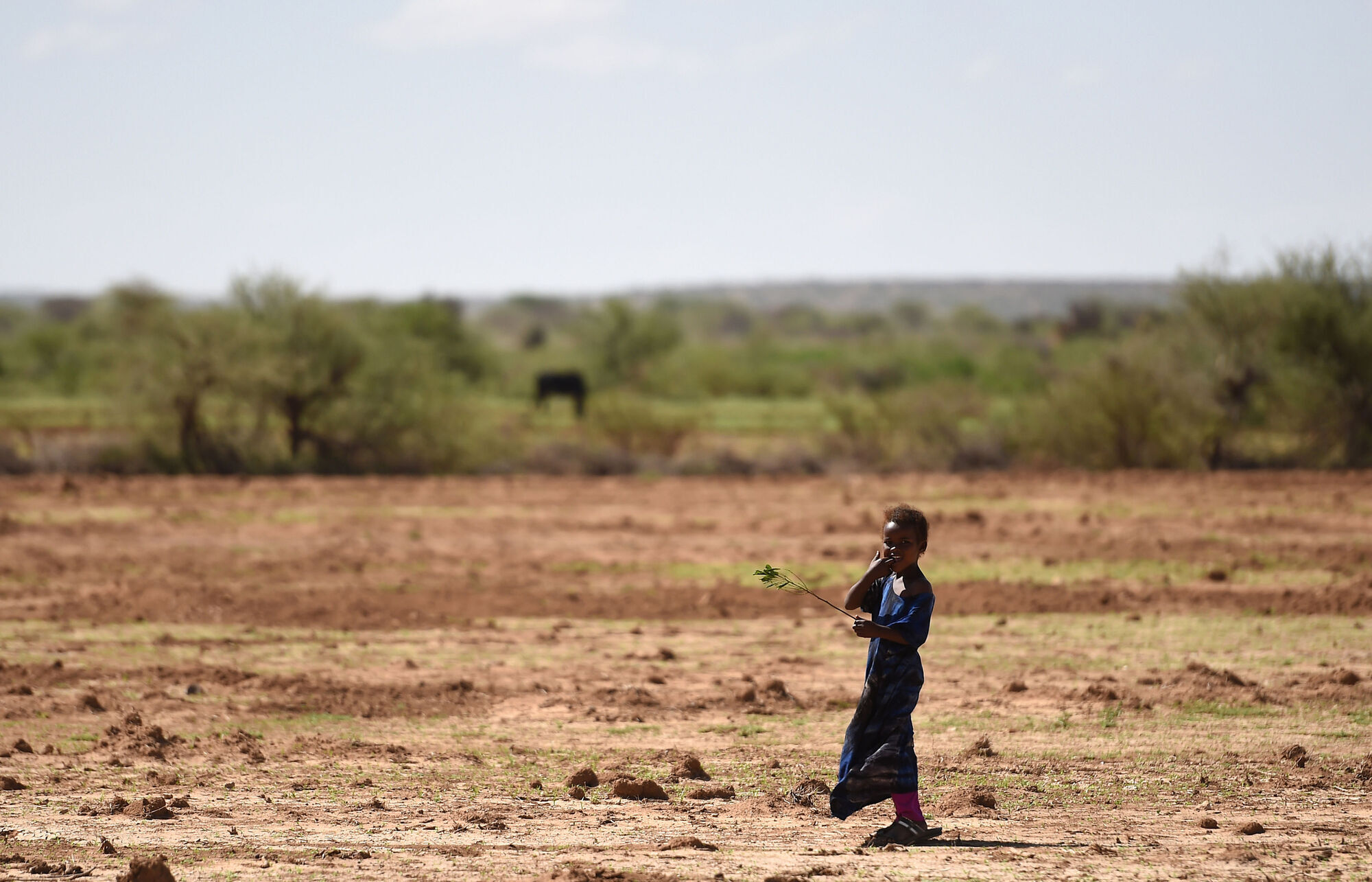
A young girl stands in a barren field on the outskirts of Hargeisa, Somaliland.
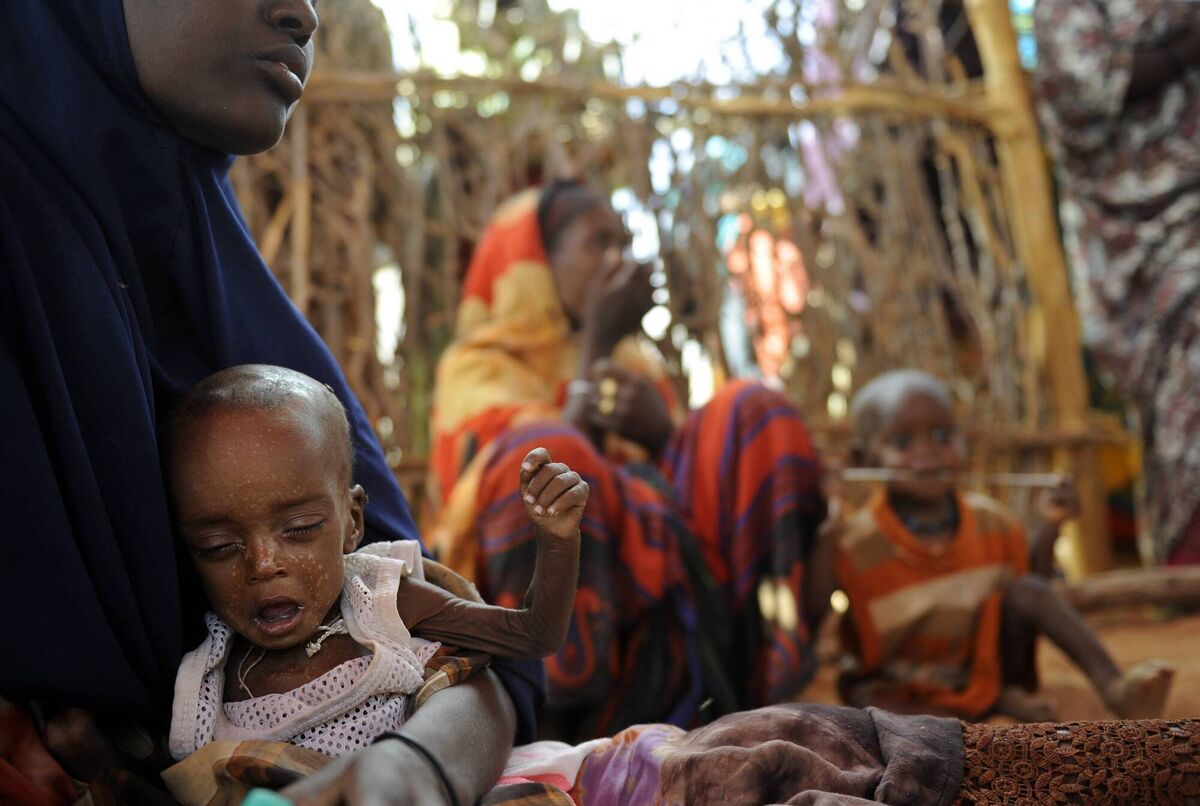
A starving mother cannot produce milk, leaving babies particularly vulnerable.
In Somalia, where Irish aid organisation Trócaire runs hospitals, children aged under five who are dying of starvation are flooding into malnutrition stabilisation centres.
Water is in such short supply in some areas that women cannot wash the blood from their bodies after childbirth for days. Animal carcasses litter landscapes, a grim reminder of catastrophic droughts.
Some 250,000 people are already internally displaced in the Gedo region of Somalia where Trócaire operates.
If a child who is on the edge of death from starvation can survive the first 24 hours in the stabilisation centre, their chances of survival are high, says Trócaire’s Somalia director Paul Healy.
But many children are so sick from starvation and dirty water they are dying before they reach Trócaire’s hospitals.
One mother was so exhausted as she walked with her seven children to seek help that when one of her children died she just had to leave her body by the side of the road.
“She didn’t have the strength to bury the child. She just dug a shallow well,” says Mr Healy.
“She said: ‘We just had to move on to survive.’
“A starving child sums the crisis up for me. This, in this day and age, is simply a disgrace.
“In richer countries, we cannot stand back and allow this to happen.
“For the last 25 years in Africa, I’ve seen the steady transition from crisis into crisis. This is the worst I’ve ever seen, without a doubt.”
The generosity of the Irish public is making a difference, but as the drought escalates, it won’t be enough, says Mr Healy.
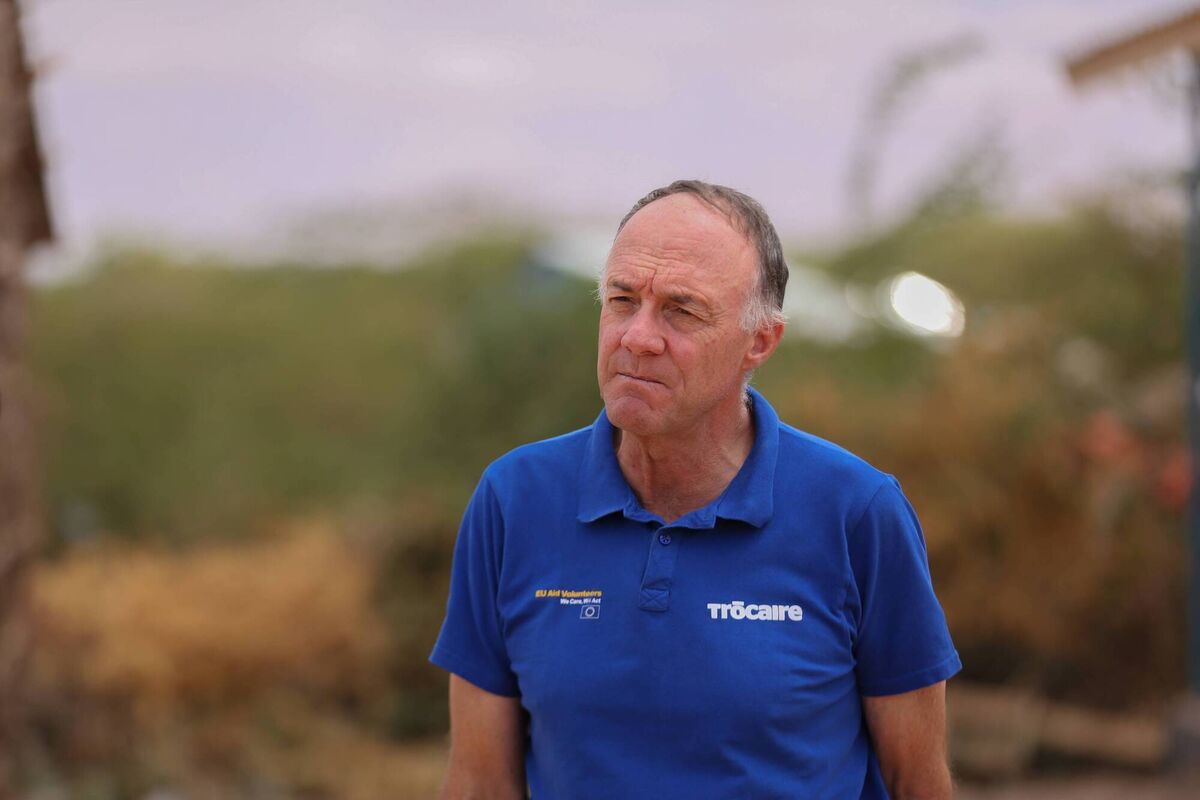
Trocaire’s hospitals in Somalia have established stabilisation wards to save children from dying of starvation. They have seen a recent tripling in the numbers of children arriving for treatment there.
“Trócaire’s health programme is saving countless lives at the moment,” he says.
“Without Irish support, we would be on our knees. Normally we have 20,000 people a month through our health centres in Gedo. That’s jumped massively because now we have 250,000 internally displaced people in Gedo, along with the host community.
Trócaire, known locally as ‘The Mother of Gedo’ is doing its best to help people struck by a famine caused by climate change driven by the West and wealthier nations. Africa has only contributed 3% of carbon emissions since the industrial revolution but is suffering catastrophically due to the continued pollution of wealthier nations — Europe, America, China, and India.
Some 23m people now face severe hunger in Somalia, Ethiopia, and Kenya, as further delayed rains exacerbate what was already the worst drought in 40 years.
Currently, 7.7m people in Somalia, or half the population, are in dire need of humanitarian assistance. Ninety per cent of the country is now experiencing extreme drought.
More than 1m people have so far fled their homes, according to UN figures. That number is expected to rise to 1.4m in the coming months.
The UN has warned that 350,000 Somali children could die this year if nothing is done to help them.
Russia’s invasion of Ukraine is exacerbating the crisis, cutting off most of the wheat imports that Somalia depends on, and sharply increasing the prices of fuel, food and fertiliser.
“We’ve had months of it, it’s just been horrific,” says Mr Healy.
“Our stabilisation centres have been completely overrun with malnutrition, children are being admitted all the time.
“The rural areas have been emptied, nothing has grown there. There’s no grass so the animals have all died — the livestock, the camels, the goats. The people have been left with nothing. Those who live along the river have survived but everybody else is in a mess.
“In Gedo alone you have about 250,000 people who have been displaced — mostly pastoralist communities.
“There’s nothing for them. They’re on these edges of towns with no future. Their animals are all dead. With climate change it’s set to continue. This is the worst it’s been in 70 years, according to the World Food Programme, and I don’t see it getting any better.
The disruption is generational, says Mr Healy, meaning knowledge that long sustained a way of life is being lost.
“In Gedo, the vast majority of the population are pastoralist people, they’ve lived for hundreds and hundreds of years with camels and goats. They had balance with the land, they’d go from water point to water point, following the waters and the grasslands. But all of that has been destroyed by climate change so they don’t know where to go.
Even up to 25 years ago, you’d come to these communities and know where to plant. The women might plant a small kitchen garden in a certain area. And they’d predict the rains. But they can’t predict them anymore. It just has not rained. We should be right in the middle of the rainy season, it normally starts 15 October to 15 December, but it’s not there. That’s across large areas of East Africa.
“So we’re seeing children in our hospitals present with severe malnutrition. They don’t have water so they’re getting sick on dirty water. And some are not getting to our facilities on time, they’re too sick and are dying on the way.
“Parents are left with nothing.
“And this is a global thing, a political thing. At Cop they’re squabbling about whether they’ll live up to their commitments and adapt properly. And if they don’t, there are hundreds of millions of people who are at jeopardy of dying and losing everything they have.
“Literally hundreds and hundreds of millions of people.
“I’m really frustrated at the global community, political leaders. It is for political leaders to legislate and do the right thing but they’re not doing it fast enough. They’re not supporting developing countries, emerging economies. They’re not supporting poorer countries to adapt to climate change or addressing the real issues.
“Why are we squabbling around climate change?”
Although percentages are calculated at year end, it is estimated that Ireland’s ODA budget would be 0.32% of GNI in 2022. Budget 2022 committed €1.044bn, a 20% increase of €176m on the 2021 allocation of €867m but still below the UN’s 0.7% of GNI target.
More money is additionally needed to address the loss and damage countries in the global south are suffering due to climate change, Mr Healy says.
Establishing funds for loss and damage has been a core demand by the global south at this year’s Cop27 climate summit in Egypt.
Loss and damage refers to wealthier countries compensating poorer countries for the loss and damage they have incurred due to climate change.
While the global north and wealthier nations have created the climate crisis, the global south and poorer countries are paying the biggest price.
Last year, the US and the EU rejected calls for a fund to compensate for such losses at Cop26 in Glasgow.
And there has again been opposition to the establishment of such a fund at Cop27 this year from Europe and the US, although some countries, such as Scotland, Germany, and Belgium, have individually committed some funds to address global loss and damage.
A new UN Finance for Climate Action report, published on November 8, found $1 trillion per year was now needed by 2030 to help nations in the global south address climate change.
“The contribution that Africa has made to climate change is negligible and yet it’s suffering exponentially,” Mr Healy says.
“Countries like Somalia are going to suffer the worst, people will live in deep, deep poverty if they survive at all.”
Sumaya Mohammed, 16, from Cork, has family in Somalia. She is currently attending Cop27.
Loss and damage has been a central tenet of the youth movement at this year’s biggest climate conference.
Chanting charged the air at a demonstration in which young people from all over the world demanded loss and damages for poorer nations impacted most acutely by the climate crisis.
“So many people were chanting and demanding that we pay up for loss and damage. The demonstrations gave me some hope,” says Ms Mohammed.
“It inspired me to hope for better — but to prepare for the worst as well.
“Having family in Somalia makes the climate crisis more personal.
“It’s really upsetting that millions of people have to suffer before anything is done.”
Somalia’s culture and deep sense of community are what Ms Mohammed loves most about her mother’s birthplace.
“Even when people are in great distress and suffer displacement, people find a way to be happy,” she says.
“There’s a real sense of community there. People make tea for each other in the mornings. At lunch, people eat together.
“People call someone older than them their parents or grandparents.
“People call others who are the same age ‘brother’ and ‘sister’. People have love for each other.
“Religion is quite central to their lives. Believing gives them hope.
“Countries in the Horn of Africa are in immediate threat of starvation. The next rainy season looks like it will underperform, which would make it the fifth consecutive failed season.
“People need to start looking at supports like loss and damage.
“People need to see the people impacted, see the communities devastated, and not only look at it from this abstract perspective.
“If we don’t wake up right now, that will not only be happening in developing countries but in developed countries too. Climate change is not going to wait for anybody.”
You can donate to Trócaire here.
CLIMATE & SUSTAINABILITY HUB
CONNECT WITH US TODAY



Be the first to know the latest news and updates