Limerick council needs €3m to finish 'road to nowhere' and clear Croom's road to expansion
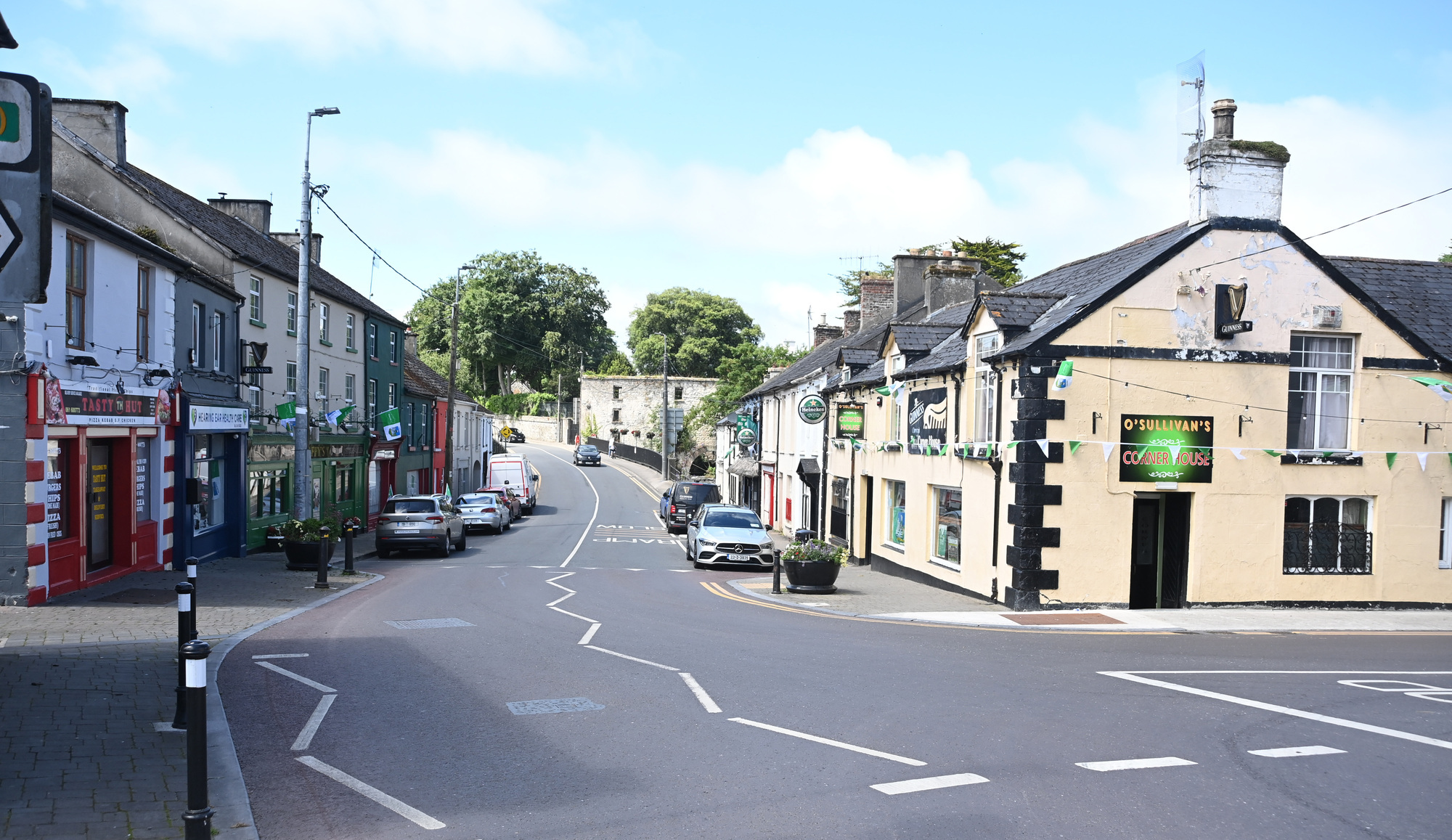
Croom, Co. Limerick. Located 20km south of Limerick city, on the western bank of the River Maigue, and off the N20 between Limerick and Charleville, few villages are better placed for growth nationally. Picture: Larry Cummins.
Croom is a growing village on the outskirts of Limerick city that is poised to see a population surge in the coming years.
Located 20km south of Limerick city, on the western bank of the River Maigue, and off the N20 between Limerick and Charleville, few villages are better placed for growth nationally.
In 2016, Croom had a population of around 1,150 people. This is expected to increase by almost 700 by 2031.
Demographics have led to housing demand in Croom which has around 460 dwellings, with 89% of those currently occupied.
Its population is expected to grow by another 325 people by 2028, which required an additional 104 homes, according to Limerick City & County Council.
The council’s development plan aims to facilitate growth in the village sequentially from the village centre, maintaining a compact urban settlement and avoiding leapfrogging of development.
“Proposals for infill development, particularly in the village core, are encouraged and necessary given the level of vacancy in the village,” a spokesperson for the local authority said. “Additional population growth in Croom will lead to increased service demand and a critical mass for the provision of additional services.”
The age of the population of the village also has implications on demand for housing, education, recreation amenities and health services. Around 30% of the village’s population is under the age of 20 with a further 15% between the age of 35 and 44.

Some 13.45 hectares of land are zoned for residential use which, the council estimates, will sustain the expected population growth in the coming years. A spokesperson for the council explained that capacity to cater for new development has been identified in the wastewater treatment plant in Croom.
“However, water supply requires capital investment to ensure there are no shortages,” they added.
The spokesperson also highlighted the importance of any development in Croom being in proportion to the “pattern and grain of existing development”, though "it is anticipated that the future growth in Croom will be limited in the short to medium term due to lack of capacity around water supply,” they added.
Since 2010, developments such as a secondary school, a primary healthcare site and the distributor road have been approved or developed, with more plans in the works, including a 56-home residential development.
Speaking to the , Cllr John O’Donoghue (Ind) highlighted the need for increased water supply in the area to facilitate growth in terms of housing and business.
“There are plans to connect Croom to the Limerick city connection and we would gain hugely from that in terms of both the quality of water and the supply of water,” he said. He added that the lack of water security in the region has been a hindrance to development in recent years.
A number of plans are currently in place for housing across Croom, including around 240 houses within the village area, as well as multi-million-euro school upgrades and plans for another nursing home.
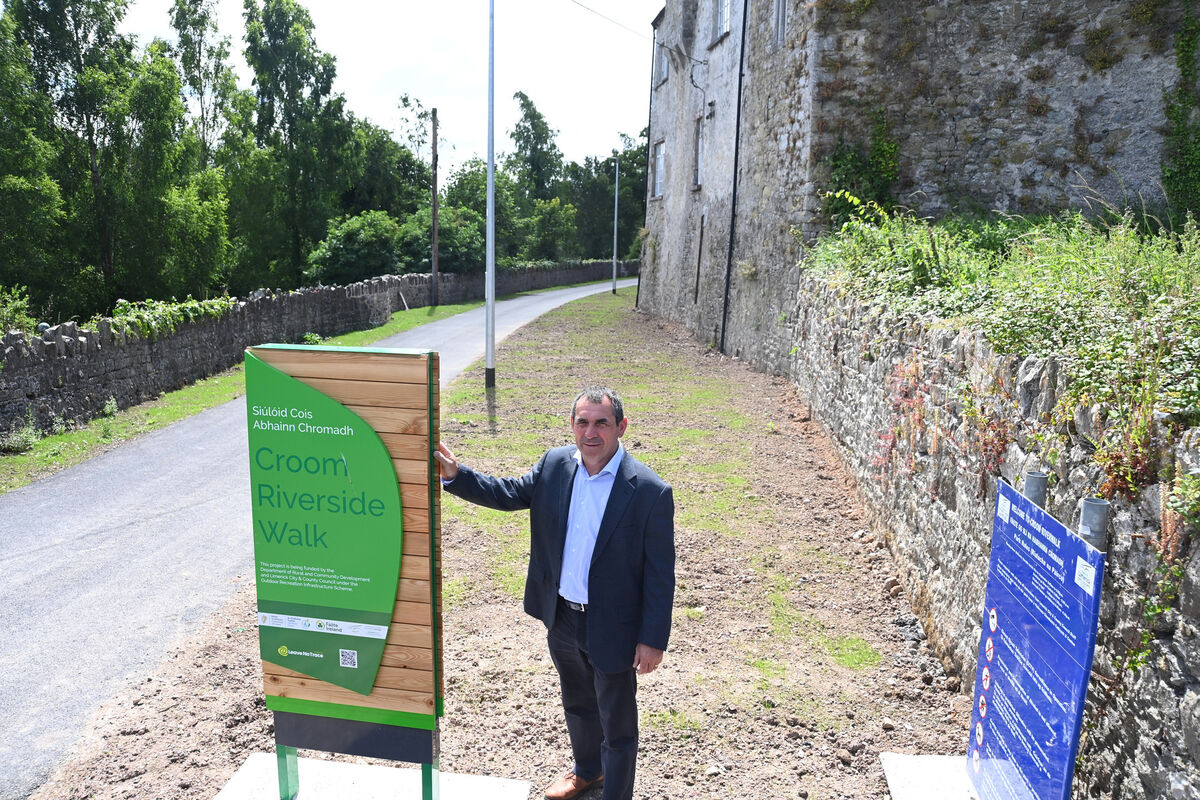
Patricia Ryan, CEO of the Croom Community Development Association (CCDA), highlighted the importance of housing developments in the area. She said increased housing in the village is badly needed, and that it would allow Croom to expand and flourish.
Ms Ryan highlighted the recent expansion of the local orthopaedic hospital in Croom, which brought with it the need for around 100 new nurses. The CCDA carried out a survey of those new to Croom and discovered housing was the main area in need of addressing.
“Lots of people like living in Croom and they would be very happy to bring up a family here,” said Ms Lyons.
“I think there was probably a perception that most of these people would come as single people but many of these nurses have come with families so that's all the better for us.”
With a strategic location between Limerick and Cork, a recently completed bypass and road projects under construction, the topic of transport is never far from the agenda in Croom.
According to the 2016 Census, the majority of people in the village (61%) use the private car for travel to work, school or college in the area. Walking came in second place at just 11%.
In its development plan, Limerick City and County Council highlighted the importance of developing “good transport links” in Croom, including improvements to public transport services to provide a genuine alternative to the car”.
“Public transport in the village could certainly be better,” Mr O’Donoghue stated. “I’d say the majority of people travelling in and out of Croom would have a car.

“The people that don’t are heavily dependent on the bus service, but the bus service could be better and there's no point saying otherwise. Having said that, the village itself is self-contained enough that those who don’t need to travel wouldn’t have to,” he added.
As well as highlighting the need for water works, Ms Lyons of the CCDA also highlighted the need for transport improvements in the area.
“Work is being done in terms of our distributor road, which is currently 400 metres short,” she said.
“There is also work being done in terms of cycle lanes and footpaths to accommodate the secondary school and it would be great if that could be extended further.” Mr O’Donoghue also highlighted the potential to develop the cycle route between Limerick city and Croom.
“The greenway runs as far as Rathkeale at the moment and the plan is to run it to Patrickswell and onto Limerick so providing that link from Croom to Patrickswell is crucial,” he said.
“Croom was on the old railway line to Limerick and part of the old bridge infrastructure it travelled on is still there but whether they’d look at that as being an option to link it or not, I’m not sure.
“Of course, with the plans for the M/N20, cycle lane facilities could also be incorporated there so we’ll have to wait and see,” he added.
With a recently upgraded secondary school and plans in the pipeline for a multi-million-euro upgrade at the local national school, Mr O’Donoghue said Croom is not worried about a lack of school places.
“We have the schools which are actually bringing students from Limerick city and surrounding areas, rather than the other way around,” he said.
Coláiste Chiaráin, which boasts 693 students, moved into a brand new campus in the village in 2021. Meanwhile, St Mary’s National School, with 172 pupils, secured approval from the Department of Education for a multi-million-euro expansion earlier this year.

However, that project has already run into difficulty in the form of the Croom distributor road, or the ‘road to nowhere’, which Limerick City and County Council states it does not have the funding to complete.
A 400-metre stretch of the road, which will link to the new national school campus and already links up with Coláiste Chiaráin, remains as yet unfinished with reports that it would cost €3m to complete.
With an increase in population expected over the coming years, the need for more GP services in Croom and the surrounding Midwest has been highlighted.
Speaking to , local GP Dr Conor Geaney said: “As with the rest of the country, there is a big demand for GP services, mainly because of the transfer of work from secondary services, Covid, an increased number of elderly in our community and increased complexity of healthcare.
“There is a need for GPs in the whole Midwest,” he added. “It's very hard for us to get any locums for holiday, study leave or illness.”

CONNECT WITH US TODAY



Be the first to know the latest news and updates