BusConnects Cork: Everyone wants better bus and bike lanes — but not like this
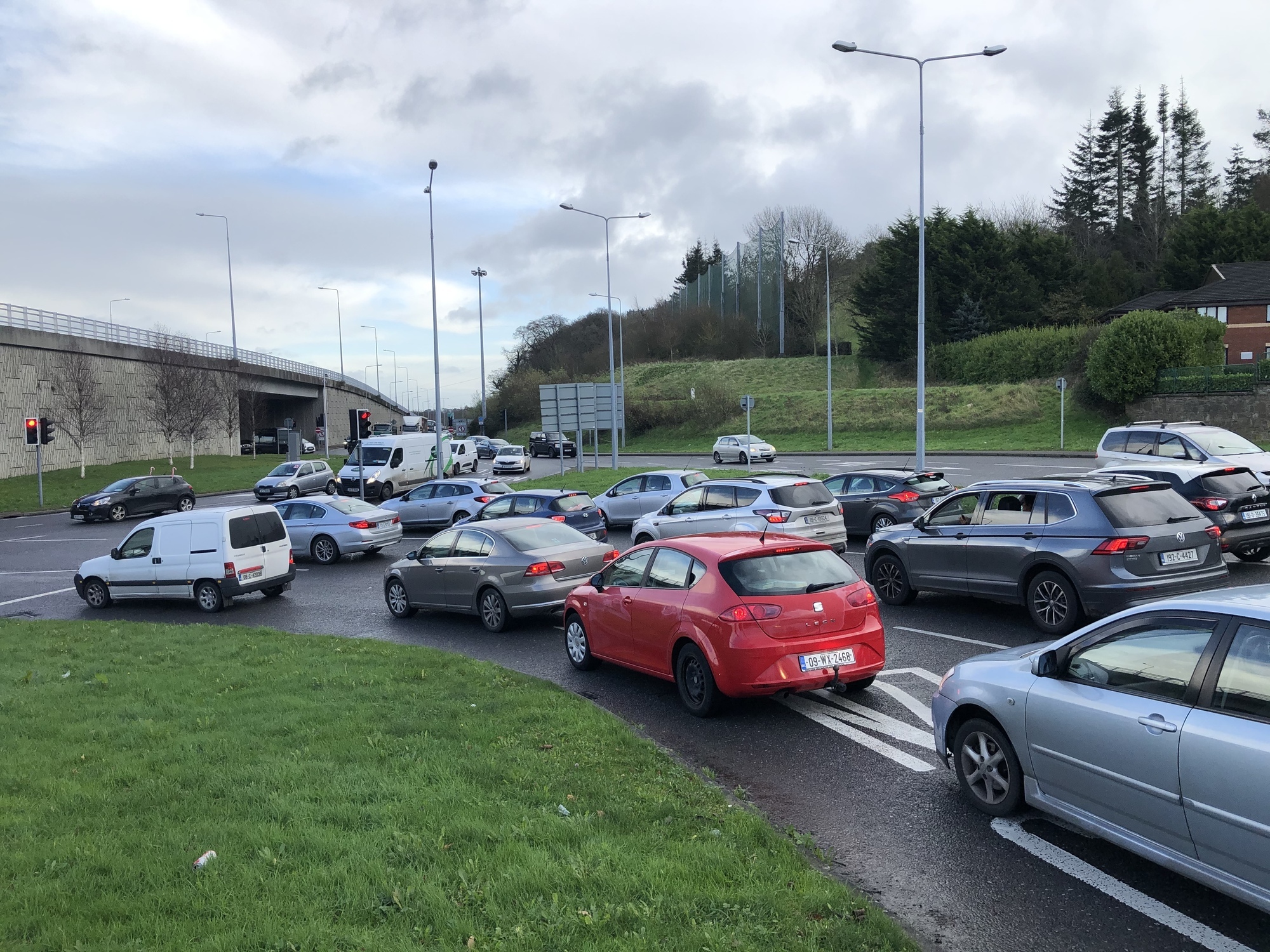
Traffic at the Kinsale Road roundabout in Cork. In Douglas, one of Cork’s congestion blackspots, BusConnects faces strong opposition from businesses, homeowners and environmentalists. Picture: Larry Cummins
Different streets in different suburbs but all with the same message - everyone wants better bus and bike facilities, but not like this.
With hundreds of gardens, trees and parking spaces in the firing line of the €600m BusConnects Cork transport plan, communities across the city have responded with a mix of shock and horror to the National Transport Authority’s (NTA) proposals for 12 strategic transport corridors (STC) - an essential part of the overall strategy.
Cyclists and bus users have welcomed the broad thrust of the proposals but roadside protect signs and online campaign groups have popped up in communities along each STC.
Yellow ribbons have been tied to trees on the Boreenmanna Road, part of a route where 191 trees could be felled, signs have been erected west of Ballincollig opposing the felling of 60 trees on the western approaches to the town, compulsory purchase orders (CPOs) loom again on Wilton Road where plans for a shorter bus route were shot down just a few years ago, and locals in Ballyphehane are worried that the cherished cherry blossom trees on Pearse Road are at risk.
In Hollyhill and Knocknaheeny, residents living on a STC route which has been designed to help facilitate the flow of buses to and from tech giant Apple’s European HQ, are worried that the proposed removal of 17 on-street parking spaces will make it difficult for meals on wheels volunteers and home help workers to call to elderly and vulnerable residents in their community.
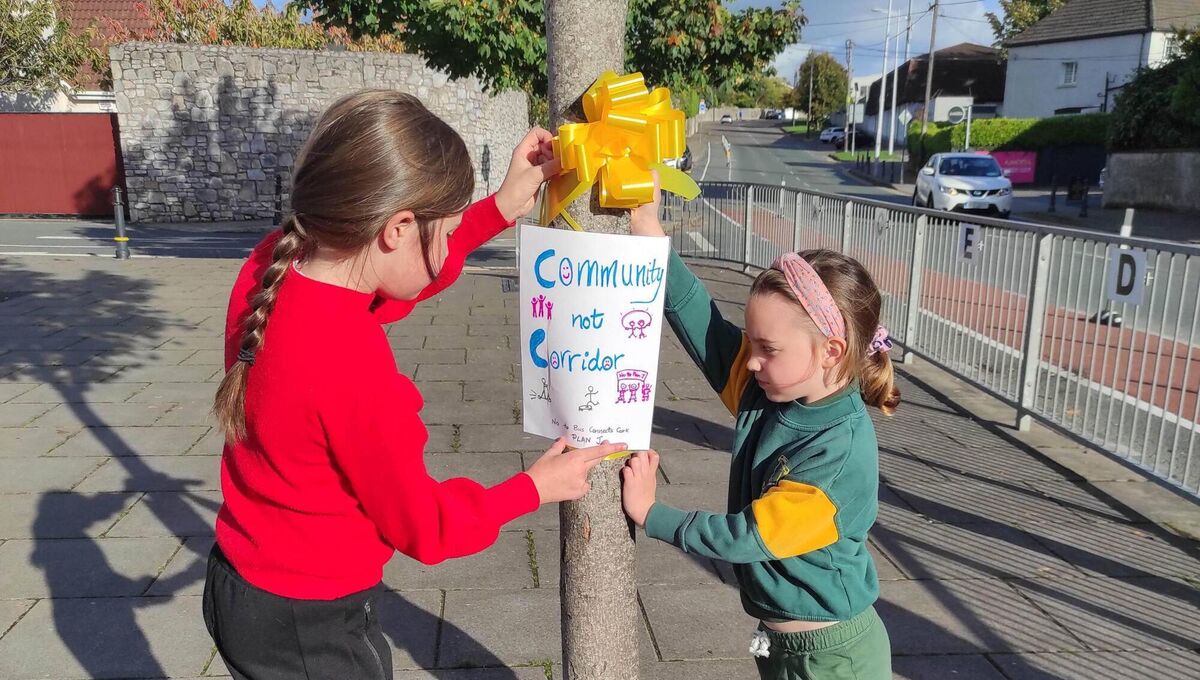
Don O’Sullivan, a member of the Harbour View Road Residents Association, lives on the southern side of the road where dozens of homes face CPOs on parts of their gardens.
“We get the environmental side of this, and why it’s being done. But it was just the way it was handled,” he says.
“They (the NTA) sent letters to people saying they might be CPOing part of their property. There is an aged population here, a lot of people are in their 70s and 80s, and for that letter to be dropped in the door, it caused a lot of upset.” He said he and other community reps attended online and community forum meetings with NTA officials in late summer, and there was “a lot of anger in the air”.
He says:
It led to senior NTA officials walking the road with Mr O’Sullivan and four other community representatives, who outlined alternatives, including running a bike lane through St Mary’s healthcare campus, and calls for the construction of a park-and-ride facility close to the Apple campus in Hollyhill, to eliminate the estimated 1,000 cars an hour which are being driven through the community.
Mr O'Sullivan says residents will judge the quality of engagement and consultation when the revised plans are published for further consultation early next year.
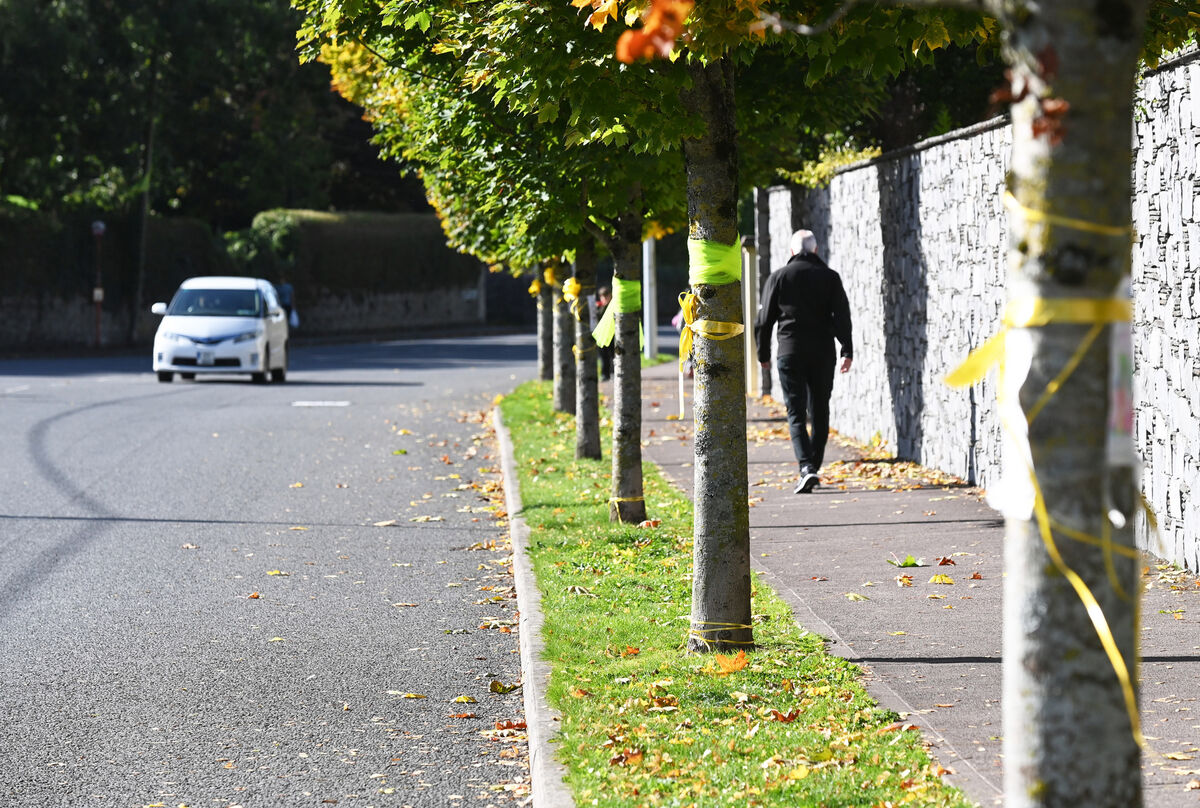
On the leafy Boreenmanna Road, where residents have tied yellow ribbons to dozens of trees that are earmarked for felling in the draft proposals for the Mahon to city centre STC, local resident and auctioneer, Der O’Riordan, describes the BusConnects plans as “environmental vandalism”.
He said locals are furious over the proposals which could impact 73 properties along the route, see the removal of 283 on-street parking spaces, and the felling of 191 trees.
The design proposes road-widening and CPOs along Boreenmanna Road, the removal of parking from outside Cork Con and Pairc Ui Rinn, and the loss of a slice of Ballinlough Park.
“They are trying to fix a problem that just isn’t there on this road, and creating complete carnage in the process,” he says.
“There are pinch-points elsewhere but they can be dealt with locally. This appears to have been a desktop exercise by people who never walked the routes.
“There has been a lack of engagement, and when they did, it was amateurish, the information flow was poor, and the feeling I got was that it was a box-ticking exercise.” He said residents have suggested alternatives that could save millions in CPO costs, save trees, and avoid the destruction of a community.
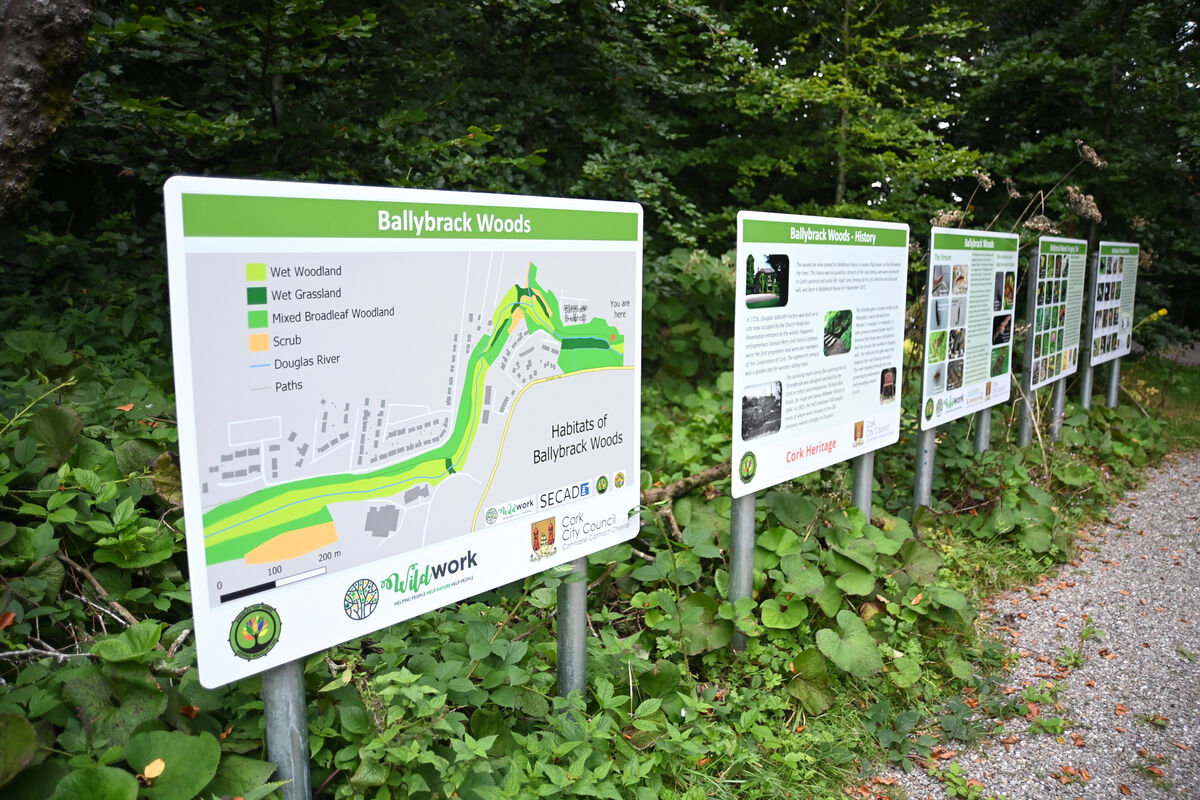
In Douglas, one of Cork’s congestion blackspots, BusConnects faces strong opposition from businesses, homeowners and environmentalists. The draft plan for the STC in their area proposes the construction of an elevated bridge over Ballybrack woods, known locally as the Mangala.
The planned bridge, based on an earlier proposal in the Douglas Land Use and Transportation Study, is shown on BusConnects maps crossing the Ballybrack valley in an east-west direction from the junction of Grange Road and Donnybrook Hill to connect with the Carrigaline Road. It would have a footpath, cycle track, bus lane and general traffic lane in each direction.
But Nina O’Neill, who runs the Douglas Now group on Facebook, said this is a step too far. She has gathered a petition of more than 3,500 signatures opposing the plan.
“The Mangala/Ballybrack Woods has been there for hundreds of years and is of huge importance to the people of Douglas and further afield,” she says.
“The woods are a haven in the heart of a large suburb and going there is good for people's physical and mental health to get away from it all. It’s also home to many protected species including bats, badgers and hedgehogs.”
Tara de Montfort, the treasurer of Douglas Tidy Towns, was involved in meetings with the NTA on this issue. In their detailed submission, she says the draft plan seems to be “all pain for little gain”.
“It may be looking to help reduce the impact of climate change, but it is not respecting our existing environment, now or in the future," she says.
“In order to win over the local communities impacted, understanding that long-term gain for the health of our planet is critical.” The Douglas Business Association (DSA) commissioned two consultancy firms to work on its two submissions to the NTA.
DBA spokesperson, Fiona Leahy, an optometrist who has been trading in Douglas for 30 years, says the STC plans are excessive.
“We do see this as the way forward. Transport can’t stay the way it is, and we welcome the tremendous opportunity for this investment, but it must be spent wisely,” she says.
In their submissions, the DBA warns that the STC proposals will cause significant “operational difficulties for businesses” and warns that congestion will still occur or worsen with more traffic being funneled into fewer and narrower roads.
“The future of several businesses will be severely threatened,” it says. “On top of Covid, surging energy prices, less disposable incomes, increases in the cost of living, and higher energy bills, these proposals may very well be the measures that ‘finish off’ businesses in this well-established and historically successful commercial and community area.”
But Ms Leahy said the DBA is ready, willing and anxious to engage with the NTA on the designs. FG Cllr Shane O’Callaghan says the original communication from the NTA, especially with people who are likely to be directly affected, was poor.
“I was also skeptical of the public consultation process and whether it was likely to produce significantly different results,” he says. “I took up the NTA offer of meetings and I have facilitated a number of meetings with residents and residents’ groups and have been pleasantly surprised by their attitude.”
While those meetings are ongoing, Mr O’Callaghan says he is taking a practical view of this.
“The city council has no say in this project, we have no vote in this. It’s going to happen regardless, and I think the best way to go about this is to engage to ensure the necessary changes are made to ensure that it happens with the least impact possible,” he says.
Green Party Cllr Oliver Moran, who has made a 17-page submission to the NTA on the three STCs passing through his ward on the city's northside, says the design proposals will evolve over the coming months.
“This year, public transport fares were reduced by 50% for young people and by 20% for all adults,” he said. “New routes and increased frequency of services for Cork were announced in June and are due to begin from 2023.
“These must be accompanied by very significant, ambitious and cohesive bus priority measures across the city to ensure the reliability of services. As a city that has set ourselves the ambition to be climate neutral by 2030, this project is essential to us.
“This is supported by and is in addition to the legal obligations on the State to cut climate-changing pollution in half by 2030 and to net zero by 2050.
“While climate change and biodiversity loss are the existential challenges of our generation, the benefits to meeting these challenges are also enormous. An affordable, well-serviced and punctual public transport system for the city is one of these."
Veronica Maguire has been using Cork’s public bus service to commute to and from work for over 20 years and uses one word to sum up her experience - atrocious.
“The buses either don't leave on time or they don’t come at all,” she says.
She vents her frustration at late buses making her late for work, of hour-long waits on cold wet winter evenings for the bus home, and at the so-called 'phantom' or 'ghost buses' which although timetabled, just never show up.
She describes the bus timetable as a work of fiction, with wild contradictions between the electronic passenger information boards at bus stops and the real-time apps and says people have arranged ‘work-arounds’ to cope with late buses or no-shows.
She has sympathy for people set to lose property or parking spaces but says given existing traffic congestion, particularly around schools, and population growth forecasts, something has to be done.
“I sympathise with the people who might be affected property- or parking-wise, but at the end of the day, a lot of these people have never used public transport in their life,” she says. “They need to see it from our perspective as well.
“They don't have to put up with the hardships that people that use public transport on a regular basis have to.
“I would love for some of these people who think BusConnects is a bad idea to actually take a bus or public transport for three weeks and see what they think of it and come back to us then.
“I understand they're annoyed. I do. I would probably be upset too. But they need to see it from the bus user’s side."
Veronica uses the 214 service to get from her home in Wilton to Kent train station from where she catches a train to work in Little Island. But she has lived and worked elsewhere, and so has experienced the 203, the 208 and 220 services too.
“Some people will use one bus service regularly and think the problems affect that bus service only, but from my experience, no matter what bus you take, you will have a problem,” she says.
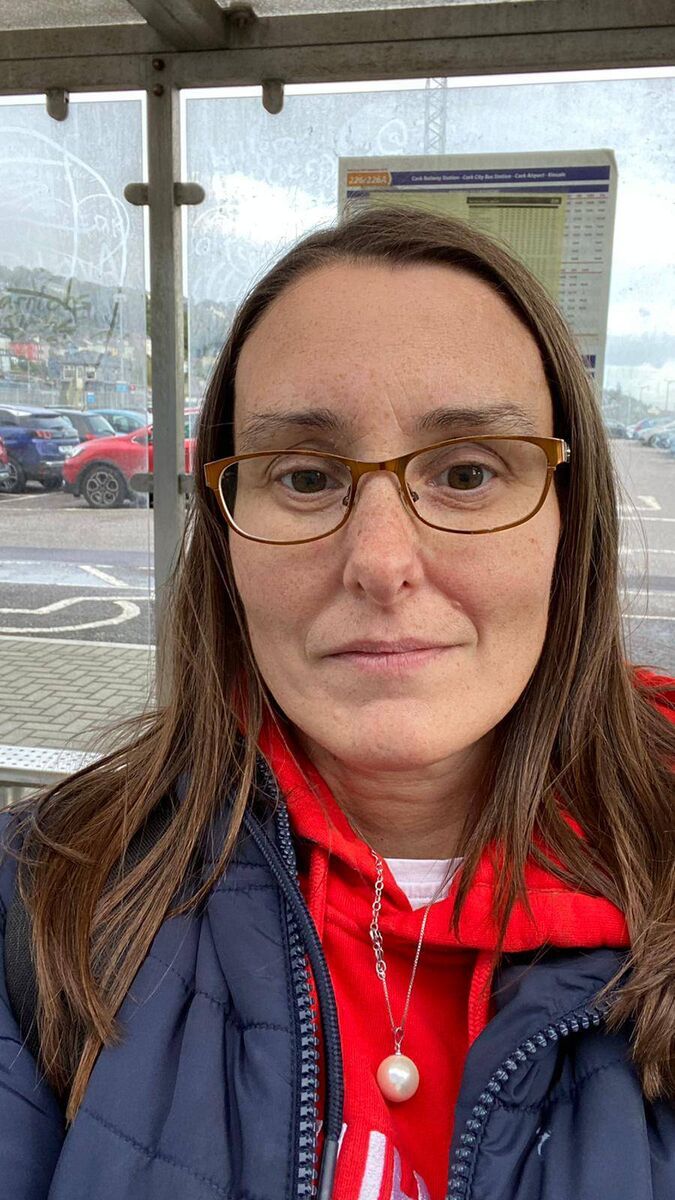
She speaks of early morning buses arriving at her stop outside Cork University Hospital early, or late, and of some just not turning up at all.
“I can remember one particular really cold morning in 2019. I had been at the bus stop since 6.30am waiting for the 6.40am which never showed. It was 7.10am before a bus showed up.
“It was such a cold morning, that by the time I got to work, I was absolutely frozen because I was waiting so long. And don’t even go there with the 203 service. It was a complete disaster.”
She says the decision to extend the 214 service to Glanmire, and onwards to Knockraha has made a bad situation worse.
“It's just gone absolutely appalling altogether. I just want to punch someone in the Department of Transport for thinking it was a good idea to send a bus through town, on to Glanmire, and then on narrow roads to get to Knockraha,” she says.
“I can sympathise with the drivers from time to time. I’ve spoken to them about it and one guy who pulled up at our stop at 8.50am one morning said he was the 8am service but he had been caught in Glanmire where traffic was at a standstill.
“Somebody from the National Transport Authority needs to come to these counties and hop on a bus and see how bad the traffic is in these places.
"I understand people are complaining about BusConnects, saying it’s going to take away from this and it’s going to take away from that. But at the end of the day, taking away parking spaces in towns where there is plenty of parking already, isn’t going to take away their business.
“It's frustrating for us as bus users then that we have to get out of our beds earlier in the morning, and get the earlier bus, or sit in the train station, or sit in our office for 15 or 20 minutes before our shift, which is what I have to do every day.”
Veronica used to work in the mailroom of Apple in Hollyhill and had to be at work for 7.55am when the postman arrived. But she says the 7.20am 202 service had a terrible habit of not turning up, and if it did, it didn’t arrive until 7.45am.
“I was late quite a few mornings but I was lucky because I had the postman’s phone number and I would give him a quick tinkle to say ‘I'm sorry, I'm running a bit late’ and he’d wait”.
She says she hopes her voice, and the voices of the thousands of regular bus users, is listened to during public consultation, and that planners and politicians back the plans.
“A short section of bus lane on Wilton Road was objected to in 2019 and I'm really afraid that it's going to be put on hold again now,” she says. “The city’s population is growing, more apartments are being built with parking and at the moment, there is no proper public transport for them.”
It’s saved his family thousands in transport costs, given them more disposable income and made it easier to shop local - and it turns a fair few heads too.
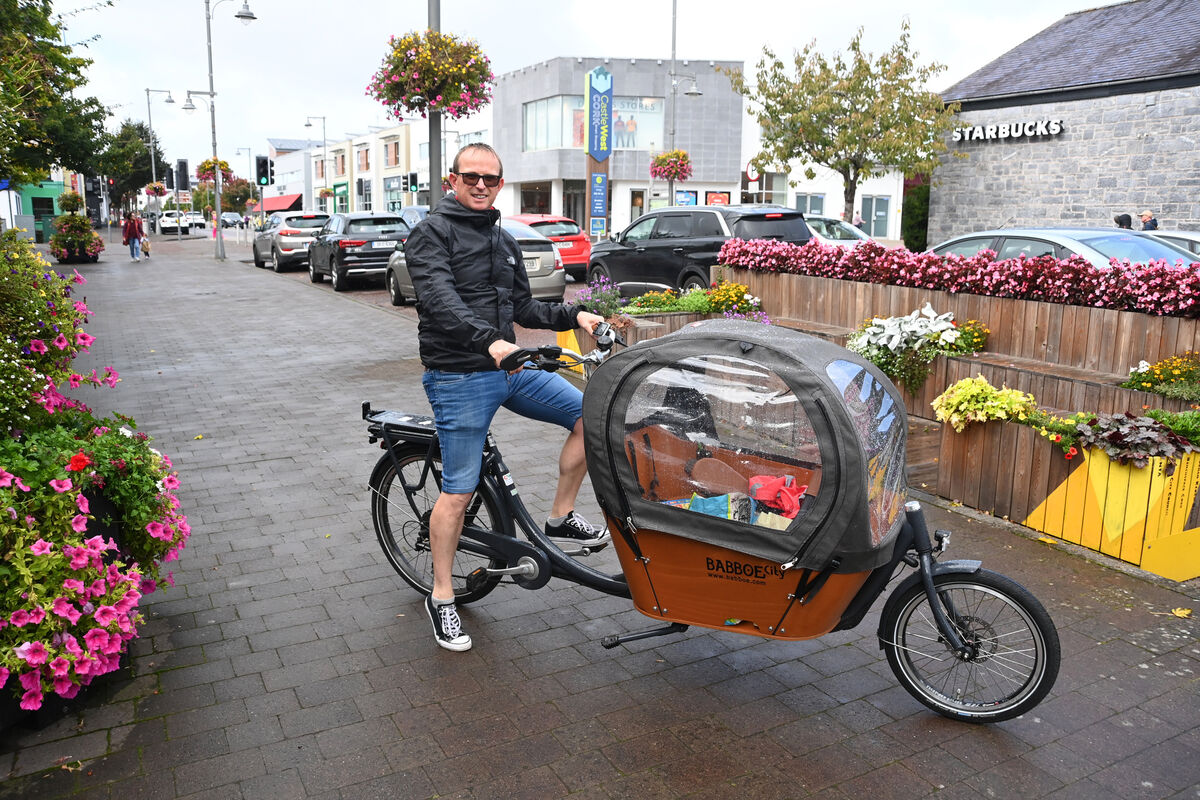
“We use it for everything. It’s our second car,” cargo bike owner Tom Hennessy says, as he parks it outside a coffee shop on main street, Ballincollig. “I just get the bike out of the shed and I can be down to the town centre in two minutes. There’s never an issue with traffic or parking.”
The active travel advocate and father of one says he's decided to speak out in favour of BusConnects Cork on behalf of the city’s cyclists who are set to benefit from the 54kms of segregated bike lanes that are proposed as part of the 12 sustainable transport corridors (STCs).
Infrastructure is vital for cyclists and segregation of bike lanes is key, he says. “We don’t not segregate footpaths. You don’t build a road in an urban centre, and then not open a footpath that’s segregated from traffic. It should be the exact same thing for a cycle lane.”
And that’s exactly what BusConnects proposes - segregated and safe bike lanes along most of the 12 STCs. Where bike lanes can’t be delivered alongside a bus lane, so-called quiet streets, where cycling alone is prioritised, are planned on nearby alternative routes.
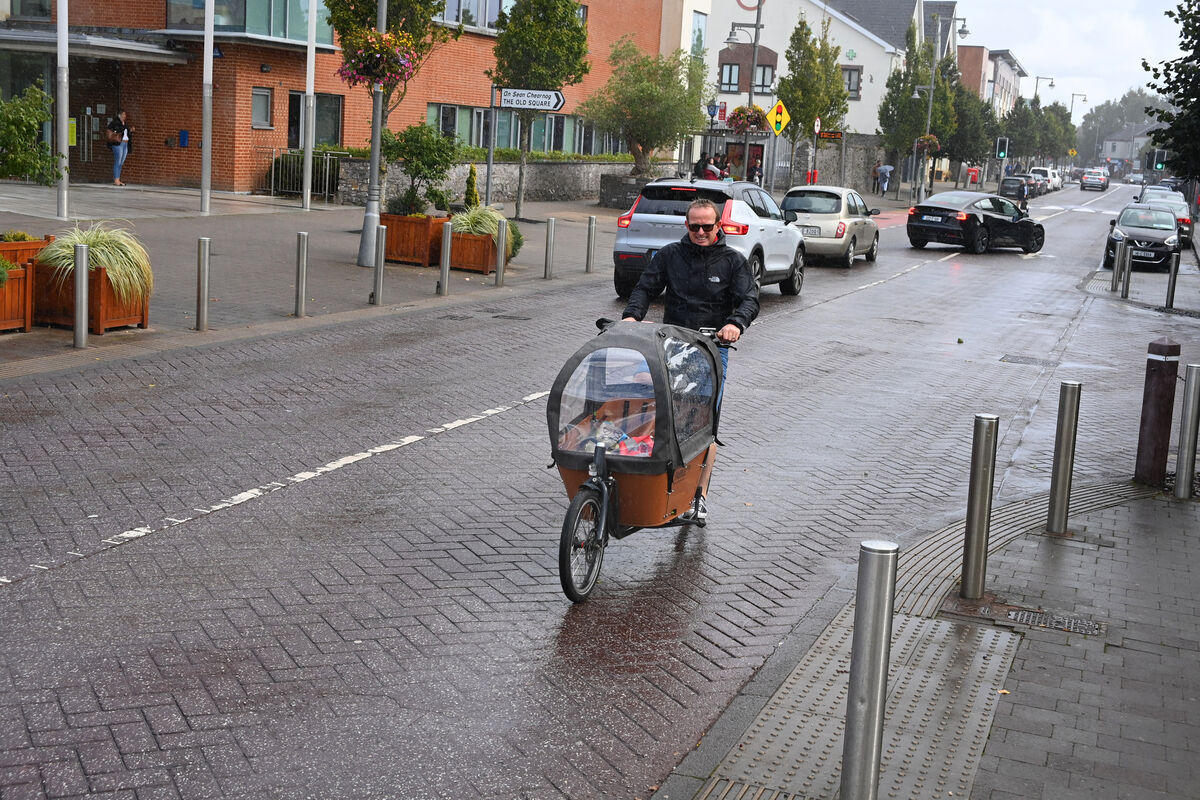
Tom is particularly pleased with the ‘floating bus stop’ proposals which will eliminate the need for buses to cross bike lanes to stop at a bus stop. The entire plan could transform how people get around Cork, Tom says.
“A painted bike lane is really no good. Segregation makes the world of difference. And when you have a child on a bike with you, segregation gives you incredible peace of mind,” he says.
He should know. He cycles his two-and-a-half-year-old son, Rian, to childcare every day in the front of his cargo bike. He also uses it to commute to work in the city, to collect Rian on the way home, and to do the family's weekly shop.
He insists:
Tom and his wife were a two-car household until he took up cycling for transport some years ago. They got rid of their second car a few months later, and shortly after Rian was born they bought a cargo bike around Christmas 2019 to remain a one-car family, and last March, Tom upgraded to the electric cargo bike.
“The car that it replaced in 2017 cost around €5,000 a year to run - that’s motor tax, insurance, fuel, maintenance. Factor in the cost-of-living stuff now and that could be up around €6,500 now,” he says. “The cargo bike cost €3,250, it costs around €300 or €400 a year to charge.
“When you run a bike instead of a car, you automatically have more disposable income, which we have to spend in local businesses. A lot of people who cycle, walk, or who use public transport have a very strong ethos about supporting local businesses. I’m very mindful of shopping local.
“It’s convenient, it supports local businesses and local jobs, it’s in my interests to have the town looking well, because it makes it a nicer place to be. I have been doing that for about the last five years by bicycle. And I'm probably one of the braver ones - doing all this by bike without adequate infrastructure.
“If you invest in providing the infrastructure, studies the world over show you that people will start cycling. And when you cycle instead of drive, you have more money than what you had before. It's as simple as that.”
He says for that reason alone, businesses should have nothing to fear from BusConnects. “If your product is good enough, if your service is good enough, and the prices are ok, people will walk 100 metres to buy from your shop,” he says.
He says the ramping up of the delivery of segregated bike lanes in Cork over the last two years or so has made a huge difference, but much more is needed.
“Politicians need to start leading and showing example and stop thinking short term with an eye on the next election cycle,” he says. “At the end of the day, you've got politicians ruling on whether my son can be safe going to school or not and I don't think that's good enough.
"So they need to stand their ground. They need to look at the bigger picture and at the greater good. And if we can get less people driving then it will be better for everyone.
“There's going to be opposition, and yes, people have to be listened to but only if they have genuine concerns. I'd be concerned about people latching on to things like saving trees and certain turnings and all this kind of stuff. I think it's a little bit opportunist.
“The NTA also needs to look at the bigger picture. We’re in a climate and biodiversity crisis. We have very little time to turn things around. I’m doing what I can. I would ask those objecting to BusConnects what are they doing to make things better?
“I don’t know if compromise is going to work everywhere. But the bottom line is we need to reduce the amount of people driving, we need to increase the amount of people walking, cycling and using public transport and change has to happen to accommodate that.”


CLIMATE & SUSTAINABILITY HUB
CONNECT WITH US TODAY



Be the first to know the latest news and updates