Afghanistan's powerless Hazara community still facing persecution
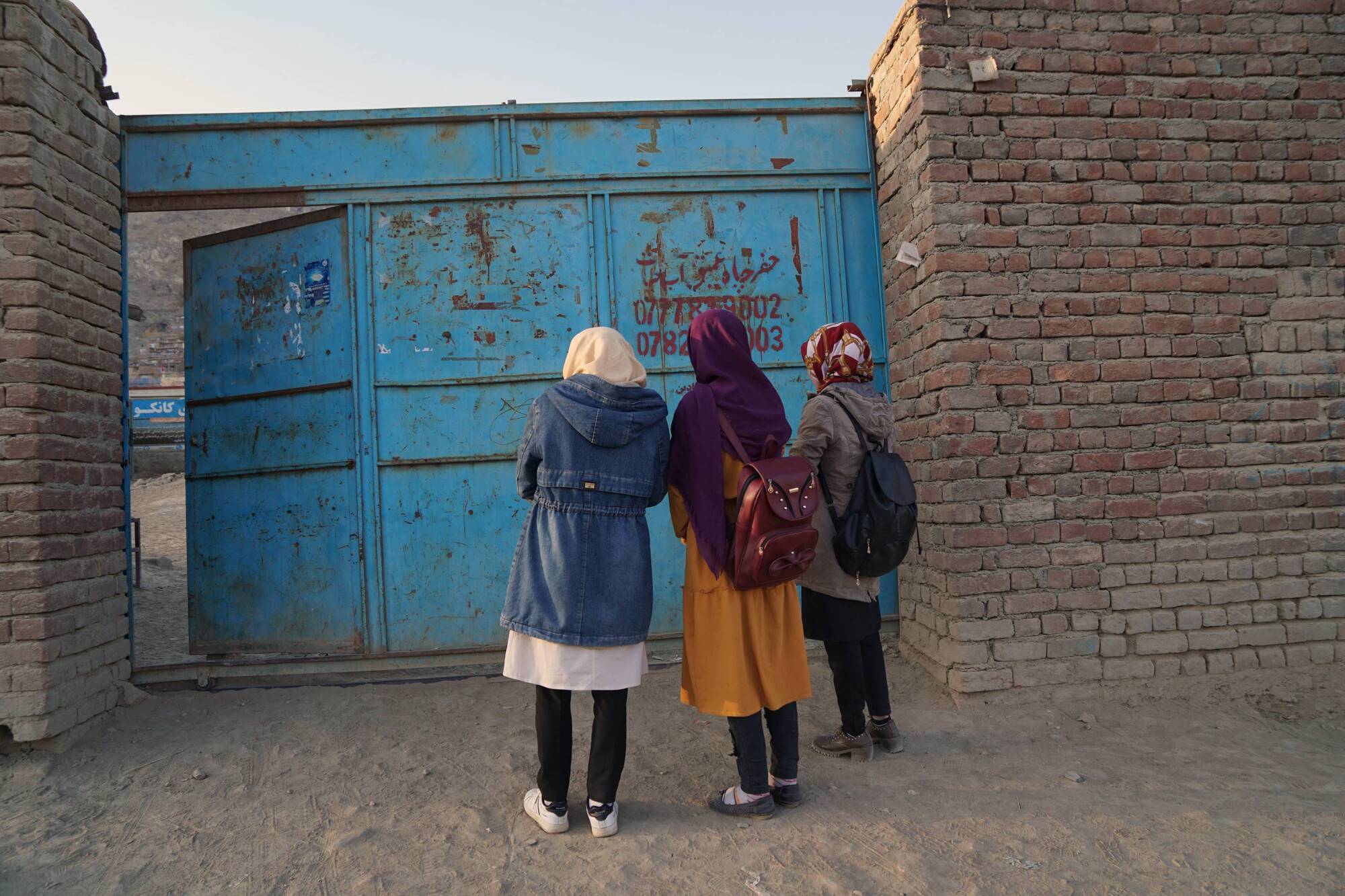
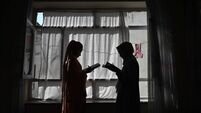
Students outside the girls' school in Dashte Barchi in West Kabul that was attacked by ISIS in May last year. A total of 85 girls from the local Hazara Shia neighbourhood died. Picture: Hannah McCarthy
“Every year when Ashura comes, I hope that people don’t get killed but then explosions and mass killings happen again,” says Arizo Rahimi, an Afghan journalist now living in Dublin.
For Shi'ite Muslims, Ashura is one of the most important days on their religious calendar. It is when they commemorate the death of the Prophet Mohamad’s grandson, Hussein, in the 7th century with processions and self-flagellation.
Hussein’s death reinforced the schism in Islam between Shi'ites and Sunnis, who constitute the majority of Muslims around the world and generally consider Shi'ites as heretics.
Afghanistan’s Shii'tes are predominantly Hazara, an ethnic minority popularly believed to be descendants of Mongol soldiers who invaded the region in the 13th century. The ethnic group, easily identifiable due to their different religious beliefs and facial features, have faced a long history of persecution and attacks in Afghanistan.

“For a long time, I couldn’t watch TV or read newspapers because I was afraid that I would hear that my friends or family had died,” says Rahimi who is from a Hazara community in the Afghan capital of Kabul.
During Ashura, which was observed on 8 August, Shi'ite neighbourhoods in Kabul were hit with a series of bomb attacks that left an estimated 120 dead.
The majority of the attacks were claimed by the Islamic State’s branch in Afghanistan, known as ISIS-K, which is an extremist militant group that identifies as Sunni.
After the bombings in Kabul earlier this month, the human rights organisation Amnesty International said that “the systematic attacks on the minority Hazara Shi'ite community in Afghanistan may amount to crimes against humanity and should be unequivocally condemned.”
“The Taliban are responsible to take all necessary measures for the protection of civilians in Afghanistan and they must immediately step-up measures to ensure protection to all civilians in the country,” says Zaman Sultani, Amnesty International’s regional researcher.
Since the US withdrawal from Afghanistan last year, Hazaras have been excluded from the new government and security force, while facing repeated attacks from Sunni militants in their neighbourhoods, mosques, and schools. The Taliban are engaging in “systematic discrimination against Hazara people,” says Rahimi.
"In the last two decades, Hazaras invested heavily in education hoping to get government jobs, but the Taliban fired many Hazaras from their jobs."
It’s not what the Hazara political leader, Jafar Mahdawi hoped for. The swift Taliban take-over last August thwarted the efforts of the former Afghan parliamentarian to form an interim coalition government to oversee the country after the end of the US occupation.
Along with the former president of Afghanistan, Hamid Karzai, the Tajik leader, Abdullah Abdullah, and Pashtun warlord Gulbuddin Hekmatyar, Mahdawi had been due to travel to Qatar on 15 August last year to negotiate with the Taliban regarding the coalition government.
The negotiations were derailed by the decision of Ashraf Ghani, the president of the US-backed Afghan government, to flee Afghanistan on 15 August.

“We just needed two days to complete the trip to Qatar and we could then have returned to Kabul and announced a new government,” says Mahdawi at his home in West Kabul.
Ghani’s decision to flee caused the security vacuum which led Taliban forces to take Kabul on 15 August and precipitated the chaotic and deadly evacuation of civilians and troops from Afghanistan. The unexpected ease with which the Taliban took Kabul in August drastically weakened the bargaining position of minority and opposition groups with the Taliban.
In an effort to reach out to the Taliban after the US withdrawal, Mahdawi organised a meeting between hundreds of Hazara leaders and senior Taliban officials in West Kabul last November to promote relations between the two groups.
The Taliban leader and spokesperson, Zabihullah Mujahid, addressed the fall hall and said that the Hazaras were smart, educated people and that the Taliban needed them.
In his speech at the meeting, Mahdawi said that the Taliban had promised him that an “inclusive Islamic government” would be formed soon and that women will be allowed to go to school and work in the New Year. At the meeting, senior Hazara cleric Ayatollah Waezzada Behsudi said: “we, the Hazara people, respect all religions” and that “we do not understand each other until we live together.”
Behsudi called for Afghan unity over sectarianism: “Sunni brothers: Shia in Afghanistan will attend your funeral, but the Sunni in Saudi Arabia will not. Shia brothers: Sunnis in Afghanistan will attend your funeral, but the Lebanese Shia will not.”
Despite the diplomatic effort of Hazara leaders, the Taliban have made little effort to fulfil their promises over the last year. The Taliban government cancelled Ashura as a public holiday while sectarian attacks against the Hazara community have mounted, and girls and women remain excluded from school and work.
“Unfortunately, during the past 10 months, the Taliban did not take a step in creating an inclusive government in which all ethnic groups and political parties played a role,” said Mahdawi by text from Kabul this month. “Many opportunities were lost.”
“Today, we see that there is no one from the Hazaras in the political leadership,” he says and adds that only members of the Tajik and Uzbek communities who used to serve with the Taliban have been included in the new government.
Mahdawi is still hopeful that a government can be formed that is “a full reflection of Afghan society in which women, professionals, young people and people from all ethnicities, groups and class are present”.
Rahimi is not optimistic. “I do not trust the Taliban’s words,” says Rahimi and “People like Mahdawi are not in a position to protect Hazara people. To be honest, in Afghanistan you need to have power to influence politics."
CONNECT WITH US TODAY



Be the first to know the latest news and updates