The Archie Battersbee case: Life, death and all the hard decisions in between
The tragic case of Archie Battersbee has focused attention once more on the emotional minefields and complex issues around laws on consent and continuing with life support, writes Niamh Griffin
The Archie Battersbee case: Life, death and all the hard decisions in between

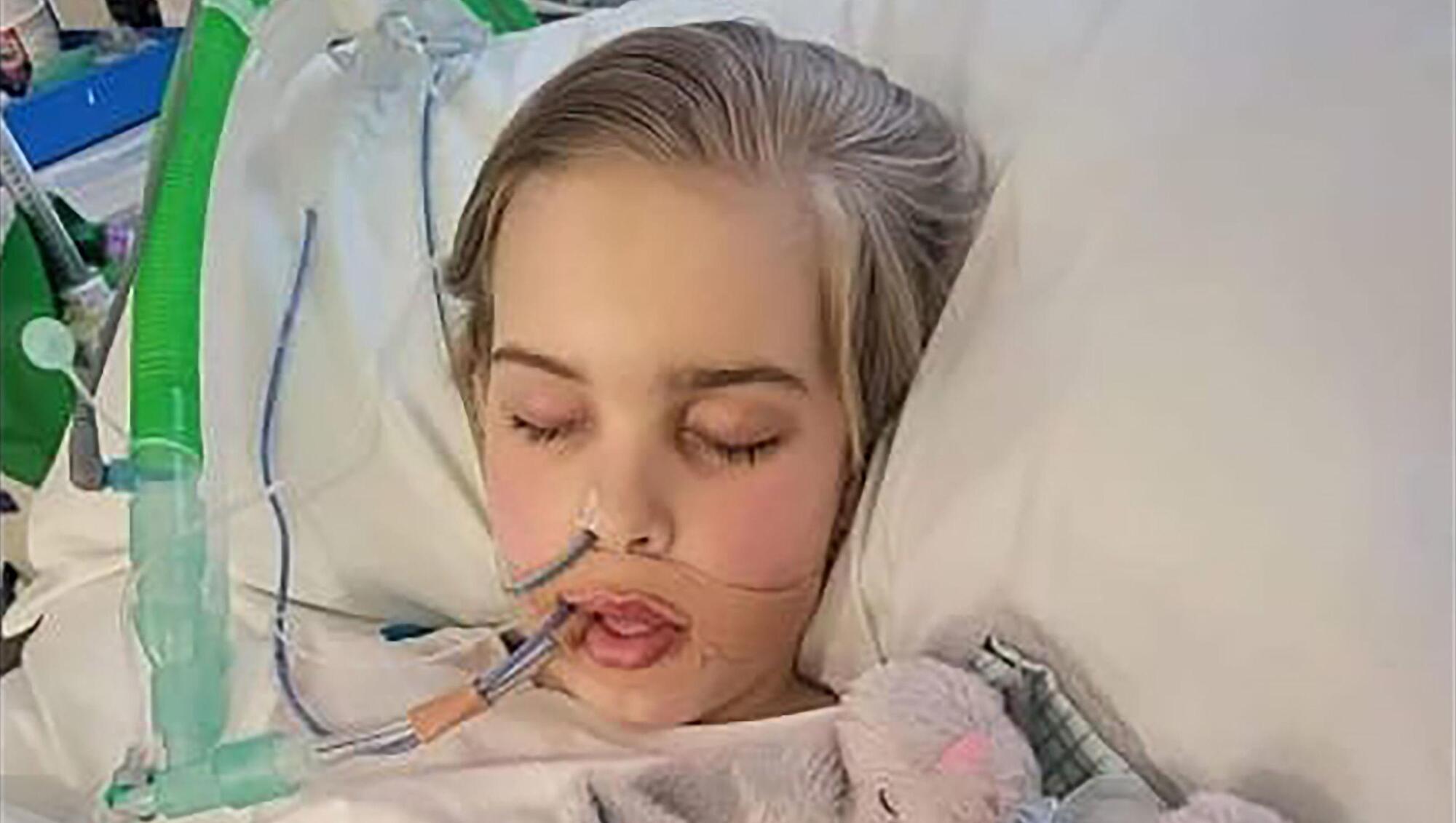
Archie Battersbee.
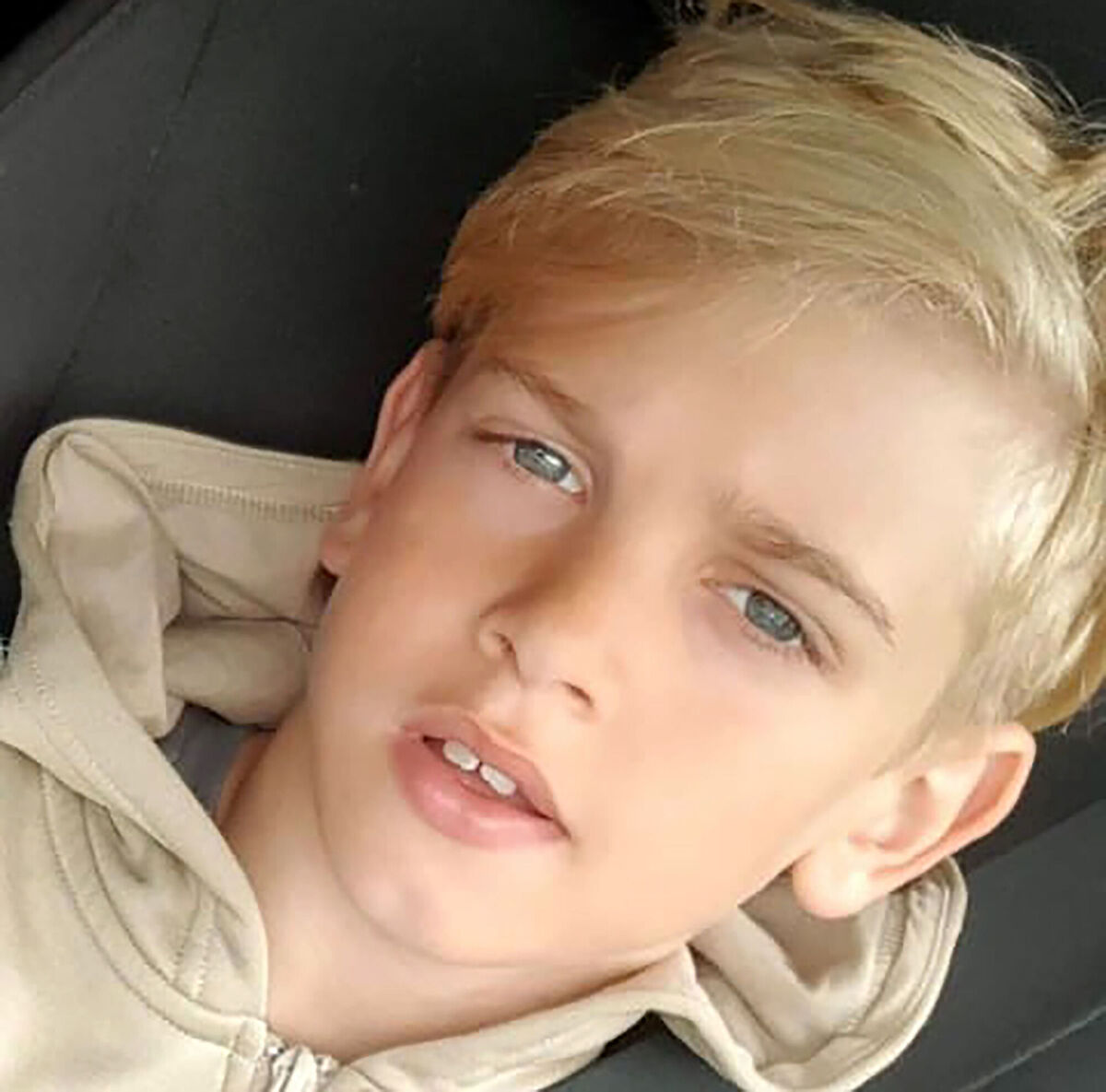
THE tragic case of Archie Battersbee, who died this morning, according to his family, has led to an outpouring of sympathy for his parents, and focused attention on laws around consent and life support systems.

As people listen to his mother, they ask what they would do in her place or if they were the doctors or judges.

This tragedy began four months ago when 12-year-old Archie, a gymnast and proud owner of a pet rabbit, was found “in a very profoundly damaged state” by his mother in their home.

He was found with a ligature around his neck, court documents state. His mother has repeatedly said she believes he was taking part in an online prank, the Blackout Challenge. He has remained “in a deep coma” at Royal London Hospital.

Since late April his mother, Hollie Dance, and father, Paul Battersbee, have been involved in court battles, supported by the Christian Legal Centre, contesting the removal of life support systems.

One judge noted: “His mother has most creditably not left his side since. The family, as best they can, have visited regularly, as have many of Archie’s friends. He is a much-loved boy who is at the centre of these proceedings and at the centre of his loving family.”

A family picture of Archie before the accident.

The hospital, under Barts Health NHS Trust, sought in the first case to have the court declare Archie “brain-stem dead”, as this would allow treatment to be withdrawn.
They argued: “This was not a situation of a very disabled child and the ethical considerations arising.”

The High Court ruled in their favour, but when the case returned to court following the family’s successful appeal, a second judge also supported the hospital.

He said: “Archie’s mum believes him to be ‘a fighter’ and I have no doubt at all that he was.

‘The fight’ however, if it can be properly characterised as such, is no longer in Archie’s hands. The damage to his brain has deprived him of any bodily autonomy.

The desperate parents have exhausted all legal routes including Court of Appeal, European Court of Human Rights, UN Committee on the Rights of Persons With Disabilities, and Supreme Court.

Ultimately they were unable to postpone withdrawal of life support from Archie.

On Friday, their appeal for a hospice transfer was denied by the British High Court.

And what would happen in Ireland in such distressing circumstances?

Professor Deirdre Madden, School of Law, University College Cork, said similar disputes here would follow a 2021 Supreme Court decision.

This case was taken by a hospital caring for ‘John’ (11), a “fervent Liverpool supporter” very close to his family, and who had suffered traumatic brain injury following an accident in 2020.

“[The hospital’s view was] that he should be moved to palliative care if his respiratory functions failed,” she said. “His parents’ preference was for his life to be continued for as long as possible by whatever means necessary.”

Like the Battersbees, court records show his father said: “He has the heart of a lion so I think [John] will keep fighting on as long as possible, you know, and that’s what I want.”

Prof Madden said the court highlighted “exemplary care and love shown by parents faced with a dreadful crisis”.

Why do courts make the decisions?

Many people have asked in recent days why courts can make decisions for a parent’s child.

“If it is established by clear and convincing evidence that the decision of the parents is one which prejudicially affects the safety or welfare of a child, then the court may take the place of parents in consenting to the treatment of the child,” Prof Madden said.

This led, she explained, to the court deciding in this case the hospital could lawfully withhold treatments which were not in John’s best interests.

Barrister Simon Mills SC pointed to a 2012 High Court case here based on a similar principle. A six-year-old boy had suffered “irreversible brain damage” after a near-drowning incident aged 1 year and 10 months, court records show.

“This concerned parents who didn’t want treatment withdrawn from their child because they believed that some treatment might turn up in the future,” he said.

“And the court indicated that cases like this have to be judged from the best interests of the child. The idea of keeping the child alive in circumstances where there was no real evidence there would be treatment in the future was not ultimately in the child’s best interests.”

He said there are also cases where it is in the best interest of the child to continue treatment.

“That is the vast majority of cases,” he said. “But there will be cases where there is no meaningful prospect of recovery and where it is reasonable to stop the burdensome treatment, and allow death to occur.”

Ireland is smaller than the UK so these cases arise less frequently.

“Also very often here, through a process of doctors and family members talking to each other and listening to each other, there is very often a way found to resolve any disputes that might arise without people going to court,” Mr Mills, a former GP, said.

Past president of the Intensive Care Society of Ireland, Dr Catherine Motherway, said agreement between families and care teams is crucial in these sensitive situations.

End of life decisions are incredibly complex, and ideally do not end up in the courts.

“Consensus requires time and dialogue and can be difficult on occasion to achieve. Generally it can be achieved, in my experience, given enough time and space.”

Consent should be central, agrees Tom Curran, Europe coordinator for Exit International. He has campaigned for right to die laws in Ireland after his own wife’s death.

“This is a horribly difficult situation,” he said. “Even in my own case with Marie, when Marie made that decision I obviously didn’t want Marie to die but I had to respect her decision. That brings in the question of, in what person’s interest is it [to maintain life support]? It is not black and white.”

Referring to the Archie Battersbee case, he said simply: "If I was in that situation, I have no idea which way I would be thinking."

He added: “None of us want the people who are close to us to die, but we don’t want them suffering either.”

On a broader scale, barrister Doireann O’Mahony said one concern is how publicity adds pressures to already vulnerable parents.

Charlie Gard.

Such a case was that of baby Charlie Gard, born with encephalomyopathic mitochondrial DNA depletion syndrome (MDDS), who made global news in 2017. His parents wanted to take him from London to the US for treatment, but the hospital ultimately advised turning off his life support.

Pope Francis and Donald Trump publicly expressed support and a leading American pro-life campaigner became their spokesperson.

“What parents need is patience, empathy and compassion, good lines of communication with clinicians,” said Ms O’Mahony. “It is totally understandable that any parent

would struggle to accept this news, regardless of their belief systems, but it is about making the process less traumatic for them.”

She called for a better system of mediation in Ireland.

“We should have better supports for these critical times, and to avoid situations where these cases have to go before the courts,” she said.

“That is extremely triggering for the individuals involved but also for wider interest groups. I would say mediation could play a role.”

She said people put their own slant on cases, possibly without reading court documents.

“I just think it is extremely unhelpful when people start giving advice and lending their voice to the conversation which is so sensitive and deeply personal for the people at the centre of it,” she said.

Prof Madden agrees, saying:

The publicity that often goes with such cases, and the heightened pressure on all sides from social media campaigns, can lead to positions becoming entrenched.

She added: “In such an atmosphere of extreme emotional distress, communication between the parents and the clinical team may become difficult, and this can contribute to a breakdown in trust at a time when everyone involved just wants the best for the child.”

Echoing Dr Motherway’s comments, she said: “Every effort should be made to continue talking with the parents, helping them to understand the medical evidence, working through their questions and concerns, allowing them to process the information and grieve.”

Mr Mills noted the complexity of issues being discussed in public: “It’s a little like discussions about abortion, gender vs sex or euthanasia. Anybody who thinks that it is so simple that the answer could be presented in a tweet is just wrong.”

Reasonable people can disagree about these issues, he said, adding: “Even if [doctors] have communicated as well and sensitively as [they] can, it is open to somebody to disagree with what the doctors are saying to them.”

Marian Fogarty, of Cantillons Solicitors, said there are implications for social media companies too.

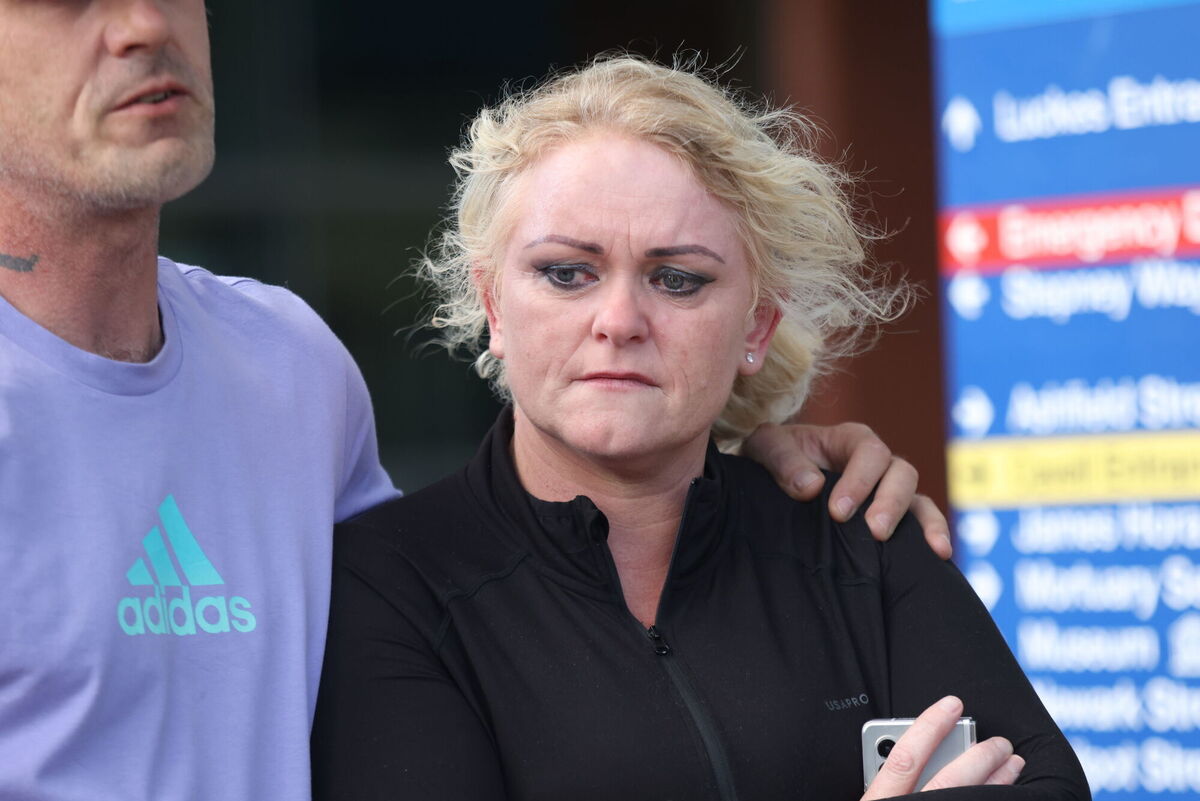
Hollie Dance, mother of 12-year-old Archie Battersbee, speaks to the media outside the Royal London hospital in Whitechapel, east London, after the European Court of Human Rights refused an application to postpone the withdrawal of his life support. Picture: James Manning/PA Wire

“In relation to the Archie Battersbee case, it has been reported that he acquired his brain injury from carrying out an online dare he had seen on a social media platform,” she said.


“One would wonder why stakeholders are not looking at banning these dangerous online dares from being posted on social media sites that put lives at risk particularly when it comes to children.”

Indeed it is crucial to remember bereaved families are at the heart of these devastating cases.

Dr Harry Barry, GP and author of Emotional Healing, about recovering from loss, trauma, grief and loneliness, said parents’ grief is lifelong.

“It is the pain of loss which is this awful, terrible, deep-seated emotional pain,” he said.

“It is indescribable. The reality is if someone can accept this sadness and pain is part of the loss, then over time people gradually start to handle it better. But you never say to a mother ‘you will be fine in five years time’, [she] will never be fine.”

He has treated parents who lost children suddenly or through lingering illnesses.

“That pain and grief is there for life, but it’s just that as time goes on, you get better at managing it,” he said.

“The loss that you experience is not just the child here and now, but the future you would have had with them. That’s one [thing that] people don’t talk about.”

He said while most children are healthy, this case is a reminder of tragic situations.

“Children might have cancer, or a rare genetic disease, cystic fibrosis, these are all the reasons a child might die younger,” he said.

“In those circumstances usually there is time to slowly start to come to terms with reality, but part of the difficulty is that your life is fundamentally changed.”

Life has changed for the worse for the Battersbee family, and we can only hope they find some peace eventually.

The Irish Hospice Foundation hosts a bereavement and loss hub which may help people affected by these issues.

More in this section

Lunchtime News

Newsletter

Keep up with stories of the day with our lunchtime news wrap and important breaking news alerts.

Cookie Policy Privacy Policy Brand Safety FAQ Help Contact Us Terms and Conditions

© Examiner Echo Group Limited