'I have never known the island without the cable car': Dursey faces anxious wait for ferry
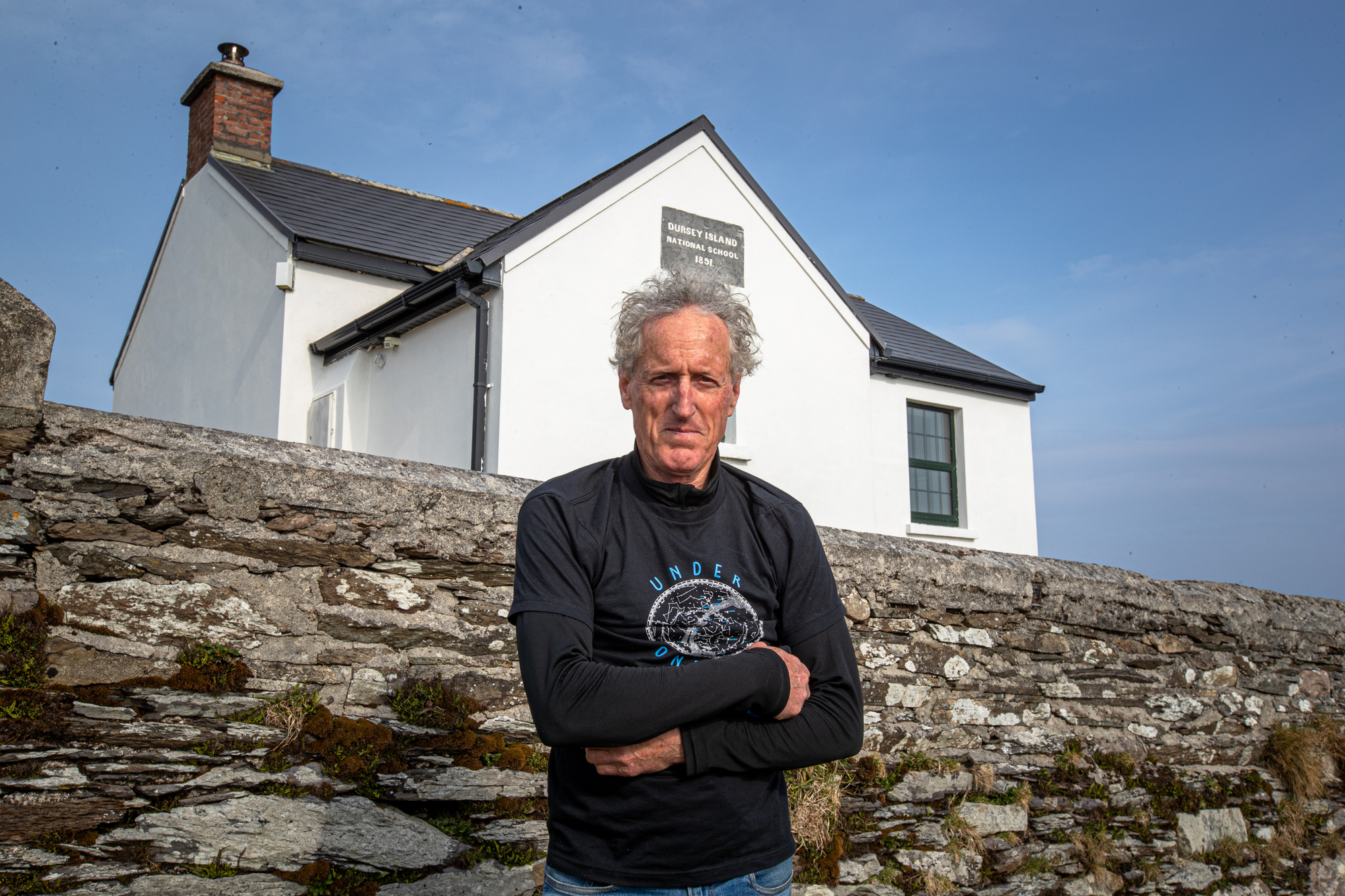
Castletownbere GP, Dr Colin Gleeson, remembers having to transport a patient with acute appendicitis during bad weather on the cable car. Picture: Neil Michael.
Dr Colin Gleeson has a memory of being on the Dursey Island Cable Car that makes him shudder - and laugh nervously - to this day.
Called out from the mainland from the Castletownbere practice he helps run to attend to someone with acute appendicitis, he remembers the day well. The weather was bad, and gusts kept buffeting the cable, sending it lurching from side to side.
The sliding doors kept opening during the crossing back to the mainland over the notoriously treacherous Dursey Sound stretch of water a few hundred feet below.

“We had got the patient on board, and they were in considerable pain,” Dr Gleeson recalls.
“Off we went but unfortunately, in the haste to get the patient into the cable car, the doors had not been closed properly. As we crossed, there was quite a crosswind that day, and with every gust, the cable car swayed one way or another.
“That meant me standing between them and the door, trying to make sure there was no way they could slide out the door. I can laugh at it now but it was pretty hairy at the time.”
The cable car’s original operator, James Sheehan, has memories dating back to its launch. The 93-year-old, who lives near Dursey, operated it for 23 years from its opening in 1969 by the then-Taoiseach Jack Lynch.

“When I operated the cable car, it ran seven days a week, 365 days a year - even on Christmas Day, and at night too,” he said.
“The islanders would wake me up on their way back from the pub, usually at weekends, and I’d get up and carry them over,” James said. “It could be 1am or 2am, and drink would have been taken but they would always behave themselves and there were no accidents.”
The cable car that replaced the one he operated can be found opposite the house of the operator who replaced James, the late Paddy Sheehan. Its green paint is faded, and it is home to hens on a strip of land that is also home to, somewhat surprisingly, a peacock.
The days of a cable car being used to carry revellers back to the island are long gone and there are now only 19 registered ESB meters, and two full-time residents, one of whom is in his 90s.

There are also around seven farmers who have cattle on the island, and a number of people who own homes on the island that they let out to visitors.
As well as Dr Gleeson - who lets out the old School House, which he bought from a nun over the phone about 20 years ago - Rosarie O’Neill also lets out her home. Sitting at the westernmost tip of Cork's Beara Peninsula, the 6.5 km-long island's only link to the mainland was its cable car.
It was also, for more than 22,000 tourists every year, the only access to what is one of the 15 so-called 'Signature Discovery Points' along the route of the Wild Atlantic Way.

“What’s the point in being upset or angry?” Rosarie asks with a shrug, supping on a mug of tea as she sits by a window, staring out over at the ocean ahead of her. “The work to repair the cable car has to be done and that’s all there is to it."
Until Wednesday, when it was announced funding would be made available for a ferry service for the islanders, Rosarie’s neighbour Martin Sheehan was not so calm. Although he is happier now, he is staying on his farm on the island to look after his cows, some of whom are calving.
“We're delighted we've got the funding,” he said.

“It's just the issue of when the ferry service will be in place and I hope that doesn't drag on.”
Farmer and electrician Joe Sullivan, who was raised on the island and still farms there with his father Michael, is also hoping for the speedy launch of a ferry service.

“I remember the joy and fascination I had with the cable car as a child."
“I have never known the island without the cable car,” said the 34-year-old said. "So, it is very odd for me that it isn’t working."