Irish healthcare makes huge strides towards understanding and tackling obesity
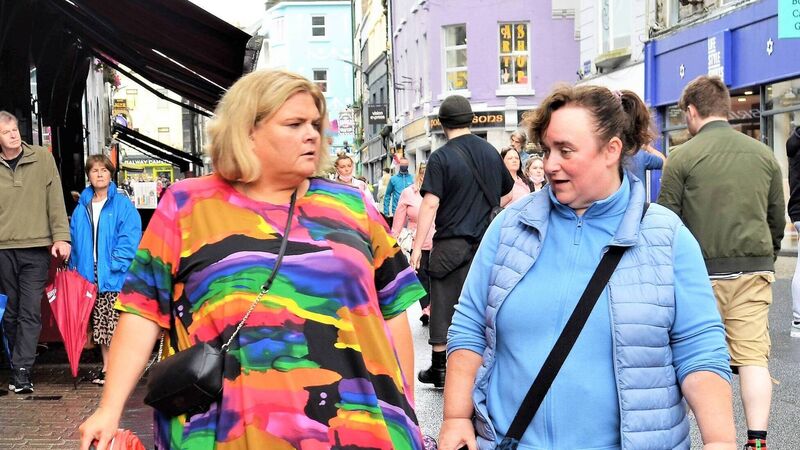
Obesity stigma, bias and discrimination are pervasive in society and in healthcare. They can prevent individuals and families from receiving the essential care and support that they need and are entitled to. Photo: Matt Love, Maura Murphy
Most people will know someone who is affected by obesity. Yet many of us do not realise the detrimental implications of blaming, shaming or having negative attitudes towards those with obesity.
Obesity and its complications can be very serious and lead to devastating physiological and psychological effects. These include low self-esteem, depression, anxiety, higher risk of eating disorders, poorer metabolic health and functional problems with mobility and movement.
Obesity stigma, bias and discrimination are pervasive in society and in healthcare. They can prevent individuals and families from receiving the essential care and support that they need and are entitled to.
One advocate, Catherine O'Sullivan of the Irish Coalition for People Living with Obesity, describes how her experience of feeling shamed by her consultant caused her to skip a crucial medical appointment. She was spurred to act by writing to the consultant, addressing the stigmatising behaviour, and received an apology.
People with the lived experience of obesity share their stories so the reality cannot be ignored.
— ICPO (@ICPObesity) March 3, 2022
Not for pity or for sympathy.
But for awareness & recognition that is vitally needed so we can ACT to improve our health, not worsen it. #WODIreland #ObesityDayEurope @ASOIreland pic.twitter.com/Od7KppHcR6
Evidence from the most recent National Child Measurement Programme in England indicates that the prevalence of overweight, obesity and severe obesity has increased since 2020 among children in primary school. There is a widening social gradient in obesity prevalence between children living in the least deprived areas compared to children living in the most deprived areas over the last two years.
Social deprivation is also a known risk factor for obesity among children in Ireland. Stark increases in the cost of living coupled with limited access to healthcare during and after the Covid-19 pandemic and the HSE cyberattack mean that the health of individuals and families are now at greater risk.
According to Dr Jean O’Connell, Endocrinologist and Chair of The Association for the Study of Obesity on the island of Ireland (ASOI): “The last two years have been difficult for everyone, but the Covid-19 pandemic has been particularly challenging for children, adolescents and adults living with obesity.
"These challenges include increased social isolation, negative impacts on sleep, activity and other health behaviours, and high levels of stress and anxiety, including understandable concerns about the increased risk from Covid-19 illness.
World Obesity Day (WOD) last year marked a significant turning point in the planning of health care services for obesity in Ireland. The Health Service Executive (HSE) in partnership with the Royal College of Physicians of Ireland launched a new model of care for managing overweight and obesity, developed by the obesity national clinical programme.
This model takes a population health approach to managing obesity which acknowledges genetics, environment and socioeconomic status as interconnected determinants of obesity. It acknowledges obesity as a chronic disease requiring end-to-end services to support prevention and treatment.
By implementing the model of care for obesity, we can ensure equitable access to care for those who need it, when they need it #WODIreland #ObesityDayEurope pic.twitter.com/a3Q9iYLR8U
— ASOI (@ASOIreland) March 3, 2022
The move has been welcomed by practitioners, with Karen Gaynor, dietetic lead for HSE health and wellbeing and the obesity national clinical programme saying it has meant great progress.
“Recruitment of dietitians to deliver community-based weight management services for adults has commenced. We are also developing a weight management programme for children and young people in two community areas.
"Care pathways for obesity have been prioritised in the Department of Health waiting list action plan. This means funding will be allocated in 2022 to develop specialist services including bariatric surgery for those with complex obesity providing the right care in the right place at the right time.”
Since its launch on WOD last year, the Sláintecare Childhood Obesity Project Team has provided free online, accredited training to over 1100 health professionals and health professional students in Ireland. This timely project is a collaboration between RCSI University of Medicine and Health Sciences, The Child and Adolescent Obesity Service in Children’s Health Ireland at Temple Street, the ASOI and the ICPO.
Through the delivery of free high-quality training (available at www.childhoodobesity.ie) the project aims to develop the knowledge of health professionals and improve access to care for children and adolescents with obesity. By improving training, the project supports healthcare professionals in providing children and families with better quality care.
Dr Grace O’Malley is the Sláintecare childhood obesity project lead. She says the training programme shows the commitment of health professionals in Ireland in addressing obesity among both children and adults, and that this is a key knowledge area for health professionals in the 21st century.
Another significant development in obesity care in Ireland in the past year was the successful application by the ASOI, in conjunction with the obesity national clinical programme, to become the European pilot site for the adaptation of the Canadian adult obesity clinical practice guidelines (CPGs) for use in Irish settings.
This project involves dealing with a wider selection of stakeholders throughout the country, with over 60 specialists across clinical practice, academia and people who live with obesity working together to adapt the guidelines.
Adapting these guidelines will help to ensure high-quality, standardised and non-stigmatising care standards to support services within the new model of care. The guidelines focus on reducing obesity stigma, something that's crucial to establishing an evidence-based approach to assessment, diagnosis and treatment.
The 2023 European Congress on Obesity (ECO) will be held at the Convention Centre in Dublin, drawing world experts together for a four-day meeting in Dublin that explores the science, prevention and treatment of obesity from all angles including the vital voice and perspective from people living with obesity.
For further information, please see:
- The Association for the Study of Obesity on the Island of Ireland (ASOI): http://www.asoi.info/
- The Irish Coalition for People Living with Obesity (ICPO): https://icpobesity.org/]https://icpobesity.org/


CONNECT WITH US TODAY



Be the first to know the latest news and updates