Irish soldiers tread the Blue Line as they maintain peace in South Lebanon

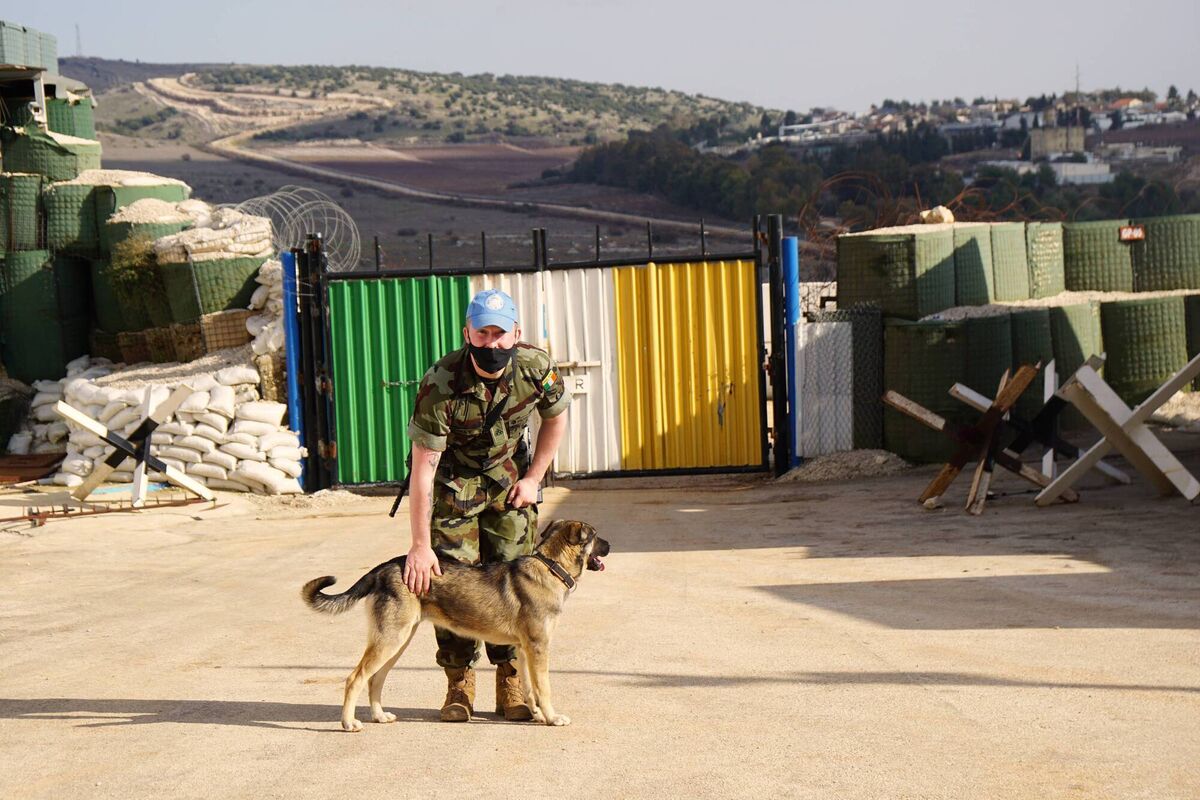
Visitors to UNP 6-52 will likely be greeted by one of the four stray dogs that Irish troops have taken in at the outpost. 'They’re great for detecting people on the road before troops do,' says an officer at UNP 6-52, 'but they don’t really have a military purpose, they’re for morale.' Pictures: Hannah McCarthy
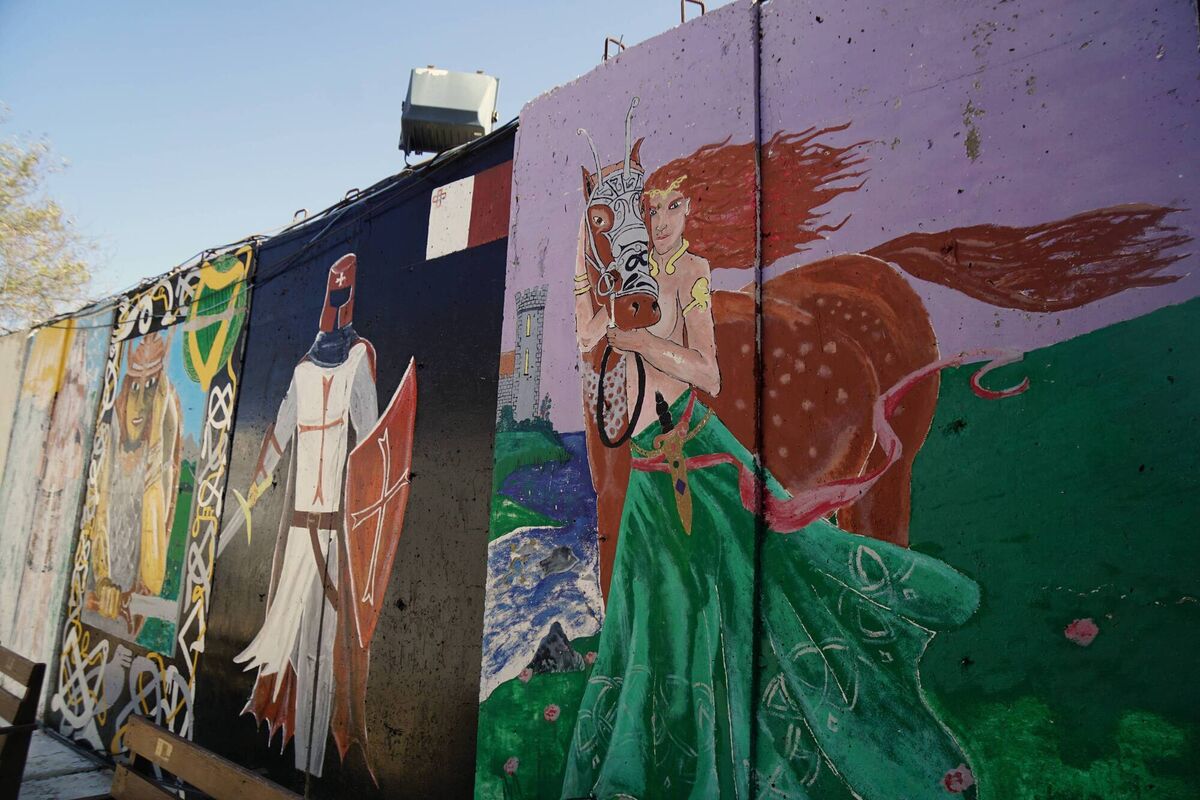
Queen Meadhbh of Connaught and Cú Chulainn, the famed warrior of Ulster, decorate the walls of Camp Shamrock. The Celtic figures were painted by Captain Tommy Dillion while stationed at the UN base in South Lebanon.
Capt Dillion’s bright murals sit alongside a depiction of an Irish peacekeeper receiving a flower from a local child. The Banksy-style art was designed by Private Danny O’Donoghue during his free time on deployment.
Despite the name and Celtic artwork, Camp Shamrock is a European melting pot where 330 Irish troops serve alongside members of the Polish, Hungarian, and Maltese forces as part of the 500-strong Irish-Polish Battalion.
The battalion is stationed in Lebanon as part of the UN force known as Unifil, the largest peacekeeping mission in the world. Most members of the Defence Forces will serve with Unifil during their career and multiple times — Sergeant Major Stan Hurley is currently on his 18th tour in Lebanon.
Despite retention and recruitment issues at home, overseas deployments remain popular and are given priority for staffing by the Defence Forces.
After returning from deployment to the Congo, Captain Deirdre Fahy from Cork City spent just four months in Ireland before deploying once again to Lebanon last November.
“Overseas deployment is what you train for,” says Capt Fahy, the tactical operations centre director for the Irish-Polish Battalion. “It’s an opportunity to put into action everything you’ve learnt. It gives people a real sense of purpose.”
The report by the Commission on the Defence Forces published earlier this month, however, noted that if resources are not increased, “it will severely constrain the capacity of the Defence Forces to maintain its overseas commitments”.
Days at Camp Shamrock start at 6.30am, when most troops commence their duties. Everyone is required to be back on base by 8pm, unless out on patrol.
Irish and Polish chefs cook on alternate days. On the menu this week is chilli Mexican beef and chicken fajitas. (Irish troops occasionally serve alongside Italian peacekeepers and their pizza and coffee are highly regarded — “We made them Irish coffees in return,” says one officer.)
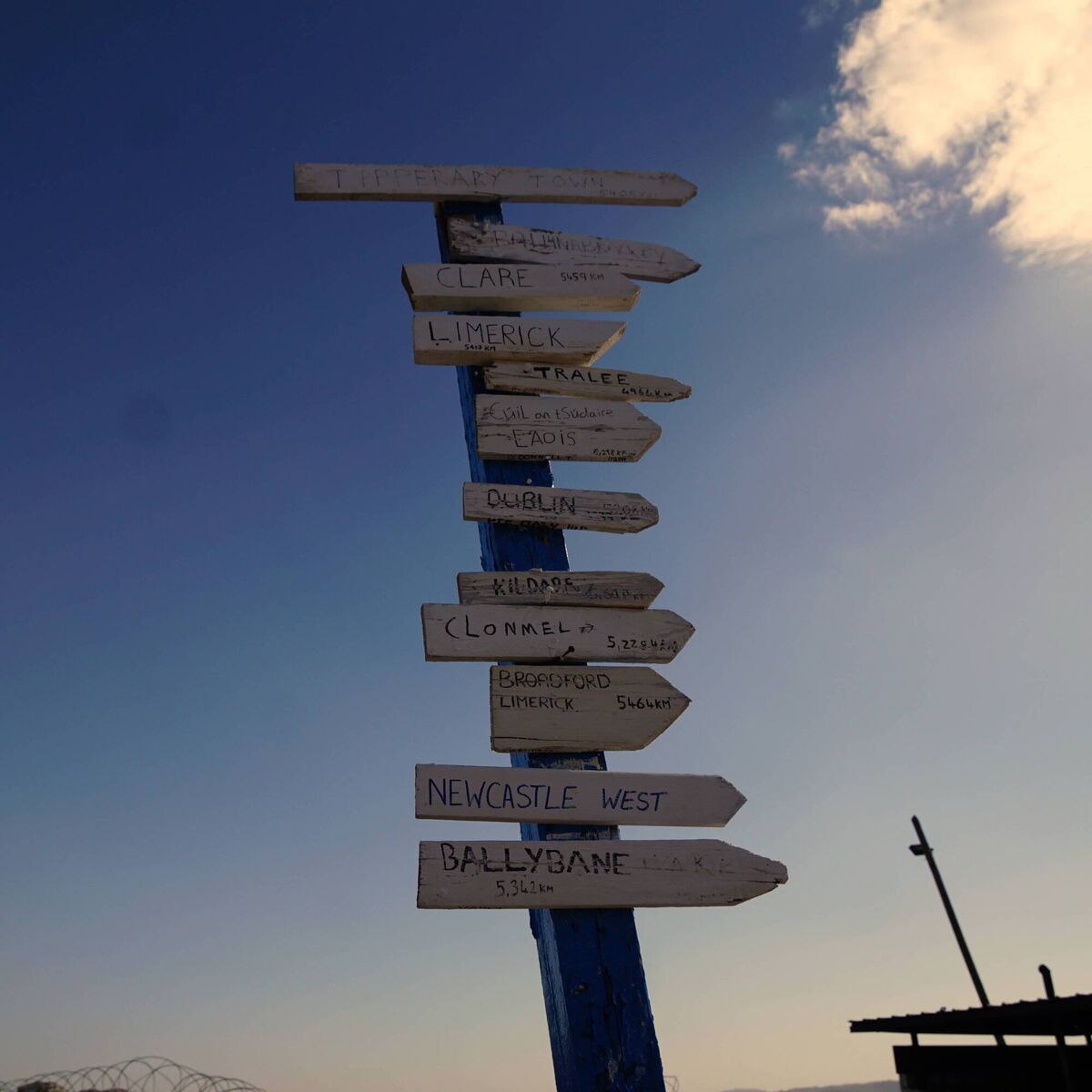
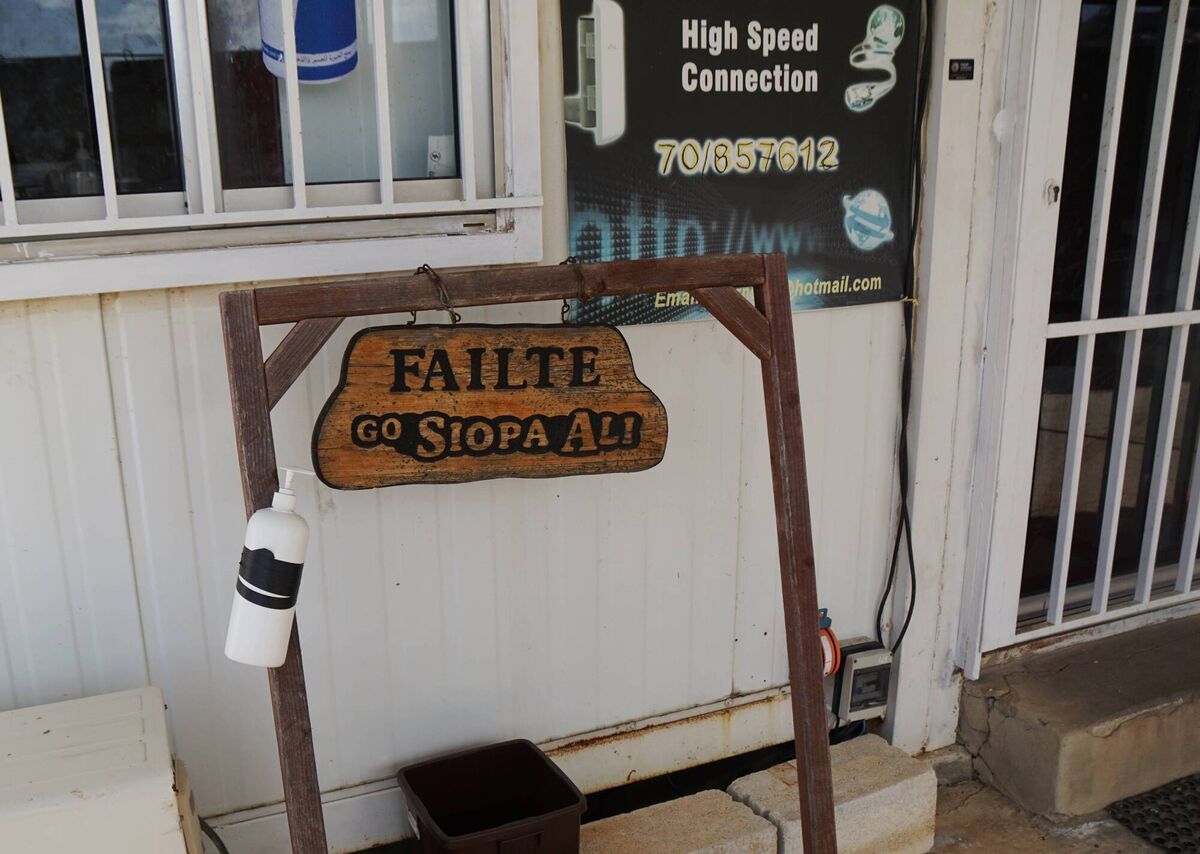
A sign saying “Fáilte go Siopa Ali” is fixed to the front of the on-site shop for Irish troops. The owner, Ali, has run a shop for Irish peacekeepers since 1982 — “I was still a teenager,” he says.
“He speaks Arabic, French, English, Hungarian, Finnish, and a little bit of Irish,” says an officer. “He’ll get you anything you need.”
Shops at the base sell commemorative bottles of Lebanon’s famous Ksara wine for members of the Irish-Polish Battalion, who have the choice of a Cabernet Sauvignon or a Chateau Blanc de Blancs. Irish troops won’t be able to try either wine though until they finish their deployment.
Following an alleged assault in November, a ban on alcohol during deployment at Unifil was introduced for Irish troops. A similar prohibition has been in force for other overseas deployments, like in Syria, due to local sensitivities around alcohol.
The informal bar in the mess hall for off-duty troops has since been stopped. “It used to be great in the evenings,” says one officer wistfully.
While most of the Irish troops are stationed at Camp Shamrock, others are based at outposts along the Blue Line that separates Israeli and Lebanese-controlled territory. The line is not a formal border but a line of withdrawal for Israeli forces who have repeatedly invaded Lebanon.
Peacekeepers do two-month rotations at UNP 6-52 which sits in something of a hotspot along the Blue Line. The UN outpost is in territory previously controlled by Israel and beside the town of Maroun al-Ras. The town is a stronghold for the Muslim Shia militia backed by Iran known as Hezbollah.
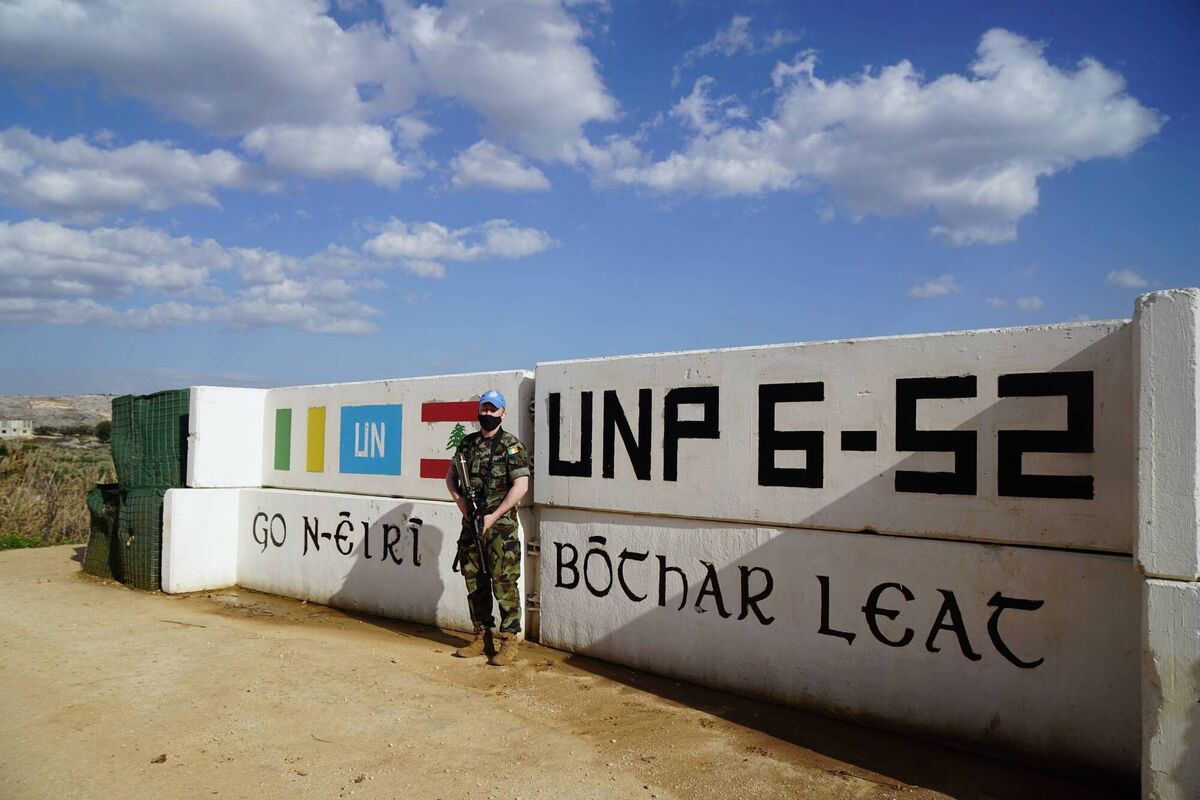
The militia suffered heavy casualties in the town during heavy fighting with Israeli forces in the 2006 war. As a tribute to those who died, Iran funded the construction of a park that was imaginatively named Iran Garden, and which overlooks UNP 6-52.
Visitors to UNP 6-52 will likely be greeted by Bella and Lily; they’re two of the four stray dogs that Irish troops have taken in at the outpost.
“They’re great for detecting people on the road before troops do,” says an officer at UNP 6-52, “but they don’t really have a military purpose, they’re for morale.”
The dogs’ health is looked after by a vet at the Unifil headquarters in Naqoura.
Private Alan Cosgrave from Limerick is stationed at UNP 6-52 as part of his first overseas deployment. “My mum’s at home crying but my dad’s delighted to have a break from me,” he says.
“You’re away from home but you’re home,” says Pte Cosgrave of life in Lebanon. He says the more experienced Irish peacekeepers are always willing to sit down and explain more about the history of the areas you’re patrolling.
“Patrols are your best chance to see with your eyes what’s going on and to see the different villages and towns,” says Pte Cosgrave.
While there has been relative peace in South Lebanon since the 2006 war between Israeli forces and Hezbollah, the area that the peacekeepers monitor remains volatile.
Last May, Irish peacekeepers were forced to take shelter in bunkers as Israeli and Palestinian forces traded fire following the outbreak of the Gaza War.
There has also been a recent uptick in altercations between locals and Unifil patrols. Videos have circulated online of people stomping on UN vehicles and pelting them with stones, while a Ghanaian soldier was injured in the most recent attack at the end of January.
The incidents have happened in Hezbollah strongholds such as the town of Bint Jbeil (which is surrounded by a ring road that Irish peacekeepers have labelled “the M50”).
“It’s hard to characterise the altercations,” says Lieutenant Colonel Fiacra Keyes, the officer commanding the Irish-Polish Battalion. “Unifil brings a lot of money to the area and it’s in no one’s interest for them to leave.”
Local mayors said that those who’ve attacked Unifil patrols represent a minority and are not co-ordinated or controlled by groups such as Hezbollah.
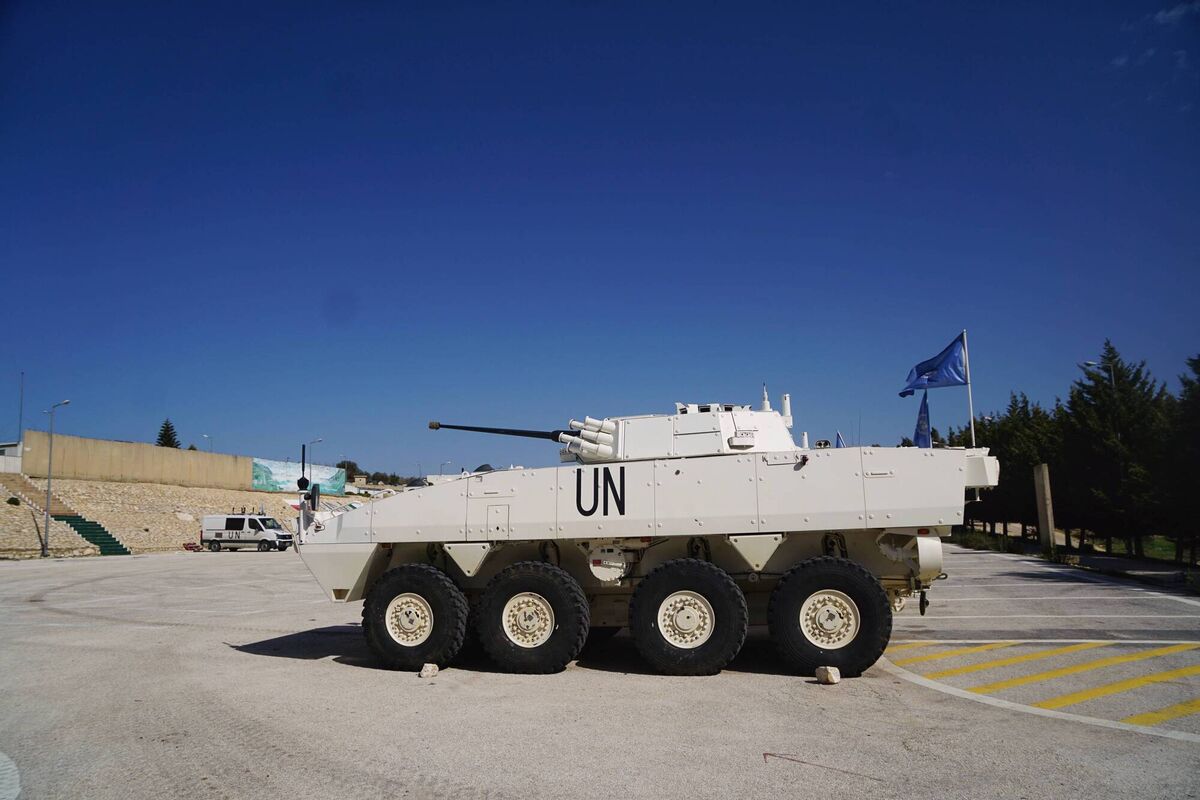
Lt Col Keyes admits that the incidents may well represent a form of demonstration by locals with genuine privacy concerns about the large UN tanks trundling along their roads, which, combined with dire economic conditions in Lebanon, may be fuelling tensions.
Irish troops typically use smaller and less intrusive vehicles than other forces and Lt Col Keyes notes that an Irish patrol has not yet been involved in any of the recent attacks on peacekeepers.
The best peacekeepers are long-serving soldiers and Irish troops have a long history in South Lebanon, he says. “We’re not afraid to get out and say hello and that’s stood to us with the local communities here.”
“Covid restrictions have made overseas deployments more difficult,” says Capt Fahy. “You also have no leave which is the biggest shift.”
Camp Shamrock saw a small outbreak of Covid in November and December and booster vaccines are due to arrive in the next few weeks.
The UN has adopted a conservative approach to quarantine periods for peacekeepers to ensure they don’t infect the local community.
Peacekeepers are currently required to undertake mandatory quarantine when they arrive in Lebanon, on top of the two weeks' quarantine they complete in Ireland before deployment. The quarantine period is due to be reviewed by the UN in March.
The lack of leave has added to the pressure overseas deployments already place on troops with families, who remained on deployment over Christmas.
“It’s very challenging," says Commandant Ian Harrington, Chief of Staff of the Irish-Polish Battalion. “You are basically handing over the running of a family to one of the spouses. It’s challenging for them and their sacrifice at home may not be recognised as much as those of us who are serving overseas.”


CONNECT WITH US TODAY



Be the first to know the latest news and updates