Yvonne Redmond: Taking a trip into mental health treatment

Could Ireland become a centre for psychedelics? A trial in Dublin may see magic mushrooms, or psilocybin, play a role in the future of mental health services
A placebo-controlled, double-blind trial of magic mushrooms, part of a global effort to prove the compound’s efficacy in treating mental illness and establish its viability as an alternative to antidepressants, has been taking place in Tallaght, Dublin.
A placebo-controlled, double-blind trial of magic mushrooms, part of a global effort to prove the compound’s efficacy in treating mental illness and establish its viability as an alternative to antidepressants, has been taking place in Tallaght, Dublin.

IN A tiny room, in a small medical centre, in a south Dublin suburb, a group of Irish people is becoming part of psychedelic history.

Soft furnishings, quiet, lilting music, and muted, calming colours welcome patients across the Tallaght threshold, where they are greeted by trained instructors, to guide them on an undertaking that promises the possibility of lives changed forever, in undefined ways, unique to each individual.

It sounds like shamanistic magic. Instead, it’s the mushroom kind: A placebo-controlled, double-blind trial of magic mushrooms (or psilocybin, to the scientific community), part of a global effort to prove the compound’s efficacy in treating mental illness and establish its viability as an alternative to antidepressants.

The Irish research effort is one of several internationally, backed by Compass Pathways, a UK-based mental health company commissioning some of the largest clinical psychedelic studies in the world.

Led by doctors from Trinity College Dublin and co-ordinated by the Irish Clinical Research Platform, the Dublin site was the first in the network to recruit patients for the study’s phase II last summer. After releasing the findings last month, preparations are under way to begin phase III this year, which is expected to involve several hundred people at sites worldwide and to receive applications from many, many more.

Even with a conscientious and deliberate effort from the organisers not to advertise or publicise the most recent phase of the trial, they were inundated. In Ireland alone, hundreds applied, though only 20 people were ultimately chosen due to strict eligibility criteria.

The woman in charge of the Irish arm of the trial is not surprised. Veronica O’Keane, a professor of psychiatry at Trinity and a practising consultant, says the demand for change in the mental health treatment space is as high among patients as providers, with both groups crying out for support, especially for the unmet needs of those with treatment-resistant depression — depression that fails to respond to standard therapy and at least two antidepressants.

“The current treatments we have for depression and anxiety — antidepressants, antipsychotics, mood stabilisers, and even benzodiazepines — are very effective in tackling the more severe forms of depression but less effective to deal with the forms of depression that people are more familiar with, the ones that arise from trauma and from the stress and strain of life, from the intolerable situations the world sometimes present to us,” says Prof O’Keane.

“And I think psychedelics are going to play a role in treating this form of depression that hasn’t yet been addressed.

“So that’s where Compass Pathways comes in. They have the money and the resources to conduct big trials and that’s what we need, to prove scientifically that psychedelics are effective, or not effective. People have profound experiences, but unless that is tracked scientifically, it has very little meaning in terms of creating access to treatments.”

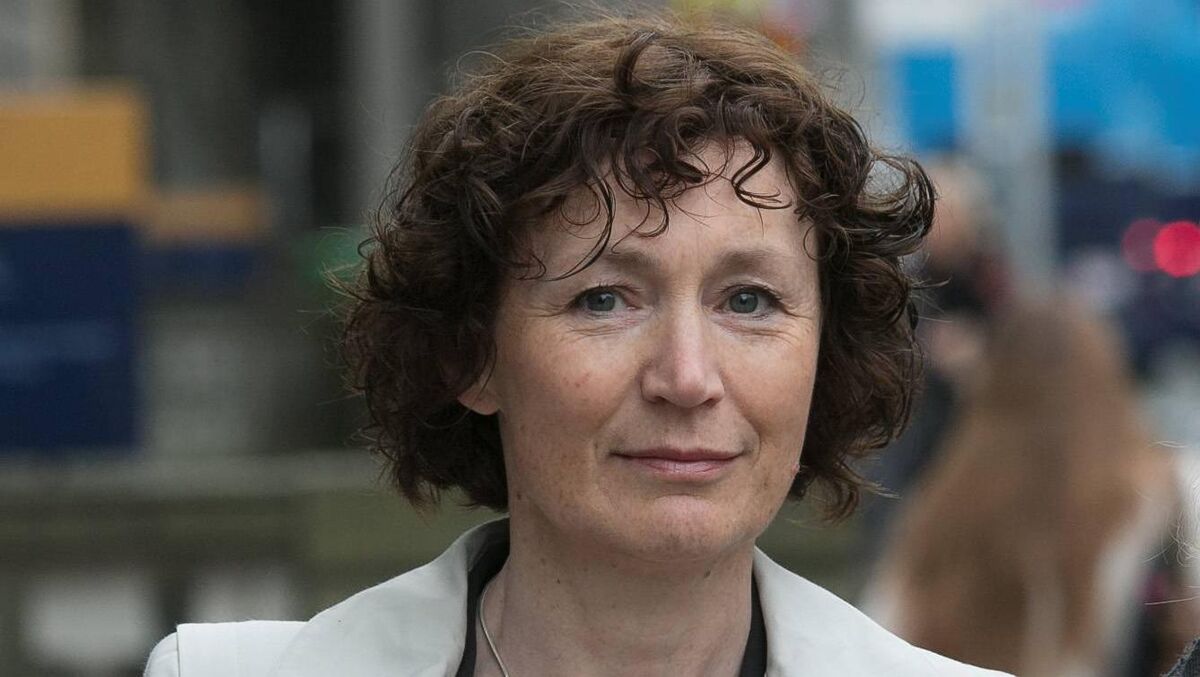
Veronica O'Keane: 'It can be a feeling of being, in a sense, released from your inner existential angst and sort of transcending that.' Picture: Gareth Chaney Collins

So how does it work? In terms of the trial, participants must meet certain criteria when applying, then eligible patients are chosen, coached through six preparatory sessions before taking psilocybin and four sessions afterwards, along with an “intense” three-month window of follow-ups and check-ins from the team, thereafter.
In terms of the experience, it takes place at Trinity’s community clinic in Tallaght, where a tranquil, quiet external environment allows patients to focus on the internal experience, sometimes referred to as a trip, which can differ for everybody,

“What it does is stimulate receptors in the brain, and there is a shift in circuitry, from inward to outward focus, so the person who is having a trip will experience an increased connectedness," says Prof O'Keane.

“It can be a feeling of being, in a sense, released from your inner existential angst and sort of transcending that. We keep people in for at least six hours after they’ve taken the medication. And then we do insist that they’re escorted home and that there will be somebody at home that evening, because it can be a very powerful experience.”

She recalls two particular patients, both male, both severely depressed, and on very high doses of prescription medication. One was high functioning, the other reclusive and isolated, for the best part of a decade. Both transformed, says Prof O’Keane, after receiving psilocybin treatment.

“They had exceptionally good responses,” she says. “The man who had the high burden of social stress, if you like, never went back on antidepressants. The other man, who was very isolated, had what we’d call biological depression, and he did need to go back on antidepressants — he will always need them — but what it did for him was change his wiring and his outlook. 

"It gave him an insight into what it is like to be connected to the world, and a pattern of thinking that took off after that.

He developed a new way of being, and a door to a new neural pathway that has been terribly important for him ever since.”

Prof O’Keane is passionate about the field, having trained under Ivor Browne, a well-known critic of the overuse of antidepressants and an early adopter of psychedelics as experimental alternatives. She is hopeful increased research will lead to a society and health system that can offer much more in the way of acceptance, choice, and hope to the many millions of people suffering from mental illness worldwide.

Depression alone affects close to 300m people, according to the World Health Organization. And the pandemic hasn’t helped matters, causing an estimated increase of up to 25%.

Factor in that as many as a third of these cases are treatment-resistant, and the scale and significance of the unmet need becomes clear.

These figures, as well as personal experience, gave life to Compass Pathways to begin with.

“In my private practice, I wrote a lot of prescriptions for antidepressants,” says Ekaterina Malievskaia, a medical doctor who co-founded Compass Pathways with her husband, George Goldsmith, after watching their son struggle to find the support he needed.

“When our family became on the receiving end of mental health care, I thought, how hard could it be? We can whip this depression and OCD into shape in no time. And it was the hardest thing that I’ve ever encountered in medicine, including intensive and critical care.

“I remember sitting in the hospital with Harvard-trained psychiatrists who were shaking their heads, saying, your son may or may not get better, and I was the only one in the room who refused to accept that. I don’t know what was more traumatic, to see my son struggling or to actually realise that mental health care and psychiatry are ages behind modern medicine as we know it. And so that’s how the company was born.”

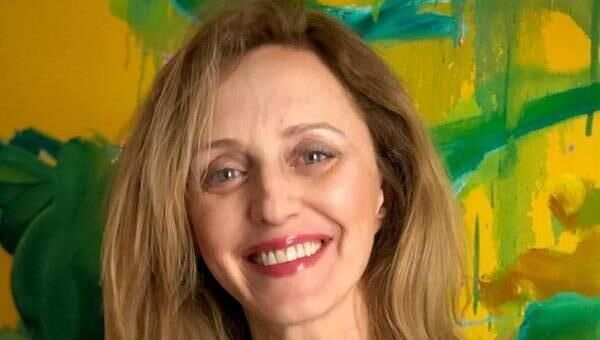
Ekaterina Malievskaia: 'I don’t know what was more traumatic, to see my son struggling or to actually realise that mental health care and psychiatry are ages behind modern medicine as we know it.' Picture: Compass Pathways

In her quest to find answers for her son, Dr Malievskaia found hundreds and then thousands of other people who all had a similar story. Realising there was an opportunity in the unmet need, the company looked to scale. It wasn’t difficult to find support.

“We were going into the origin story of the company in funding meetings and we saw the heads nodding and we saw the eyes welling up — hedge fund managers and investment bankers would share their personal struggles with mental health. Everyone had a story. So we were funded 15 minutes into our first pitch. No one had seen what we were proposing.”

Then came a bigger win for the medical startup — a nod from the US Food and Drug Administration.

“The FDA gave us a breakthrough designation for psilocybin for treating resistant depression,” said Dr Malievskaia. “It was a great win, not only for us, but also for the field.

“And the signal was very clear that they were serious about mental health. They were willing to put political and social misconceptions aside and it was the same with investors; we were working collaboratively and we were developing a common language.”

And from that common language and the growing body of scientific research came a word not often used in mental health circles: Cure.

Psilocybin isn’t the only psychedelic being explored as an alternative mental illness treatment, nor is Compass Pathways the only player in this space. LSD is being researched by companies like MindMed; ketamine use is being explored by Canada’s Field Trip Health and trialled here in Ireland by another Trinity professor, Declan McLaughlin; and MDMA, or ecstasy, is under the microscope in the US. It was the result of a trial there, six months ago, that prompted talk of the C word.

“It was curing post-traumatic stress disorder at a rate of 67%, so two-thirds of patients involved no longer qualified for PTSD afterwards.

“And so if you look at what we would normally use for PTSD, they’d be on two or three antidepressants, going to a couple of therapy appointments each week, for the rest of their lives,” explains Lynn Marie Morski, president of the Psychedelic Medical Association, a network of healthcare workers interested in the use of psychedelics in medicine.

Many hurdles 

While she says the results of trials like this are a welcome step forward, she also cautions that proving treatment efficacy is just one of many hurdles for the industry. Along with needing all the right regulatory approval, the biggest challenge will be education and awareness, not just for patients, but their practitioners too.

“This is why I ask people, if you’re going to your clinician about a mental health issue, mention psychedelics and see what they think or what they know about it,” says Dr Morski. “Because once we do have these medicines approved, if doctors and therapists don’t know about it, they’re going to keep handing you the same antidepressants or antianxiety drugs that they always have.”

That said, the lack of awareness around what is still a very new development doesn’t mean there won’t be significant interest from practitioners when the time comes, according to Dr Malievskaia, who describes existing psychiatry methods as “a very limited toolbox”.

“[Doctors] feel extremely frustrated,” she says. “They want to find effective treatments for the population they’ve been serving for years. It’s extremely disheartening for a physician who cares. So for them, when they see the results in patients who come back from the trials, patients who would otherwise never have gotten better, it just speaks for itself.”

Promising research results aside, it isn’t all smooth sailing, for Compass Pathways or the industry. The company hit headlines over its patent applications, sparking a debate over intellectual property rights, along with accusations that big businesses are trying to dominate the market, squeezing out advocates and activists.

Such controversies might be ascribed to simply the predictable growing pains faced by any company in this space, but the question of cost is one that never goes away and will likely remain long after other issues have been ironed out — how much will treatments be and who’s going to pay for them?

“I think it’s a case of having to rethink the concept of cost, right?” says Dr Malievskaia.

“We’re not looking at this model thinking, How much does it cost us, we need to make a certain markup on this treatment, etc.

“We’re looking at it as creating value for health systems and then the whole ecosystem benefits. 

It’s a shift in perspective where we see that these treatments create value differently.”

It’s a suitably diplomatic answer from a person running a market-leading company valued at over €1bn. But advocacy groups largely agree and are looking at the long game. The global antidepressants industry is worth €12bn, prescription rates are going up, but depression rates are not going down.

Faced with an intractable mental health crisis, those invested in the future and success of psychedelics are looking at them as… well, an investment.

“Consider something like disability benefit in the United States, which pays out so much for people with depression and PTSD,” says Dr Morski.

“Because sometimes it’s so severe, they’re unable to be productive members of society. If you cure them, they can go back to work; then look at how much you’re saving society just in that realm. So really, these treatments are very cost-effective. It’s just a whole new kind of paradigm we’re going to have to get used to.”

Fear and stigma

That acclimatisation may take some time. The benefits of psychedelics may “speak for themselves” in scientific and medical circles, but

for the general population, fear and stigma could hold back widespread acceptance for a still illegal substance, which has been demonised for decades.

In the US, it’s been 50 years since president Richard Nixon declared a war on drugs and only a couple since some cities and states started raising the white flag —since 2019, a range of psychedelics have been decriminalised in Denver, Detroit, Seattle, Washington DC, parts of California, and the state of Oregon. Closer to home, Spain and Austria allow possession of psilocybin, while Portugal decriminalised drugs two decades ago.

In Ireland, where access to cannabis on medical grounds has been the subject of such debate, are people really ready for a world where GPs recommend psychedelics?

While some experts recommend a cautious approach and are wary of the possibilities of bad trips, addiction implications, and the overzealous interpretation of early evidence, the College of Psychiatrists of Ireland, the national body for the profession, when contacted, said it does not have a position on therapeutic psychedelic use at this time.

Regardless, Prof O’Keane believes Irish people are more forward thinking than we might think.

“First, it’s important to remember, psychedelics are always administered with psychotherapy, so you’re not just giving somebody a shot in the arm or giving them a tablet and sending them on their way,” she says.

“And yes, there will always be people who will oppose the introduction of any sort of drugs. There will be that lobby.

“But we’re also part of a world that’s changing and a much more mature Irish society than 10 or 15 years ago. We’re much more able to look at reality and acknowledge it. And even if we don’t like it, we look to more vulnerable people in society and look at ways of helping them.”

Prof O’Keane’s optimism is good news for a country she predicts will be front and centre in the global movement to advance these kinds of treatments and, she hopes, home to a new Irish centre for psychedelics within the next few years.

It is going to be a big part of the future of mental health services. We’ve got young researchers and young clinicians in Ireland now who are expanding on this work and are solely focused on its advancement.

“We are at the centre of some really groundbreaking studies, really seminal work that will be cited long into the future.”

Whatever the destination for psychedelics in mainstream medicine, Ireland is poised to be integral to the journey, one that certainly seems likely to be an interesting trip.

x

More in this section

Lunchtime News

Newsletter

Get a lunch briefing straight to your inbox at noon daily. Also be the first to know with our occasional Breaking News emails.

Cookie Policy Privacy Policy Brand Safety FAQ Help Contact Us Terms and Conditions

© Examiner Echo Group Limited