'I haven't been home for over five years': Undocumented get chance to come out of the shadows
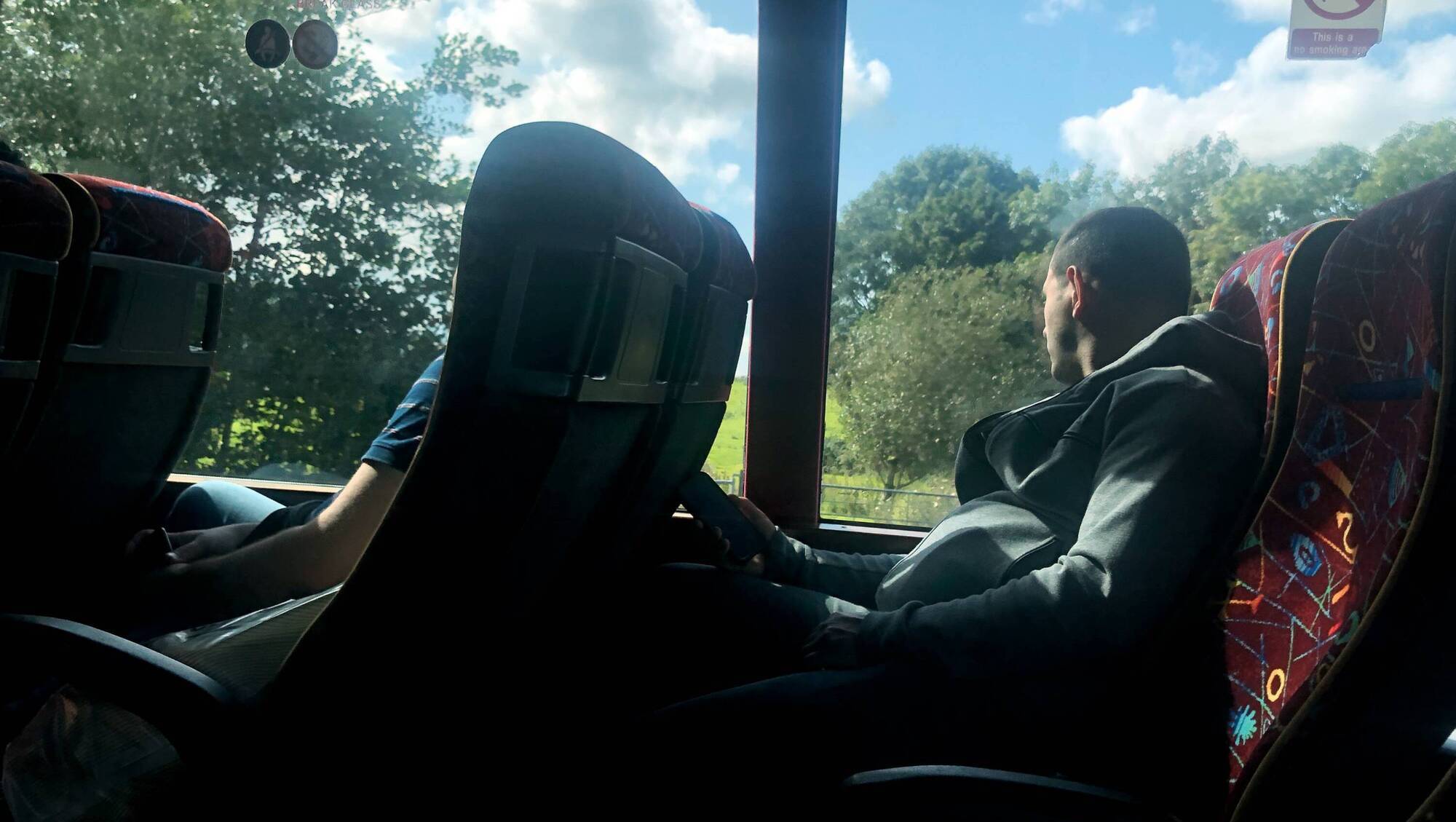
As many as 15,000-17,000 undocumented migrants could be living in Ireland according to some estimates.
Quite unusually for a Government statement, especially in current times, the announcement from Justice Minister Helen McEntee of a “once-in-a-generation scheme” on 3 December 2021 was welcomed in all quarters.
This once-off scheme would give long-term undocumented persons without a current permission to remain in Ireland the chance to regularise their status, access the labour market and begin their path to citizenship.
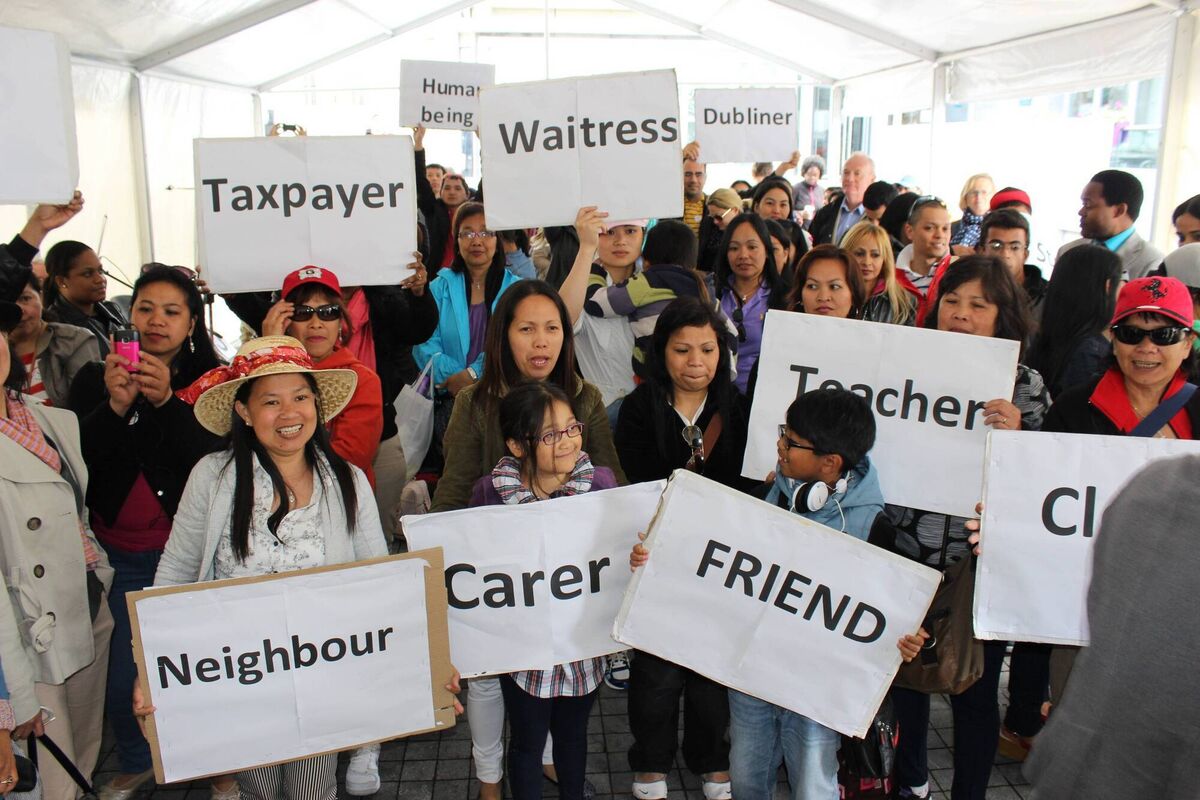
It would mean people who worked as carers, on building sites, in childcare — some of whom have lived in Ireland for many years — would get the chance to do some of the basic things many take for granted. They’d be able to work and get paid at least the minimum wage, get a driving licence, be permitted to visit home and return to Ireland.
To meet the criteria, they’d have to have lived in the State without immigration permission for four years. Or three years in the case of those with children on the date the scheme opens for applications later this month.
And it wasn’t just undocumented who’d be able to access the scheme.
Individuals with an outstanding application for international protection who’d been in the asylum process for a minimum of two years could apply. This meant that the scheme would also apply to people living in direct provision for two years or more.
Ms McEntee said at the time that thousands of migrants and their families who are living in Ireland would be eligible for the scheme.
“Given that those who will benefit from this scheme currently live in the shadows, it is difficult to say how many will be eligible, but we are opening this scheme for six months from January to allow people come forward and regularise their status.
“It will bring some much-needed certainty and peace of mind to thousands of people who are already living here and making a valuable contribution to our society and the economy, many of whom may be very vulnerable due to their current immigration circumstances.”
Ms McEntee said that undocumented persons may be reluctant to seek medical assistance when ill, support from the gardaí when they’re a victim of a crime, or a range of other supports due to their status.
This new scheme would help to change that, she said.
There was a warm welcome to the news from the NGOs working in this field, many of whom had been campaigning for the rights of migrants in Ireland for many years.
Nasc CEO Fiona Finn said the announcement would bring “equal measures of joy and relief to individuals and families across Ireland who have been living in the shadows for years”.
Ms Finn said the scheme would have “a transformative impact” on the lives of undocumented families who will be “finally be able to take their full place in society”.
The Immigrant Council of Ireland said it would be “profoundly transformative” for thousands of migrants.
The JFU chairperson Tjanasi Potso said: “This scheme will allow us to live securely in our homes, no longer in fear that the next knock at the door will be someone to take us away.
“We can stand up for our rights at work, our children can grow up safely, and we can visit our families for the first time in many years. We are grateful to all the supporters and allies who have campaigned with us.”
On the back of the announcement, organisations in this field began to receive queries from those who may be eligible on what their next steps should be.
John Lannon is CEO of Doras, which provides support and advocates for people from a migrant background in Ireland.
He said that the response to the announcement of the new Government scheme has been huge.
“We have had a lot of queries over the Christmas,” he said. “And a lot in the run-up to Christmas. We are going to have to do a lot of work now to help people process their applications.”
Mr Lannon said that as the scheme is only open for six months, it’ll be important to spread the word far and wide to ensure no one misses out.
Well, it’s difficult to accurately say how many undocumented people there are in the country, but it’s safe to say many thousands could benefit from the scheme.
As many as 15,000-17,000 undocumented migrants could be living in Ireland according to some estimates, including 3,000 children, and that many could be in employment which is likely low paid.
Undocumented persons aren’t entitled to the minimum wage, can’t avail of most social welfare payments and cannot leave the country as they may not be permitted to return.
Over nine in 10 (93%) were in employment to support themselves; 27% worked providing care to older people in private home settings; 10% worked in childcare; while 5% worked in construction.
If they are granted immigration permission under the new scheme, it will give them unrestricted access to the labour market and have those years they’ve already been here reckonable for the purposes of pursuing Irish citizenship.
That’s not including the roughly 5,400 international protection applicants housed in Direct Provision at the end of November. To be eligible for the scheme, applicants must be living in such circumstances for at least two years.
So it’s clear that the number of applicants may run into a five-figure number for this scheme.
Syed* is a Bangladeshi national who’s lived in Cork for almost six years.
The university-educated man was refused his first visa after a 10-month period.
He applied for a review of his case, but was left waiting three-and-a-half-years for this review to be completed.
When he was informed out of the outcome again in October 2020, he was disappointed to find again that it was a refusal.
“At the time, they didn’t give me a deportation letter,” he said. “I’m not sure if it was because of Covid, but they didn’t send one.”
Syed and his friends closely watched the government formation talks as, about a month before the deal was finally agreed, it was reported that Fianna Fáil, Fine Gael and the Greens were discussing plans for a regularisation scheme for the undocumented.
“We’ve been waiting on that scheme, from when it was first announced [in the programme for government],” he said.
In all that time, he’s not been able to go home. And, in that time, five of his close relatives have died.
“When you have something important back home, parents or family members sick, you can’t go visit them,” he said. “My cousin was 24 years old when he died. I can never forget that.”
But, with the scheme that could now regularise his status, Syed is feeling a lot more positive. In particular, he’s looking forward for the opportunity to visit Bangladesh again and then being able to return home to Cork.
“Everyone I know, they’re all so happy,” he said. “We are grateful to Minister Helen McEntee, and Minister James Browne for pushing this. And we’re thankful to the Green Party for pushing this scheme.
“When we will be [regularised] and in the system, it’ll be good for everyone. Good for us, good for the people, good for the government.”
Access to healthcare will be a big factor, according to Syed. Particularly during Covid times where undocumented people with symptoms may have felt less willing to come forward for a test or others may have felt unwilling to come forward for a vaccine because they don’t have a PPS number.
Getting their status regularised will give them the right to do things that others take for granted, he said, such as getting paid the minimum wage, getting a driving licence.
“I know people who work hard, 12-14 hours a day who might get €5 or €6 an hour,” Syed said. “Getting the minimum wage [of €10.50 an hour] will make a big difference.
“People in my position, we will work and we will give back. People will pay their taxes. I’ve been thinking many times that when I start work properly, I’ll pay my tax every week, keep my payslips and after a few years I can get my Irish passport.
“It’s so many things with it that will leave a very good impact on our lives.”
Zhang* is a Chinese national, who has lived in Ireland for nine years.
He first came on a student visa to study in Ireland, and had taken a separate course at the same time to improve his English.
“For people outside Europe, the fees are very high to go to college here,” he said. “My family is not rich so I had to work hard at the same time to try to pay for college.”
Zhang had to keep up with the pressures of his studies while attempting to earn the tens of thousands of euro to pay for these studies at the same time, and did not complete his course.
His visa then expired, and he’s been living here illegally since 2017.
He has worked jobs, mainly in hospitality, where he sometimes has gotten paid as low as €4 or €4.50 an hour.
“But you have to do it,” he said. “There’s not a lot you can do about it. You can’t legally get a job.”
Left with no other real possibility of regularising his status, the new scheme will be a game changer for Zhang if he is approved for it.
“I was really happy, and really excited,” he said. “I really can’t wait. If I get this piece of paper, it’s the chance to get a job, do all kinds of things. There are other people with families in harder situations and this will help them so much.”
Zhang said he loves living in Ireland and feels strong ties, having already gotten married while living here. But the opportunity to also visit home again, while being able to return again, is a tantalising prospect.
His grandmother has recently been unwell, and he is particularly excited at the prospect of seeing her again.
“There’s been lots of crying [over the last while],” he said. “I really appreciate this. I hope it works. I think I can make it. I was looking at all the requirements. I know it takes time for the immigration to check all your papers. But I hope all the people can benefit soon. It’ll make lots of people really happy.”
The Department of Justice said in a statement this week that further details on the scheme and when it would begin will be announced “shortly”.
While that information is awaited, there are a number of elements of the scheme that remain remain to be clarified. These include how long the process will take, if family reunification is possible for those awaiting results on their asylum bid who also apply for this scheme.
These further details will also be published on the Department’s Irish immigration website “shortly”, a spokesperson said.
One notable reaction to the scheme also came from business group Chambers Ireland, which urged for the creation of a formalised process to fully regularise all undocumented persons from now on.
Chief executive Ian Talbot said a process needs to be in place for “all undocumented people, not just those who meet the narrow requirements of this ‘once-in-a-generation’ scheme”.
“What happens to those who fall just outside of these parameters to apply?
Providing a proper mechanism for workers and families to regularise their situation going forward would be “crucial”, he added. So far, no such initiative has been forthcoming beyond the upcoming six-month scheme.
John Lannon, from Doras, said that it’s important that the department does everything it can to make the scheme accessible so that organisations aren’t left picking up all the slack and risk some missing out on what’s been dubbed a “once-in-a-generation” opportunity.
“I think the department needs to be proactive in ensuring that everybody who deserves access to these schemes has the opportunity to do that,” he said.
Such initiatives can put a strain on charities in the area, Mr Lannon said, particularly in the area of translation so it would be incumbent on the department to ensure the relevant information was readily available in a number of languages.
“We now need in the first instance to make people aware of the scheme,” he said. "We do find that we’re explaining it to people, in some cases making people aware of it in the first place.
“We’re stretched because there’s a limit to the languages we have got as well. Every effort has to be made to ensure as many as possible avail of it.”
*Names have been changed at individuals’ request
Lorna Siggins
The Brazilian community in the south Galway town of Gort has welcomed the Government’s new scheme to regularise undocumented migrants and their families in Ireland.
“It’s amazing – I’m so happy,” Joyce Correa da Silva of the Gort Justice for Undocumented Campaign has said.
“How lives are going to change, and it's all communities, not just the Brazilian community,” Ms da Silva said.
“I remember how it was to be undocumented. It is just the worst feeling as you just don't know what tomorrow will be," she added.
Ms Da Silva was responding to confirmation by Justice Minister Helen McEntee late last week that a time-limited regularisation scheme will open for online applications in January and applications will be accepted for six months.
The town close to the Burren on the Galway-Clare border was once home to 1,000 Brazilians, many recruited by Sean Duffy’s meat plant in better economic times.
When the factory closed in 2010 and work permits expired, there was no obligation on the employer to fly former staff home.
The Portuguese speakers had married, started families, put down roots. Those without papers were forced to take insecure and often low-paid cash jobs to survive, and have had no access to State supports and no right to medical cards.
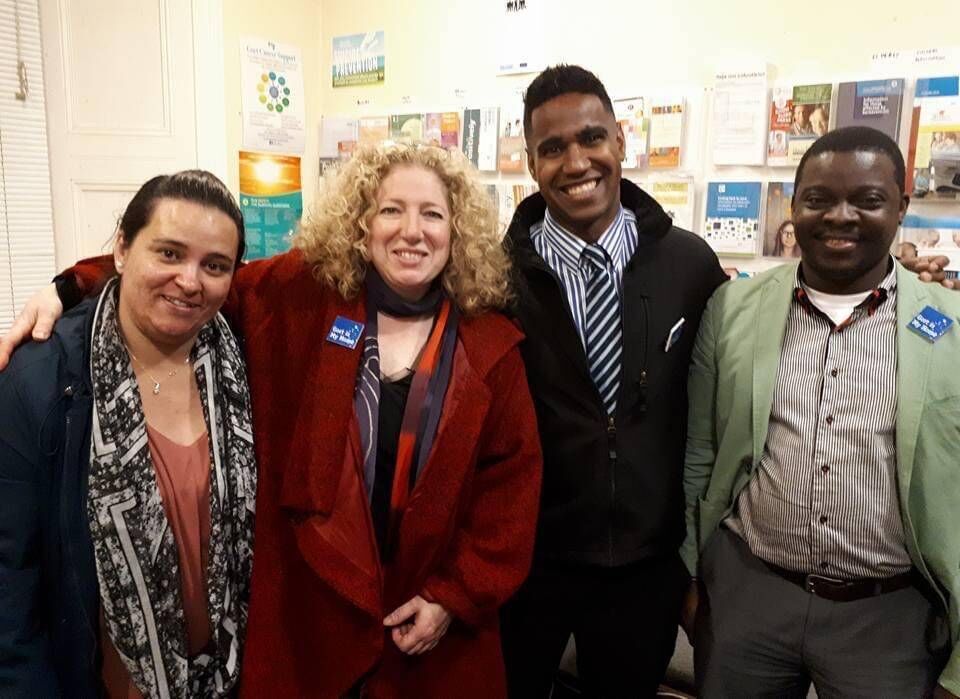
They risk deportation if their application for status is not successful, Da Silva, 39, who came over with her husband 18 years ago when he was offered work with horses in Co Kildare, applied for documentation after she separated and moved to Gort in 2009 with her teenage son.
She finally got papers, but over 70 people in the south Galway area who are undocumented have been seeking assistance from the Gort Resource Centre — with one man in Ireland for 18 years.
Margaret Brehony, who undertook a survey for the Gort Justice for Undocumented group, said undocumented migrants living outside the system have existed in constant fear, with neither shelter nor the right to food.
Applicants under the new scheme must have a period of four-years undocumented residence in the State, or three years in the case of those with children.
Successful applicants will receive immigration permission, access to the labour market and will be able to move towards citizenship application.
Gort Resource Centre chairperson Amy Bradley recalled the start of the Gort campaign over 10 years ago around a “second-hand kitchen table at the resource centre”.
“Brave undocumented individuals from our community came together with the Migrant Rights Centre of Ireland (MRCI) to try to create national change to improve their lives, their families lives and for others who also found themselves living in the shadows," she said.
“Through their hard work, dedication and selfless action in the face of so much personal risk they rose to the task and have made a difference,” she said.
“This would not have been possible without the driving force of this campaign Annie Rozario of the Gort Resource Centre, along with a team of dedicated volunteers who supported the group to succeed in having their voices heard,”she said.
“This news will certainly provide hope and peace for many individuals and families around the country this holiday season,” Ms Bradley added.
CONNECT WITH US TODAY



Be the first to know the latest news and updates