Ireland and the Yazidi struggle for justice after IS ravaged their homeland
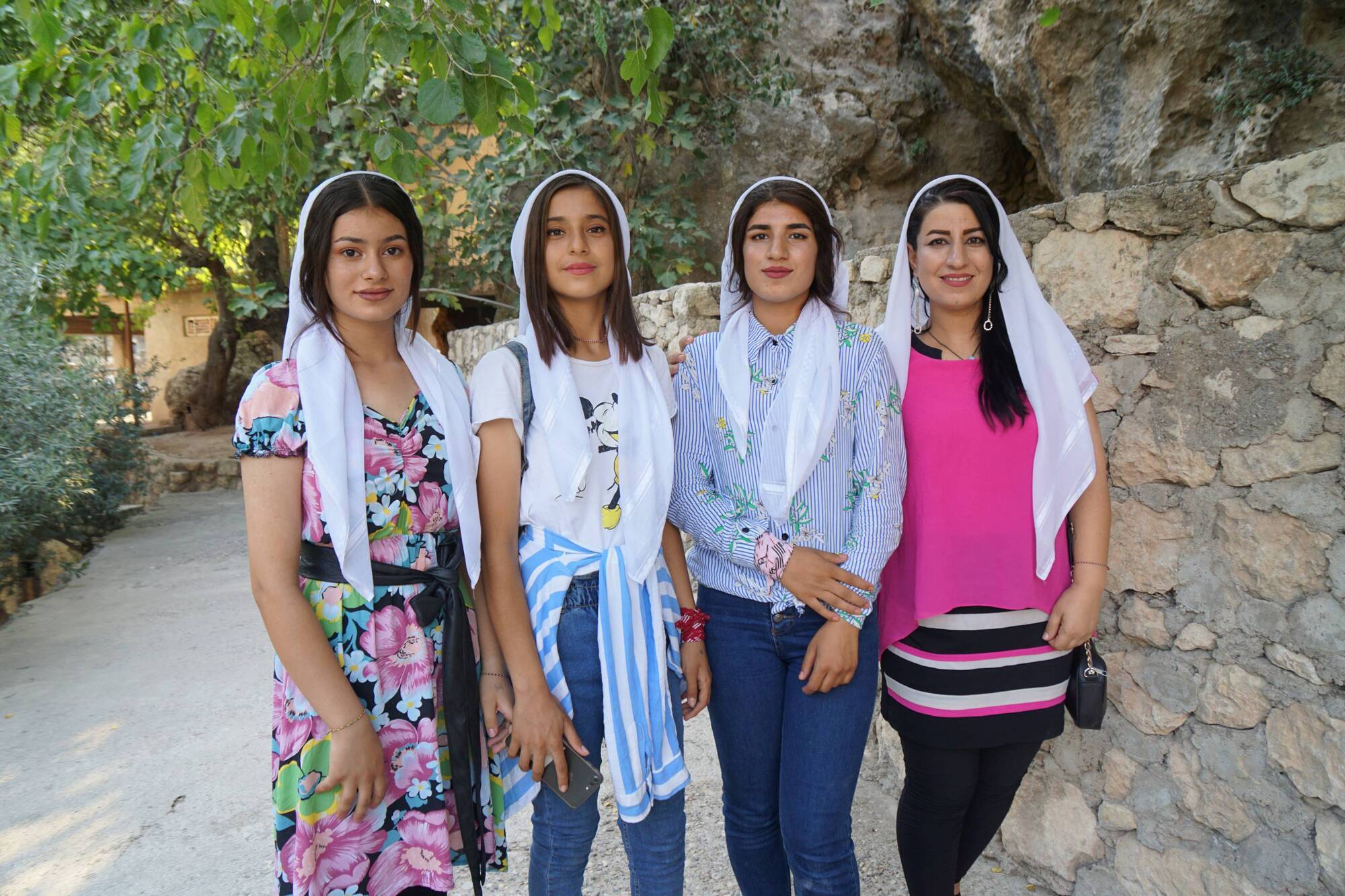
Yazidi women from an internally displaced persons' camp in Kurdistan in Iraq at Lalesh Temple. In 2014 IS killed an estimated 5,000 Yazidis and abducted and sexually enslaved about 7,000 Yazidis, mostly women, and children. Yazidis were forced to convert to Islam, many of their religious and cultural sites were destroyed, and 450,000 people fled from their homes to escape the violence.
Faced with hopeless living conditions in camps in Kurdistan, several Yazidi families were among the thousands of migrants who travelled to the bitterly cold Polish border last month. They were given hope of an easy crossing into Europe by the Belarusian government, which callously used them to put pressure on EU states to remove sanctions placed on Belarus, after it forcibly diverted a Ryanair plane to arrest a journalist last year.
Instead of finding refuge in Europe, Yazidis families were violently pushed back from the border by Polish troops and then deported from Belarus. They have now returned – broken and in debt - to the camps in Kurdistan (a devolved region of Iraq).
The homeland of the Yazidi community, where they farmed and practised their ancient faith, has traditionally been the Sinjar province in northern Iraq. This changed for many families in 2014, when the religious minority was targeted and brutalised by ISIS.
The Islamic militant group killed an estimated 5,000 Yazidis and abducted and sexually enslaved approximately 7,000 Yazidis, mostly women, and children. Yazidis were forced to convert to Islam, many of their religious and cultural sites were destroyed, and 450,000 people fled from their homes to escape the violence.
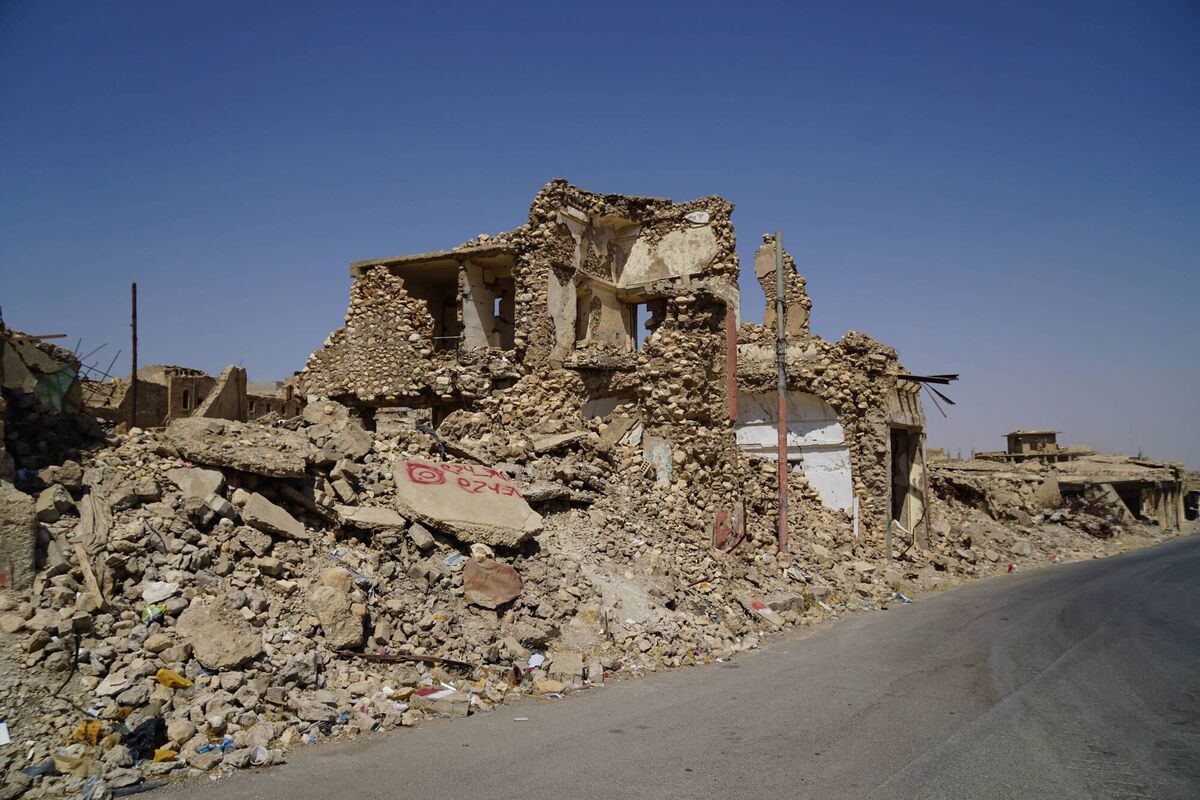
Today, around 300,000 Yazidis continue to live in camps in Kurdistan, where they face scorching summers and torrential rain during winter while living in tents. Those who have returned to the Yazidi homeland in the Sinjar have found rubble and little government support.
Several Yazidis spoke to Irish TDs and Senators earlier this year about the lack of progress that has been made in the seven years since the genocide that was brutally orchestrated against them and the conditions the community currently faces.
Nasreen Rasho, a Yazidi survivor of ISIS captivity, spoke to the Oireachtas foreign relations committee remotely from Iraq in June. The young Yazidi woman described how survivors of ISIS have been deprived of the opportunity to continue their education. Many were captured by the Islamist group in their teens, with some as young as nine.
Sinjar, the main city in Sinjar province, remains covered in rubble from the destruction reeked by ISIS and their fighting with Iraqi forces in 2015. Much of the support provided in the damaged city has so far involved small-scale and ad-hoc projects, like the support provided by The Irish National Teachers’ Union for primary education.
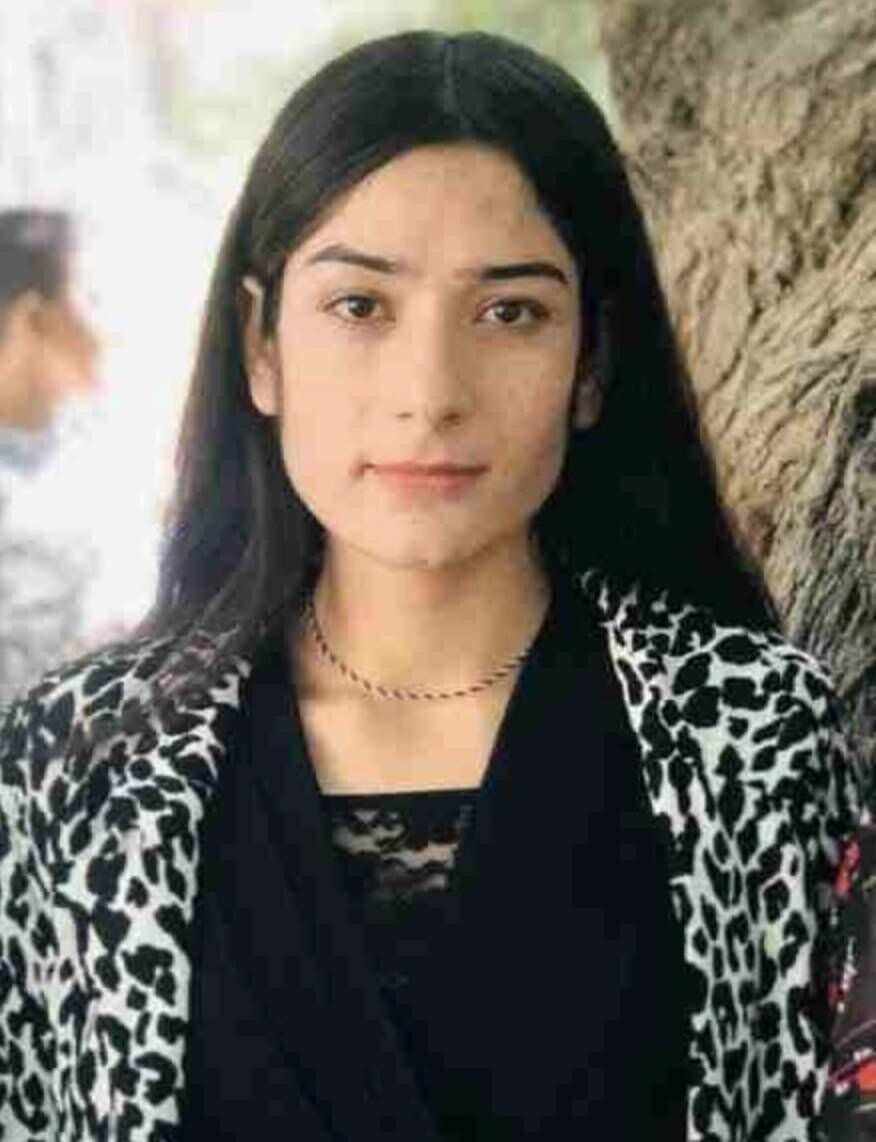
In her home in Sinjar, Hiyem Dakhil described to how many Yazidi survivors find themselves without psychological support for theis trauma and with no pathway to secure the education that was stopped by their ISIS captivity, or economic opportunities to rebuild their lives.
“We need more education to be taken seriously and to be part of the decision-making process, especially on topics that are directly about us,” said Rasho to Irish TDs and Senators in June. Natia Navrouzov, Legal Advocacy Director at the Yazidi NGO Yazda, told the Oireachtas committee that English and Arabic lessons, IT classes and advocacy training were all needed for survivors to effectively lobby for their needs. Yazda requested EUR 368,000 for educational support from the Irish government during their meeting with the foreign relations committee.
In the meeting of the John Brady TD noted that “Ireland is one of a few countries that has not contributed to alleviating the difficulties and plight of the Yazidi people.” Charlie Flanagan TD, chairman of the committee, said he would request support for the initiatives discussed from the Department of Foreign Affairs and Trade (DFAT) after the meeting. However, the DFAT could not confirm to if such a request was ever made or whether any of the initiatives would be supported.
Many Yazidis believe that ISIS will never be held accountable for the atrocities they committed. While the terror group was largely defeated in 2017 by a coalition of US and Iraqi forces, few Yazidi women have had the chance to face the ISIS militants in court who subjected them to sexual enslavement and killed many of their male family members.
So far, Iraqi courts have predominantly tried former ISIS militants on terrorist charges in Baghdad, rather than on charges that involve the specific crimes committed against Yazidis. Little effort has been made to involve victims of ISIS in the court process, while many suspects have been sentenced to death on weak evidence in trials that have been criticised by human rights organisations.
“Not just in Iraq but around the world, it’s easier to try suspects on terrorism charges rather than war crimes or crimes against humanity, which require a huge amount of evidence in comparison to proving membership of an organisation,” says Kip Hale, a human rights lawyer who has investigated ISIS atrocities in Iraq.
The failure to try suspected ISIS militants for war crimes and crimes against humanity means that states are missing an opportunity to highlight the criminality of ISIS and how it runs counter to Islam, argues Hale.
Yazda asked the Oireachtas foreign relations committee for Ireland’s support on the UN Security Council for establishing an international tribunal to prosecute ISIS crimes. The NGO said that Yazidi survivors believe that any tribunal needs to have “strong international involvement because of the local mistrust towards Iraqi institutions”.
Iraq is not a party to the International Criminal Court (ICC) in the Hague, the world’s only permanent court established to deal with war crimes and crimes against humanity. As a result, ISIS’s crimes committed within Iraq’s jurisdictions (including genocide) cannot be referred to the ICC. Instead, any international tribunal to prosecute ISIS crimes in Iraq must be specially constituted with the consent of the Iraqi government – an expensive and politically fraught exercise.
So far, the UN has only received support for a body to investigate mass killings and atrocities perpetrated by ISIS, known as UNITAD. Ultimately, the decision to prosecute ISIS militants (and with what charges) remains up to the Iraqi state.
“The Yazidis have one of the strongest cases of genocide I’ve ever seen,” says Hale. However, he’s pessimistic about the chances of an international tribunal being established.
“Unfortunately, the Yazidis have been caught in the crossfires of a diplomatic fight over the use of the term genocide,” says the human rights lawyer.
"They are also further side-lined by the fact that every aggrieved group now wants to have what happened to them labelled “genocide”, so it distorts and water downs the crime and an accurate understanding of it."
A spokesperson for the DFAT told that “the legal definition of genocide is a very precise one, and must be done [sic] by a competent international or national court of law with the jurisdiction to try such cases, after an investigation meeting appropriate due process standards. Until such time as there is a ruling by a competent authority, states, including Ireland, are not in a position to use the precise legal term ‘genocide.’”
The international community and its diplomacy have failed to convince countries like Iraq to sign-up to the ICC (in part due to United States’ hypocritical refusal to sign-up to the ICC’s jurisdiction); and given Iraq’s clear preference for charging ISIS militants with terrorism charges rather than war crimes, it’s increasingly unlikely that - outside of a few adhoc prosecutions in Europe - there will be a comprehensive prosecution of those responsible for the Yazidi genocide.
Ultimately, a clear case of genocide looks likely to go unpunished, while thousands of Yazidi victims are left without meaningful support for restoring the lives they’ve had broken.

CONNECT WITH US TODAY



Be the first to know the latest news and updates