THE moment that Jack Griffin found ‘Baby John’, more than 37 years ago, is something he never wanted to relive.
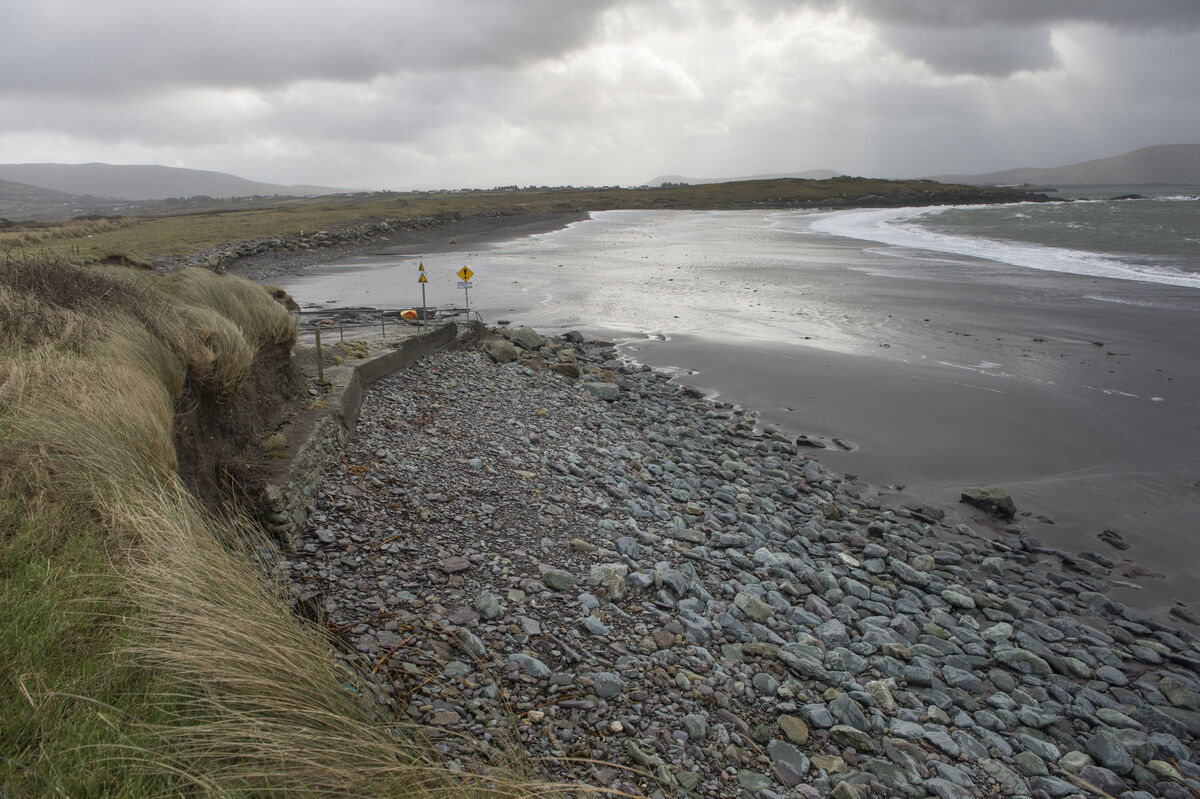
If his discovery of the baby, on White Strand, Caherciveen, Co Kerry, on April 14, 1984, wasn’t disturbing enough, the fact that the infant would stay at the heart of the country’s longest-running, and most public, murder mystery makes it difficult for anybody associated with it to move on.
When the farmer did speak on the matter, for the first and only time, in a brief interview in 2018, he wondered aloud about how, perhaps, “a lot of people have put it behind them and moved on”.
His wife had said that Jack didn’t like answering questions about ‘Baby John’. Some people in the area still don’t. Maybe they, too, want to move on.
Maybe they want to forget. Maybe they are not ready to reveal what they know. Maybe they never will.
Gardaí believe that the answers to the shocking murder remain in Caherciveen, that someone, somewhere, has vital information, knows, saw, or heard something that can finally bring this case to an end.
They also believe that ‘Baby John’s’ mother is still alive and living locally. So, too, might be the murderer.
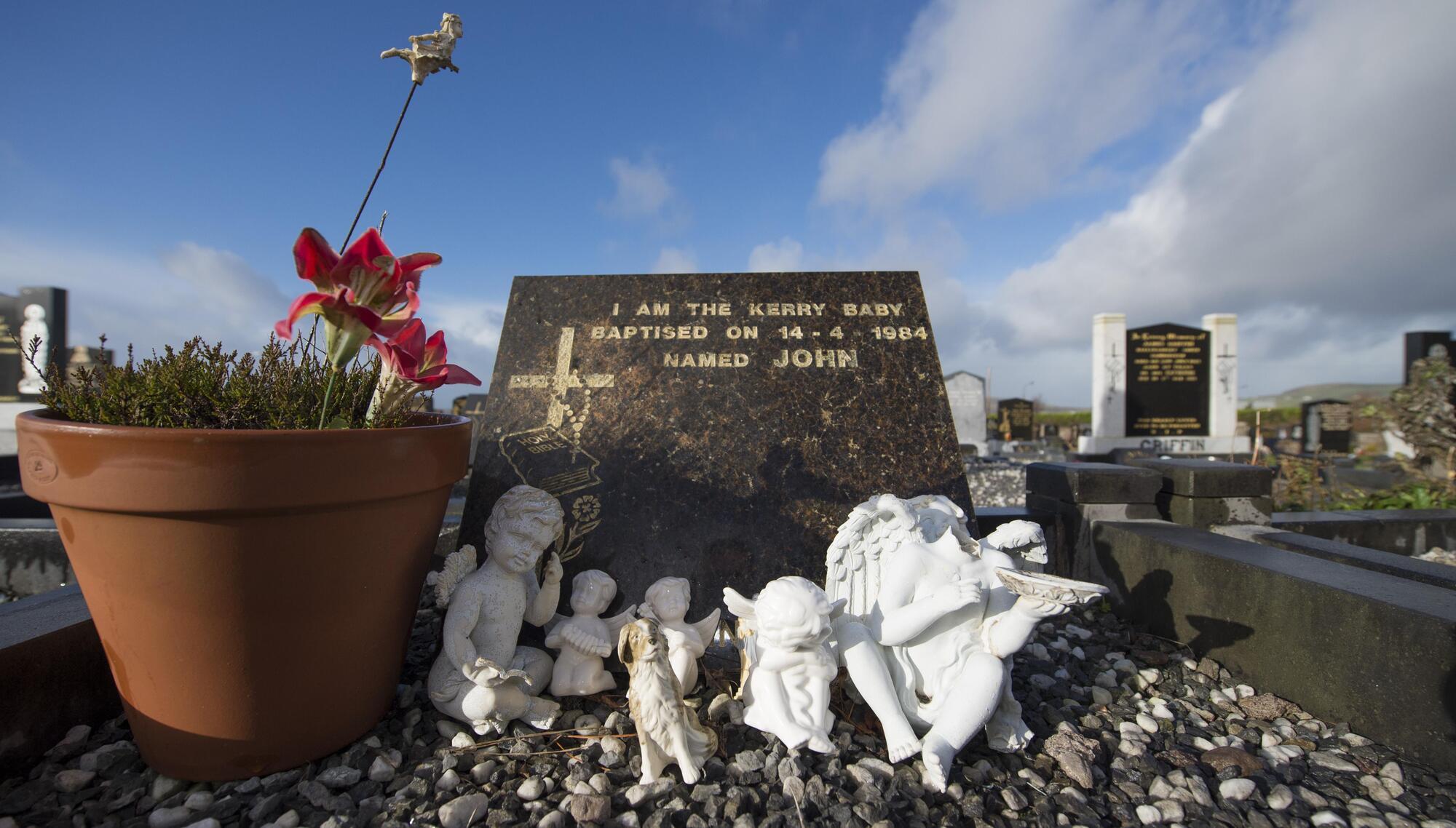
In the latest bid to bring the grim chapter to a close, gardaí exhumed ‘Baby John’ from Holy Cross Cemetery at first light on Tuesday, claiming it was both “essential and important” in the search for justice.
They also appealed to the baby’s mother to come forward. Most affected by the tragedy, it is she, they believe, who is the key to the investigation.
The exhumation will also have jolted people right back to the evening of Sunday, April 14, 1984, when Jack found ‘Baby John’, as he was later named by an undertaker before his lonely burial.

And that discovery was also the grim start to what became known as the ‘Kerry babies case’.
During the autopsy carried out by the then state pathologist, Dr John Harbison, it was revealed that the baby had 28 stab wounds.
Four of these had pierced his heart and Dr Harbison also learned that the baby’s neck had been broken.
An investigation was immediately launched, with house-to-house inquiries being made around White Strand, Caherciveen, and adjacent areas.
Gardai were tasked with trying to trace any single, unmarried woman who had recently given birth to a baby whose whereabouts were unknown.
At the same time, Joanne Hayes was being treated at Tralee General Hospital, where she had been admitted, bleeding and in pain, on April 14.
On the night of April 12, she had given birth to a baby boy in a field on her family’s farm, just outside Abbeydorney, near Tralee, north Kerry.
He had died very soon after and she had put his body in a plastic bag and hid him.
The baby had been fathered by Jeremiah Locke, a married father of two, whom Ms Hayes had started going out with socially in 1981.
She suffered a miscarriage the following year, but became pregnant by Mr Locke again in August 1982, and gave birth to her daughter, Yvonne, in May 1983.
Mr Locke was also the father of the baby Ms Hayes had given birth to on her family’s farm in April 1984.
Word soon reached the gardaí that not only had she been pregnant, but nobody had seen the baby.
Garda investigation
Gardai then interviewed the 24-year-old receptionist, and members of her family, at the start of May 1984.
Her initial statement, that she gave birth to an illegitimate baby boy in a field on her parents’ farm, 70km away from Caherciveen, in Abbeydorney, and could show gardaí his body, was not believed.
Gardaí were, instead, convinced she had gaven birth to her baby in her bed, beat him over the head with a brush and strangled him, before members of her family had disposed of his body.
But the day after she was charged with the Caherciveen baby’s murder, her own baby — known in official reports as the ‘Tralee baby’ — was found on her parents’ farm in a plastic bag.
Subsequent tests on a section of lung taken from the Caherciveen baby showed he had a different blood group to Ms Hayes, Mr Locke, and her own baby.
Charges against her and her family were withdrawn in October 1984.
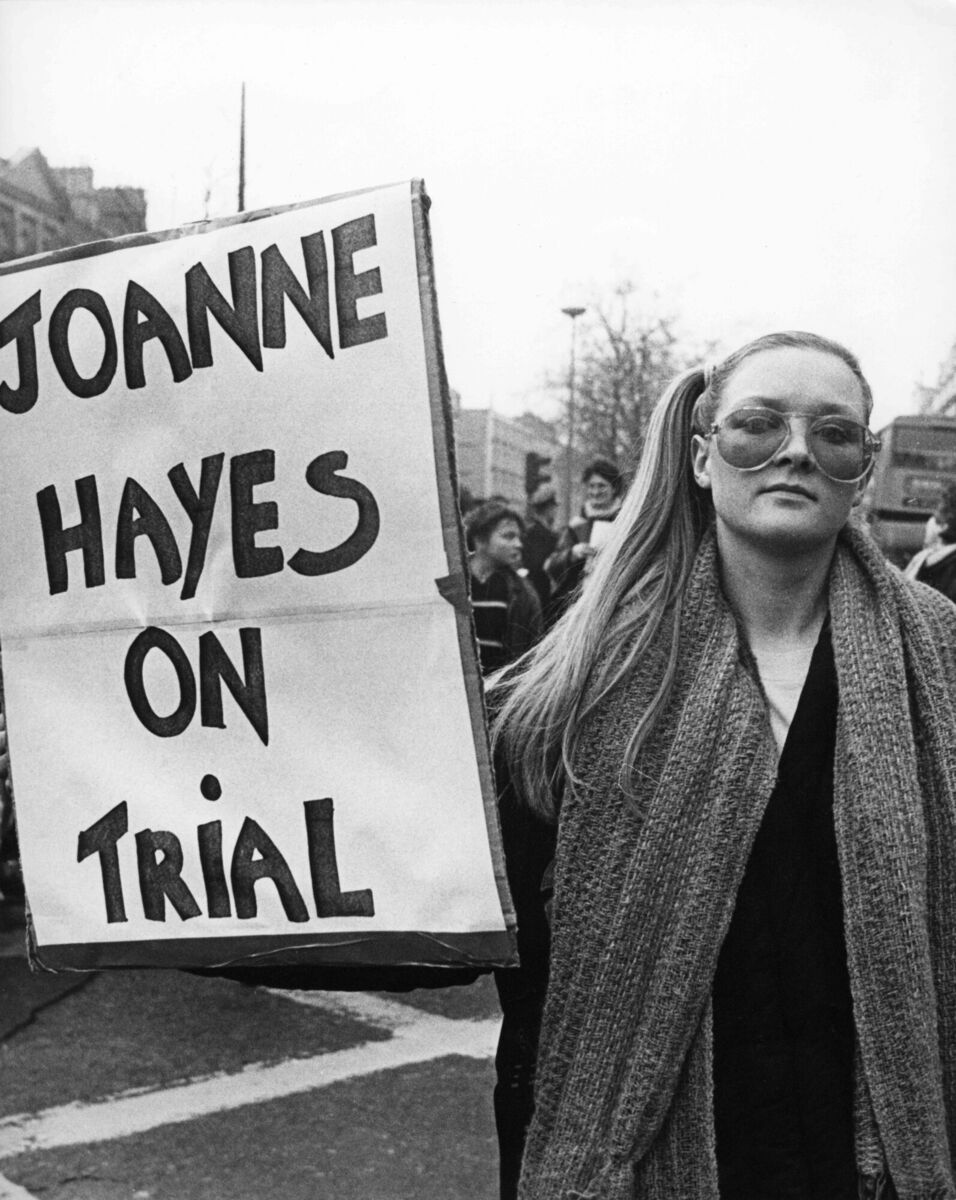
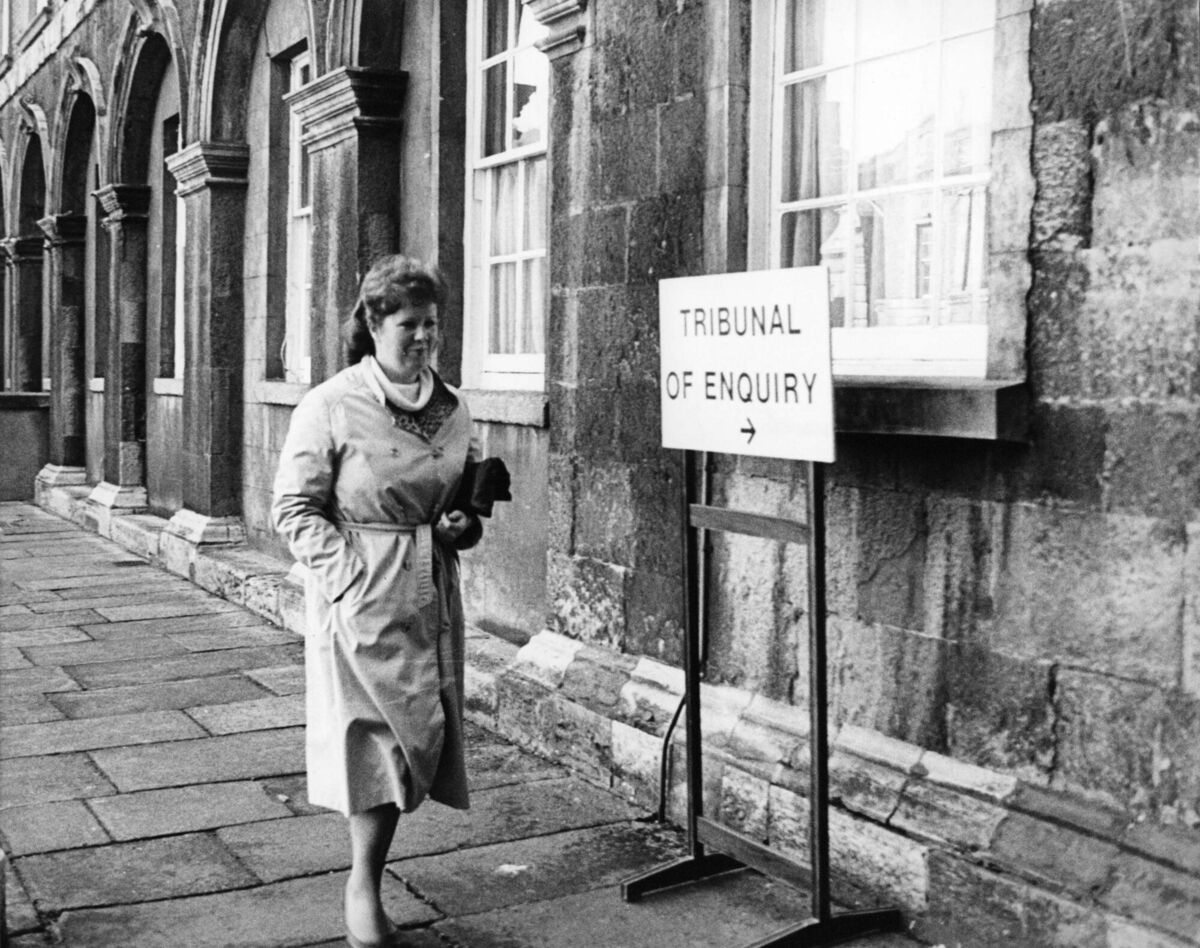
A tribunal was subsequently established to look into Garda handling of the case and how they had ever brought criminal charges against the Hayes family.
Chaired by Justice Kevin Lynch, its remit was also to look into claims by members of the family that they had endured threats and had been assaulted.
At its conclusion, the tribunal failed to answer the key questions of how members of the Hayes family confessed to something they did not do. It failed to properly investigate the conduct of gardaí. It also failed Joanne Hayes.
Her entire life was dissected, as were her morality and mentality.
Every aspect of her private life was minutely scrutinised in a mercilessly unforgiving fashion.
The case rocked the country and remains one of the most enduring of its time.
As one observer would later put it, the case opened a “Pandora’s box of hatred and blame and misogyny and misery”.
Ms Hayes, already an unmarried mother of one, had been having an affair with a married man.
Were it not for the discovery on White Strand, the affair would have remained little more than the object
of the odd knowing wink and nudge from behind the famously squinty windows of rural Ireland.
The tribunal, which opened in January 1985, all but turned on her and her family.
The young woman had to endure the unedifying and embarrassing spectacle of the minutiae of her sex life being paraded in public.
Cross-examined
During the 82-day tribunal hearing, Ms Hayes was cross-examined for a total of five days, and asked some 2,000 questions, including about how she lost her virginity.
The grilling she received at the hearing remains the longest amount of time in the history of the State that a witness has been questioned.
It would take the State until 2018 to finally and formally apologise to Ms Hayes and her family about the way they had been treated.

And that apology was reiterated in the High Court in 2020, when it was formally declared that all findings of wrongdoing made against them were unfounded and incorrect.
The family, in settling their case against the State, also received a declaration that their questioning, arrest, charge, and prosecution in 1984 were unfounded and breached their constitutional rights.
Many, especially those living in and around Caherciveen, who watched events unfold between 2018 and 2020, then assumed — and hoped — that, finally, a dark chapter in Ireland’s history was being brought to a close.
Tuesday’s announcement that gardaí had exhumed ‘Baby John’ has not only reignited interest in the case, but has also led to a certain amount of confusion locally.
Why, locals ask, was there a need for an exhumation after all this time?
And they also wonder: Do gardaí know something now that they didn’t know in previous probes and is this why they need another DNA sample?
Officially, the exhumation was to collect a fresh DNA sample.
And that would appear to be because the old sample, which was taken back in 1984, has either deteriorated or there is too little left to be of much use.
How the State could get permission to exhume a body just so they could have a better sample of DNA on file has raised a few eyebrows since Tuesday.
The announcement, however, gave little away.
It simply stated that the remains of ‘Baby John’ were exhumed by gardaí at Holy Cross Cemetery, Caherciveen, Co Kerry.
Ongoing investigation
It said they were then taken to the morgue at University Hospital Kerry, Tralee, for examination, “as part of the ongoing investigation”.
The statement read: “The exhumation commenced at first light and was conducted on foot of a ministerial order granted in accordance with the Coroner’s Act 1962, as amended.
“The exhumation was conducted by gardaí, a forensic anthropologist, and personnel from Kerry County Council and the Health Service Executive.
“The remains of Baby John have been reinterred at Holy Cross Cemetery.”
Sources insist gardaí do not have a suspect in mind.

There may, however, be another reason why detectives need new DNA and that’s the Criminal Justice (Forensic Evidence and DNA Database System) Act, 2014.
This grants gardaí the power to compel people in a geographical area to give DNA, if gardaí have reasonable grounds for believing that mass screening could help the murder investigation.
And to do that, you would need a lot of DNA.
The new DNA sample is likely to have been taken from either ‘Baby John’s’ pelvic plates or one — or both — of the petrous parts of the temporal bones in his ears.
These usually contain very well-preserved DNA.
What people don’t realise is that each time DNA is checked, it is only done as a comparison to somebody else’s DNA.
And to do that, the sample has to be treated with chemicals and that — in effect — destroys the piece tested.
If the gardaí need a bigger sample, there is probably now a chance that to finally crack this case, they could well be on the verge of mass DNA testing in and around Caherciveen.
A source close to the process of collecting DNA said:
It would, in my view, be unethical to exhume a body simply to get a DNA sample to keep on file.
“There would have to be a specific reason why they would want this DNA. I don’t know what that is in this case, but it would have to be a pretty important reason.”
Sources say a “significant” number of people from the town and surrounding area voluntarily gave samples during Garda investigations since a cold-case review was opened in 2018.
Until that mass screening is formally announced — if, indeed, that will ever happen — questions about the latest twist in this ongoing saga will remain.
One person who isn’t asking any questions is local priest, Fr Liam Kelly.
He was called to ‘Baby John’s’ graveside on Tuesday, after the baby’s remains were laid to rest for a second time.
“I was asked to say prayers at the graveside,” Fr Kelly said.
“We had a small number present. It was all done very discreetly, at about 4pm in the afternoon.” Asked how he felt, given the significance of what he was doing, he added: “This was all before my time.
“I didn’t ask any questions, because it’s all very sensitive.”

Cancel anytime
CONNECT WITH US TODAY
Be the first to know the latest news and updates