Everything you need to know if you're in search of holiday sunshine
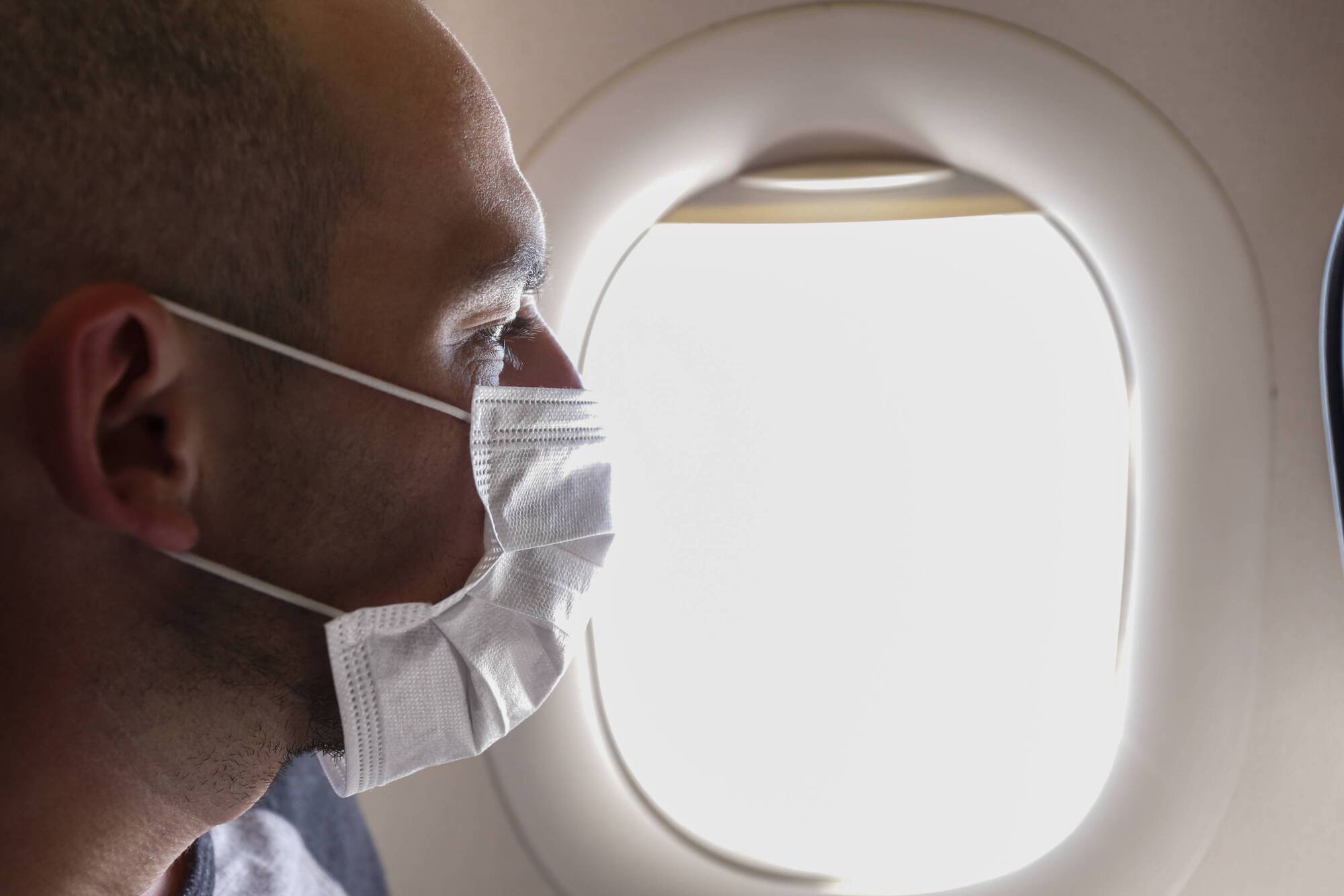
Whether it is prudent or not in the midst of the coronavirus pandemic, there are swathes of Irish people who are determined to go abroad this summer and early autumn. File photo
MANY Irish people really do want to get off this island for a few days, despite any risks that accompany such a journey.
Whether it is prudent or not in the midst of a global pandemic, there are swathes of Irish people who are determined to go abroad this summer and early autumn.
For all the magic of rediscovering Ireland on domestic holidays, the lure of guaranteed sunshine is the elixir of life for those who have made it an annual pilgrimage of sorts before the pandemic hit.
What awaits them on the glistening sands and blue skies of the likes of Spain, Portugal, Greece, Italy and Cyprus changes day to day, and week to week, as Covid-19’s latest iteration, the Delta variant, refuses to relinquish its insidious grip.
People on these shores remain undeterred. The evidence may be anecdotal, but it is compelling nonetheless — there have been countless stories told in family homes, shopping centres, bars and restaurants, and all over social media platforms in recent days of waiting times of up to six hours on the EU digital Covid certificate helpline.
It seems to be a rite of passage that you take your place in the phone queue, leave it on loud speaker, and wait it out for hours on end before the call is dealt with by an agent.
Once the EU digital certificate is finally secured, what comes next?
The traditional favourites of our EU neighbours seems to be the only show in town for now, despite the Delta variant doing a serious number on traditional destinations such as Spain, Greece and Portugal.
For families and older travellers who had hoped for a return to far-flung destinations such as the US, Thailand or even Australia, it seems to be a journey too far.
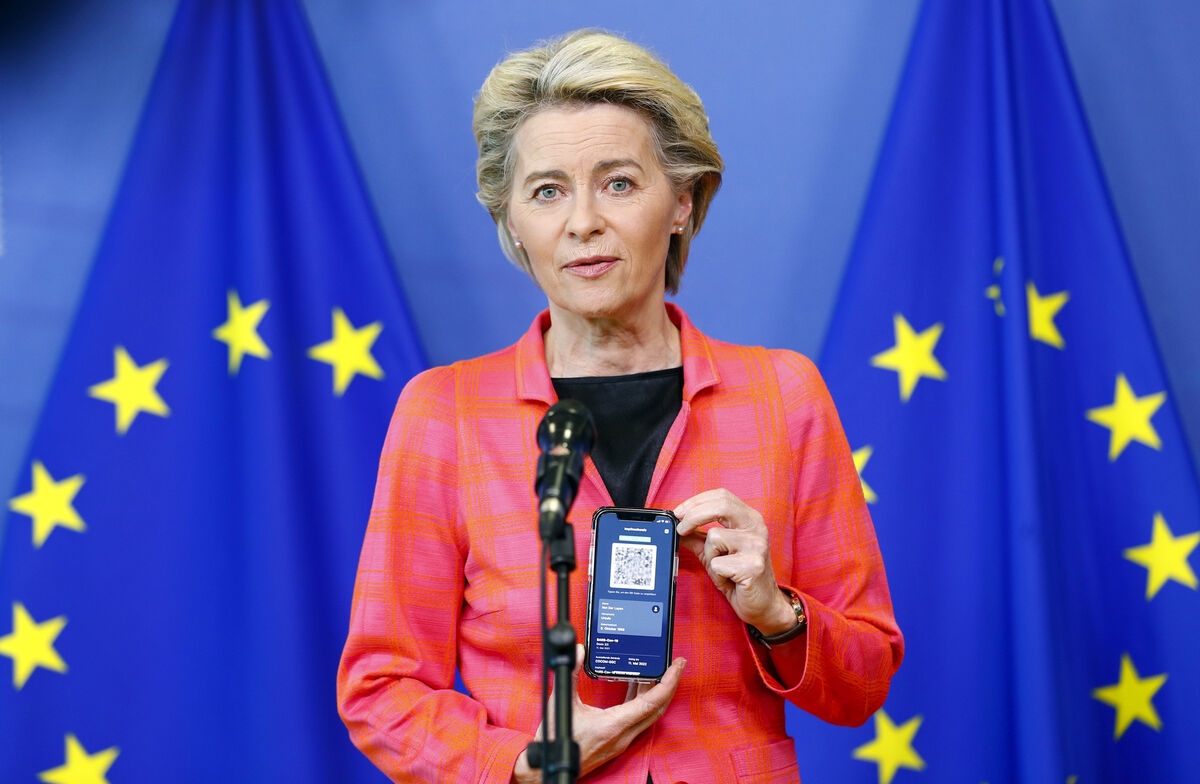
This week, European Commission president Ursula von der Leyen implored US President Joe Biden’s administration to finally lift the ban on EU citizens going stateside.
In place since the early days of the Covid-19 pandemic, the ban on EU travellers, especially those who have been vaccinated, has been criticised as arbitrary and unscientific on both sides of the Atlantic.
However, the White House is not for turning, repeatedly dangling the possibility of the ban being reversed in recent weeks, only to reverse course days later.
Once-in-a-lifetime holidays for Irish families to Disneyland in California or its sister resort of Disneyworld in Orlando, Florida, will not be happening before the schools reopen, barring an abrupt about-face in the next week.
Will the European Commission president’s stern words make any difference?
Time will tell, but a betting person would say no. The US has resisted any such overtures so far and, with a crisis of its own due to the Delta variant cutting through unvaccinated people across the country, especially in the southern states — Florida has a record number of Covid-related hospitalisations at present — it is likely out of reach until 2022 at the earliest. Mickey and Minnie will have to wait.
Thailand surpassed its record daily caseload this week, with over 20,000 reported cases and 188 deaths, and hospitals are running out of beds. Bangkok and 29 high-risk provinces have imposed measures such as curfews, travel bans and business closures as it deals with the perfect storm of the Alpha and Delta variants running through its population.
Irish people’s common sense should tell them that the favoured Asian destination, with its glorious beaches and breathtaking scenery, is not viable for the rest of the summer, or indeed the autumn.
So if Europe is the only realistic show in town for would-be holidaymakers from Ireland, what should they know?
According to Irish Travel Agents Association (ITAA) chief executive Pat Dawson, a good holiday can still be enjoyed despite heavy restrictions being in place in the likes of Spain, Portugal and Greece. Naturally, he has a vested interest in Irish travellers doing so, but he said booking with a travel agency, rather than holidaymakers trying to source flights and accommodation themselves, was the way to go this year.
It takes the hassle out of travelling, and a travel agent will guide you on exactly what documentation you need, as well as giving you the lay of the land for each country, he said.
“I was at the airport, both going out to Spain and coming back, and some people were there without the proper documents, or they had their documents in mobile phones that they couldn’t reach.
“One man coming back on the flight from Spain had an issue where all his friends had the proper documents, but he didn’t, having stored it on another’s phone. There were five in the terminal, but only four made it on to the plane — he wasn’t let on.
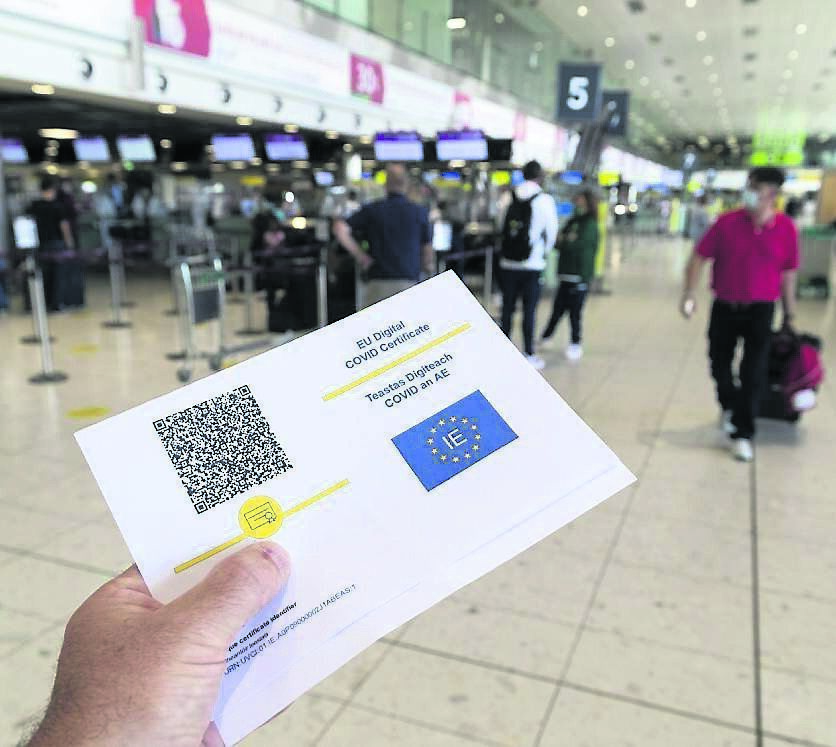
“You really need to go through it to make sure you have the different documents that you need — your passport, your boarding card, your EU digital Covid certificate and your passenger locator form. There are four documents you need; make sure they are updated,” he said.
Countries such as Spain are very much like Ireland at the moment when it comes to eating out and enjoying a semblance of nightlife, he said.
Young people hoping for the full nightlife experience may be out of luck as Covid-19 eliminates the possibility of dancing long into the night, but careful measures are in place for people to still enjoy themselves in a more low-key manner, he said.
“You wear masks like we do here when you are going through airports, or on trains and buses and taxis, but because the weather is so good, people are eating outside anyway.
“Bars and the like are staying open until around 12am in many cases, with social distancing in place if they do. They are generally quiet at the moment, with less tourists than might be expected in a normal year, and it is mainly Spanish people in the different Spanish resorts at the moment, from what I witnessed.”
If something was to go wrong as the Delta variant maintains its unpredictable path, then booking with a travel agent guarantees peace of mind, rather than someone having to tackle the various links in the chain if they have booked flights and accommodation separately, according to Mr Dawson.
“If you book a hotel separately online, and a flight online, and you don’t have a package, then you have little protection. That is because we have the European Travel Package Directive. The UK now doesn’t have that because they obviously have left the EU.
“Travel agents here must have it as part of the licensing. A lot of people booking through travel agencies outside of Ireland have to go back to the country of origin, which can be very tricky indeed if it is a UK-based website or company.
“I would implore people to make sure that the booking is made where the EU protections are in place. The Commission for Aviation Regulation has a list on their website, so make sure to check that your booking is Irish-based.”
How does it work for families with children who haven’t been vaccinated?
First off, let’s examine what having the EU digital Covid certificate means.
According to the Citizens’ Information website, the certificate is for travel originating within the EU plus Iceland, Norway, Lichtenstein and Switzerland (EEA).
It is proof that you have either been vaccinated against Covid-19, received a negative test result or recovered from the virus in the last six months.
“If you plan to travel abroad, you should check the testing and quarantining requirements of the country to which you are travelling. The digital Covid certificate is accepted throughout the EEA as proof that you have been vaccinated, tested or have recovered from Covid-19. However, EEA countries have their own restrictions and quarantine requirements.
“If you arrive in Ireland from the EU or EEA and you have an EU digital Covid certificate, you do not have to quarantine, unless the certificate is based on an antigen test. All travellers must fill in an online Covid-19 passenger locator form before they arrive into Ireland.”
So far, so good. However, most children have not been vaccinated, so what are the obligations on families before travelling?
For those with children up to the age of 11, things are pretty simple, but tests are required for children 12 and over, according to the Citizens’ Information advice.
“Children between the ages of 12 and 17 need to have a negative RT-PCR test taken within 72 hours before their arrival into Ireland, unless they have valid proof of vaccination or recovery.
“Children of any age, travelling with accompanying vaccinated or recovered adults, do not need to self-quarantine post arrival. However, if one accompanying adult needs to self-quarantine, then all children must also self-quarantine.”
If those hurdles are cleared, what awaits Irish people in their perennial favourites, starting with Spain?
Let’s examine the Canary Islands, especially Tenerife, which has had a resurgence in cases in recent weeks, so partying all night is definitely not on the agenda.
Irish people going to the Canaries will have to prove to hotels that they are fully vaccinated, have a negative test, or have recovered from Covid, along the lines of the airport requirements.
In Tenerife, which is in level four, and Gran Canaria in level three, masks must be worn by adults and children over the age of six in enclosed public spaces (except when eating or drinking) and outdoors where it is not possible to maintain 1.5m distancing. Nightclubs are closed, while restaurants have to be closed by midnight.
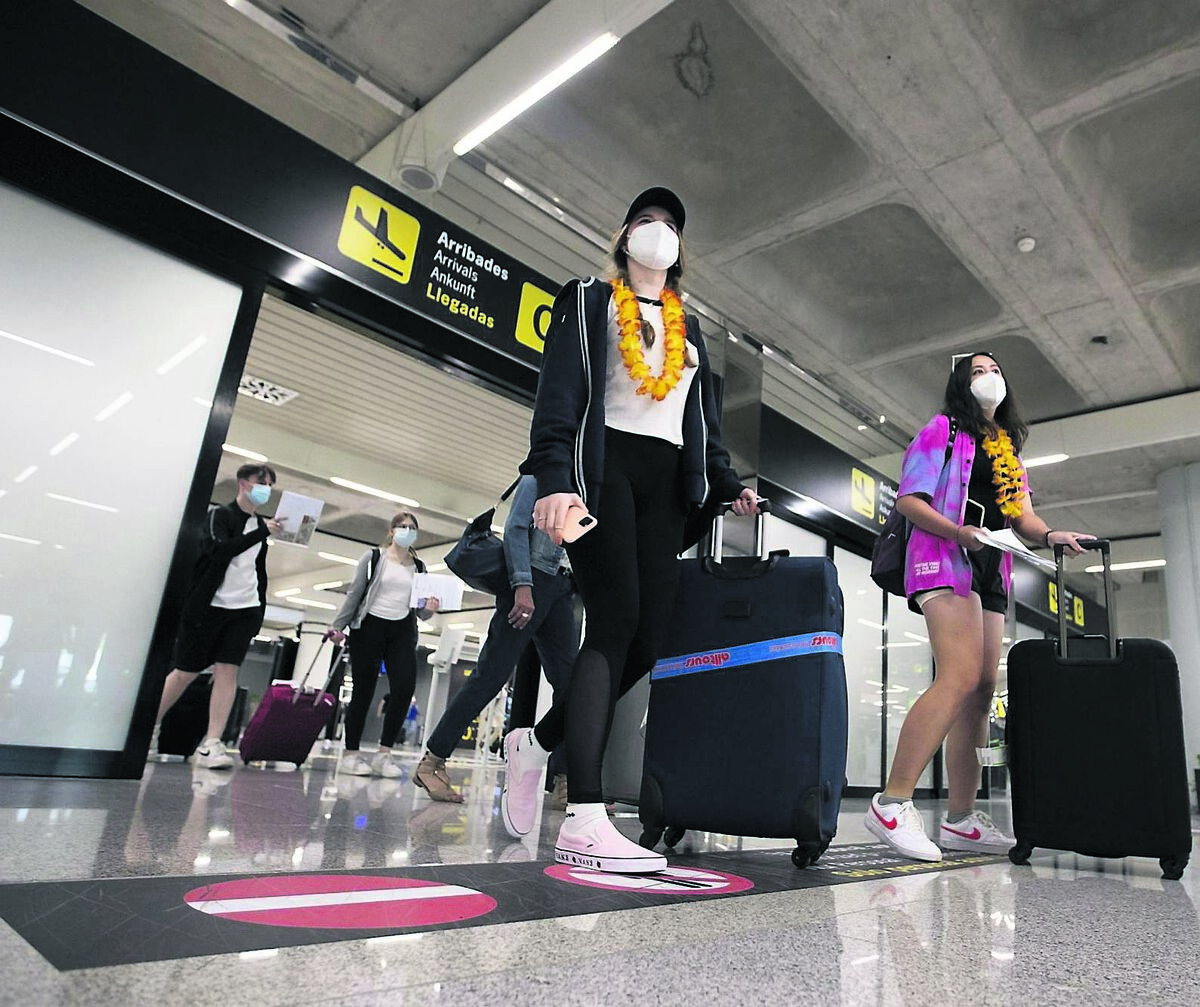
Level four in Tenerife means restrictions on beach capacity, as well as swimming pool capacity, while level three in Gran Canaria has similar. There is a little more leeway on Lanzarote, which is in level two.
The popular Balearic Islands of Mallorca, Menorca and Ibiza offer even more leeway for tourists, despite Covid rampaging through the archipelago, and the European Centre for Disease Prevention and Control placing them in the dark red category — if the 14-day cumulative Covid case notification rate is 500 or more per 100,000 people.
Mallorca, for example, has forbidden any meetings between 1am and 6am. Bars and restaurants close at 1am, with late-night bars operating until 2am with capacity restrictions in place.
The original plan was for restrictions for open-air events to ease on August 14, with up to 1,000 people in enclosed spaces and up to 5,000 in open-air spaces. However, spiking cases means restrictions could be re-imposed suddenly, so Irish tourists will need to be well aware of what could lie ahead up to the day they are to depart.
Portugal has begun to wind down its restrictions, despite high levels of the virus still circulating, albeit coming down from a seriously high number just weeks ago.
Last week, Antonio Costa, the prime minister, said he wanted a goal of “total freedom” ahead of 70% of people being fully vaccinated by the end of summer.
According to the Associated Press (AP), beginning this week, localised curfews are to end and restrictions on the opening times of restaurants, shops and cultural venues will be lifted, allowing them to stay open until 2am.
“However, a digital virus pass proving inoculation or a negative test will be needed to enter restaurants at weekends or on public holidays, when they are often busy, and for gyms and sports and cultural events. Working from home will be recommended instead of mandatory.
“From September, face masks will no longer be mandatory outdoors and premises holding public events can increase the number of people present to 75% of capacity, up from 66%. Bars and discotheques, closed for the past 16 months, will reopen only in October,” the AP reported.
Greece is going through yet another spike in cases, with the European Centre for Disease Prevention and Control marking the south Aegean islands in its dark red category.
People have to wear masks in indoor public spaces and have proof of vaccination to sit inside restaurants and bars, as well as other measures.
“The group of islands that have been placed in the dark red category includes 13 of Greece’s most popular destinations, such as Santorini, Mykonos, Samos, Paros and Naxos, which attract millions of holidaymakers during summer,” said information website SchengenVisaInfo.
reported: “Greece has begun deploying police units to holiday island hotspots as the country’s tourism season moves into high gear amid a worrying spread of coronavirus variants.”
Haris Theoharis, the country’s tourism minister, said: “While hotels and family-type venues are implementing protocols diligently, there’s more congestion than we would like to see in bars, especially among the younger crowd... so we are trying to ensure some balance is kept.”
Italy has four zones, according to SchengenVisaInfo. After August 12, the digital cert from the EU will be needed to travel.
“All persons wishing to travel to Italy should keep in mind that, based on infection levels, the country is currently divided into four zones: red, orange, yellow and white... it is mandatory to wear a mask at all times in indoor and outdoor places as well as keep a distance of at least 1m,” it said.
As of July 30, the Italian government said there are no red, orange or yellow zones, meaning the whole country is in the white category.
However, as cases creep up in areas such as Sicily, Rome and Lombardy, restrictions could be imposed locally at short notice.
There are plans to make the EU digital cert obligatory in September for travelling by train and planes or those taking long-distance bus rides.
If domestic holidays are not on the agenda for Irish people, there are options abroad, albeit not what they have been used to in previous years.
If the clamour for digital certificates is any indication, restrictions aren’t a deterrent — sunshine seems to be the real tonic for the lockdowns and sacrifices made over the past 18 months.


CONNECT WITH US TODAY



Be the first to know the latest news and updates