Motherhood special report: Guilt and the cost of care

It is a natural instinct to want to protect our children but the pressure to do it all perfectly is exhausting.
Mothers face huge criticism in today’s world, says Dr Mary O’Kane — a lecturer in psychology and early childhood education. She is also the author of a new book: .
“In our parents and grandparents’ generations, children were allowed to fend for themselves to a much greater extent,” says Dr O’Kane. "There was not the same emphasis on being the perfect parent that we are exposed to today.
“We have set the bar remarkably high, and the pressure on parents to conform to a very idealised standard is continuous.”
It is a natural instinct to want to protect our children but the pressure to do it all perfectly is exhausting.
And this is being experienced by mothers, in particular.
“I think even in today’s society more pressure is put on mothers with regard to their parenting.
In her experience, what things do mothers feel most guilty over?
“Everything”, is her answer.
If everything can cause guilt, what is the antidote to it?
“I speak in my book about the idea of good enough mothering developed by paediatrician, Donald Winnicott.
"The idea is that as babies are psychologically fragile, it is natural that caregivers should be highly attuned to their needs in the first few months of life.
“But we should naturally move from an initial feeling of devotion to the child to an understanding that we cannot meet their every need,” says Dr O’Kane. "This is important as the child needs to experience minor frustrations within their world.”
She believes that the guilt many mothers feel actually interferes with the connection children need, as does the drive to be perfect.
“It is possible that the need to get everything right leads us to parent with a focus on controlling the lives and destinies of our children. Instead, we should focus on connection,” adds Dr O’Kane.
- Perfectly Imperfect Parenting: Connection not Perfection is available on www.drmaryokane.ie
There are two reasons care work, and mothering in particular isn’t valued by the State or society at large.
It isn’t measured and it is mostly unpaid, and where it is paid it is either low-paid work or outside the tax system.
Associate Professor of gender studies in UCD, Ursula Barry, represents Ireland on the EU research network for gender equality.
She was also a member of the expert advisory group for the Citizens’ Assembly on gender equality — where she gave a presentation on why care isn’t valued.
“I did a presentation for them on the care economy and why care isn’t valued, we measure GNP (gross national product) and GDP (gross domestic product) and that measures whether the economy is growing.
“But when you’re measuring GNP only things that are paid for are counted, and in economic thinking — only things that are paid for are valued,” says Prof Barry.
Because GNP and GDP are not measuring non-market transactions, that means the care economy is invisible.
“It’s not at the forefront of policy makers' minds, it’s not taken into account,” says the professor.
But that’s only half the story in Ireland, because elsewhere in Europe childcare is prioritised and publicly funded.
One of the core recommendations of the Citizens’ Assembly on gender equality was a move towards a publicly-funded model of childcare.
“We have a system, to the extent that we fund some childcare, but the public funding is going into private businesses,” explains Prof Barry.
"That’s so different to most other European countries, like France, Spain, Italy, the Nordic countries, and the UK, where local authorities provide childcare.”
However, just because it’s publicly funded does not mean it’s free.
“If you are in Finland or Sweden or the UK you have these graded charges, the providers are within the public system and are publicly regulated, but there are differential payments depending on your financial situation.
"Everyone has access to a quality service, and you don’t have lower-income families only able to access a low standard provision,” says the professor.
But in other European countries it is not about cost and enabling women to enter the labour market, childcare is about children.
“Childcare isn’t being provided with the goal of having more people in the labour market but for children, and especially children from disadvantaged backgrounds so that they can have a good start and the playing field is level,” adds Professor Barry.
But when it comes to the impact on mothers doing the bulk of the invisible and unpaid care work, because we lack a public model, what is the effect?
“If a society doesn’t value something you are doing, then how are you going to feel about it?” suggests Prof Barry.
Laura Nolan Horgan is a business owner and mum of three. Throughout seven years of motherhood she has lived the full spectrum of situations from returning to work after 12 days on her first child to relying on crèches and au pairs, and from being at home full-time to now having her own business that works around her family.
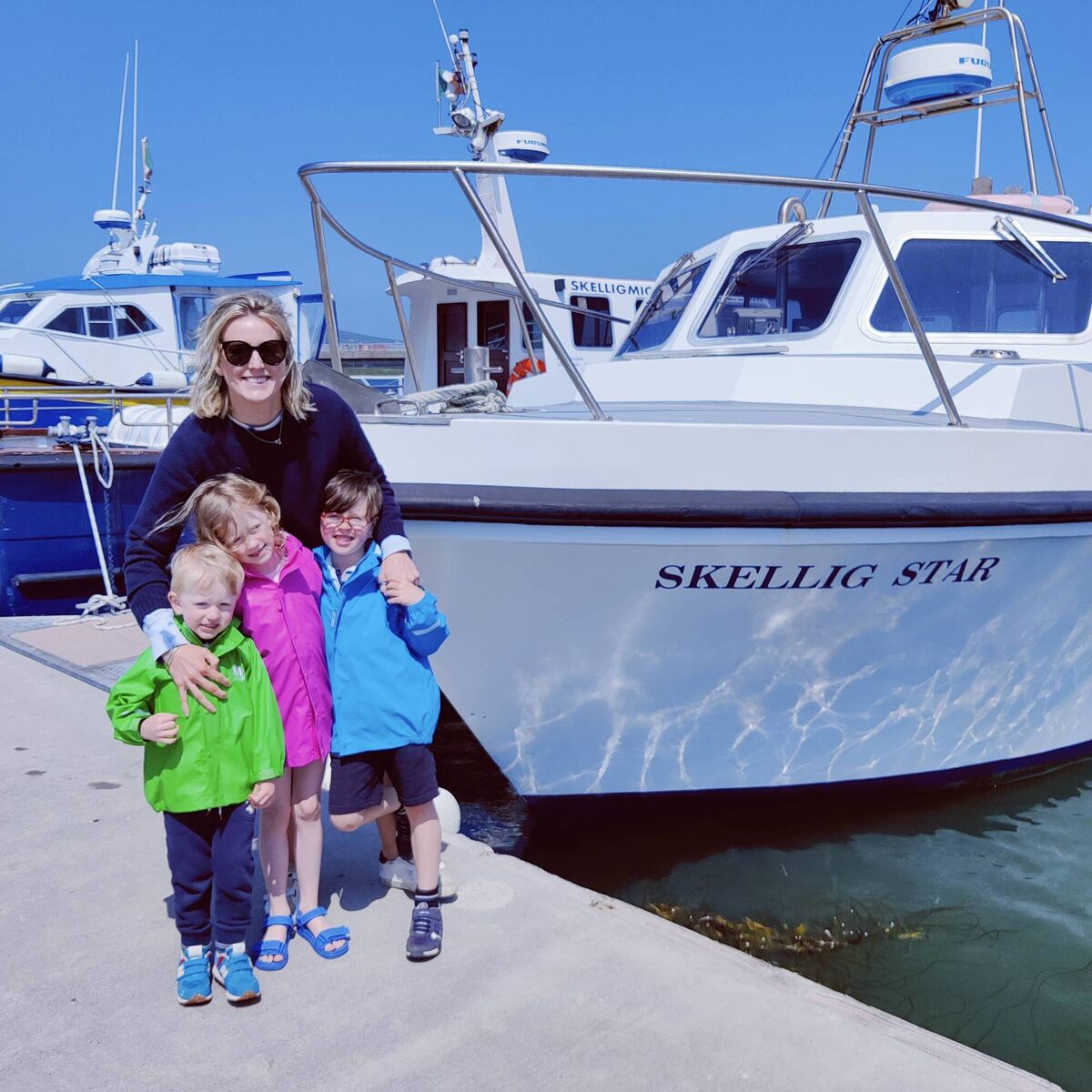
In the midst of having children, she was also diagnosed as being BRCA1 positive, meaning she was at a high risk of developing breast and ovarian cancer, so in 2018, and 2019, Laura underwent a hysterectomy, a salpingo oophorectomy and a double mastectomy.
“My career has totally worked around my children, it’s taken steps forward and steps back,” says Laura. "Growing up as a child we had a full-time nanny who lived with us as both my parents were entrepreneurs, they worked really hard and were very successful, but seeing my parents all the time was not something that was normal to me.
“When I got engaged to Ronan and I was looking back, I wanted to be that mum who is at the school gates all the time.
"I wanted to be that mum who was there for it all, but everyone’s different, and we’ve experienced it from every angle over the last seven years,” she adds.
But Laura’s set-up now is all she “wanted”.
Laura launched her interiors and fashion business LNH Edit in February.
In her previous career she was the creative director of Irish fashion wholesale business and retail chain Fran and Jane, where they employed 200 people. In 2015, her family business closed and Laura also gave birth to her second child.
She then went on to work as a buyer in Primark, a job she loved, but one that required international travel.
“Ronan moved jobs and at the time I was doing a lot of traveling, if someone got sick he couldn’t leave his job and as he was the breadwinner I had to give up,” says Laura.
"I was devastated, but I was also kind of delighted, I can be a stay-at-home mum, I could just enjoy it.
“Then in true Laura Nolan style, the bubble burst, and I found out I was expecting Toby and that I was BRCA1 positive, that was the end of 2017, Toby was born in June 2018,” she adds.
Ten weeks later, she had a full hysterectomy and a double salpingo oophorectomy and went straight into menopause, with no HRT, and an 11 week-old baby to mind. Hugo was nearly three and Elizabeth was five.
"I had this beautiful new baby who would sleep, but I had night sweats. Then I met the wonderful Dr Deirdre Lundy, and I got small doses of HRT, and I’ve never looked back and I got back to myself,” says Laura.
“My mum moved in to help, Ronan took time off work, and teachers, friends and family couldn’t have been more helpful, I’ve never known kindness like it.”
Then in November 2019, she had a double mastectomy.
“I was just finding my feet and in February 2020, we went skiing and had an absolute ball, and I thought: ‘I am through that and out the other side, now it’s time to do something for myself.’ Then like everyone else, Covid hit,” explains Laura.
She spent 2020, like almost all parents, home schooling. At night she worked on her business, sourcing fabrics and suppliers and building her brand and website.
She launched her online store — the LNH Edit in February of this year, and sold out in four days.
“As a buyer you never win, you either buy too much or too little, but I thought I had enough stock for four months, but there was a complete sell through in four days, it was much bigger than I thought and I thought it would grow to this in a year or so not straight away,” explains Laura.
Has the balance of working for herself and being at home assuaged the “mum guilt”?
“I put my back into my kids, and I put my back into my marriage, but the mum guilt never goes away, it’s not as bad, you learn to live with it,” she answers.
When it comes to parenting she says support is “gamechanging”.
“Getting help is the most important thing. It’s gamechanging, I would have eaten beans to have more help around, there was a stage where every penny I earned was going on childcare but it gets easier when they start school.”
- @lauranolanhorgan
Éadaoin Curtin has a 10-month-old son and is a self-employed photographer. So far motherhood has taught her that productivity is not equal to worth.
“I have a 10-month old son and I’m a photographer — I work with business owners, generally women who own their own business.
“My husband works full-time in a research lab so I’m a full-time mother during the week and then book shoots for weekends when he can take care of our son,” explains Éadaoin about how she manages work and childcare.
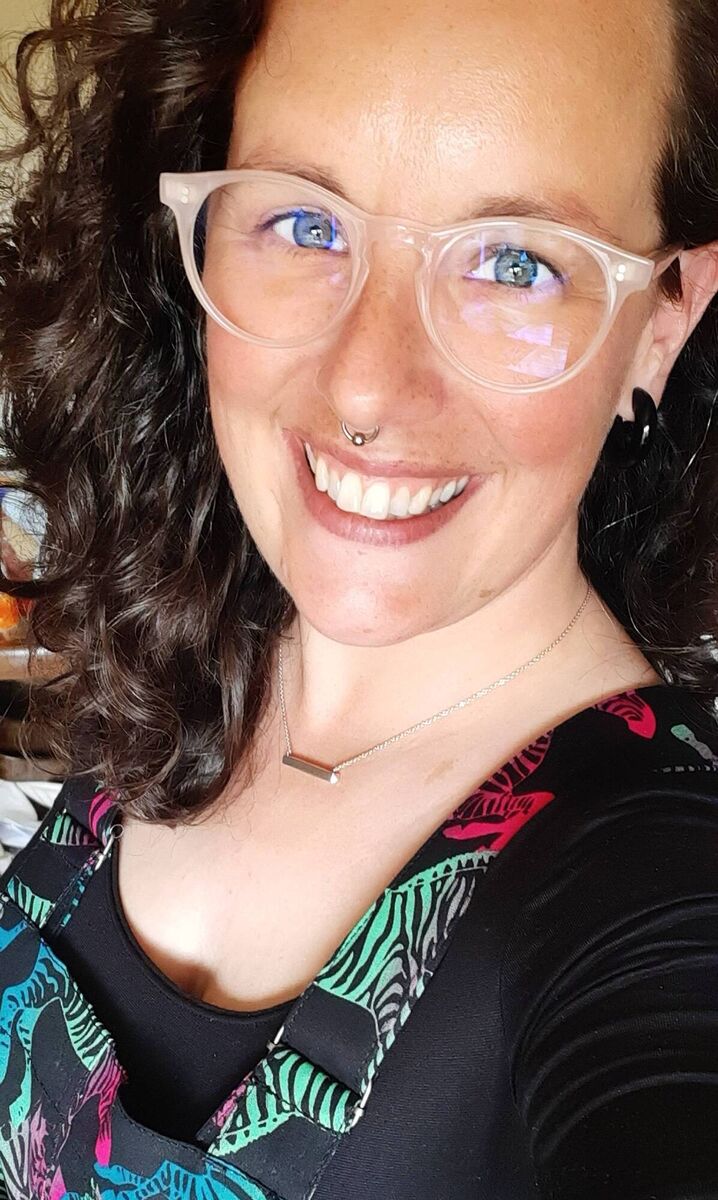
Managing work with parenting aside, she has been struck by the dichotomy of being a mother, experiencing both the joy and challenges it brings.
“I was four months pregnant when the first lockdown began so of all the shifts I’ve experienced over the last year and a half, I’m not sure what’s related to motherhood and what’s been more to do with the slower, quieter pace of life.
“I feel as though the process has unmade and remoulded me into a new, similar but very different version of myself,” she says.
In terms of work, there are the days she photographs on and the days she does admin and editing work.
“Any work admin generally gets done on my phone while I’m feeding the baby or after he goes to bed.
"I’ve just emailed a client at almost 11pm to tell her that her photos are ready for us to look at together — I can start to take meetings during the day now because the baby is starting to sleep more independently,” explains Éadaoin.
The juggle between paid work and care work has also prompted an identity shift for the photographer.
“I’m not sure how much that has to do with lockdown and how much has to do with the constant calculations I have to make throughout the day around naps and feeds and meals.
“Pre-lockdown/pre-baby, I engaged in a lot of busy work, a lot of admin and was very much tied to the idea of productivity being equal to worth, I’m unlearning that and it’s an exciting process,” she says.
Another major learning for Éadaoin since becoming a mother is valuing the work she is doing in raising a human being.
“I definitely still struggle with not feeling productive enough on those days when ‘all I’ve done’ is be a mother, but our son is a very happy and healthy child and I have the privilege of having the opportunity to be a huge presence in his life while also continuing to do my work and earn money,” she says.
@firechildphotography

CONNECT WITH US TODAY



Be the first to know the latest news and updates