Debenhams debacle: Reflecting on the longest industrial relations dispute in Irish history
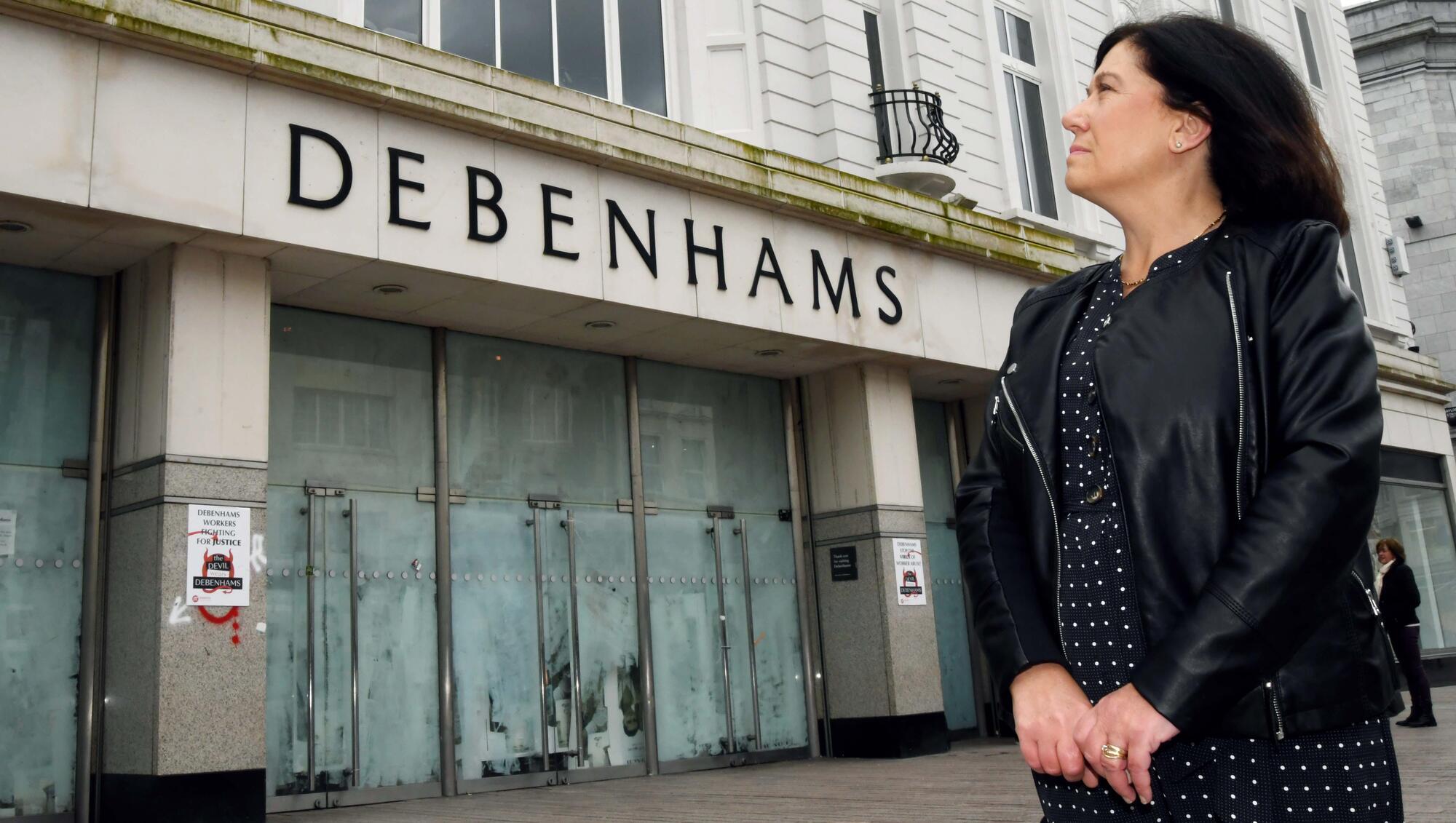
Valerie Conlon, shop steward, outside the former Debenhams store on St Patrick St, Cork, at the end of their 406-day struggle. "A change in Irish law would make the 406 days so worthwhile. The sit-ins, the threats of arrest, it would make all that worthwhile if we got that passed.". Photo: Denis Minihane
Two lonely signs remain outside the Debenhams Patrick St store, little ghosts from the fractious recent past still clinging to the present.
The slogans 'Debenhams stop the virus of worker abuse’ and ‘the devil wears Debenhams’ are written on them, taped to the door which tenacious former Debenhams workers guarded for a 406-day picket - the longest industrial dispute in Ireland.
Valerie Conlon, trade union shop steward for the shuttered store, recently removed the other large banners and placards from the iconic building, an emotional clear-out after her battle against a giant corporation, the Government and a system which she believes is often pitted against workers.
The picket ended last week when Mandate trade union workers voted to accept a €3m training and wellness fund instead of the two weeks redundancy pay per year of service that they were fighting for.
Accepting the deal was “very bittersweet”, Ms Conlon said she has learned and grown so much through the last 406 days and has few regrets.
“It was a sad day taking the signs to the dump this week. It was awful. Just throwing away 12 months of my life.
“But those 406 days have taught us all so much.
“My only regret is that I couldn’t get the redundancy payment that they were entitled to and that they deserved. But other than that, I have no regrets from it. It taught me so much and how could you have regrets then?” Their fight touched people all over Ireland and the world. Ms Conlon’s been invited to speak about their struggle on international radio and she’s become a regular on Irish media.
And when former Debenhams staff guarded a dark laneway at night to stop stock from being removed from the trade entrance to the premises, bus station employees from nearby Parnell Place would “keep an eye out” for them, stopping by if they ever felt they needed help.
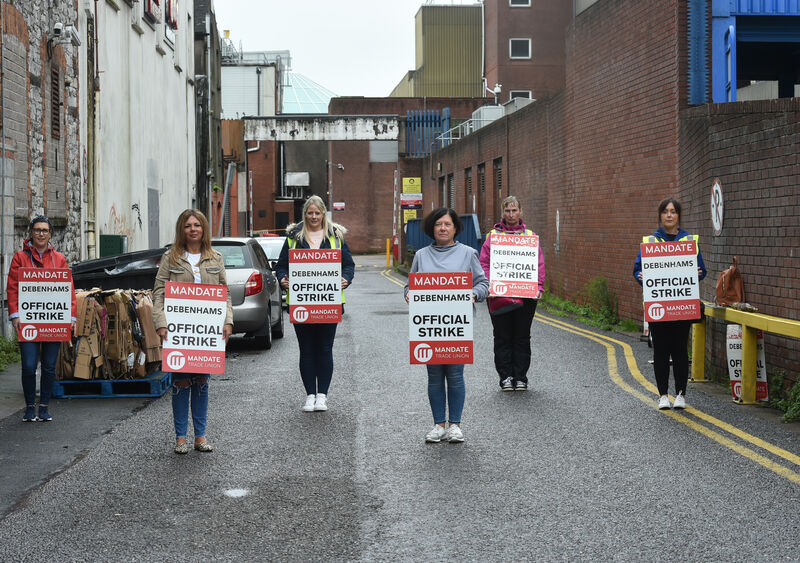
Up until last week, one man bought them a lottery ticket every Friday, hoping to change their luck.
And almost every day, people bolstered their resolve with words of support, or gifts of tea, coffee, sandwiches and treats to sustain them while they picketed through rain, hail and snow.
Watching crowds of people gather in support outside the former Patrick Street store through social media while Ms Conlon was inside the building during a two-day sit-in last year was the first time she saw just how many people were on their side.
“Seeing so many people who never worked in Debenhams gather outside that day to support us was incredible.
“We felt so supported throughout the entire picket by the people of Cork and of Ireland,” Ms Conlon said.
“Even the security in the bus station would keep an eye out for us at night time.
She believes that people really connected with their struggle because “they all knew it could happen to them or their children.” Patrick Street and Limerick were the only two premises from which no stock was removed during the dispute.
“We are so proud that they were able to hold them off [from emptying the store]. We had a very, very strong picket. The girls were brilliant, sitting in their cars throughout the night for the last week there before the ballot was announced.
“If you had said to me this time last year, ‘would you survive that?’ I’d have probably said ‘no way.’ But I think as things went on, everybody got stronger, because we knew what was at the end of it and they didn’t want to give up.” Now, the former Debenhams staff will concentrate on fighting for legislation to protect other workers in liquidations in future.
“We have to come away with something other than the €3m. To us, from the very start, it was very, very important that legislation was brought in so that this cannot happen again.
“Because there was Vita Cortex, there was Clery’s, La Senza. Each time they said something was going to be done but nothing was done. So this time we’re going to make sure that something is done. We’re not just walking away, we’re going to keep fighting for that.
“A change in Irish law would make the 406 days so worthwhile. The sit-ins, the threats of arrest, it would make all that worthwhile if we got that passed.” Solidarity TD Mick Barry has introduced legislation in the Oireachtas which would make workers who were owed redundancy or other monies, preferential creditors in a liquidation.
So if the company they worked for was dissolved, they would be first in line to receive any money owed as assets were sold off. The Bill would also make unpaid collective agreements into a debt in the eyes of liquidation law.
The Companies (Protection of Employees' Rights In Liquidations) Bill 2021, known as ‘the Debenhams Bill’ was inspired by the Debenhams struggle.
It received broad cross party support but the government parties recently used their majority to vote to delay a second reading of the bill by up to one year.
The Government proposes to establish an "independent forum" with employer and employee representatives and legal experts to consider the issues in the meantime.
“That made us very cross. They’re just delaying a process that needs to be done now,” Ms Conlon said. “Again, Government are looking after themselves, wasting time so they can bring in their own legislation instead, rather than protecting the employees of Ireland now.
“They don’t give a damn about us. They kept saying they felt sorry for us but they didn’t, we were just a thorn in their side. It was proof to us that the government certainly does not look after the average Joe Soap on the street.” She said that although her dealings with government over the past year has left her disenchanted with the political process it has also been a political awakening for her.
“If this happens to anyone after us I would tell them that they have to stand up and defend themselves. They can’t just go in a corner and hope someone will look after them. They have to get out there and they have to be heard.
“We’ve all learned so much from this process. I would never have been politically minded before. I just got on with my life, did the voting I was meant to do.
“And we’re keeping our picket boards to show them when they do come knocking on our doors looking for our votes.” But her experiences have made her consider a career in politics and she is toying with the idea of running for council.
“It’s been in and out of my mind. My children keep encouraging me. I might run for council.
“I might use my access to the training fund to train for political work.
“And I’m probably not the only one thinking along those lines across the 11 pickets.
Everyone is a lot stronger from it. We’ve grown more as people and we’ve grown stronger.”
Lifelong friendships have also been forged on the picket line. Ms Conlon said that her friendships with Madeline Whelan and Jillian McSweeney are now unshakeable.
“They have been there for me 24 hours a day. We’ve become lifelong friends. You couldn’t part us now. We’re meeting for coffee later!
“It’s really deepened friendship bonds. There were people you might say ‘hi’ to in the shop but now we know these people, we’ve grown with them over the last year, our personalities have changed.
“We have much stronger friendships now than what we would have had without the picket.” But picketing on the streets has also opened their eyes to the desperation, darkness and destitution in Cork City.
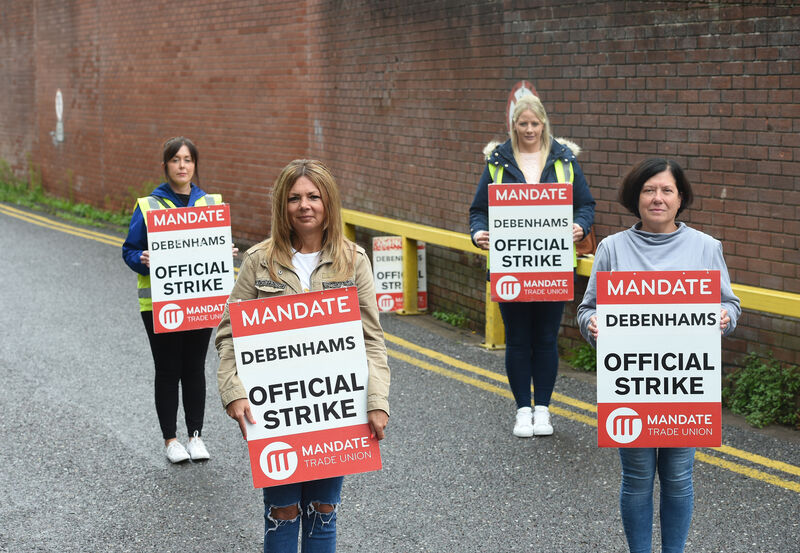
Dolores Mulcahy, 65, said that the city at night is a “sad and frightening place”.
“Cork City is not the place it was. I used to feel safe walking home at night before but it is not safe anymore.
“Even by day, during the lockdowns, the city did not feel safe.
“It’s a shame to see the city go that way.
“And retail has been decimated. The pandemic has got people even more used to online shopping. What’s going to happen to all these empty buildings?” She said that the number of people who are homeless, crouching in laneways, sleeping in bins and overdosing in doorways is sobering and deeply upsetting.
“These people are not out there because they want to be. They’re desperate,” she said.
"I never thought I’d see that level of desperation in Cork. He’s someone’s son.
“We’ve seen people overdosing on the street and had ambulances called. I don’t know what happened to those people afterwards. But they belong to someone.” Losing her job has forced her into sudden unemployment and she believes that her age is now a barrier to her finding new employment.
“I wanted to keep working but I’m unemployable now. I’ll just have to adjust to being at home,” she said.
“But I’ll keep fighting to have the law changed. We’re not giving up until that legislation is passed and the Duffy Cahill report [commissioned after the Clery’s liquidation] is implemented.
“It’s been worth the fight if that happens.
“It won’t help us but it will help others in the future.
“I’m a mother and a grandmother and I want to see those changes to protect future generations.
“Other people fought for our rights years ago so now we must fight for the next generation. That’s how positive change happens. If we can’t help others what are we here for?”
Debenhams, along with other high street stores, announces it is shutting its doors due to the Covid-19 pandemic. Debenhams stores did not reopen.
Then taoiseach Leo Varadkar announces a national stay-at-home order to battle the pandemic.
Debenhams staff are told that it is to liquidate its operations in Ireland and close all its stores, meaning their jobs are lost The Mandate trade union estimated that 1,500 people worked directly for Debenhams in Ireland.
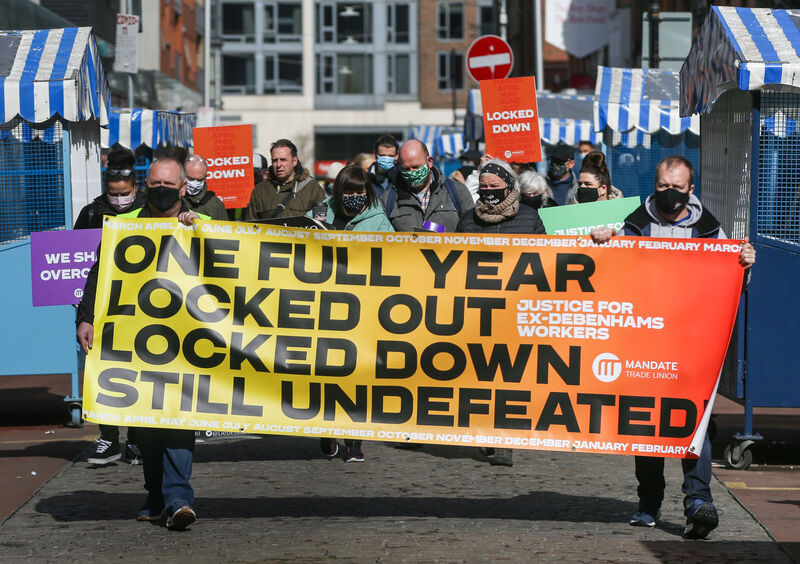
Socially distant protests would pop up at Debenhams stores across the country 26 May 2020: Former Debenhams workers physically block a van carrying what workers believe is a safe containing an estimated €70,000 from its closed Cork stores.
The protest reaches the 100-day mark
Six people are arrested in Dublin following a sit-in at the Henry Street store.
In the St Patrick's St store in Cork, workers there applauded gardaí as they left the scene of a sit-in, which saw them discuss the move with the demonstrators inside the building and leave without incident.
The Debenhams protest reaches 161 days, surpassing that of the Vita Cortex sit in which finished in 2012.
Former Debenhams workers march on the Taoiseach’s Cork office today demanding support from Government, which they say has treated them “shabbily and disrespectfully”.
Ireland enters a six week Level 5 lockdown meaning non-essential retail was closed.
Claire O’Leary prepares to give birth to her ‘picket-line’ baby. She tells the Irish Examiner: “The fact that my baby will be born now really shows what a long-lasting dispute this has been.”
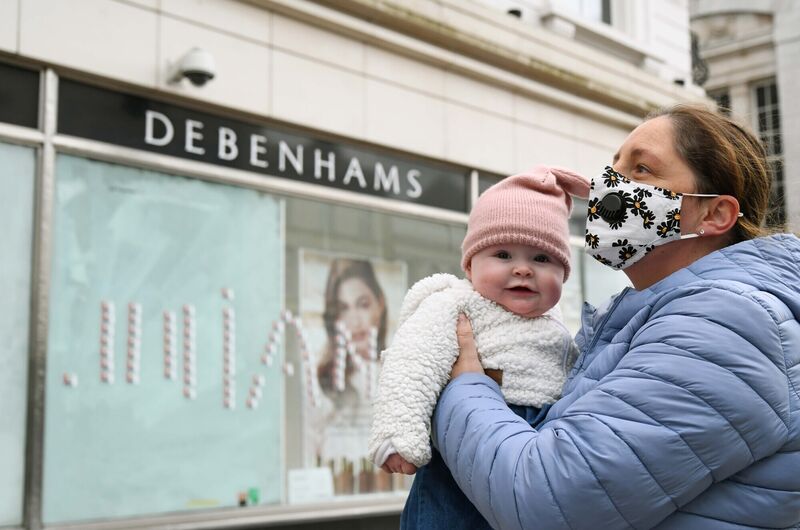
After 224 days, the Taoiseach meets with former Debenhams workers. Despite nothing being agreed, it was described as a “positive” meeting at the time.
It is confirmed that Labour Court chair Kevin Foley agrees to mediate the dispute.
Non-essential retail reopens in Ireland.
Christmas Day and the dispute reaches day 260.
Non-essential is closes again.
Debenhams shuts its online operations in Ireland.
Workers vote down a government deal that offered them a €3m training fund.
Picketing ex-staff in Cork find a homeless man sleeping in a bin. It led to appeals to waste companies to be vigilant while emptying bins.
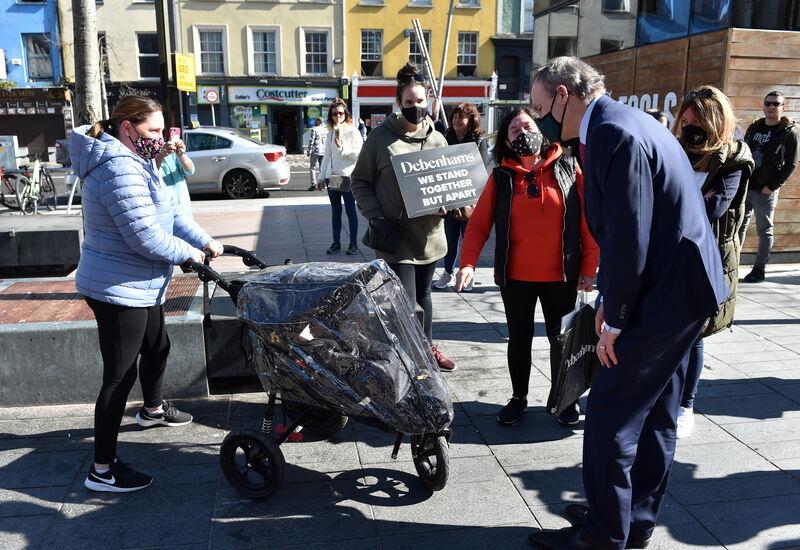
Online retailer Boohoo buys the Debenhams brand and website for £55m.
Protesters mark one year on the picket outside Debenhams stores.
Former Waterford staff are removed from their blockade of the store after a four-hour stand-off as attempts were made to remove stock.
Inspired by the Debenhams workers’ struggle, Solidarity TD Mick Barry brings the Companies (Protection of Employees’ Rights in Liquidations) Bill 2021, dubbed the Debenhams Bill, to the Dáil.
The legislation aims to make workers preferential creditors in a liquidation so they would be paid what they were owed as a priority.
Non-essential retail reopens fully for the first time in more than four months.
Former Debenhams workers in Limerick lie on the ground in front of trucks, preventing liquidators from removing stock.
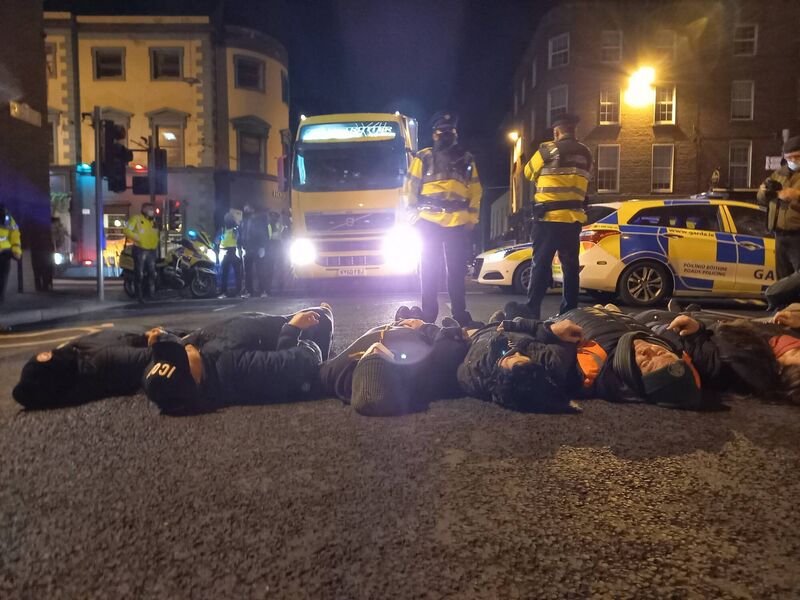
After 406 days, former Debenhams workers vote to accept the offer of a €3m training fund, bring the dispute to an end.

CONNECT WITH US TODAY



Be the first to know the latest news and updates