Non Irish-born personnel a 'growing Band of Brothers' in Defence Force
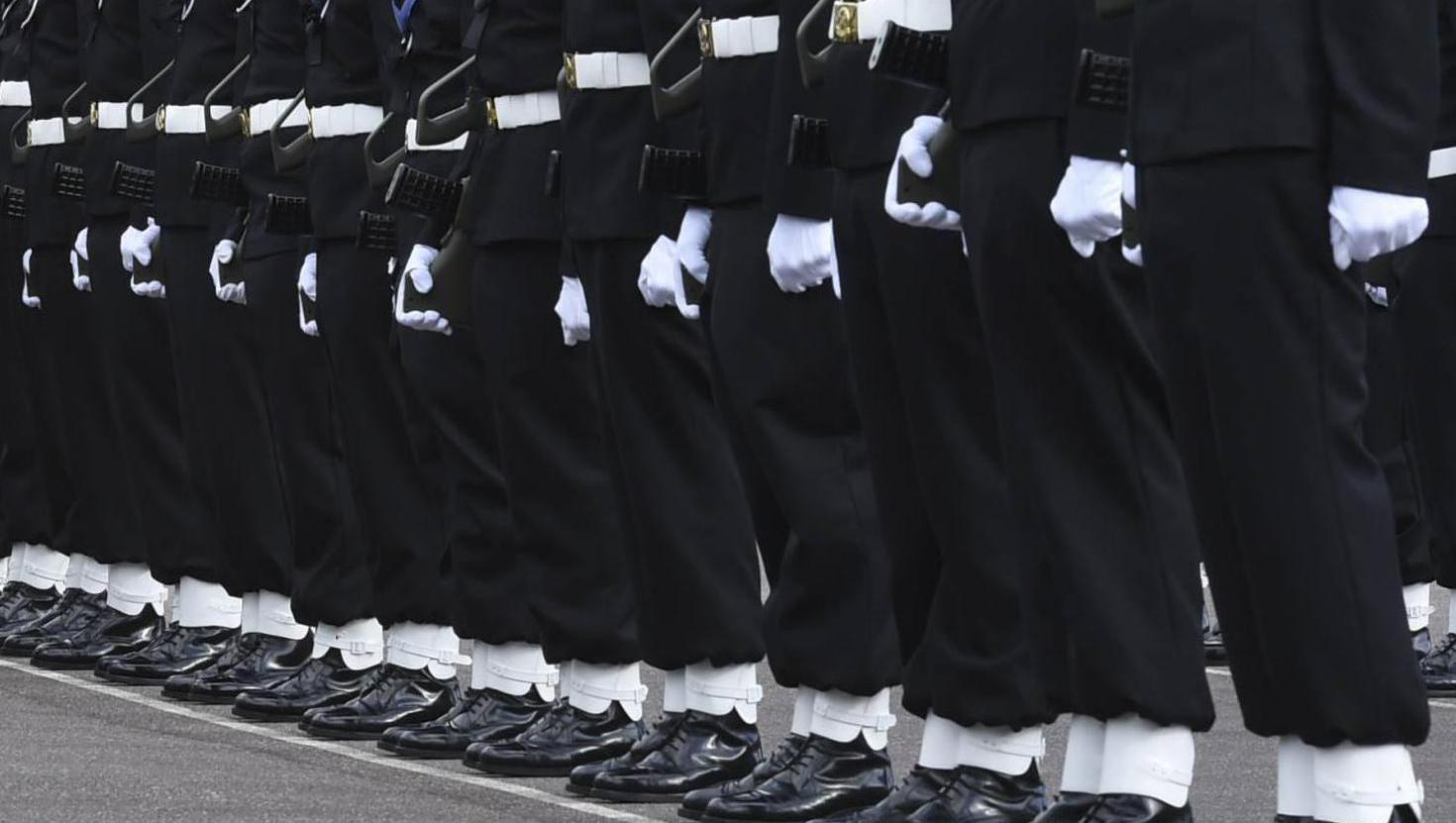
Among the lastest Naval Service recruits who passed out from training and who are foreign-born come from countries as diverse as Brazil, Croatia, Guinea, Romania, and Latvia. Picture Larry Cummins
Ireland has the longest peacekeeping record in the United Nations (UN). We are also a member of the UN Security Council and our forces are rapidly becoming a 'United Nations of personnel'.
Figures obtained by the show that while Irish-born personnel remain the backbone of the Army, Naval Service, and Air Corps, there has been a growing shift in the number of people joining up who were born elsewhere, which has been welcomed by Defence Forces Chief of Staff Vice Admiral Mark Mellett.
Today's Defence Forces include personnel born in far-flung parts of the world: While they include our nearest neighbours Britain, they stretch as far as Australia; North, South, and Central America; Africa; the Middle East, and Eastern Europe.
Ireland has a proud record in going to countries on international peace and security operations — including a number of countries some of our newest recruits come from.
The Defence Forces made its first contribution to peacekeeping in 1958 when approximately 50 officers were assigned to the United Nations (UN) Observer Group in Lebanon (UNOGIL) as observers along the Armistice Demarcation Line (ADL) between Lebanon and Israel.
After that came missions in the Congo, which unfortunately led to several Irish soldiers losing their lives, as also happened in Lebanon.
From 1958 there have been 70,000 individual tours of duty completed by Irish Defence Forces personnel.
Today, the Defence Forces have a particular advantage in the diversity that foreign-born personnel bring.
They have valuable multi-language skills and are able to provide an insight into cultures which our military may have not yet gathered, despite extensive overseas experience gained in many countries in the past by former and serving Irish-born personnel.
Currently, there are a significant and ever-increasing number of foreign-born personnel serving in the Defence Forces and it's projected this will become more pronounced in the years ahead.
Defence Forces Chief of Staff Vice Admiral Mark Mellett has welcomed the new diversity among his ranks and said it signified the change from an indigenous Irish society to one which is becoming more and more multicultural, like many other European states.
The British-born contingent is the largest outside the Irish-born and it's believed the vast majority have Irish parentage and came back here because of a sense of belonging; they account for 428 personnel.

The next biggest cohort are of European birth. However, some figures supplied by the Defence Forces press office show many just opted on their application form just to give 'Europe' of their place of birth.
In total they account for 110: The largest contingent hail from Poland, with 37; there are also other personnel who were born in France, Germany, Serbia, Belgium, Ukraine, Italy, Cyprus, and Austria.
The North Americans, from the USA and Canada account for 28. Again it's believed that a number of them have Irish heritage, the majority of whom are second generation who wanted to come back and protect the motherland of their ancestors.
From further afield, there are eight Defence Forces members who were born in Australia. Again it's understood that many of them have the same paternal or maternal links to this 'mother country'.
Interestingly, there are 15 personnel who were born in Africa, five from Asian countries and another five from the Middle East.
The Defence Forces press office was asked if there was any connection with the influence of Irish peacekeeping UN troops serving in these regions, especially in Lebanon and the Middle East as a whole. A spokesman said they didn't have any details about that.
It's unprecedented that one-fifth of a Naval Service recruit class who recently 'passed out' to become fully-qualified seamen were foreign-born.
However, in many cases they and others like them now joining the Defence Forces share a common bond — their relatives served their native country's military.
The latest recruit class in the Naval Service — called 'Deirdre', after one of their former ships — contained 25 personnel.
Five were foreign-born, including the first Rastafarian to join the Defence Forces, resplendent with his envious dreadlocks among comrades sporting more sombre military-style crewcuts.
The was the first to exclusively report that Ansoumane Firkins, who was born in Guinea in West Africa, had joined up and will be allowed to keep the locks because that's part of his religion. Military high-command is openly courting such diversity.

Tamba Kallas Traoré, his late grandfather, served in Guinea's military; Ansoumane pointed out proudly that he was one of the country's founding fathers when in 1958 it gained its independence from France.
This newspaper also highlighted the story of his colleague, Brazilian-born Luis Eduardo Espindola Caldas. His father, also Luis, served with that country's special forces and was a trained medic.
In the same group was Filip Bezjuk, 23, who was born in Croatia:
Filip came to live in Ireland three years ago and his sister also lives here now.
He pointed out that his father was in the merchant navy back in his country of birth.
This explains the affinity with the sea and he added very emphatically that he's “loving it” [the Naval Service].
Raul Muresan, 25, was born in Romania. He came to live in Ireland at the age of 16, moving to Waterford.
“My dad, Adrian, was in the Romanian Army,” he said.
Raul, however, preferred seafaring for an early age and has found his niche.
He explained that at the start of 2018 he joined as a volunteer with the Waterford Marine Search and Rescue unit. Then Raul joined the Naval Service Reserve and felt it was an obvious progression to join the full-time regulars.
“I like being on the water, I love it,” Raul said.
The exception to the military heritage rule amongst the five foreign-born men is Daniels Tuceks, who is a native of Latvia.
The 19-year-old moved permanently to Ireland three years ago, living with his family in Baileboro, Co Cavan.
“I am the first person in my family to join the military. I wanted to do something to challenge myself and this is it,” Daniels said.