From Shannon to Dallas: President John F. Kennedy's final journey
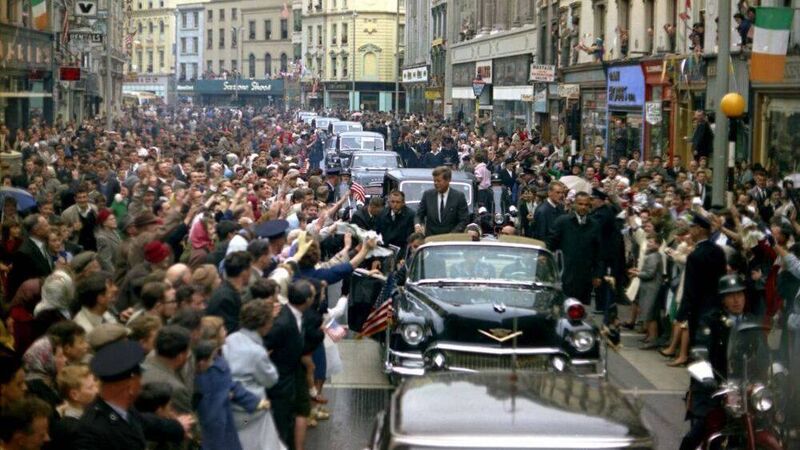
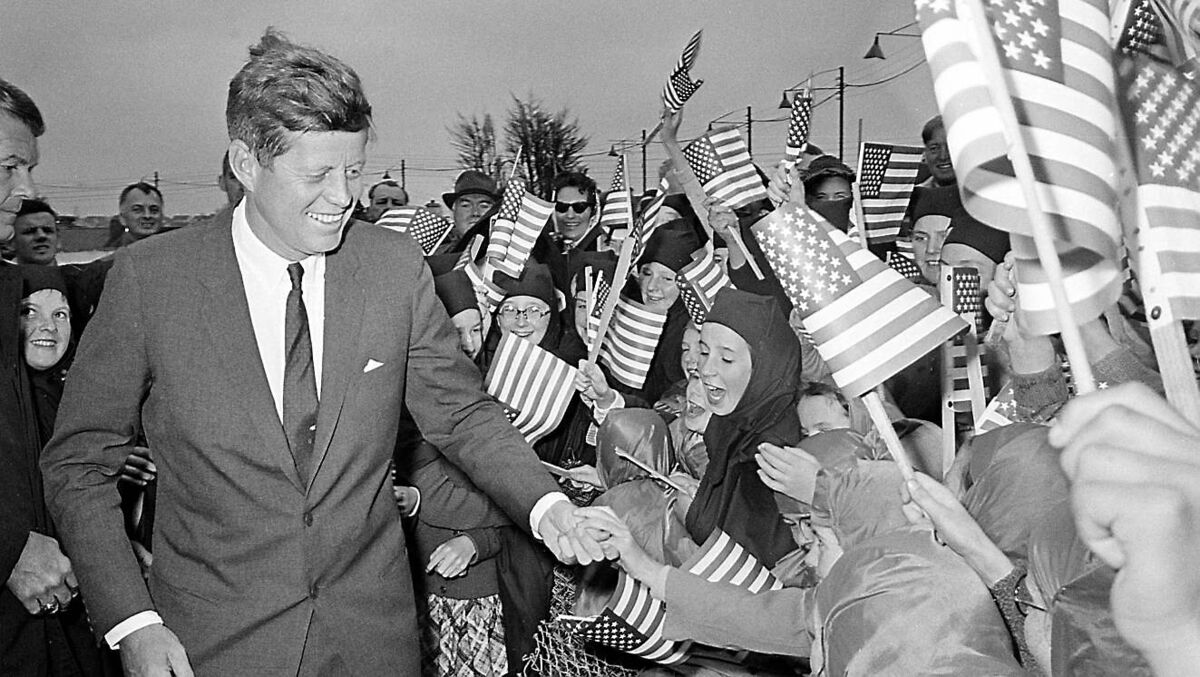
President John F. Kennedy's Motorcade through Cork in June 1963
THE distance from Shannon Airport to Dallas, Texas, is 7,045km. It took the 35th president of the United States 146 days to make this journey, although he took a rather circuitous route.
On 29 June 1963, John Kennedy spent his last ever day on Irish soil. Prior to departing, Kennedy famously said "this is not the land of my birth but it is the land for which I hold the greatest affection and I certainly will come back in the Springtime".
That pledge was not honoured because of an assassin’s bullet in Dealey Plaza, Dallas, on 22 November 1963. Kennedy’s time in Ireland has been described as the happiest of his presidency, but from the moment he departed on Air Force One he rode a political and emotional rollercoaster.
Between leaving Shannon and arriving in Texas, Kennedy experienced some of the most tumultuous and defining days of his presidency.
In this short 21 week period, Kennedy triumphantly concluded an important test ban treaty. He significantly advanced détente with the Soviet Union. He put out peace-feelers towards Cuba and China.
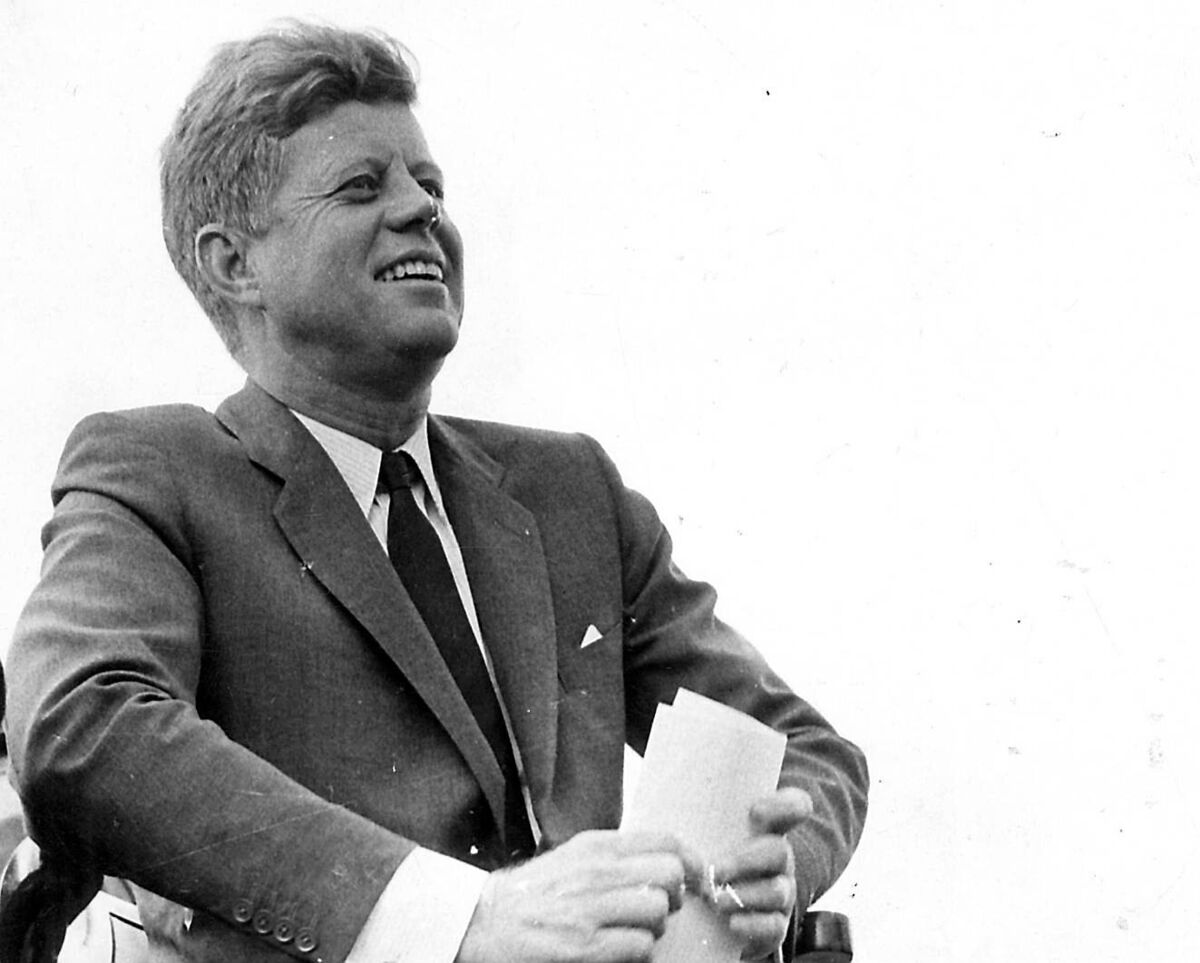
His administration was complicit in a coup in Vietnam while, at the same time, Kennedy was, paradoxically, planning to downscale American involvement in South East Asia.
He endured the huge personal bereavement of losing a child. He made incremental progress on the burning issue of civil rights legislation. He also began, to all intents and purposes, campaigning for his re-election in 1964.
Kennedy got the biggest laugh of his Irish visit when he started to say that Limerick was his final stop before going on to England and then Italy.
Instead, he caught himself, and said, "From here I go to – another country – and then Italy."
Kennedy had told his close adviser, Kenny O’Donnell, that his visit to Ireland was "a pleasure trip."
In contrast, Kennedy’s visit to England involved significant political business, but before this could be conducted, the president availed of the opportunity to discharge a family debt of honour.
Minutes after the President’s plane left Shannon Airport, the White House announced that Kennedy would visit a family grave in Derbyshire and Air Force One made a hitherto unpublicised stop at Waddington RAF base, where Kennedy transferred by helicopter to the Chatsworth Estate in the Peak District.
There he paid his first and only visit to his younger sister Kathleen’s grave. She had died in a plane crash in France in 1948 and had been buried on the estate of her late husband, an English aristocrat and heir apparent of the tenth Duke of Devonshire.
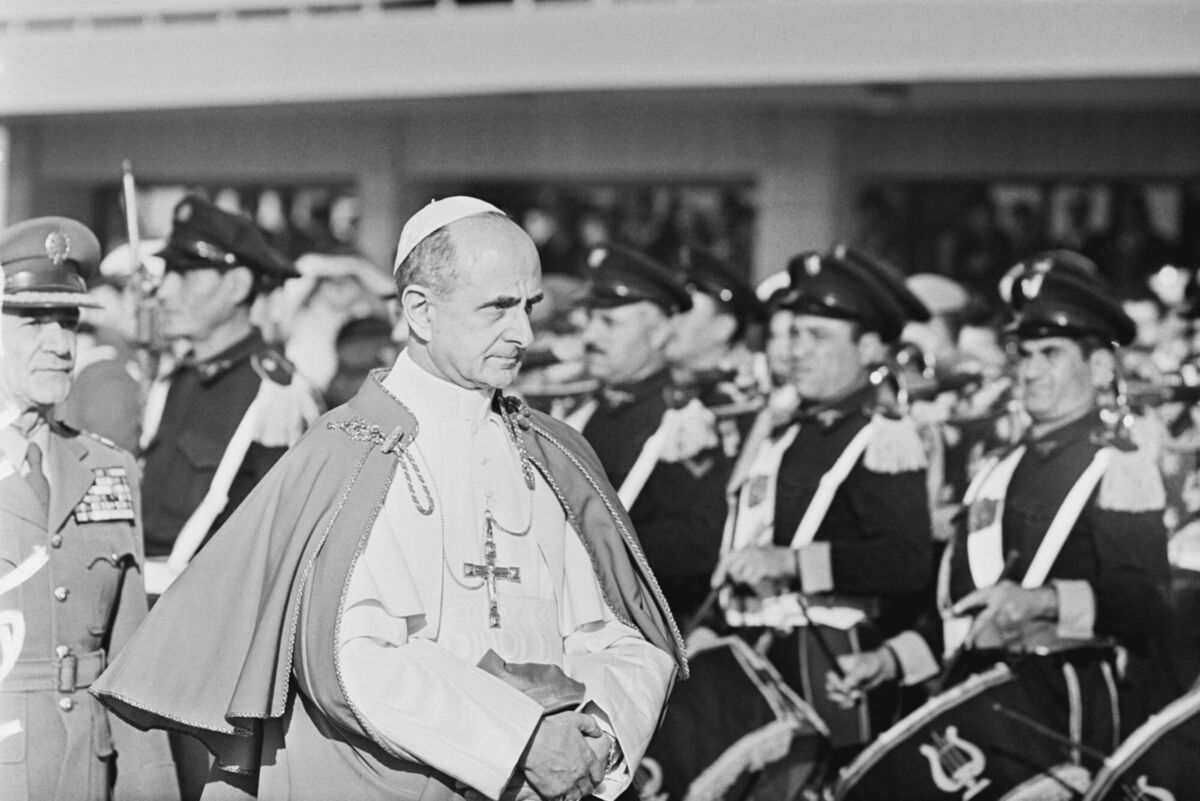
After a short stay, Kennedy’s next stop was Italy, where he rested at Villa Serbelloni, a Rockefeller Foundation-owned property, at a northern beach resort on Lake Como.
His visit coincided with the coronation of Pope Paul VI, but after consulting with Cardinal Cushing from Boston, Kennedy did not attend the ceremonies.
"Stay away from Rome until after the coronation," the Cardinal advised. "It’s the biggest day of the man’s life and you don’t want to take the play away from him."
Kennedy waited until two days after the coronation before he went to the Vatican to meet with the new pope. This meeting was, in fact, a renewing of acquaintanceships because Paul VI had first met the president and other members of the Kennedy family at the coronation of Pope Pius XII in 1939.
On that occasion, Ted Kennedy had received his First Communion from Pius XII. Journalists who accompanied Kennedy’s delegation to the Vatican reported that "Kennedy appeared clearly moved by the [private] audience with the Pope."
In the days prior to the president’s meeting with Paul VI, there was heightened newspaper speculation as to whether Kennedy would kiss the Pope’s ring, which is the custom for Roman Catholics when received by the Pontiff.
Kennedy, however, had no intention of doing so because "he was visiting Paul as a head of state, not as a Catholic".
He was determined not to give ammunition to those who believed that a Catholic president would be subservient to Rome. According to Shaun Casey, the author of 'The Making of a Catholic President', "the argument was, when push came to shove, a president who was Roman Catholic would ultimately be more loyal to the Vatican because the fate of his eternal soul was at stake".
On 7 October, the historically-minded Kennedy formally signed the Limited Test Ban Treaty, on behalf of the United States, during a specially staged ceremony in the White House’s Treaty Room on the same table which President William McKinley had signed the peace protocols that concluded the Spanish–American War in 1898.
The Test Ban Treaty was just one of a series of measures that Kennedy pursued in the Autumn of 1963 as part of a wider peace strategy.
Kennedy had entered into office as a dedicated Cold War warrior, but the Cuban Missile crisis in October 1962, in which the world had come to the brink of nuclear annihilation, had deeply affected him.
He had come to the stark realisation that both the United States and the Soviet Union had, in his own words, a "mutual interest in avoiding mutual destruction".
Rather than an arms race, by 1963 Kennedy was engaged in a race for peace. Though he personally abhorred Communism, Kennedy confronted hawkish attitudes and argued that peaceful co-existence between East and West was not just possible, but essential to the survival of mankind.
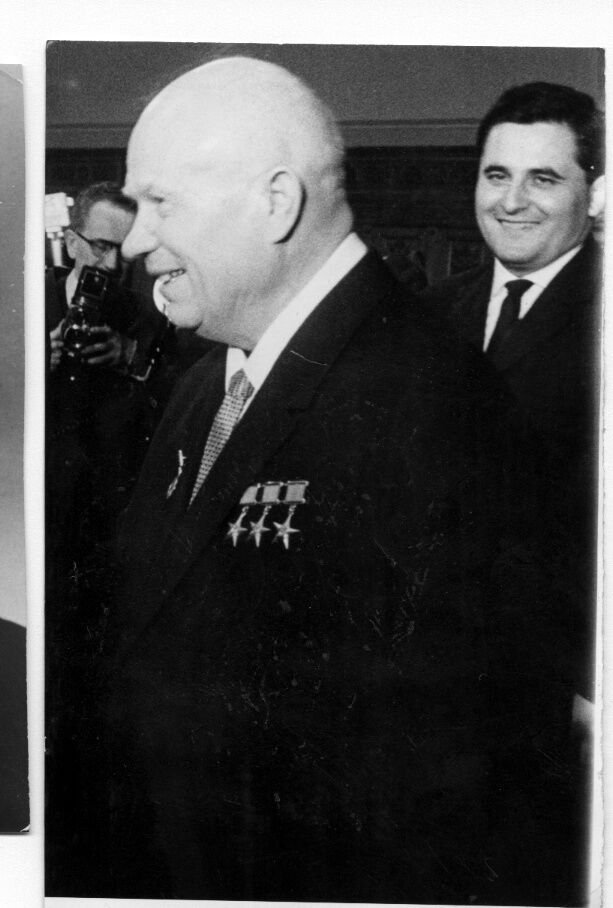
In an extraordinary speech to the United Nations General Assembly on September 20, Kennedy made a direct appeal to the USSR to work with the United States in pursuit of a sustainable peace.
He said: "I would say to the leaders of the Soviet Union, and to their people, that if either of our countries is to be fully secure, we need a much better weapon than the H-Bomb – a weapon better than ballistic missiles or nuclear submarines – and that better weapon is peaceful co-operation."
Kennedy’s actions in this period show that this was not mere rhetoric.
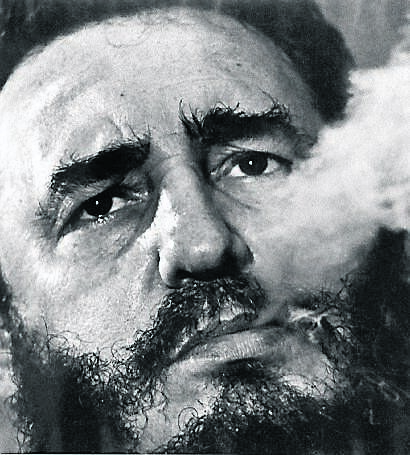
In September 1963, he authorised a back-channel of communications with Fidel Castro’s Cuba, via William Attwood, a key official of Adlai Stevenson, the United States Ambassador to the United Nations.
His eagerness to arrive at an accommodation with Cuba is evident from the fact that, alongside the Attwood initiative, Kennedy himself also personally opened a second back-channel to Castro.
On October 24 1963, Kennedy met with Jean Daniel, a socialist and noted French journalist, who that November was travelling to Havana. Kennedy told Daniel, who he knew would report the conversation back to Castro, that the United States could peacefully co-exist with Cuba and would end the economic blockade if Castro’s regime stopped attempting to export communism to other countries in the region.
In his memoir, published in 2006, Castro wistfully recalled Kennedy’s assassination as a lost opportunity for United States–Cuban relations.
"The day he was killed I was talking to a French journalist, Jean Daniel, whom Kennedy had sent to me with a message, to talk to me."
"So communications were being established, and that might have favoured an improvement in our relations ... when [Kennedy] was taken from the stage he had enough authority in his country to impose an improvement in relations with Cuba."
If the secret peace feelers that Kennedy was extending towards Castro in the final weeks of his life had been revealed at this time, there would have been consternation within the sizeable Cuban community in Florida, one of the southern states Kennedy was prioritising for his 1964 re-election campaign.
Kennedy was prepared to risk this to put in place the foundations for a new direction on Cuba in his second term, at which point he would no longer have to worry about facing the American electorate again.
In the meantime, Kennedy had to walk a fine line between securing re- election and deepening his peace strategy. He knew that he would have greater room for manoeuvre in his second term and he confided in his friend, David Ormsby-Gore, the British Ambassador to Washington, that if he was re-elected he intended to visit Moscow as a step towards further improving United States–Soviet relations.
Kennedy also intended to explore détente with China in his second term.
In his 1967 book, 'To Move a Nation: The Politics of Foreign Policy in the Administration of John F. Kennedy', Hilsman contended that Kennedy turned ‘a small corner’ in policy towards China by explicitly abandoning the Dulles assumption that Chinese Communism was a passing phase, whose passing America should hasten by isolation.
Kennedy had already begun the process of preparing the United States public for this unprecedented engagement with the Communist world.
On October 17, 1963, Josip Tito, the President of Yugoslavia, became the first Communist head of government to be received at the White House.
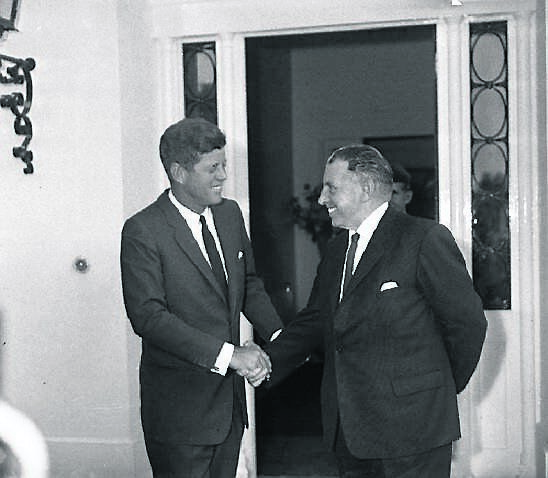
Tito arrived at the White House by helicopter and, in greeting him, Kennedy told the assembled media it was a good thing that countries with differences in political philosophies should try to know the policies of each other "to lessen the danger of war".
Kennedy was, however, clearly conscious that Tito’s visit was going to be the subject of some domestic criticism and he did his best not to be seen as being overly friendly to the Communist dictator.
A joint statement from both leaders said the basis for war could be reduced and world peace assured if all nations contributed their "determined effort and support".
The statement also said that both leaders looked forward to the development of improved relations in the "expansion of normal trade, economic contacts and cultural and scientific exchanges".
As a further gesture of goodwill, Kennedy also promised to send surplus army barracks, which would house some 10,000 victims of the Skopje earthquake.
Read More
On departing the White House, Tito described Kennedy as "a good partner for discussion" and revealed that he had invited the United States President to Yugoslavia.
Though Kennedy saw diplomatic engagement with the Communist world as a means to break down barriers in pursuit of peace, his approach was a gradualist one, at least until he could secure re-election.
Kennedy was an electoral realist and he knew that extending olive branches to Communist leaders had to be carefully managed for fear of generating suspicion and alienating voters.
Even as Kennedy conferred with Tito, a picket of about 100 Serbian-Americans and Croatian-Americans paraded near the White House with placards protesting: ‘Murderer’, ‘Red Pig’ and ‘JFK don’t shake hands with killer.’
Tito’s visit had also led to criticism from both the president’s political friends and foes in US Congress.
Tito’s visit had almost immediately followed on from a less contentious and more light-hearted state visit. Two days previously, then taoiseach, Seán Lemass, had been the guest of honour at a state dinner which concluded with a private late night party in the President’s White House quarters.
Gene Kelly, the celebrated Hollywood star, performed for the guests and Dorothy Tubridy, an Irish friend of the Kennedy family, sang the 'Boys of Wexford'.
After noticing how much this song had moved the president, his sister, Eunice Kennedy-Shriver, with Lemass’s help, sourced a recording of it to give to him at Christmas. It was a present that John Kennedy would never receive.
In the final autumn of his life, as Kennedy publicly strove to underpin world peace, he was privately mourning the death of his newborn son.
Patrick Bouvier Kennedy was born on 7 August 1963. He died two days later at Boston Children’s Hospital of Hyaline Membrane disease, a respiratory distress syndrome.
The White House press secretary broke the news to journalists, though some had guessed at the tragedy even before Pierre Salinger had begun his briefing:
“Patrick Kennedy died at 4.04 am,” he said. “The struggle of the baby boy to keep breathing was too much for his heart."
Patrick Kennedy, named after the president’s great-grandfather who had left New Ross during the Great Famine, was the first child born to an incumbent United States president in almost seventy years.
The birth of the Kennedy baby had been the subject of much anticipation and comment in the United States media and Patrick’s premature death was the cause of genuine national and international mourning.
Though Kennedy requested that his son’s passing be respected as a private family matter, the Kennedy family’s despair and every morsel of information regarding the baby’s death was considered front-page news and syndicated around the world:
When the president arrived, Friday morning he wore his grief on his face.
His eyes were red and swollen as he strode from the helicopter to the hospital room where his 34-year-old wife is recuperating from the caesarean birth.
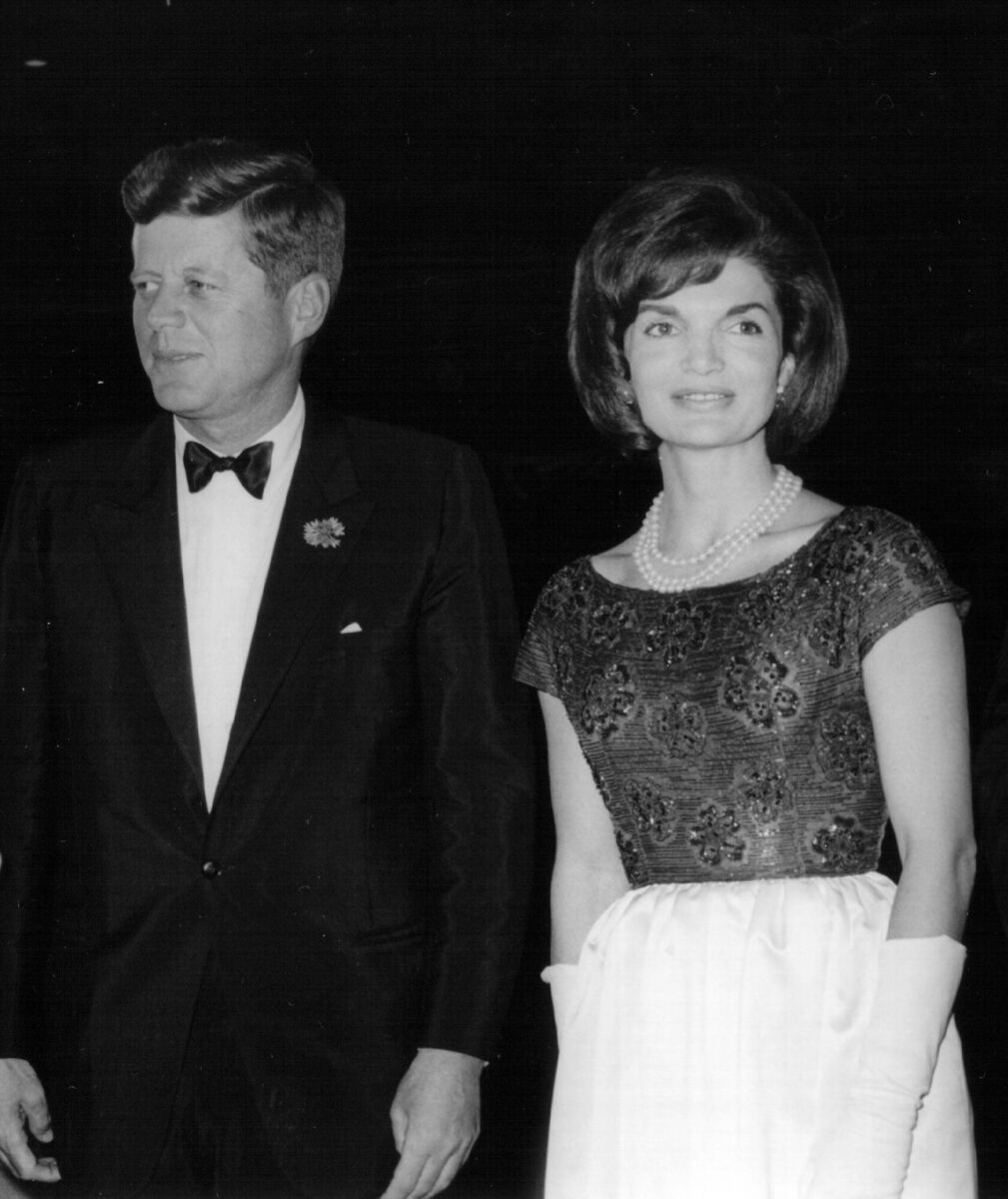
He was spared the anguish of telling his wife that the infant had died despite the combined efforts of some of the nation’s finest pediatricians, who used a rare treatment in an effort to save his life.
Dr John W. Walsh, the first lady’s obstetrician, gave her the sorrowful news when she awoke Friday morning. She then was given a mild sedative and slept until her husband arrived.
When Kennedy emerged from the hospital, he cast his eyes downward and bit his lip. The entire area was deathly still outside the hospital and no one spoke.
Later, he helicoptered to the summer White House at Squaw Island to see his five-year-old daughter, Caroline, and two-year-old son John Jr., apparently to tell them gently the brother they had looked forward to was dead.
Vietnam also loomed large in Kennedy’s consciousness in this period.
From mid-August 1963, Kennedy had prevaricated on whether his administration should support a coup against the South Vietnamese president, Ngo Dinh Diem.
Diem had increasingly fallen under the sinister influence of Madame Nhu, the wife of his younger brother. Diem’s government was engaged in a campaign of persecution against South Vietnamese Buddhists.
In protest at this repression, in June 1963, a Buddhist monk, Thich Quang Duc, had burnt himself to death in Saigon. Photographs of Quang Duc’s death received huge coverage in newspapers and Kennedy remarked that "no news picture in history has generated so much emotion around the world as that one".
Further immolations followed and continued media coverage of these incidents horrified millions across the globe, including Kennedy.
Madame Nhu made matters worse by referring to the immolations as ‘barbeques’ and offering matches and fuel for further immolations.
On November 1, having received assurances from the United States Ambassador Henry Cabot Lodge that the United States would not intervene, the South Vietnamese Generals ousted Diem in a coup d’état.
Whatever about effecting regime change in Vietnam, Kennedy was determined to ensure that the United States did not become enmeshed in South East Asia.
On October 2, Kennedy asked his defence secretary, Bob McNamara, to announce the immediate withdrawal of 1,000 soldiers and to pledge that all American forces would leave Vietnam by the end of 1965. This commitment was reversed in the immediate aftermath of John Kennedy’s death.
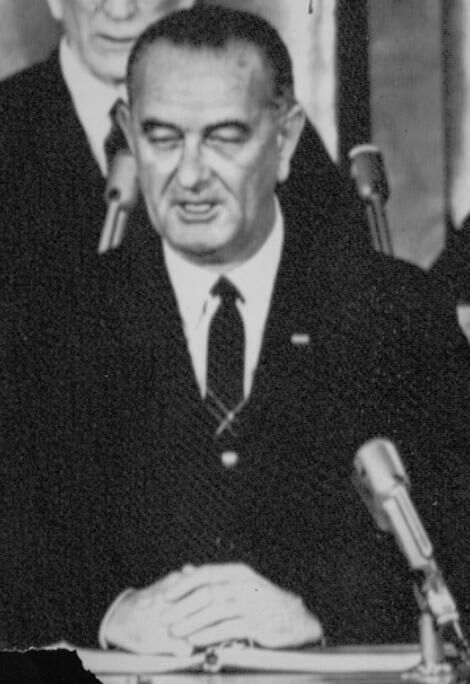
During president Lyndon Johnson’s administration, the United States pursued a policy of military escalation in Vietnam, which was publicly criticised by some of Kennedy’s former close aides, including Hilsman and Salinger.
Hilsman resigned from Johnson’s administration in February 1964 after "fighting a losing battle against what he considered a disastrous American strategy in Vietnam".
In an interview with CBS News anchorman Walter Cronkite on September 2, 1963 in Hyannis Port, Kennedy had emphasised that there would be no Americanisation of the war on his watch: "In the final analysis, it is their war. They are the ones who have to win it or lose it."
Hilsman stressed that this was not a throwaway remark from Kennedy and that, although the 35th president believed the United States should advise and assist, "President Kennedy made abundantly clear to me on more than one occasion that what he most wanted to avoid was turning Vietnam into an American war. He was sceptical of a policy of escalation and of the effectiveness of an air attack on North Vietnam."
In the final months of his life, Kennedy believed that if Communism could not be defeated in Vietnam, he needed to give himself enough leeway to be able to enter negotiations for a settlement without fatal consequences to America’s position in the rest of Asia, a factor that would be complicated if American troops had become immersed in the conflict and United States military pride was dented.
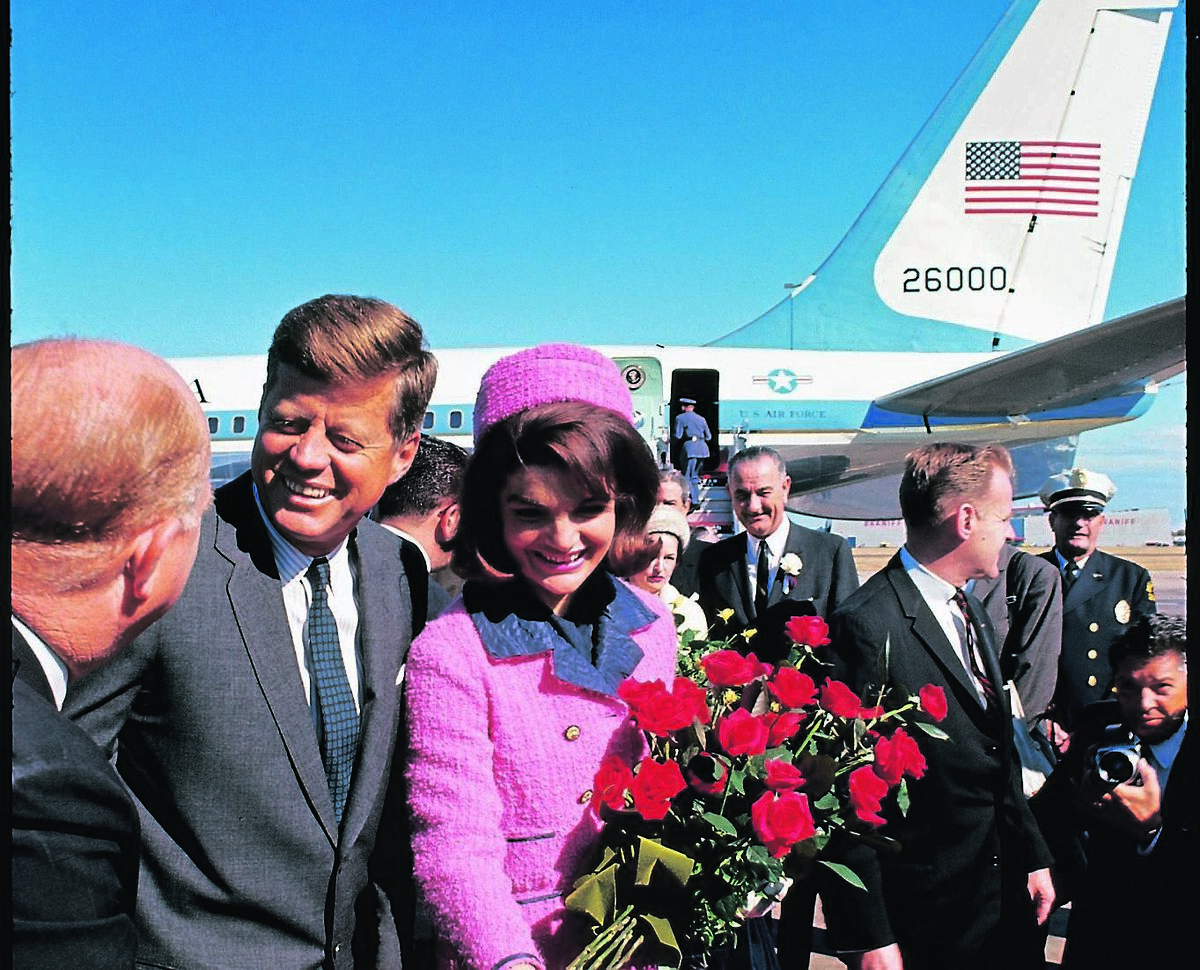
By the autumn of 1963, Kennedy had arrived at a fixed position in his own mind that he would never commit combat troops to Vietnam, a position that Hilsman has affirmed in a significant but unheralded speech at Corning Community College, New York, in March 1968.
At the time of the Kennedy assassination, there was only 15,000 American ‘advisers’ in Vietnam, Hilsman said. President Kennedy always thought of it as "their war – win or lose," Hilsman said. "And if they lost, Kennedy would have gone to Geneva with the hope of getting the best possible settlement".
In his 1971 BBC interview, Salinger also emphasised that Kennedy’s commitment to Vietnam was a limited military one. Contrasting Kennedy’s approach to that of president Johnson, Salinger maintained that Kennedy never intended a major escalation in Vietnam and contended that only the South Vietnamese could solve their problems with the Communist North.
On 28 August, Kennedy stood at the third-floor window of the White House solarium with Preston Bruce, the White House doorman, and watched a crowd of over a quarter of a million people march to the Lincoln Memorial.
Gripping the windowsill, Kennedy turned to the African American staff member and said: "Oh, Bruce, I wish I were out there with them."
The rally organised by the Civil Rights Movement was the largest ever mass protest in American history. After Martin Luther King had delivered his iconic "I have a dream" speech, Kennedy had a robust encounter with leaders of the Civil Rights Movement in the Oval Office.
The civil rights leaders wanted Kennedy to expand the scope of his civil rights bill to include a Fair Employment Practices Commission, which would prevent racial discrimination in hiring.
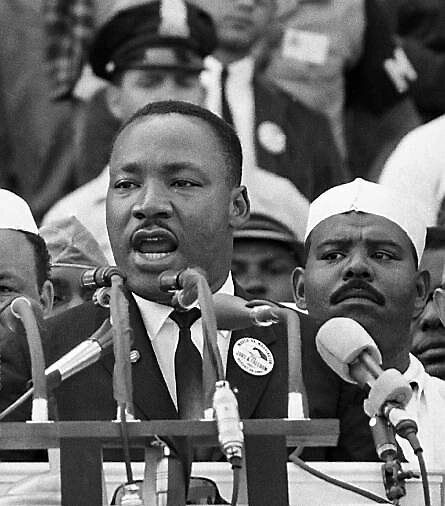
The president however doubted that an expanded bill, including this fair employment measure, would attract significant support to pass through Congress.
Kennedy was fully committed to the civil rights agenda, but he took a piecemeal, pragmatic approach. A Gallup Poll in October 1963 showed that Kennedy’s approval rating had dropped from 50 to 35% after he had submitted his civil rights bill.
A Harris Poll in the Washington Post on 14 October suggested that Kennedy would lose up to half of the southern States he had won in 1960.
The President’s visit to Texas was about shoring up southern support. With an eye on the 1964 election, Kennedy was already in campaign mode.
He had visited Tampa, Florida, on November 188, 1963. On this trip, Floyd Boring, a secret service agent who had previously foiled an attempt on president Harry Truman’s life, expressed concerns to Kennedy that by travelling by open-top motorcade the President was endangering his own safety.
Kennedy replied: "Floyd, this is a political trip. If I don’t mingle with the people, I couldn’t get elected as a dog catcher."
Kenny O’Donnell later told the Warren Commission, Kennedy’s journey through Dallas was planned to give the president maximum public exposure.
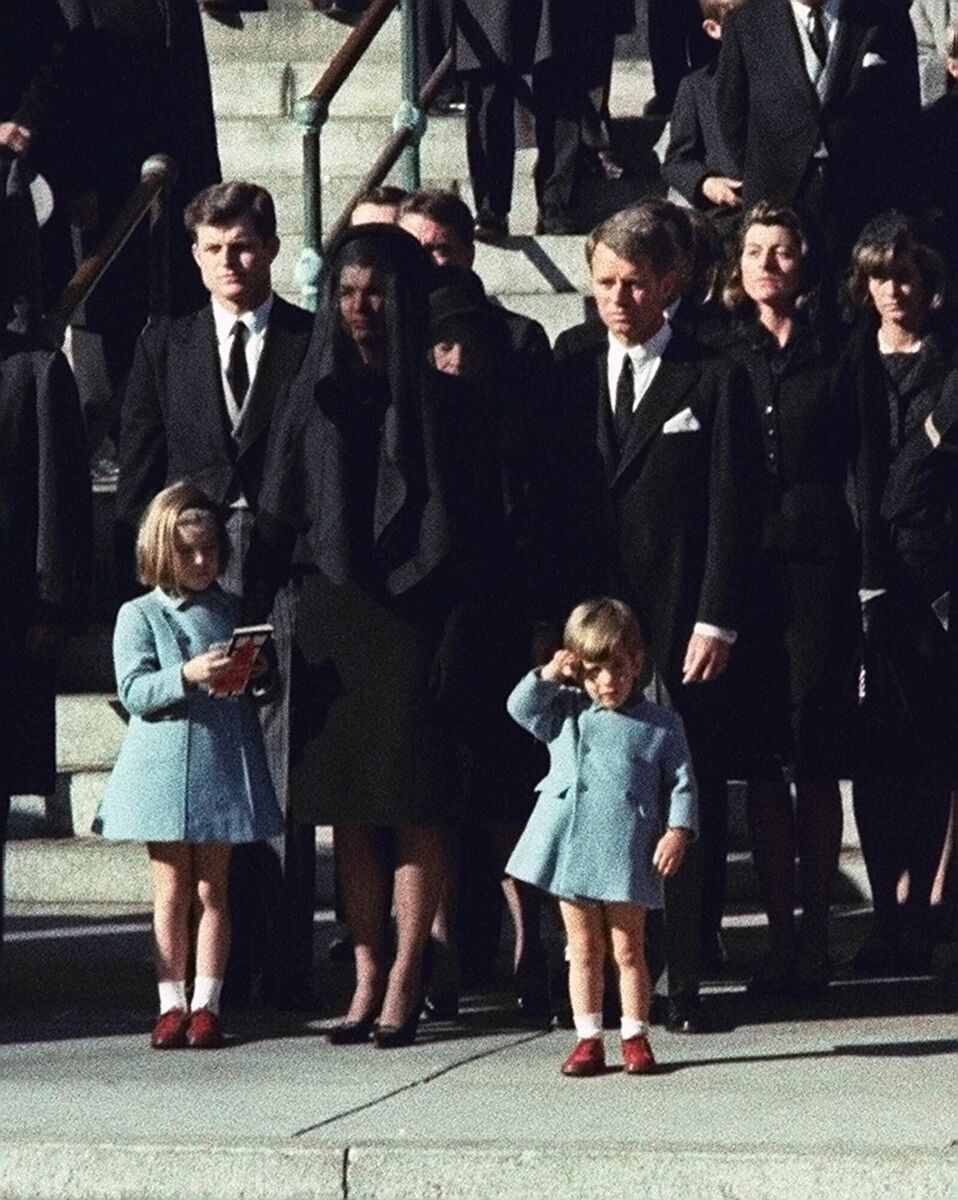
At 12.30pm on November 22, 1963, John F. Kennedy’s open-top motorcade turned left onto Elm Street in Dallas.
Seconds later shots rang out which would change the course of history.
It was just 146 days since John Kennedy had said goodbye at Shannon.
Read More


CONNECT WITH US TODAY



Be the first to know the latest news and updates