Photo essay: Brexit is no fisherman’s friend as industry navigates uncertain waters
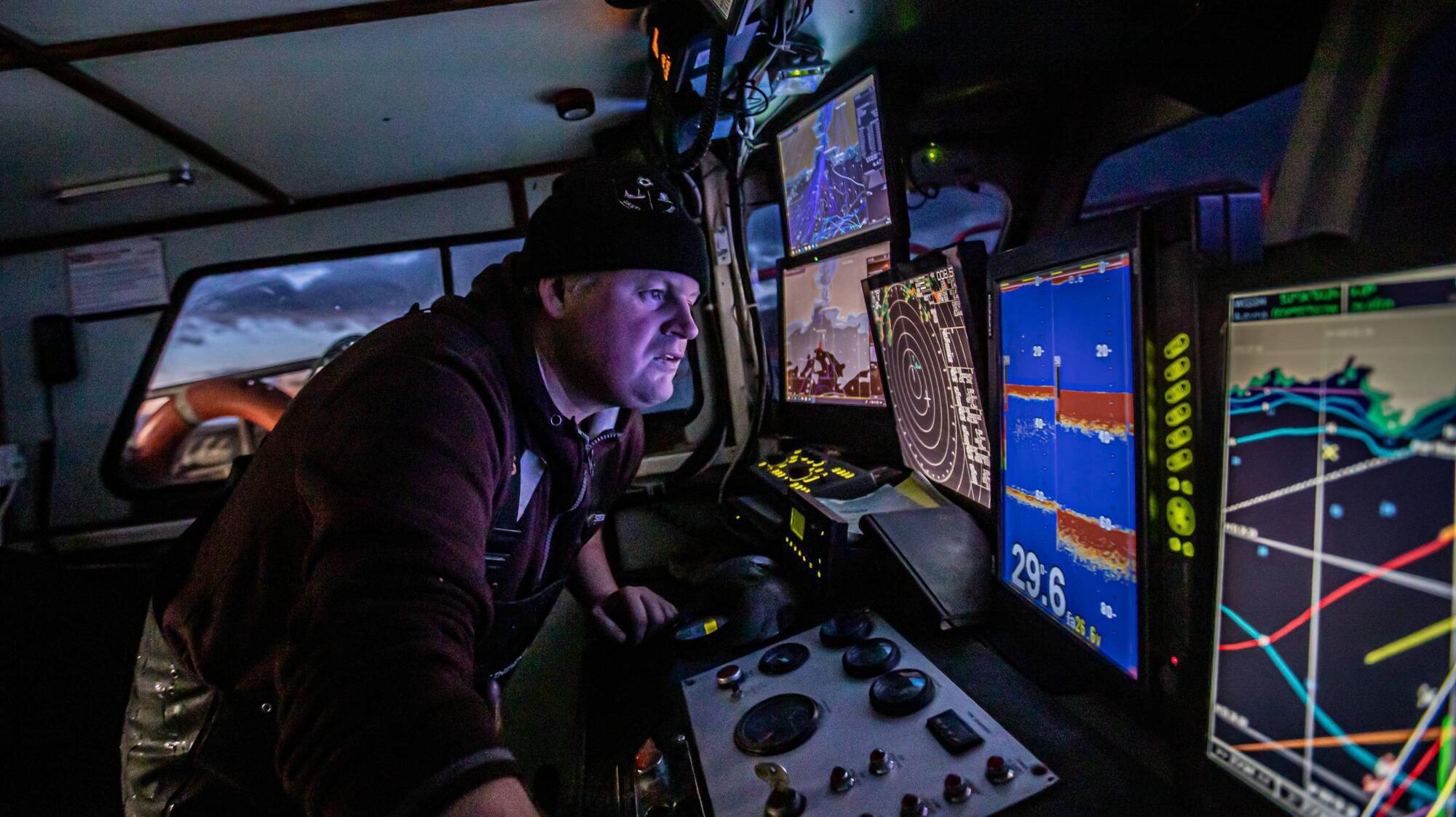
Sean 'Bawn' O'Sullivan pays close attention to the radio and screens as he navigates his trawler out of Bantry Bay, avoiding sunken boats and ditched planes, and live vessels too. But it's New Year's Eve 2020, so the skipper faces at least one further hazard with Brexit coming into effect at 11pm that night. Picture: Neil Michael
IT IS THE early hours of New Year's Eve morning. As Skipper Sean 'Bawn' O’Sullivan gets ready to set sail, he is in a despondent mood.
The recently-agreed Brexit deal is preying on his mind. In just a few hours, it will come into effect.
And he believes it is another nail in the coffin of the Irish fishing industry.
He tries to put that behind him as his boat, La Petite Edelweiss, creeps slowly out of the harbour’s mouth at Castletownbere, in West Cork.
He prowls his small bridge, his face lit up by a bank of screens in front of him. He gently presses on the 15-metre boat’s throttle.
The heavy guttural din of his diesel engines increases as the vessel picks up speed, pushing itself into the dark icy sea ahead.
His two crew move about below deck as the boat passes the dark outlines of familiar landmarks in the bay.
The full white glaze from the overhead moon dances across the smooth-topped swell of the sea around them.
The floodlight glow of other trawlers they leave behind at Castletownbere grows smaller and smaller.
Soon the engine turns to a steady hum that will gently vibrate throughout the vessel for the remainder of the voyage.
From the small galley below the skipper comes the sweet fatty aroma of sausages, bacon, and black and white pudding cooking on the small gas hob in the boat’s galley.
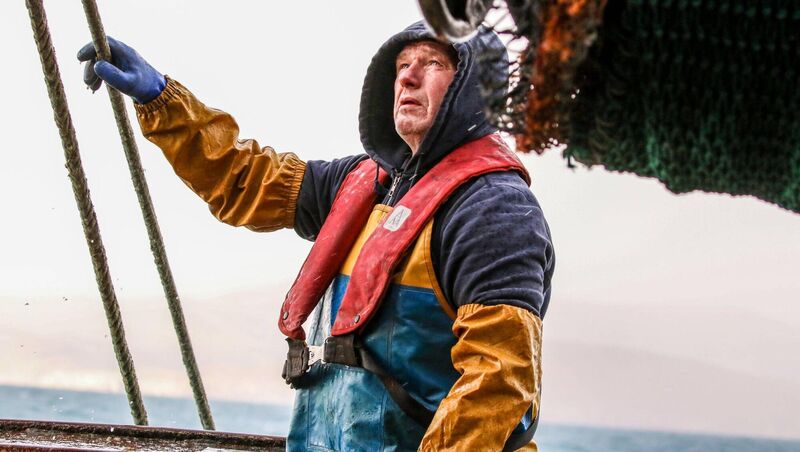
Lithuanian Tadas Kasiulevičius is at the cooker, prodding gently away with his fish slice.
Fellow countryman Egidijus Maciulskis sits behind him on a bench at the small table, dragging from a cigarette in one hand.
Both are silent in their own thoughts.
Shortly after breakfast, and more mugs of coffee, they start pulling on their overalls.
The skipper steps down the steep wooden steps from the bridge on to the working area which leads directly out to the back of the trawler, grabbing his life jacket as he goes.
He heads straight for a large stainless steel housing for the controls for the winches and the net drums.
Egidijus steps towards the back of the boat, which sways — and lurches — constantly from side to side during the entire trip, and stands to one side as Tadas stands to the other.
The skipper then presses down on the gears.
It's hard to hear yourself think amid the almost deafening bangs and clanks as the metal chains thrust out into the sea, and the huge metal net drum creaks slowly round, unfurling the net into the water past Tadas and Egidijus.
Once the net is finally in the sea, Tadas and Egidijus head for the galley, and Sean heads back up to his bridge for much of the next four hours.
The radio crackles with weather and sea warnings, and he keeps a wary eye on the screens in front of him.
He is careful to avoid possible obstructions on the sea bed that could snag his net in and around the bay — they include a sunken German submarine, an RAF bomber, a car ferry, and three Spanish trawlers.
If he is towing at night, it is especially tricky he says, as he has to watch out for larger, foreign-registered vessels.
Sean stares out at what is turning out to be a beautiful sunny, if icy cold, morning.
It doesn’t take long for him to share his thoughts.
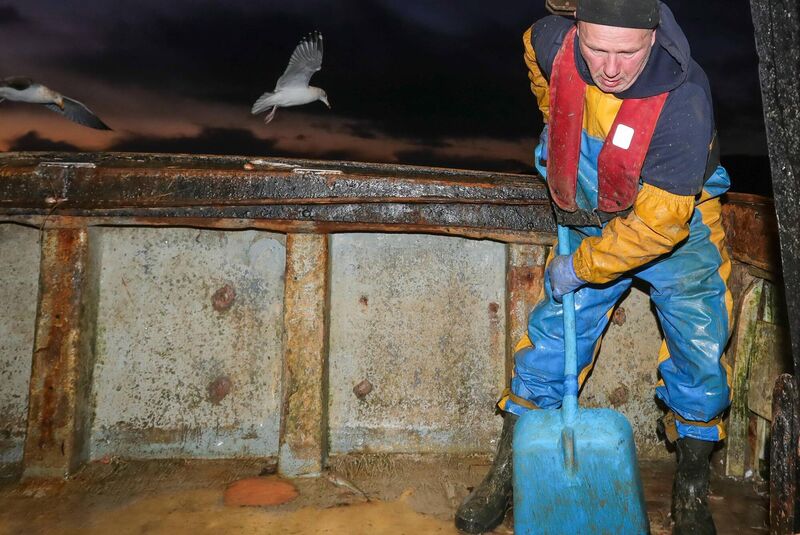
Over the last 20 years, every harbour has taken a hit on the number of fishing vessels it hosts regularly.
As the 44-year-old sails away from Castletownbere, he is one of only about 25 trawler skippers operating from there on a regular basis.
When he started as a 17-year-old the day after he finished his Leaving Certificate in 1994, there were up to 90 trawlers based there.
And as they went, so too did jobs in the town.
Indeed, they say that for every fisherman or woman that is at sea, there are at least four jobs on land.
He is disillusioned with what is perceived to be a lack of interest in the Irish fishing industry on the part of successive governments.
When the Brexit deal was announced on Christmas Eve, agriculture minister Charlie McConalogue, admitted it contained “unwelcome elements for our fishing industry”.
It takes a brave person to try and explain Brexit’s impact on the Irish fishing industry.
But, in simple terms, it means Irish trawlers have been told by Europe they have to catch less fish in Irish waters.
This is because the size of their quota — the amount they are allowed to catch each year — was reduced by up to 25% to give the UK a bigger quota so the EU could secure a Brexit deal.
It is estimated that the Irish fishing industry will, as a result, lose at least €43m by 2026.
Added to the impact of Brexit, the Irish fishing industry is also reeling from the effect the pandemic has had on its fortunes so far.
According to Bord Bia, there was a decline in the value of seafood exports in 2020 of at least 10% down to €443m.
Key markets of France and Spain experienced severe lockdown throughout the summer months.
As the State food marketing agency noted in its recent export prospects report for 2021, “uncertainty remains” within the sector about the impact of Covid-19 until at least the third quarter of 2021.
And this is with the “view widely shared” that the recovery will be slow, and that, “realistically” it will most likely be 2022 before the sector returns to the levels seen in 2019.
Added to the woes of Irish trawler skippers is the price they are paid for fish.
As an example, Sean says that while a member of the public will pay up to €25 or €30 for a kilo of cod, he will be paid just €1.50 to catch it.
“There is not enough fish in our shops,” he says.
“The reason for that is that people have to pay too much for fish.” Despite his misgivings about the future of the industry, he still loves the job.
“In a word? It’s freedom,” he says cheerily.
“It’s the freedom, the fresh air, and the healthy way of living. And you are your own boss as well.
“We see, for example, dolphins all the time and there are always whales around too.” Speaking of risks, he knows all about those.
As one of the RLNI’s coxswains, he has volunteered with the Castletownbere Lifeboat for the past 14 or so years.
“I have seen a lot of stuff,” he says, as he turns away from the bridge and looks out across the bay.
“I've seen a lot of fellas in trouble over the years.” His voice trails away.
“I don't like really talking about it because there are just too many cases,” he says finally after a long, reflective silence.
“I prefer to keep it to myself if you don’t mind.” He jumps off his seat, and into his waterproofs and boots and grabs his life jacket and is just as suddenly back down those steep wooden steps.
It’s time to haul in the catch.
Tadas and Egidijus are already dressed in their overalls and wearing their life jackets and ready to get to work again.
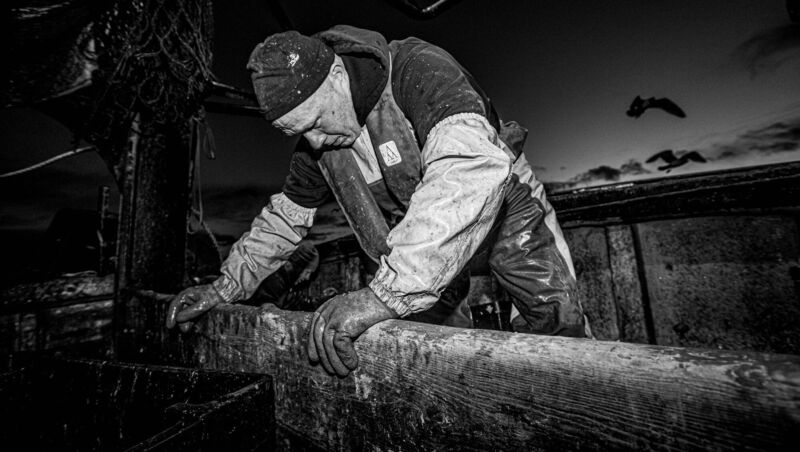
Again the chains clank and rattle as the net is hauled back towards the boat.
After about 10 minutes, it suddenly emerges and the two others grab it at either side.
Gasping fish heads poke out on either side at them. Seawater and a slimy white sludge spews out from the gorging net, drenching them.
They both grapple and pull the heavy, laden net from side to side until the contents finally spew out onto the wooden floor of a compartment at the stern.
The men sink to their knees and sort through the fish. They are lucky it’s just fish and maybe the odd small rock, this time.
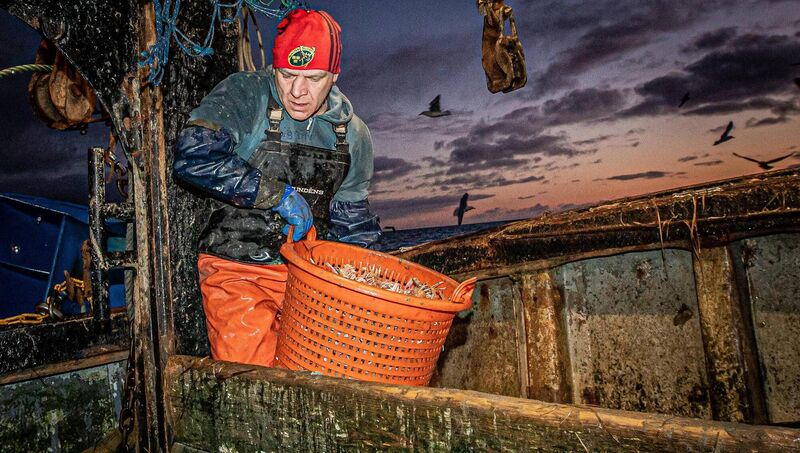
The net is cast out again and, for about an hour, all three move swiftly to put the fish into a variety of baskets before gutting and washing them with a high-powered hose before putting them into the hold on ice.
As he finally reverses his boat back into port later that evening between two other trawlers moored in the harbour, Brexit is just hours away from coming into effect.
Given how bad things are for Irish trawlers now, and how much harder they are likely to be, it’s hard not to ask him: If it’s that bad, why bother?
He pauses before he replies.
“Apart from the fact that I love this job, I've invested everything I have in this boat, and this career,” he says.
“It's so hard to just walk away after everything you've done over the decades.”
CONNECT WITH US TODAY



Be the first to know the latest news and updates