Stolen identity: The phone call that rewrote a Bessborough survivor's life
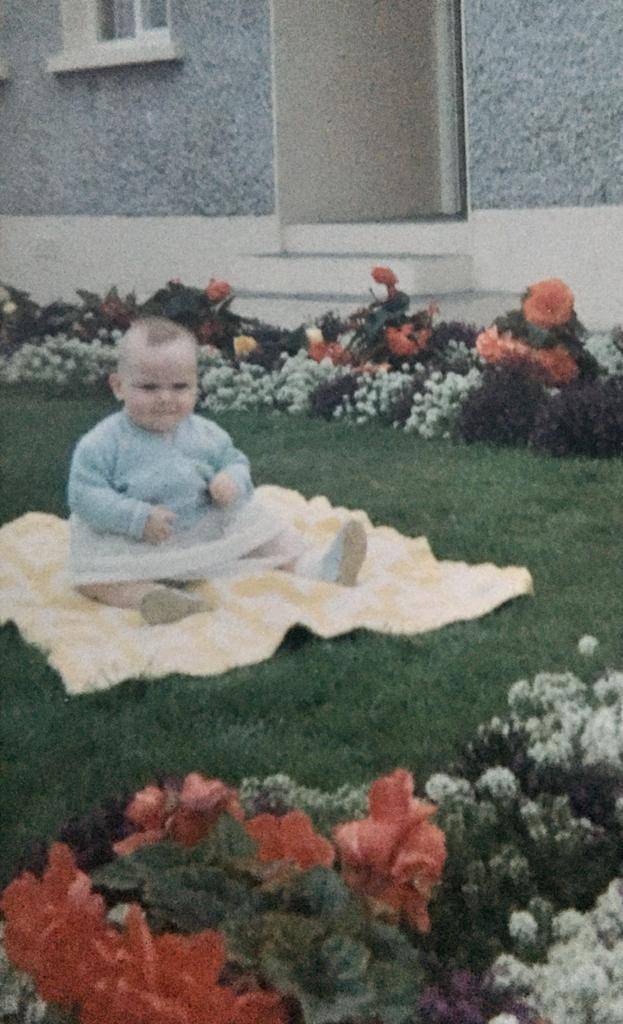
Jean Dunne as a baby. Little did she know that a conversation she would have at the age of 50 would change her life forever.
I will never forget that morning. I heard the rattle of the letterbox and, as I had done so many mornings before, I picked up the post and started opening envelopes. One stopped me in my tracks.
It was from ‘Tusla, the Child & Family Agency’ and it stated matter-of-factly: “Somebody wishes to make contact. Please contact us.” “Somebody”? I thought I had already met that ‘somebody’ when I met my birth mother two decades before.
I had assumed (rightly or wrongly) that my father, whoever he was, was never in the picture. I had never asked.
I couldn’t think why Tusla was contacting me now. I picked up the phone and when the social worker answered, I blurted out: “Is she dead?” I hadn’t heard from my birth mother in months, which was unusual. She was unwell and as she had never told her family of my existence, I couldn’t contact her.
When the social worker assured me that she was alive and well, I thought it must be my father. But it wasn’t him either.
My brother had been in touch.
A brother! My natural mother had never mentioned a brother? As far as I was concerned I was an only child. I knew that she was only 18 when she gave birth to me.
I was premature and weighed a mere 4 lbs. In the years that followed, I was to discover that this was, in fact, a good thing as my mother was admitted to hospital for the delivery.
As we know only too well now, many babies did not get out of Bessborough alive.
In later years, many others died because of neglect. I was one of the lucky ones.
I was just over two months old when I was placed for adoption. My parents didn’t have children and I was their only child. Growing up I always knew I was adopted but I never had any desire to trace my birth mother.
This changed when I had my first child. A deep sense of finally belonging to someone flooded my whole being. For the first time in my 25 years, I now had someone who I was truly related to – a real blood relative.
The feeling was absolutely overwhelming as was the thought of having this beautiful baby torn away from me. My first born was perfect and precious. How could I possibly part with her?

Luckily, I did not have to but if my baby had been born under different circumstances and only a quarter of a century previously, I too might have been forced to hand her over. I found the thought deeply distressing and couldn’t quite allow myself to think that the woman who gave birth to me had faced that harrowing reality.
It made me want to seek her out. My intention was simple. I wanted to reassure her that I had turned out all right and that I was happy. I didn’t need or want to disrupt her life. I had a mother and I was now a mother. I was content but I thought my birth mother might find peace knowing that I bore her no resentment.
It took three long years before I located her. There were no electronic records at the time which made the search much more difficult. It meant someone had to physically trawl through paper files to find the traces of my story.
I was left under no illusion that I would be “lucky” if anything was found.
In the early days of the search, I innocently thought I could request my original or long-form birth certificate and that way I would find my birth mother’s details. Adopted people have what’s called a ‘short’ birth certificate with only basic information.
I applied for the birth cert and felt utterly cheated and upset when all I received was a copy of my short certificate. I applied again, making it abundantly clear that I was looking for the ‘long’, not the short form of my own birth cert.
There followed a to-and-fro dance. The Adopted Children’s Register sent me my ‘short’ birth cert three times. Effectively, they were telling me again, and again, and again that I had no right to the details of my own birth. I was incensed.
I had no choice but to leave the search for my identity in the hands of the social worker. The search was intermittent as it depended entirely on the resources of the social worker assigned to my case.
It dragged on and on and, at times, I felt it would have been easier to give up but I am stubborn and I held firm. Eventually I was ‘found’, or at least details of my birth were unearthed.
Then, after all that waiting, I had to wait again; this time to see if my birth mother wanted to have any contact. I was given as much information as was deemed necessary – her first name.
When she gave her consent, a series of meetings was arranged with my social worker. Those meetings were not to offer me counselling, but to ‘assess’ me to see if I was ‘fit’ to meet this woman. I was the one being scrutinised for suitability.
I remember the first time we met. It was a mixed bag of emotions. There was fear of rejection, fear of the unknown, fear of a possible relationship developing which might turn sour. This was tinged with a tingling excitement of finally getting to meet the woman who gave birth to me 29 years before.
Under the supervision of the social worker, I sat across from a grey-haired woman wearing thick glasses, then in her late forties. She looked older than her years.
I was both disappointed and relieved that I looked nothing like her! Our meeting was pleasant and strangely incurious. There were no awkward displays of affection. I was happy with this.

I did not seek answers to the many questions one might think I might have had. I had fulfilled my ambition of finding her and I had no wish to unearth what I believed to be unpleasant memories for her.
I learned that she had married a widower and that they did not have a family. I was selfishly glad of this. Many adoptees who reconcile with their birth mother find that she married their father and the couple went on to have more children.
I did not want to be the one who was left behind; the one that had been given away.
And yet, a part of me, as an only child, still yearned for siblings. I wondered if perhaps it was because she had given me up for adoption that she never had any other children. Little did I know.
And so it continued for the next 20 years – peculiarly uncomplicated. Cards exchanged at Christmas and birthdays and a phone call every month or so relaying pleasantries. We met on three occasions in total including one time when she came to stay with me for a night.
My children were too young to understand the complexities of this situation and I didn’t have the heart to upset my ageing parents, so I hid her identity. Now, two decades on, I was hearing the unbelievable news that I had a brother.
How could she have kept this secret from me for all those years? The social worker continued to tell me that my brother had tried to make contact with his mother – my mother! When that didn’t work out, he tried his brother and when that too failed, he decided to try to contact me.
When my obvious shock registered with the social worker she went on to explain that there were four siblings and I was the eldest.
Ten minutes previously I was an only child and suddenly, after a phone call at 50, I was the eldest of four. She had three other children after me, all given up for adoption, and for 20 years she never said a word. I was in shock – it was too much to take in.
There followed weeks trying to make sense of this information; conjuring up various possible circumstances that led one woman to give up not one, but four babies. I felt ashamed for an act I had no part in.
I felt anger towards this woman who had all the answers but who had now gone into hiding. She chose secrecy as her fear-driven weapon, possibly the only weapon she knew.
I had somehow romantically fantasised a fairy-tale in which my mother had fallen in love with a man, gotten pregnant and had no choice but to give me up. Now that fairy-tale was shattered.
It was unlikely she fell in love with four different men; if there were four different men? I could only imagine some sordid scenario which did not bear thinking about.
I eventually had no choice but to accept that I might never have the answers. The answers lay with one petrified woman too afraid to speak. However, they are also hidden deep within the State bureaucracy that has separated so many adopted children from their birth stories.
The little titbits I was fed were harmless – the social workers’ hands were tied. A mother’s right to anonymity was seen to trump my right to information.
Now, suddenly, I wanted answers to the questions I had not asked 20 years previously, but still they were not forthcoming. There were scraps of paper in my file, one detailing “a pleasant baby with a nice smile… progressing well”.
I wondered if we were categorised or if there was a pecking order based on behaviour and/or appearance? Most of what the file contained was redacted, withheld from me, the only person likely to ever want it. Instead, the information is hidden in the past, locked away.

And, so once again, I locked away my questions for the next three years. Until now, when I could no longer keep my Pandora’s Box shut.
The recent Commission’s report into the Mother and Baby Homes has brought this all back to the surface. The inhumane treatment of women and their babies and children is unforgivable.
Church, State and society as a whole is to blame for the shameful part it played in these women’s lives. I consider myself one of the lucky ones and for a brief fleeting moment, I consciously tried to distance myself from these horrors, but I couldn’t.
I do consider myself lucky. I got to meet my mother albeit, from what I know now, under a cloud of false pretences. Yet, I felt robbed and cheated. Had my brother not come looking for me – which he might not given his previous rejections – I would never have known of his or my other siblings’ existence. The powers that be knew, but nobody told me.
As it stood, my brother originally made contact with Tusla two years before I was told, but I was kept in the dark for all that time. This leaves a very bitter taste. Is it just and fair that I could have lived the remainder of my life unaware that I had two brothers and a sister?
I got to meet my brother who was truly delighted to meet me – and I him. We both decided that we would attempt to contact the remaining two siblings. The other brother who had declined contact, remained steadfast in his resolve, as is his right.
Our sister, however, was unaware that we existed. I was so angry at being deprived of contact with my brother for all those years that I was determined to find her.
Unfortunately, this meant that I was ensnared in yet another mesh of impenetrable red tape.
Her records were held by another state agency which was winding up and did not have the resources to conduct a search.
They knew who she was and where she was, yet they didn’t have the staff to contact her. I was conscious that time was running out as my birth mother was growing older. At the very least, I wanted my sister or half-sister to be given the option of knowing about her mother before it was too late.
I was determined not to wait until resources were allocated officially – which would be a further two years down the road – so I contacted my local TD. He raised the matter in the Dáil and perhaps it was a coincidence, but shortly after that my unknown sister was located.
She struggled with the idea of meeting us and, unfortunately, decided the time wasn’t right for her. I’m glad she got to make the choice herself, and that I was able to fulfil what I saw was my duty to let her know that she had siblings, or half-siblings.
After my anger – and upset – towards my birth mother had finally abated, I sent her a photograph of myself and my brother without disclosing our true identities. Still tangled in this web of secrecy, a part of me wanted to reassure her that I could understand why she never told me I had brothers and a sister if only she would allow me. I was hoping to find out why she gave away four children or, at the very least, to provoke some kind of response.
There was none.
Her shame, guilt and fear born in a bygone era now separate me from the truth. My truth.
Not all of those who passed through mother and baby homes suffered what we might term abuse. Those who suffered those unforgivable obscenities must be acknowledged and there must be redress.
But we also need to think about those who are living with the 'fallout' of being born in these institutions. For me, this is about stolen identity and lost time. We are the living relics born from fear, shame and ostracization.

So many have lost lifetimes looking for that connection – a link to where they came from so that they might know who they are.
Their true identity has been stolen from them and hidden in locked files by the bureaucrats. They are not the thieves, yet they are the ones serving the life sentences.
In my case, I was robbed of the opportunity to meet my three siblings 25 years ago when I first met my mother. She obviously couldn't bring herself to tell me about the others because of fear or shame drilled into her many years ago.
“Oh what a tangled web we weave, when first we practise to deceive,” as the poem goes.
This deception ruined lives for over a century. What's in the past has happened and cannot be altered. But the future can be changed by giving respect to those who were adopted and by ceasing to treat them as second-class citizens.
Allow us access to our records; let us be entitled to our original birth certificate like every other Irish citizen.
- *Jean Dunne is an assumed name. The writer would like to use her real name but because so many others are affected by her story she has chosen to remain anonymous. The baby picture, however, is a real picture of her as a young child.