Dutch woman ruled out as Gardaí continue to investigate birth and death of Baby John
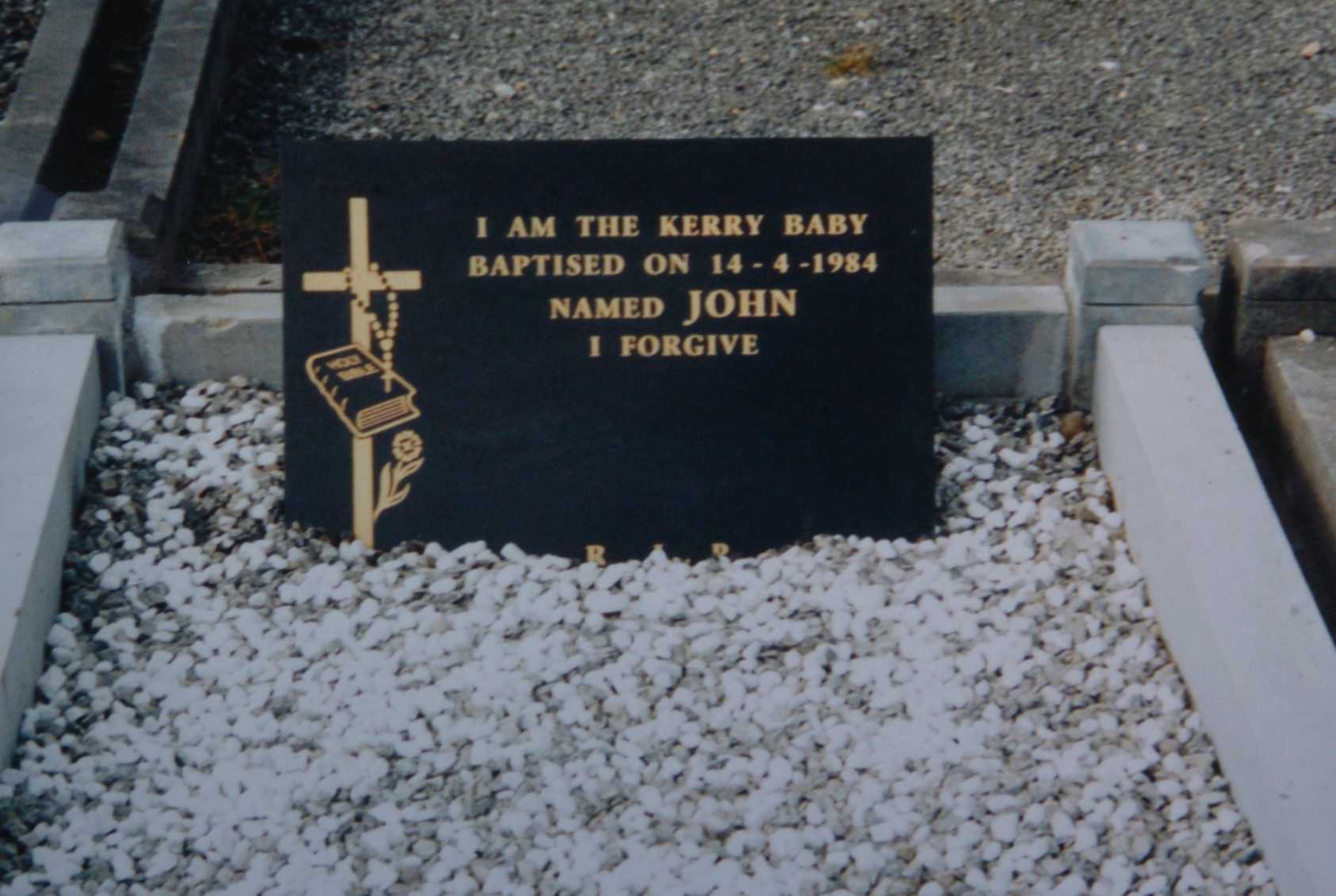
The 'Kerry Baby' grave in Cahirciveen, County Kerry. Picture: Don MacMonagle
'I am the Kerry Baby'.
Five words inscribed on a gravestone, remembering a little boy who didn't live long enough to speak his first words. From the date he was baptized on April 14, 1984, and named 'John', nobody has ever discovered who he is.
His birth is as much of a mystery as his death was brutal and savage. He is forever trapped in the opening chapter of a never-ending horror story.
Exoneration and compensation for Joanne Hayes and her family is overdue. But still nobody knows who hides the secret to who Baby John’s mother is - or was - or where she gave birth to him.
Somebody knows what happened before he ended up on a beach with 28 stab wounds to his little body, but that person has never been found.
The understands that the daughter of a wealthy Dutch children’s book publisher who featured in the investigation up until recently has now been ruled out of the case.
Odilea Boele van Hensbroek took her own life in a nearby shed just weeks after Joanne Hayes gave birth.
Working as a childminder in north Kerry, the Dutch national had lived just 5km from Ms Hayes and had a history of mental health problems.
Her family had dismissed longstanding rumours of her involvement as idle speculation - but a statement given to gardaí in 2019 by a former mortician had added credence to those rumours.
Patrick O’Shea, who assisted in the post-mortem on Ms Boele van Hensbroek's body as well as on that of Ms Hayes' baby, told gardaí he believed the 35-year-old may have given birth before she died.
Gardaí had been following lines of inquiry in relation to this possibility, liaising with Ms Boele van Hensbroek's sister Merit, but it's understood that investigation has concluded.
Baby John, or The Caherciveen Baby as he was referred to officially, was found by a farmer on White Strand, Caherciveen on the evening of Sunday, April 14, 1984.
As Jack Griffin crossed some rocks, something caught his eye despite the fading light.
Stopping to look at the pink form with black hair and face down at his feet, he at first thought it was a doll.
But a closer look made him suspect otherwise and fearing the worst, he blessed himself, and went and got a relative who returned with him to the spot.
Shortly after they got back there, they turned the little body over, and realised to their shock they were staring down at the body of a baby boy.
The subsequent report into the case noted: “On first view of the Caherciveen Baby it did not seem as though it had been murdered.
It was during the post-mortem examination carried out later by the then State Pathologist, Dr John Harbison, it was discovered the baby had 28 stab wounds. Four of these had pierced his heart. Dr Harbison also discovered the baby’s neck had been broken.
An investigation was immediately launched with house-to-house inquiries being made in the area around White Strand, Caherciveen and adjacent areas. Gardai were specifically tasked with trying to trace any single, unmarried woman who could have recently given birth to a baby whose whereabouts were unknown.
At the same time, Joanne Hayes was being treated at Tralee General Hospital, where she had been admitted bleeding and in pain on April 14. On the night of April 12, she gave birth to a baby boy in a field on her family’s farm just outside Abbeydorney, near Tralee, north Kerry.
He had died very soon after birth and she had put his body in a plastic bag and hid him.
The baby had been fathered by Jeremiah Locke, a married father-of-two who Ms Hayes started going out with socially in 1981. She suffered a miscarriage the following year, but became pregnant by Mr Locke again in August 1982 and gave birth to her daughter Yvonne in May 1983.
Mr Locke was also the father of the baby Ms Hayes had given birth to on her family’s farm in April 1984.
Word soon reached gardaí that not only had she been pregnant, but nobody had seen the baby.
Gardaí then interviewed the 24-year-old receptionist, and members of her family, at the start of May 1984. Her initial statement that she gave birth to an illegitimate baby boy in a field on her parents’ farm 70km away from Caherciveen in Abbeydorney and could show gardaí his body was not believed.
They were instead convinced she gave birth to her baby in her bed, beat him over the head with a brush and strangled him before members of her family disposed of his body. But the day after she was charged with the Caherciveen Baby’s murder, her own baby - known in official reports as The Tralee Baby - was found on her parents’ farm in a plastic bag.
Subsequent tests on a section of lung taken from the Caherciveen Baby showed he had a different blood group to Ms Hayes, Mr Locke and her own baby.
Charges against Joanne Hayes and her family were eventually withdrawn in October 1984. But some detectives persisted with their belief the Caherciveen Baby was hers, and that she had in fact given birth to twins fathered by two different men she had been having affairs with.
This, they maintained, would help explain the fact that the Caherciveen Baby’s blood type was different. And they put forward the theory of heteropaternal superfecundation - an extremely rare occurrence in humans where a woman can give birth to twins who have different fathers.
A tribunal was subsequently established to look into garda handling of the case and how they had ever brought criminal charges against the Hayes family.
Chaired by Justice Kevin Lynch, its remit was also to look into claims by members of the family that they endured threats and had been assaulted during interviews by detectives.
But while the tribunal did indeed focus on garda actions, and did make critical conclusions, detectives were effectively exonerated of the worst claims made against them.
The gardaí accused of wrongdoing were moved to different departments within the force while Ms Hayes' reputation was torn to shreds.
Her entire life was dissected as much as was her morality and mentality. Every aspect of her private life was minutely dissected in a mercilessly unforgiving fashion.
The case rocked the country and remains to this day one of the most enduring of its time. As one observer would later put it, the case opened a ‘Pandora's box of hatred and blame and misogyny and misery’.
Ms Hayes, already an unmarried mother-of-one, had been having an affair with a married man. Were it not for the discovery on White Strand, the affair could have remained little more than the subject of the odd knowing wink and a nudge from behind the famously squinty windows of rural Ireland.
The tribunal, which opened in January 1985, all but turned on her and her family. The young woman had to endure the unedifying and embarrassing spectacle of the minutiae of her sex life being paraded in public. During the 82-day tribunal hearing, she was cross-examined for a total of five days, and asked some 2,000 questions, including about how she lost her virginity.
The grilling she received at the hearing remains the longest amount of time in the history of the State that a witness has been questioned.
The report noted: “Joanne Hayes was well aware from the very start of her relationship with Jeremiah Locke, that he was a married man, but she allowed herself and indeed, encouraged herself to develop an overriding infatuation with him.
“Joanne Hayes entertained foolish dreams that Jeremiah Locke would leave his wife and family and set up house with her and that in some way or other, the fact of his marriage and the problems created by it so far as she was concerned, would just disappear.
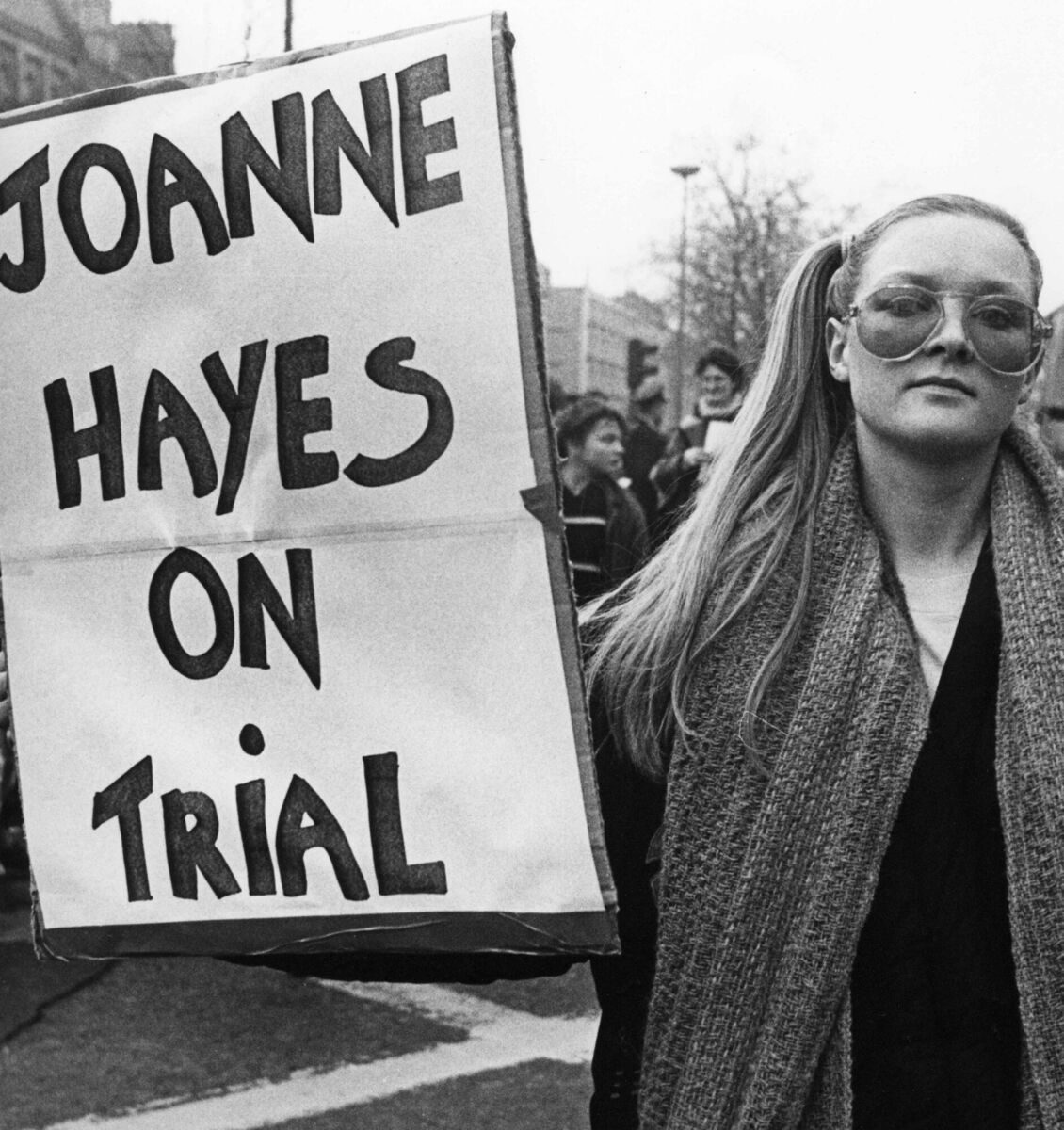
Speaking on The Late Late Show after the tribunal, Ms Hayes said she felt she was the one on trial, not the gardaí.
“I didn’t expect a clap on the back, but I didn’t expect it would go so hard on me,” she said.
“After all, the tribunal was set up to look into the behaviour of the gardaí, but it was I who went on trial. The tribunal itself was a terrible experience.
“The report, when it came out, was very anti-women, not just anti-me, but anti-women, and I don’t think it showed any feeling at all. I was the underdog going into the case, anyway, I don’t think we could have won against the system.”
After their belated apology to the Hayes family in January 2018, gardaí returned to the area around Caherciveen to talk to residents and take statements. This has yielded few leads.
But one lead that featured as part of the investigation was the one brought to gardaí’s attention by retired mortician Patrick O’Shea. As well as assisting in the post mortem on Ms Hayes' baby, he had subsequently assisted in the post mortem on Odilea Boele van Hensbroek.
The Dutch woman, who died just weeks after Ms Hayes had given birth, lived about 5km from Ms Hayes, in a small roadside cottage at Leith’s Cross, on the main Tralee to Listowel Road.
Around the time she took her own life on May 16, 1984, her body found in a small shed beside the bungalow, there had been rumours circulating about her. One of those was that she might have been the Caherciveen Baby’s mother.
This was dismissed at the time by gardaí, who had their sights firmly set on Ms Hayes, and her family believe the rumours about her were nothing more than idle speculation.
One of her brothers confirmed that the family has been in touch with investigating gardaí.
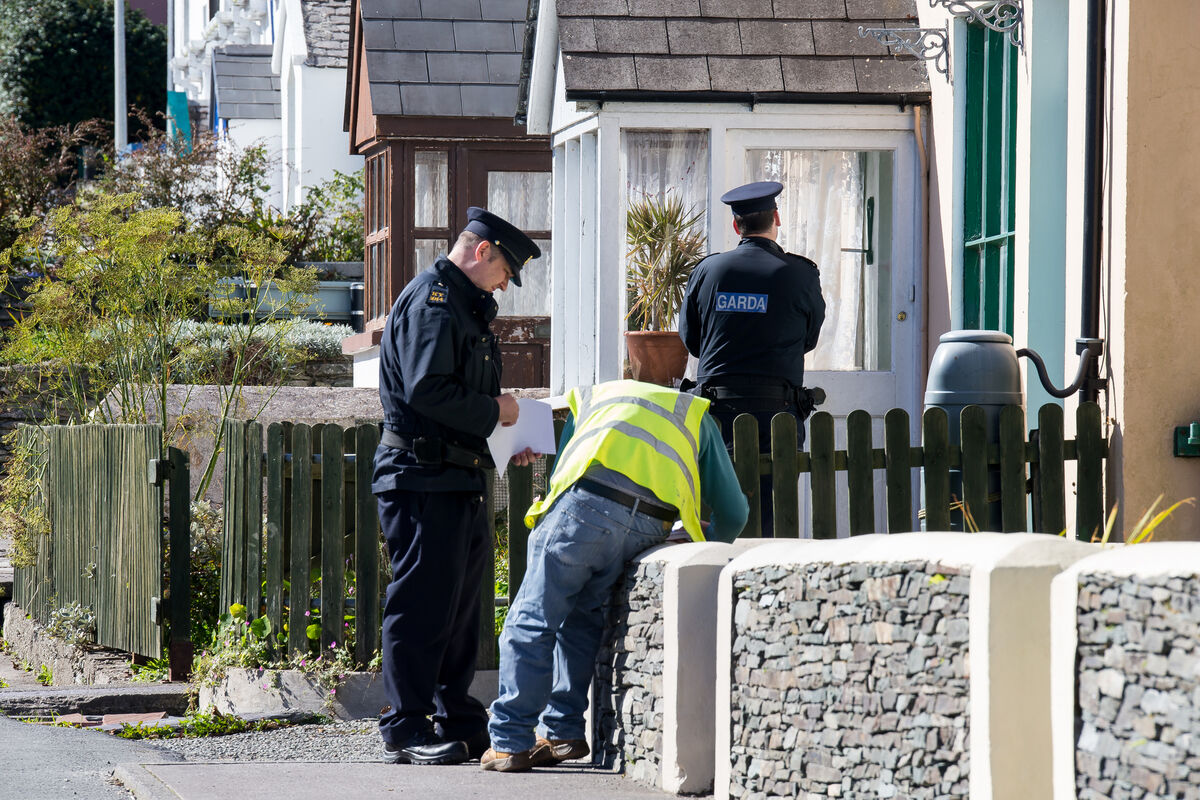
Detectives are believed to have been in talks with the family about one of them providing a DNA specimen to see if there is any link between her and the Caherciveen Baby.
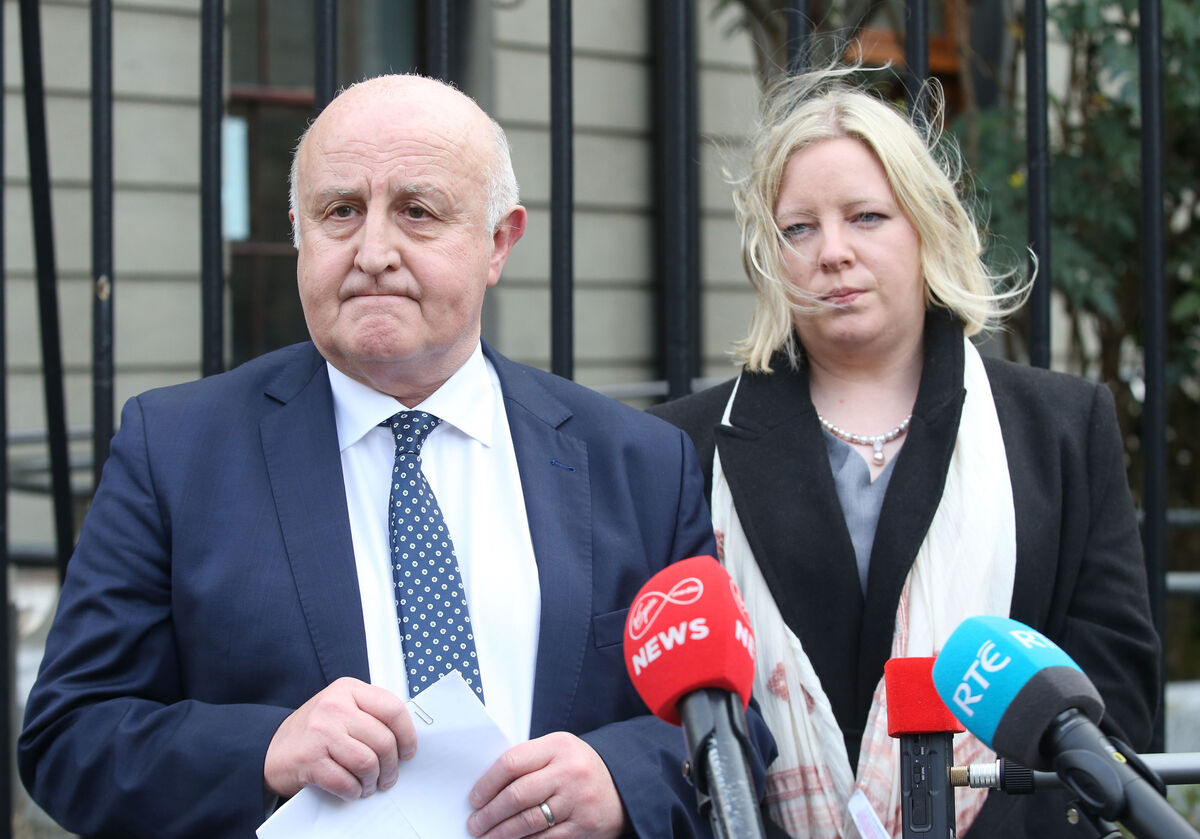
Professor Pieter Boele van Hensbroek, whose sister Merit has been dealing with detectives, said: “She has an agreement with the police not to communicate with the media during the investigation. One could expect the usual investigation methods to be used. At some point police results will be made public.”
This is because Mr O’Shea, who used to work at University Hospital Kerry, claimed to have information which suggested she may have had a baby before she died. It is not known if any family member actually gave DNA, but if - as sources have now indicated - she is no longer a person of significant interest - they could well have come to some arrangement with detectives.
“I am delighted this woman has been eliminated from the inquiry,” Mr O’Shea told the .
“At the time I assisted in her post mortem, I had not known anything about her. It was only when I started reading the reports about the tribunal as it was going on, that I heard about the Dutch woman.
“From memory, I remember her as being dismissed as not relevant. But from descriptions of her at the time, I remembered back to the post mortem and it made me wonder about her.
"Again, I am very happy for the family of this woman, but sadly for this case, the whole thing is now wide open again."
Neighbours say Odilea “arrived out of nowhere from abroad” in around January 1984 and worked as a babysitter for a local family.
Before she arrived in Ireland, she had spent a number of months travelling in the UK and her native Netherlands.
Before then she had been living in New Zealand but had left in late 1983 after a relationship fell through and she was unable to get a residential visa to stay there. Her brother Pieter says she suffered a nervous breakdown after leaving New Zealand and eventually moved to Ireland ‘to make a new start’. It was, tragically, not to be.
She is buried at the edge of a small burial ground around the 12th-century Kyrie Elieson Abbey, just outside Abbeydorney. Her weather-worn grey concrete gravestone faces away from the ruins of the abbey and over the surrounding fields.
Inscribed under the word ‘MOMO’, a barely legible inscription gives her name and the date she died. And it contains part of the same epitaph author Robert Louis Stephenson has on his grave.
It reads: ‘Home is the sailor, home from sea, and the hunter home from the hill.’ That is part of a wider verse that also reads: ‘Under the wild and starry sky, dig the grave and let me die. Glad did I live and gladly die.’
Her family travelled from the Netherlands to attend her funeral, while a small number of neighbours and other friends also attended.
The farmer who found the Caherciveen Baby can no longer bring himself to talk about that Sunday morning he found the lifeless remains he first mistook for a baby doll.
Jack Griffin’s wife told the earlier this week he never wants to relive that day in public ever again.
When he did speak for the first time, in a brief interview with the in 2018, he wondered aloud whether perhaps “a lot of people have put it behind them and moved on”.
But he added of the little baby he found: “It’s still a sorry sad story to think of that poor baby ending up on that beach.”
CONNECT WITH US TODAY



Be the first to know the latest news and updates