Spotlight: ‘We will never stop looking for our loved ones’
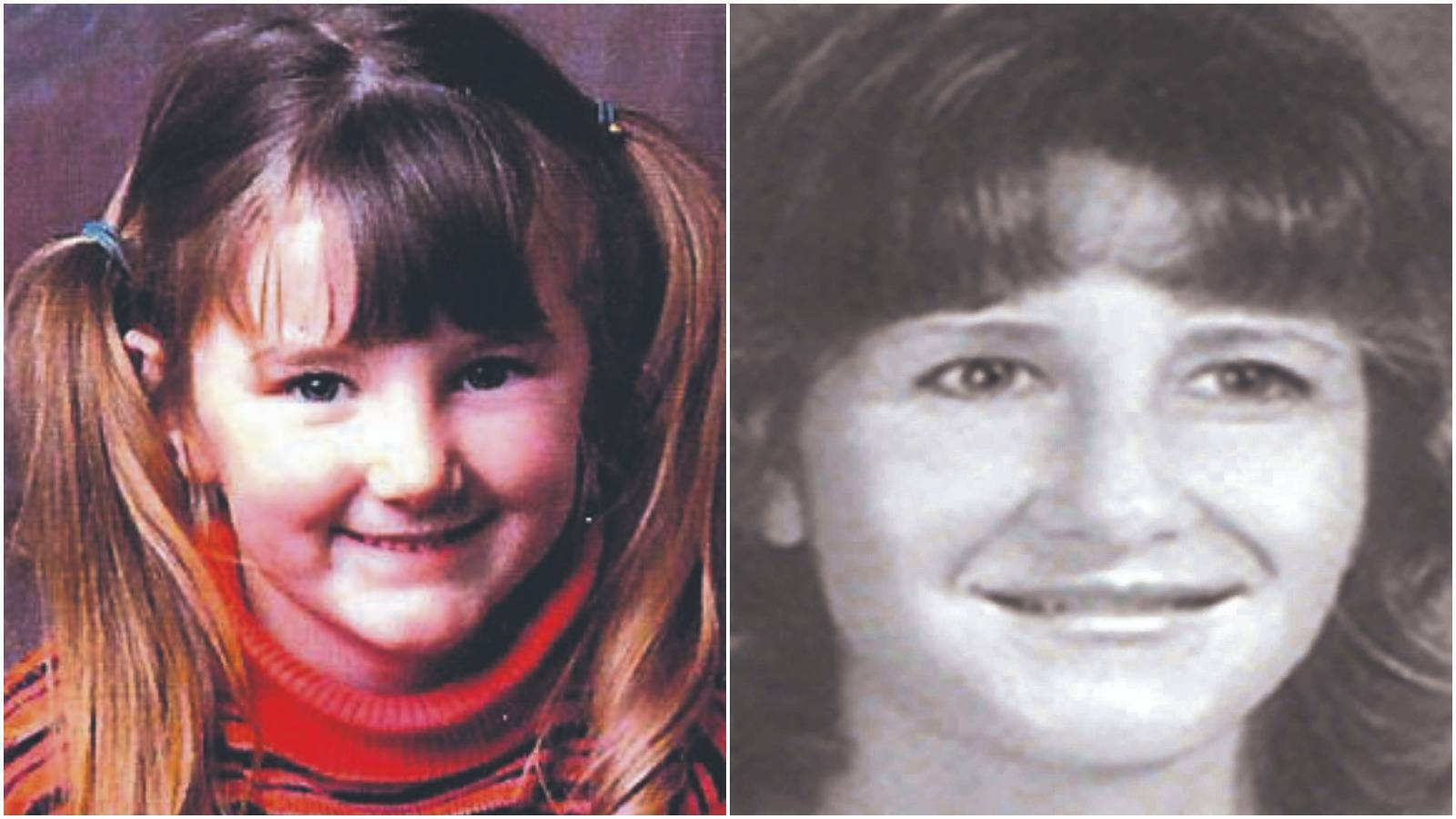
An image of Mary Boyle shortly before she went missing on March 18, 1977. An age progression image issued by An Garda Síochána showing how Mary Boyle may look today
At around 2pm, a little girl was sitting by a fire in her grandparents’ house in rural Donegal just before lunch.
The lively six-year-old suddenly motioned her mother over to her.
“I forgot to give you a kiss this morning,” she told her. And with that, she threw her arms around her mother, and gave her a kiss. She then sat down for lunch at the small table which had been set up for her, her brother and twin sister and two of her cousins, beside the table where the adults sat.
The last time her mother would ever see her after that was as she walked out the door with the rest of the children.
Spotting her uncle on his way to drop a ladder off at a neighbouring house, the girl decided to follow him, clutching half a roll of sweets in her hand.
But at some stage she decided to turn back and, in an instant, Mary Boyle vanished straight into history, and Ireland’s longest-running missing child mystery.
The last marks she left were her small footprints and a discarded sweet wrapper in some briars on a remote road leading to the junction
To this day, her mother Ann still feels that blood-chilling moment when she discovered Mary was missing on March 18, 1977.
Ann’s father, who was “a bit of a worrier”, had called twice to ask if the children were OK.
“The first time I told him, yes, because I could hear them playing in the garden,” Ann told the in an interview to help publicise Missing Persons Day.
“The second time, I physically went out into the garden. I could see the four others, but I couldn’t see Mary. My blood turned cold and I felt this awful fright.
“Every time I go to bed, I think about my little doll.”
Although without a doubt one of the most infamous missing persons cases — in part because of various conspiracy theories associated with it — Mary Boyle is but one of 823 current missing persons cases. Dating back to 1936, they are all open.
This year alone, up to November 11, there have been 7,472 missing persons reports. In 2019, there were 9,489 reports, and in 2018, there were 9,682.
Most will be found, and most will concern children and teenagers under the age of 18. But a small number of cases will not be so easily resolved, to the distress of their families and friends.
Some 52 people who have gone missing this year, including 18 children, have not yet been found.
A similar picture emerged last year, with 30 people unaccounted for out of all the missing persons reports, and there were 28 in 2018.
While the obvious reasons for someone going missing could include self harm or crime, it is a fact that some people just want to disappear. But, whatever the reason, the impact on those left behind is the same.
As well as wanting answers as to why their loved one had vanished, they yearn for the return of their body so they have a grave to mourn at.
Sergeant Carmel Griffin, of the Garda’s Missing Persons Unit, said: “A missing persons case remains open until they are found.
“We never give up looking for them. We never forget about them.
“There is a constant series of reviews of cases, right back to the longest-running case.”
LAST year, gardaí urged families of missing people to come forward and provide DNA samples to help in the search for their loved ones.
“The appeal was a success,” Sgt Griffin said. “I was contacted by many families and I was able to go out and take DNA.
“But, however successful the appeal was, I would like to put the appeal out again.
“It is very important if the families of the missing people would consider giving a DNA sample. They can do it at their local garda station.”
An example of the importance of DNA in solving missing persons cases is Patrick Healy.
The 70-year-old grandfather was last seen alive on September 20, 1986, at his Dublin home, after telling his family he planned to head to the coast. A subsequent search by family and friends failed to find him.
But, unbeknown to them, a decomposed body was washed up on a beach in northern England on October 22 that year.
A little over £15 in Irish currency was found in his pockets.
Cumbrian police contacted gardaí, who contacted Mr Healy’s family to tell them an unidentified body had been found.
Although his clothing was similar to what he had last been seen wearing, nobody could be sure it was him, and he was eventually buried in Cumbria.
Over the intervening 34 years, his wife died and his surviving family remained in the dark about what had happened to him.
Advances in technology have undoubtedly changed that and this is a classic example of that.
Gardaí took a DNA sample from Patrick’s daughter Mary in the summer, and — after Cumbria Police obtained permission to exhume his body — it was matched with Patrick’s.
Suddenly, the Healy family were on their way to being reunited with Patrick’s remains after so long.
Sgt Griffin said: “I’d like people to realise that we really do never give up. We never close a missing persons investigation until the person is found.
“We need the help of the public because sometimes it might be a small piece of information that they might think is inconsequential that might be of assistance in providing a new direction.
“People should never be afraid to come forward.”
As to what sort of person goes missing, she says: “There is no certain demographic that is more prolific than any other. It’s people’s current situation.”
And this leads her to a proportion of missing people who have deliberately vanished.
“The other side to all this is that some people have lost contact with their families and they may have been reported missing,” she said.
“I would like for them to know they can contact the gardaí and let them know they are safe and their location will not be shared with their family. There is no judgement.
“Sometimes people go missing for whatever reason and they don’t feel that they can return, or contact their families any more.
“Some people just want to disappear.
“We urge people in that position to get in touch with us — if anything, just so we can let their loved ones know they are safe.
“Maybe they want to make sure their family knows they are safe without them having to talk to them directly, and we are happy to provide that service.
“Every case is so unique and so different and it is only when you dig down and investigate that you find that, in certain circumstances, it is the case that someone does not want to be found.”
IF gardaí working in the Missing Persons Unit have a tough task, the one faced by Geoff Knupfer and his colleagues at the Independent Commission for the Location of Victims’ Remains (ICLVR) is just as tough.
They have been tasked with finding the bodies of the so-called Disappeared, 16 people who were killed over the course of the Troubles in Northern Ireland.
To date, the remains of 13 of the Disappeared have been recovered, ten of whom were found through the efforts of the ICLVR.
Those who have yet to be recovered are the former west Belfast monk Joseph Lynskey who went missing in 1972, and Captain Robert Nairac, the 29-year-old British Army officer abducted in Co Antrim in May 1977 and murdered.
The third person is Columba McVeigh from Donaghmore, Co Tyrone, who was 19 when he was abducted and killed in October 1975.
Although extensive searches, based on information received, have been carried out at Bragan bog in Co Monaghan, his remains have yet to be recovered.

“Regardless of the background to these deaths, you have to remember there are their families constantly waiting for some form of closure,” Mr Knupfer said.
“A very common emotion expressed is a desire for closure. They all want a grave to grieve. The big issue is the unknown, not knowing what happened to them.”
It’s what Ann Boyle thinks about every day.
She is so convinced that her daughter is still alive that she still does not want to have an inquest opened.
Asked if opening one would force her to accept her daughter is dead, she pauses and replies after a long silence: “Yes.”
As to what she thinks might have happened, she adds: “There was no talk of murdering children at the time.
“What reason would anybody have to murder my little girl? She was a little doll who did no harm to anybody.
“I don’t know what happened to her, but I pray every day that I will find out what happened to my little Mary.
“I would love to think that somebody picked her up and was good to her and she is OK. I don’t like to think about any other outcome.”
- If you have information on any missing person, email info@missingpersons.ie, or phone the National Missing Persons Helpline on 1890 442552, or the Garda Confidential line on 1800 666111.