O'Brien & O'Flynn play their way back into the game
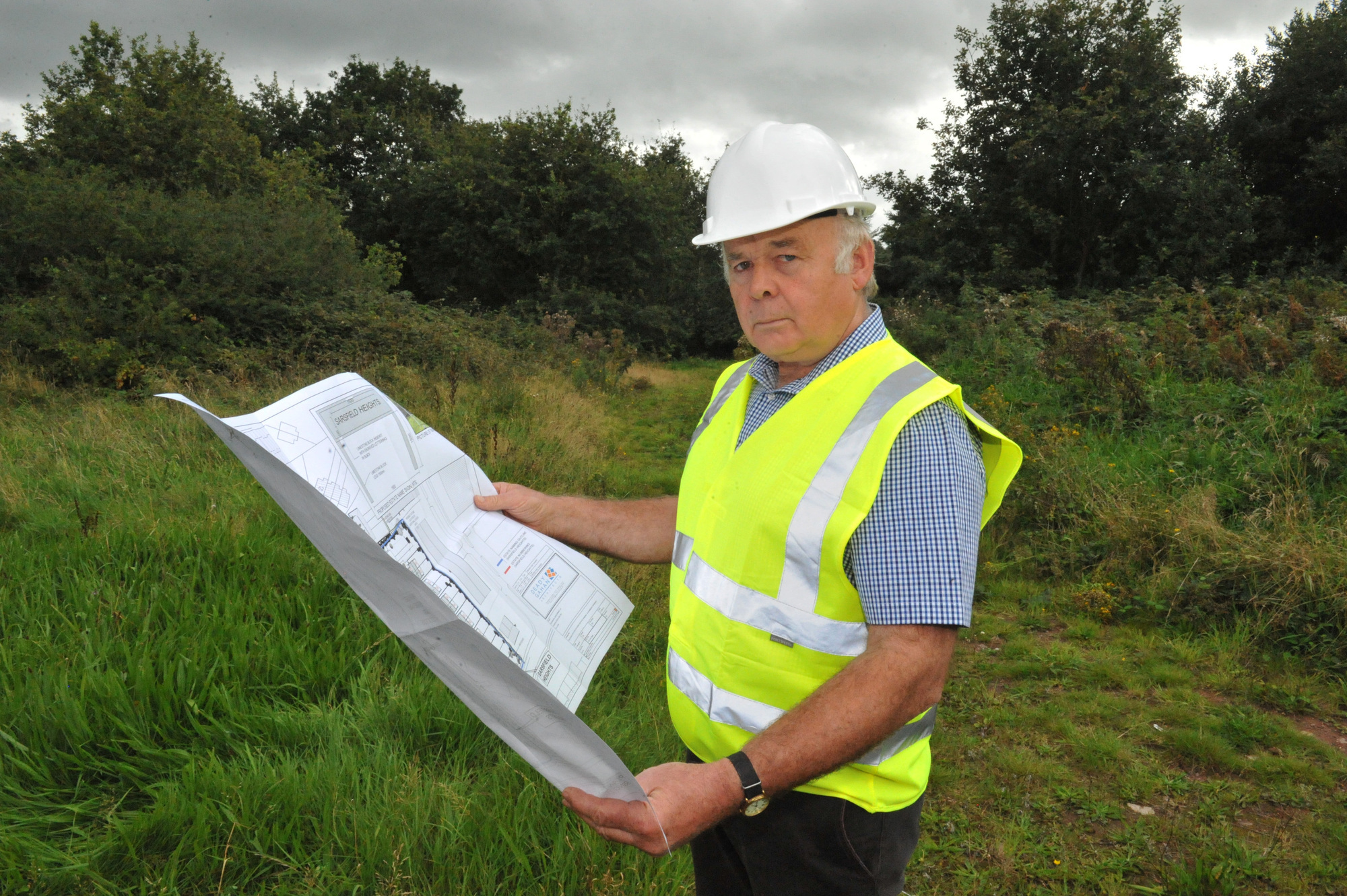
Company director Denis O'Flynn on the site on Sarsfield Road, Cork set for redevelopment as Sarsfield Heights residential development, by O'Brien and O'Flynn.
Brothers Denis and Dan O’Flynn are best-known as housebuilders in Cork, but the cut and thrust of Gaelic games have influenced the way they go about their business.
It is little over a month since the men made Irish legal history by reclaiming their company, O’Brien & O’Flynn, from both receivership and liquidation at the same time, resurrecting a firm from the dead that had built close to 4,000 homes in Cork from 1976 to 2014.
With a banking system that teetered on the brink of collapse, an angry public demanding answers as to how the financial crash happened, and an increasingly unpopular Government staving off economic meltdown, property developers and multimillion-euro loans were targeted for Nama in the aftermath of late 2008.
The National Asset Management Agency was set up in 2009, tasked with taking property development loans from Irish banks and weaving them into government purple debts bonds, aimed at opening up credit in the economy.
O’Brien & O’Flynn brothers was one such company targeted for takeover by Nama, which deeply concerned them because of their belief that their business model was viable and could withstand the pressures of the financial climate caused by the 2008 crash.
Nama-associated company Nalm petitioned the High Court in July 2014 to appoint a provisional liquidator to O’Brien and O’Flynn, which it alleged was €71m in debt with just over half that in assets.
The brothers staunchly disputed those figures, arguing that the assets were worth far more.
Despite its attempts to show the court that the debts were not insurmountable and that it had a sound basis to trade its way out of debt with plans for further homebuilding, the firm could not avoid the receivership and liquidation order.
In 2014, the company they had built over almost 40 years, responsible for thousands of family homes in the likes of Ballincollig, Wilton, Mayfield, Passage West and Maryborough and Deerpark was gone.
Dan said: “It hurt me very personally, I’ll be honest about it. If you are honest, hard-working and do the best you can, you should win out afterwards.
"It was very hard, very painful and it hurt a lot, I can tell you that. I was the man on the sites. But deep down, I knew we had done our best.”
Denis was also devastated.
“We can survive without building. But of course, it was shattering. I was angry because I felt we had been wronged.
"The anger turns into determination and you never lose sight of those assets. We could have left it, but we loved housebuilding.
"We wanted what we had built back. So the planning and plotting began."
The countless GAA matches watched and played in over the men's lives served as inspiration.
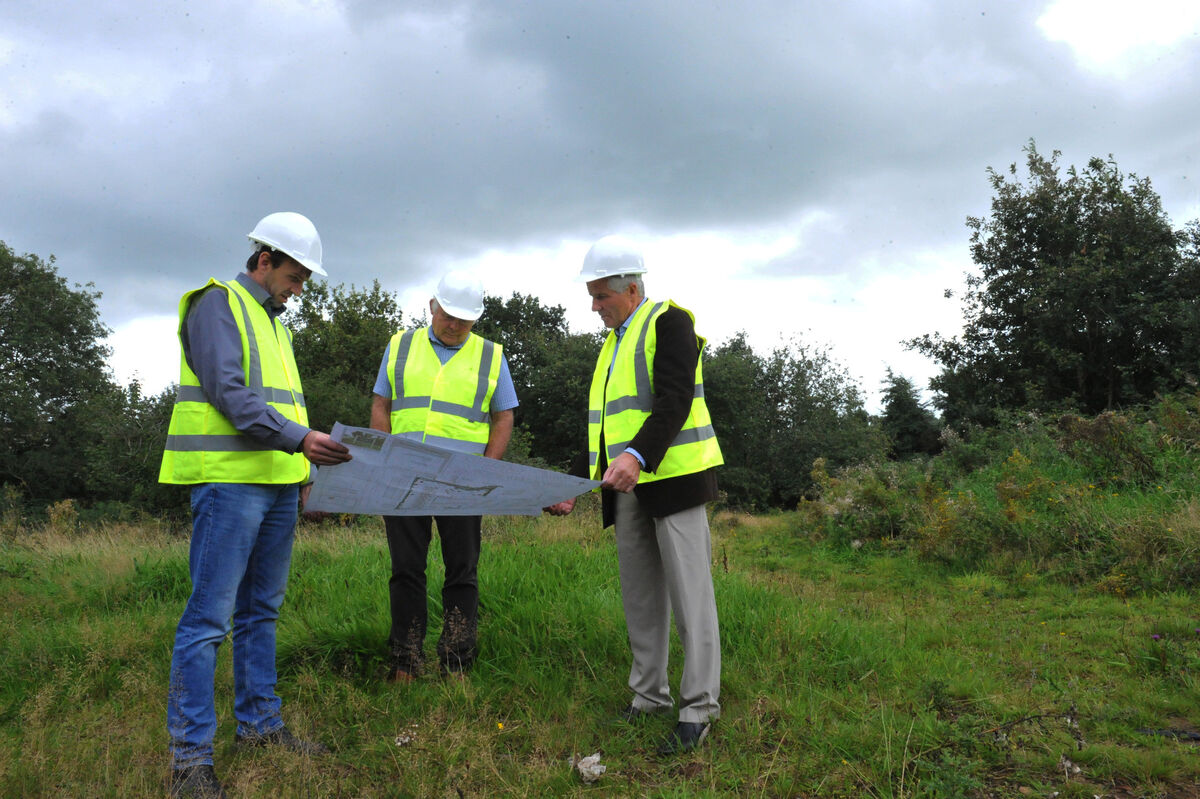
O'Brien & O'Flynn seemed down and out, eliminated from the championship, and even the backdoor system that has seen legendary teams fight their way back to All-Ireland glory seemed to be impenetrable.
Dan said: "We could roll over, but we had to fight back. For me personally, to finish that way, for the next generation coming along, I couldn’t do it.
"Denis and I have played a lot of GAA, along with our brothers, we won counties and when the going got rough, we loved the battle.
"Going into the last 10 minutes of a game, I would put my head where there should have been a hurley.”
The only show in town for Denis and Dan O'Flynn was getting their company back. Nothing else was worth it.
With the help of the likes of BHK Solicitors and financial advisors Hyland, Johnson and Keane, they set about doing something never done before in Irish legal history -- getting a company back from both receivership and liquidation.
According to the Department of Finance, as part of a wider set of measures to address the liquidity and solvency issues of systemically important Irish Banks, Nama was established in 2009 “to remove, from participating banks’ balance sheets, problem loans secured by property and development land, the value of which had fallen steeply”.
The removal of these loans from the banks significantly de-risked their balance sheets and operations and, together with the subsequent recapitalisation of the banks, contributed to the stability and recovery of the Irish financial system, the Department said.
NAMA ultimately acquired loans with a par debt of €74bn, valued at €26.2bn from the banks for consideration of €31.8bn, a 22% premium, providing over €5.6bn of State aid to Irish banks.
Solicitor Patricia O’Brien said: “The Nama bill was published in 2009. There had been potential models for the Irish banks, one of which was having two banks – one for the good loans and one for the bad loans.
"Another model was to mix them up and put them all into a banking institution, and another was to put them all into an asset management institution.
"That is what they decided on, mixing the good and the bad and put them all under the control of Nama.”
Denis added: “We were the baddies immediately, anyone that was associated with it. You were a bad builder if you were in Nama.
What Nama didn’t consider, and which it should have, according to the brothers, was that there were bad loans but also ones that did not have to be bad, and with their know-how and track record in housebuilding through previous recessions and hard times, they had not only come through tough periods, but they had thrived afterwards.
Now, they vehemently disputed the valuations put on their assets when compared to their loans.
Their fervent belief was that the valuations of their assets done by Nama significantly underestimated their true worth.
That people had lost the run of themselves by getting involved in property wars and contributed to the financial crash was not in dispute, according to Denis and Dan O’Flynn.
What made the likes of O’Brien & O’Flynn different was that they knew the industry inside-out, were not interested in speculation to accumulate or getting into bidding wars.
Denis said: “We had done nothing wrong, but we were swept into Nama along with everyone else. Every Tom, Dick and Harry was getting involved with syndicates, and enormous money was being made.
"The development community has to take responsibility for some of that. Land was shooting up, house prices were shooting up, and everyone with money was trying to get in on the act.
"Everyone wanted land, and leveraged their money through borrowing.
“They were buying land and not knowing what to do with it. They were paying ridiculous money, but you had to bid against them or not stay in business.
"The sector was infiltrated by non-builders and non-professional developers. Some developers followed that to make money, or just to stay in business.
"It would be like me putting Denis O’Flynn Solicitor above my door -- I wasn’t a legal expert, but why not call myself one? If you are in my game, why can’t I be in your's? Non-professional developers got involved.”
In 2014, the process came to a head with O’Brien & O’Flynn put into receivership and liquidation, despite the brothers' insistence that the value of their assets was far higher, and that they had the ways, means, track record and expertise to pay back their loans.
The High Court decision may have been the end of it for many firms, but not the brothers.
A six-year odyssey would begin to restore it.
It was 1976 when two 20-somethings from rural Cork had a vision for building quality homes for families as Irish society was growing and suburban living was on the rise.
Along with Denis O’Brien, the brothers had built a few one-off homes before then, including the family home of the late, great Liam Miller of Manchester United, Glasgow Celtic and Ireland.
They then set their sights on housing estates.
“You don’t go buying housing estate land starting and standing from scratch at 21 or 22 years of age, being realistic. It just doesn’t happen.
"The first big purchase was 14 plots in Castleknock in Ballincollig. It was about £15,000 at the time, which was a lot of money, and we pooled it together and we formed a company, the two brothers and Denis O’Brien,” Denis said.
It was done through sheer graft, according to Dan.
“We had to mix concrete with a charter and mixer because we couldn’t afford ready-mix.
"We had to bring gravel in the old-fashioned way, and mix it by hand. A load of gravel would go, and you’d bring in another, and on and on like that.
"You’d keep mixing all day, every day and build away.
"It was real physical work, there was no other way.”
Denis added: “We’d work 8.30am to 6pm on Monday to Friday, and we’d give ourselves a half-day on Saturday, finishing at 4pm.
"That was a half-day, and we’d then go home to farm, to give the father a hand.
“There were 26 houses at the end of that development, from £11,500 to £14,500. That was considered dear at the time, with 8% interest rates.
"They were semi-detached houses, you try and market them as best you could and sell them as quickly as you can.
"There was nothing very fancy about them, like you have today, but they were good homes for people.”
What followed was 16 four-bed detached houses down by the GAA pitch in Ballinlough for £34,000.
Denis added: “We started at the right time, and they sold well. Former city manager Jack Higgins bought one.
"It was an infield site that we got our hands on. The momentum was building, and we hit the big-time after that with Wilton.”
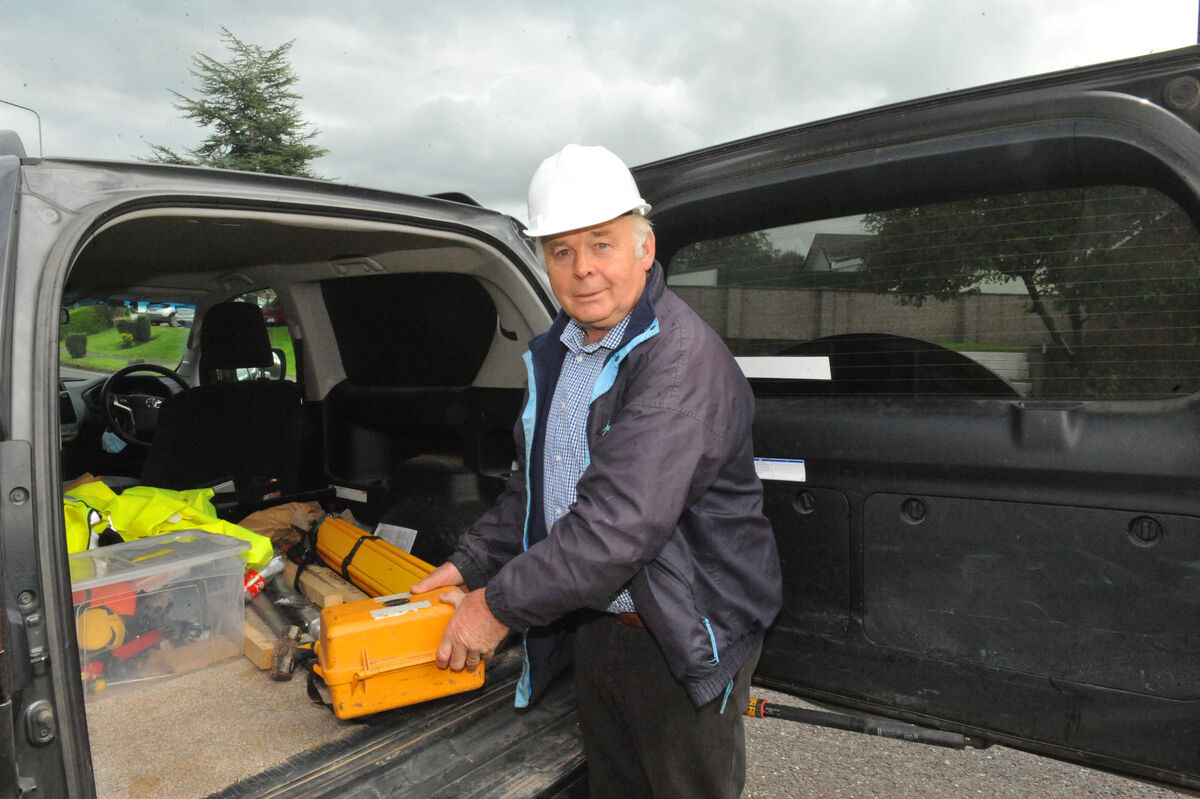
In 1978, the firm began Westbury in Wilton, with 160 homes. In 1981, Palmbury in Togher saw 191, and schemes across Cork began through the 1980s, including Merrion Court in Montenotte in 1987.
The 1990s would see hundreds of homes on both the northside and the southside of the city, including 231 in Deerpark in 1990, 128 in Larchfield on the Commons Road in 1995, 210 in Eagle Valley, Wilton in 1996, 108 in Foxwood in Rochestown in 1996, and 263 in Coolroe Meadows in Ballincollig in 1998.
The 2000s began with 524 at Maryborough Woods in Douglas, along with the likes of Ashmount in Mayfield in 2001, Harbour Heights in Passage in 2005 and Maryborough Ridge in 2006.
Dan said: “There were hard times and things were tight along the way, it wasn’t easy by any means. You have to keep going, you can’t walk away.
"Our mother always told us: 'Whatever the situation, you always keep going.' You do that by watching costs.”
That is why the men felt so devastated at losing the company in 2014.
It was also the reason they felt housebuilding was in their blood, and that it would never go away.
Late in 2018, Denis and Dan O’Flynn saw an opportunity.
With the help of solicitor Patricia O’Brien and her team from BHK Solicitors, and Donal Keane from financial advisors Hyland Johnson Keane, the men attempted to do what had never been done before - bring the company back from both receivership and liquidation.
By late 2018, the brothers and their team of advisors knew what assets were left, as well as the details of loans outstanding.
Denis said: “We’d have to see what assets were left, and buy them back. If you can get the assets back, why not get the company back, we thought.
"We began to make enquiries as to what was left by way of assets and liabilities, and whether we could get the company back.
"We wrote to Nama to see what was left, there was an initial resistance, Donal did huge financial due diligence, and Patricia did some Trojan work.”
Ms O’Brien said: “Nobody thought it could be done, because it wasn’t done before. We had to try to persuade Nama that it was possible, the receivers, etc, because nobody believed you could get the company out of receivership and liquidation.
"There wasn’t any precedent. But it just seemed to make sense. After the loans, there was equity left that could be preserved.
"It was a just outcome that the O’Flynns would get the benefit of what they had built up over the years.
The plan was persuasive enough for Castlehaven Finance to come on board to back the firm if it was successful.
Despite the Covid-19 pandemic throwing a massive wrench in the works, the team ploughed on with their case.
Justice Michael Quinn was persuaded, and in August 2020, a permanent stay on liquidation was ordered. The men had their company back.
Dan said: “It is just a feeling of sheer relief, it was all over and we can start again. People like Patricia, Donal and Joan Kiely, a vital part of the team who did the conveyancing, have to be mentioned.
"We are captains of a team but the team is why we win. They played a blinder.”
What now for Dan and Denis O’Flynn and the reborn firm of O’Brien & O’Flynn?
As soon as the judgement was made in August 2020, the men got back to work.
The firm has already set down plans for the construction of new homes in Sarsfield Rd, Cork, and Harbour Heights in Passage West.
It also has further sites in Grange, Ovens, Killumney, and Glenbrook that it plans to develop.
Denis said: “Sure, what else would we do, only get to work? We started in Sarsfield Road this week, removing overgrowth and getting going.
"Harbour Heights is 27 to begin with, and 250 in mind. The 65 in Sarsfield Road are also getting going. We’re timber-framed and we have subcontractors.
"There is huge amounts of work done on-site. There will be extensive employment across the sites.
Dan said: “The hardest is getting up and running. Once you get a system in place, it all falls into place.
"Now it is time to move on, it is a whole new phase for us. O’Brien & O’Flynn has always been known for quality.
"It is a brand that is known and recognised. It’s not about sites, it is about the brand and what we do best.
"The finished product gives you great satisfaction, seeing it done right.
"Workmanship is very important, people pay enough for houses, so they should be finished off to a high standard.
“We’re beginning again, and we’re excited to do what we’ve done for more than 40 years.
"I still feel as excited going back on site today as I do when I started. We feel like young fellas of 35.”
Denis said: “We wouldn’t do it if we didn’t feel that passion. We have plots for 600 houses.
"That’s a lot of houses, and potential for more. This is a new beginning.”
CONNECT WITH US TODAY



Be the first to know the latest news and updates