After an explosive incident, entry for fun left the first YS winner in total shock
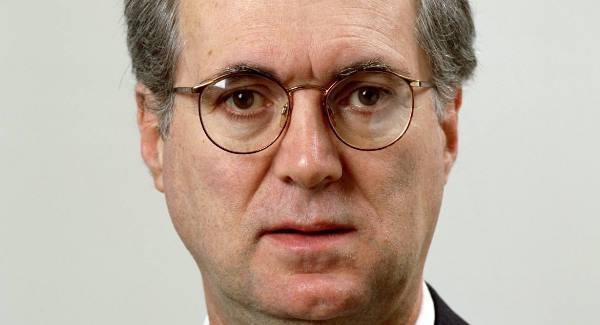
John Monahan is, of course, top of the history class in terms of the BT Young Scientist & Technology Exhibition, he being the first winner, in 1965.
“I’ve been interested in science since I can remember. I lived in Kildare and had my own laboratory, probably from the age of 10. Gradually, I got some proper equipment, flasks, etc, and started doing respectable chemistry. I worked on the farm with my father Frank and my mother Tess and they encouraged me.”
He approached the exhibition with a certain naivete, even failing to grasp he had won when it was staring him in the face.
“I entered for the fun. I had no idea that I would win. I pretty much did it all on my own and had no contact with any teachers. I remember I brought the equipment into the competition and was totally amazed at the size of the event. The judging was during the day and we were all asked to leave about 4pm. I was staying with my aunt and, on the way back to her flat, I passed the Mansion House again and wandered in. I went over to my project and it had a rosette on it saying first prize. I really didn’t understand what it meant and the next morning I saw a big crowd around it and was absolutely amazed to find I had won the overall prize.
“My project, basically, looked at how the body digests food, how enzymes break down different foods, such as carbohydrates, and how that process takes place. What won the competition was that it was novel and the judges were impressed with the fact I had done this by myself. I think that approach by the judges would still apply today. They will attempt to piece out the student’s own input,” said John.
He feels winning opened doors for him but “the primary fact was that it boosted my self-confidence”.
“I now had a way of appraising where I stood in terms of my knowledge of science. I was going to pursue a career in science no matter what. You have to be cut out to be a scientist and certain characteristics are required. Science is a little bit like art in a sense, you have to have a certain craving for it, you certainly have to have a talent for it, but if you find that you like scientific things, and it can range from maths to chemistry to biology and physics, it impacts on every walk of your life and it is very motivating and very exciting. There’s always new discoveries, new observations, it never stands still. You sometimes see them in the newspapers, but if you live and work in the scientific community, almost every day there is something interestinggoing on in a branch of science.
“I’ve travelled the world over my career and met many young people and people in general in science, and one of the things that I’ve really noticed is that students in Ireland actually have an intrinsic creativity, which is something that is very important in science, and that does not exist everywhere in the world, so I think things like the BT Young Scientist & Technology Exhibition bring that talent out in people and give self-confidence and helps them get motivated in terms of pursuing a career in science,” said John.
After graduating in chemistry from UCD he worked abroad in biotech companies before founding his own company, Avigen, which pioneered the development of gene medicines. He ultimately took the company public and raised over $235m before exiting. Today, he is executive vice-president, research and development at the cutting edge Synthetic Biologics, a US-based company focused on the development of medicines for the prevention and treatment of serious infectious diseases.
He is also on the boards of a number of US and Irish biotechnology companies (Genable, Cellix, Luxcel, GKA), which brings him home regularly.
“I come over every two or three months. So I see both sides of the fence and I think Irish people sometimes have a tendency to be very critical of themselves and actually don’t appreciate the talent that actually exists within the country in terms of the hi-tech community.”
He feels education here deserves a high mark, but with the ‘can do better’ codicil. “I think the education system is pretty good relative to a lot of other countries, particularly the quality of teachers. Ireland is rated highly, but there is always room for improvement, for example, when you make a comparison with Japan and South Korea. The overall emphasis on maths and engineering needs to be encouraged,” said John, who says of the exhibition: “If it affects young people the way it affected me, then it must be good.”
CONNECT WITH US TODAY



Be the first to know the latest news and updates