Workers squeezed after ‘wrong call’ in Budget 2026, Sinn Féin says
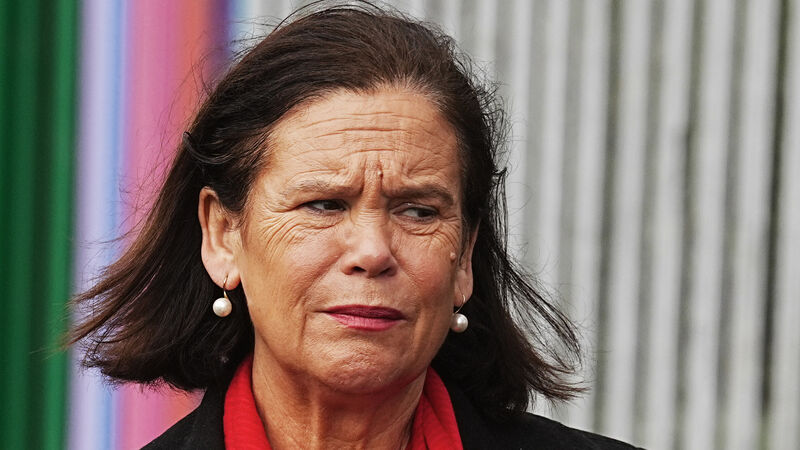
Sinn Féin leader Mary Lou McDonald said workers had been squeezed (Brian Lawless/PA)
Workers have been “squeezed” after the government made the “wrong call” in Budget 2026, Mary Lou McDonald said.
The Sinn Féin leader told Taoiseach Micheál Martin there was “real anger” amid working families “paying their way and yet falling further behind with each passing week”.
She referred to comments made by Public Expenditure Minister Jack Chambers, who said on Tuesday that Budget 2026 “didn’t give workers a break” and that would “have to be a priority in the context of Budget 2027”.
Read More
Speaking during Leaders’ Questions on Wednesday, Ms McDonald said: “There it is, your own Minister finally saying out loud what we have been telling you for six months.”
She said the last budget “drove the deep anger and frustration that we now see across the state”.
“As prices were rising, as bills were mounting, while working families were under the most severe pressure, you withdrew supports, you abandoned your election promises, one after another, and you left people high and dry,” she told the Dail.
“You had the resources, Taoiseach and you made the wrong call, and now the consequences are everywhere.
“Workers squeezed, households stretched to breaking point, people cutting back on basics and making impossible choices.”
She said the government did not cut the Universal Social Charge (USC), while school transport and State exam fees increased.
“It seems no matter how hard it gets, Fianna Fáil and Micheál Martin are quite happy to let people struggle on.
“People won’t tolerate that Taoiseach, and you will get your response again.”

Mr Martin said that Sinn Féin had “ignored” the war in the Middle East’s impact on fuel prices and said Sinn Féin
“didn’t believe in targeting” measures to those most in need in the Budget.
“You have the similar approach to (former British prime minister) Liz Truss in terms of the energy question,” he said, referring to caps on energy bills.
He said that public expenditure would increase by 8.6% under Budget 2026, and had looked to prioritise housing while also putting “huge investment into infrastructure”.
“That’s not failing anybody, that’s a very, very high increase in investment in public services that all workers benefit from and families and people generally benefit from,” he said.
He said the State pension was increased by 10 euro, weekly child supports also increased in order to tackle child poverty, and 500 million euro was allocated to disability services.
“Remember, the most important thing always in life is that we have an economy that can provide jobs to people.”
Asked about income tax on Wednesday morning, Mr Chambers said helping low- to middle-income workers was a priority for the budget on Tuesday October 6.
“We know that they’re feeling the pressure in the context of decisions we made in last year’s budget, where we sought to prioritise housing – correctly, in my view – and enhance viability in housing.
“What we did say, we’ll try and revert back to prioritising and reducing the burden for workers, I think that would be a priority.”

Then finance minister Paschal Donohoe said while unveiling Budget 2026 that there was “limited” scope for “significant personal tax changes”, but said the Government “will stand by” progressive changes for income tax over its full term.
Labour leader Ivana Bacik also accused the government of “a lack of forward planning” and said the millions of euro worth of a “bailout” for the Department of Education, to cover special education, was “all over the place”.
She said that while 430 special education places were made available this year, the shortfall was 600.
“You mentioned the 650 million euro bailout for the Department of Education, as if it was something to be proud of, but the fact that the bailout was necessary yesterday is exactly the problem.
“We’re seeing a lack of planning, a lack of forward planning, and then this bailout, it’s all over the place, Taoiseach.
“How did you not know that that money would be required, you know the numbers of children who require additional school places.”
Mr Martin said there would be 26,000 special needs assistants (SNA) this year, and the teacher ratio would be one teacher and two SNAs to every six pupils.
“The overall budget for special education is growing significantly, Cabinet has approved 650 million extra current funding for education, and a significant amount of that directed towards accommodating special education.”


CONNECT WITH US TODAY



Be the first to know the latest news and updates