British prime minister Keir Starmer calls for European countries to spend more on defence
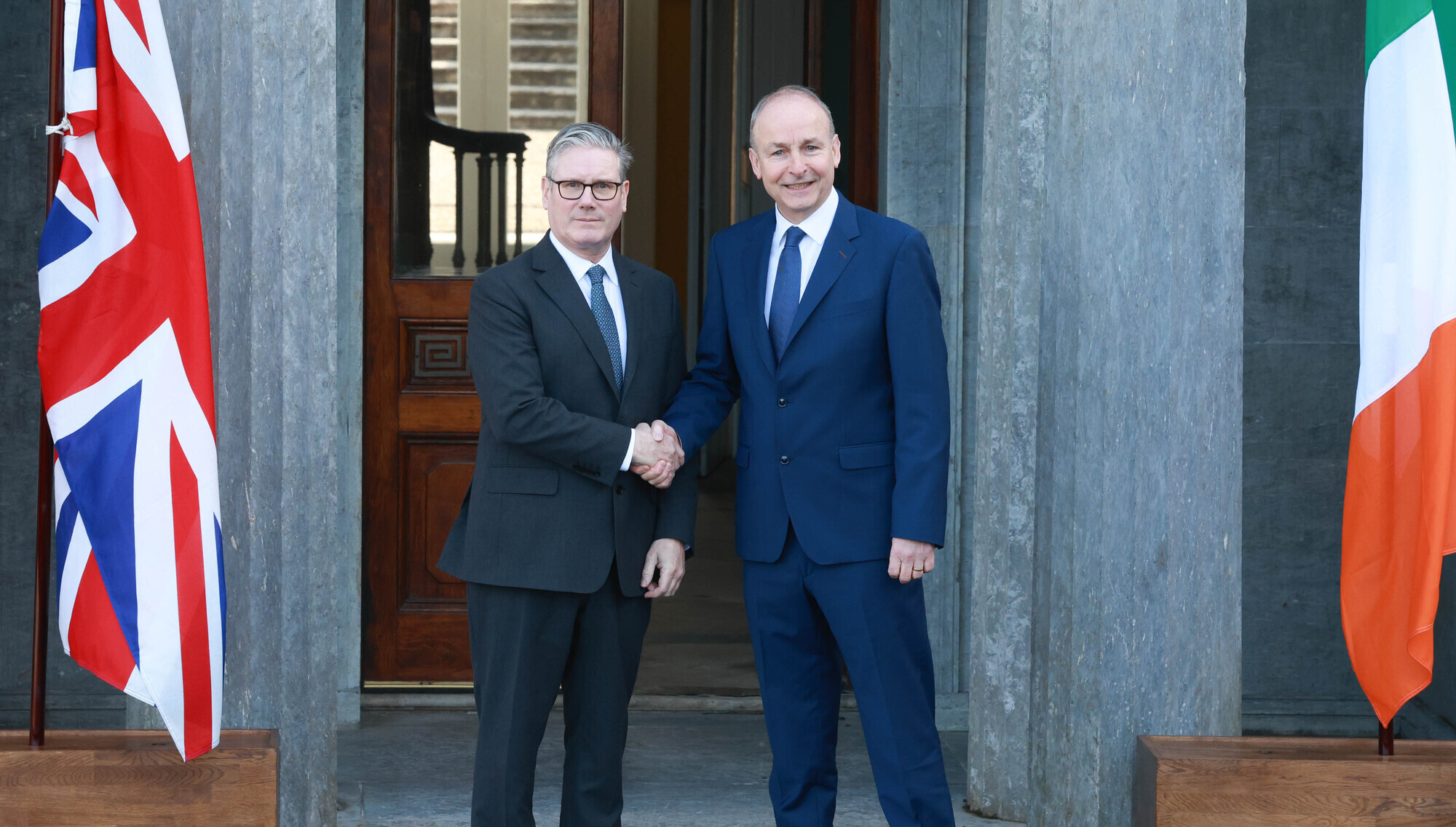
Taoiseach Micheál Martin greets British prime minister Keir Starmer at Fota House, Co Cork, on Friday, as the two leaders meet for the second UK-Ireland Summit. Picture: Leah Farrell / RollingNews.ie
European countries including Ireland should be spending more on defence, the British prime minister has said.
Speaking at a UK-Ireland summit at Fota House in Cork, Keir Starmer said Europe needed to be more co-ordinated and increase defence budgets.
“We can go further and we have the ambition to go further on defence and security, that is really important," Mr Starmer told the plenary session of the summit.
“Europe needs to do more, we need to step up on defence and security, we all need to spend more but that has got to be co-ordinated, we’ve got to collaborate otherwise we won’t get strategically what we need when it comes to defence and security."
Mr Starmer's comments came as the summit saw an updated memorandum of understanding agreed between the two countries, which will focus cooperation on subsea cables and maritime defence.
The memorandum updates the 2015 document, but with what was called a "stronger focus on critical infrastructure protection", and a "major new emphasis on critical undersea infrastructure, including cables and energy links".
New elements of the agreement include maritime security exercises and workshops, development of incident response protocols, as well as annual defence talks between the two countries and the exploration of a UK–Ireland Defence Council at senior official level, and regular service-level staff talks across naval, army and air forces.
It will also see greater cyber security collaboration, critical infrastructure protection and "defence capability development and dual-use technology collaboration".
Speaking after the summit, Taoiseach Micheál Martin said the memorandum highlighted the interdependence of countries on one another for defence of infrastructure.
"In the modern communications technology world, we're very interdependent in terms of energy interconnection," he said.
"So essentially, we work together in terms of mitigating or eliminating threats to that infrastructure.
"So that's the context, and it's to protect that and to make sure we can respond effectively if an event was to happen."
Mr Martin added the agreement would mean both sides would "be alive to threats", but it was not about British ships patrolling Irish waters.
"When the Yantar and other ships were over our gas connectors, our divers would have gone down, UK divers would have gone down to make sure that everything was okay. So this is ongoing with our European colleagues as well, of course, and without that collaboration, we're nowhere.
"Working together, sharing information, sharing knowledge. It's extremely important for our economic security that we do that."
Minister for defence Helen McEntee rejected the idea Ireland was too dependent on others for its defence.
"As a country, we're militarily neutral, but we're not neutral to any of the threats that exist at the moment. And the threat in our maritime domain, a space that is seven times the size of our landmass, is there. It's real."

CONNECT WITH US TODAY



Be the first to know the latest news and updates