Moriarty Tribunal: What was it and what has Michael Lowry got to do with it?
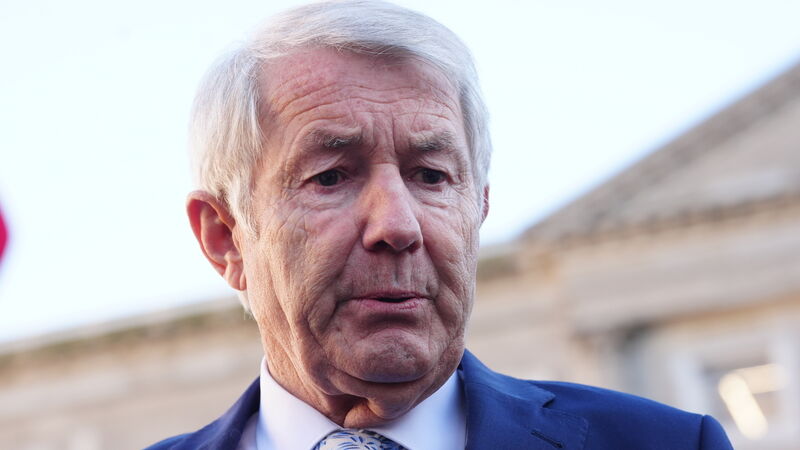
Investigations into Michael Lowry focused on the awarding of Ireland’s second mobile phone licence in 1996.
On Tuesday evening, 15 years after the Moriarty Tribunal delivered its final report, it was confirmed there would be no charges brought against Independent TD Michael Lowry or businessman Denis O'Brien over its findings.
Gardaí began their investigation 14 years ago, with a file being sent to the Director of Public Prosecutions (DPP) last January. The case is now closed.
The tribunal was set up to examine payments made to former taoiseach Charles Haughey and Michael Lowry, an Independent TD for Tipperary North and former cabinet minister.
It was formally known as the Tribunal of Inquiry into certain Payments to Politicians and Related Matters. It was overseen by High Court judge Michael Moriarty, with two reports being published.
The first, released in 2006, focused on Mr Haughey and payments made to the former taoiseach. It found that he accepted millions worth of payments from businesspeople in exchange for favours.
The second report, published in 2011, focused on Mr Lowry.
Investigations into Mr Lowry focused on the awarding of Ireland’s second mobile phone licence in 1996, which was granted to Denis O’Brien’s consortium Esat Digifone.
The contract itself was awarded by Mr Lowry, who was then serving as the Fine Gael communications minister in the Rainbow Coalition.
In particular, the tribunal sought to investigate whether there were any payments provided to Mr Lowry by Mr O’Brien in advance of the licence being granted.
The tribunal found that Mr Lowry had an “insidious and pervasive” influence on the awarding of the State’s second mobile phone licence to Esat Digifone.
The report found it was “beyond doubt” that Mr Lowry provided information to Mr O’Brien, which assisted him in obtaining the licence.
There were also findings that Mr O’Brien made payments totalling £447,000 to Mr Lowry, alongside supporting a loan of £420,000.
These payments to Mr Lowry were wired via offshore bank accounts, with the report stating it went to accounts on the Isle of Man, to Jersey, back to the Isle of Man in an account in his name.
It also found Mr Lowry made efforts to influence a rent review of a building, which was part-owned by Ben Dunne and being leased to Telecom Éireann. The report described this as being “profoundly corrupt, to a degree that was nothing short of breathtaking".
Both Mr Lowry and Mr O’Brien have always denied any wrongdoing.
Mr O’Brien has previously said the findings of the tribunal were based on “opinions”, while also saying he had never made any payments to Mr Lowry in any capacity, whether this was as a TD, Government minister or private citizen.
After the report was completed in 2011, the information was passed to gardaí. An examination was launched, with former Criminal Assets Bureau (CAB) chief Eugene Corcoran leading it.
After 14 years, in early 2025, gardaí confirmed that they had sent a file to the DPP in relation to the tribunal. Mr Lowry said he had fully co-operated with gardaí during their investigation.
On Tuesday evening, it was formally confirmed that no case would be brought by the DPP resulting from the garda investigation.
Mr Lowry, in a statement, was deeply critical of the tribunal and its findings, saying it had always been “flawed”.
He said the tribunal had not been “based on hard facts or admissible evidence, but on conjecture, manipulation and speculation”.
“Its findings have allowed me to be subjected to repeated insults, smears and false allegations, with no legal remedy available to me,” he said.
Mr O'Brien said on Wednesday he has also been informed no charges will be brought against him, and that "evidence to support such claims of criminal wrongdoing never existed".


CONNECT WITH US TODAY



Be the first to know the latest news and updates