Department claims it doesn't need to act on safety recommendations from Rescue 116 disaster
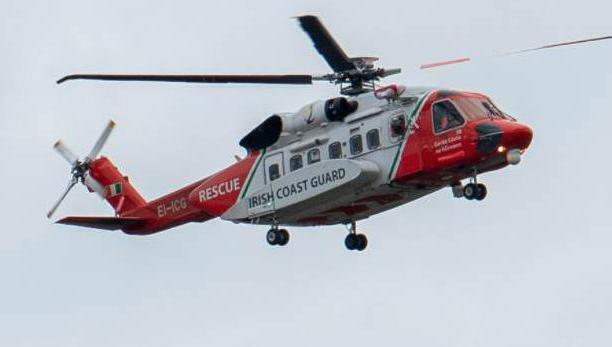
Rescue 116 crashed into Black Rock Island off the coast of Co Mayo while on a mission just after midnight on March 14, 2017, with the loss of all four crew members.
The Department of Transport has defended its inaction on safety recommendations issued after the Rescue 116 helicopter disaster, claiming that an external consultant deemed them unnecessary.
Recent freedom of information requests made to the department by the Dublin Airport residents’ advocacy group, the North Runway Technical Group (NTRG), were refused.
It requested all documentation on the relevant aviation qualifications, expertise, and training requirements for the department’s aviation section, but was denied because no such records exist.
The same aviation section oversees the airport operator Daa and the independent regulator, the Irish Aviation Authority (IAA), and currently has 49 staff.
In November 2021, the Air Accident Investigation Unit (AAIU), a subsidiary body of the department published its final report on the loss of the Dublin-based Coast Guard helicopter Rescue 116. It made 42 recommendations.
Rescue 116 crashed into Black Rock Island off the coast of Co Mayo while on a mission just after midnight on March 14, 2017, with the loss of all four crew members.
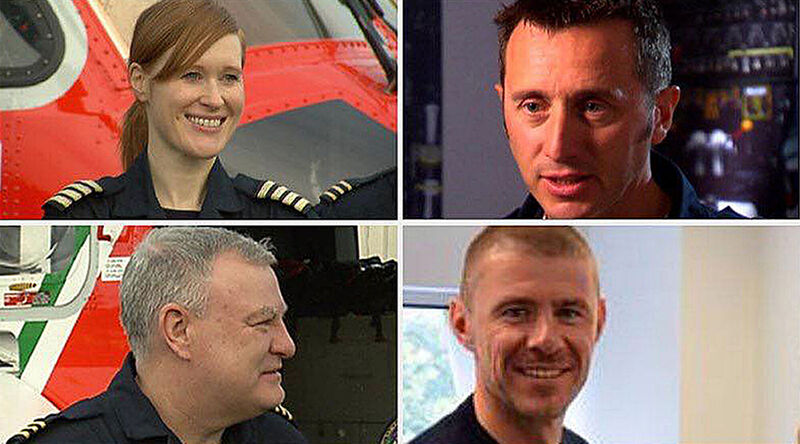
Captain Dara Fitzpatrick, Captain Mark Duffy, winchman Ciaran Smith and winchman Paul Orsmby died in the tragedy.
The four-year investigation concluded that it had resulted from several failures across organisations, with a major contributing factor being the omission of Black Rock, or the inaccurate depiction of the island, within the helicopter’s built-in terrain databases, so that neither of the helicopter’s pilots had been aware that the island was directly on the aircraft’s flight path.
All 42 of the AAIU’s recommendations had been fully accepted by the then transport minister Eamon Ryan at the time of the report’s publication in 2021, including three specifically for the department.
The final AAIU report indicated that the Department of Transport — the ultimate supervising body for the Coast Guard and search and rescue (SAR) service — had no aviation expertise within its own staff, rendering it incapable of being an “intelligent customer” concerning overseeing the SAR service.
It recommended that the transport minister “periodically review the availability of in-house expertise” to “intelligently oversee” the SAR service.
It further recommended that the minister "should ensure that the department has sufficient specialist aviation expertise to enable it to discharge effective oversight of the full range of IAA activities".
Asked about progress in implementing the AAIU’s recommendations, a department spokesperson said it had instead utilised the aviation consultancy Aerospace Qualified Entity (AQE) to benchmark its expertise against that of other EU countries.
That review concluded the department’s arrangements for oversight were “comprehensive” and “robust”, the spokesperson said.
The spokesperson added that the department’s own in-house evaluations had concluded that it “has comparable personnel, expertise and resources allocated to the oversight of the IAA to that of other government departments overseeing an independent safety regulator”.
Gareth O’Brien, a qualified pilot and representative of the NRTG, said the AAIU recommended that the department acquire aviation expertise but "instead, they hired a consultant to tell them they didn't need any".

CONNECT WITH US TODAY



Be the first to know the latest news and updates