Cabinet to consider major reform of Ireland's asylum laws
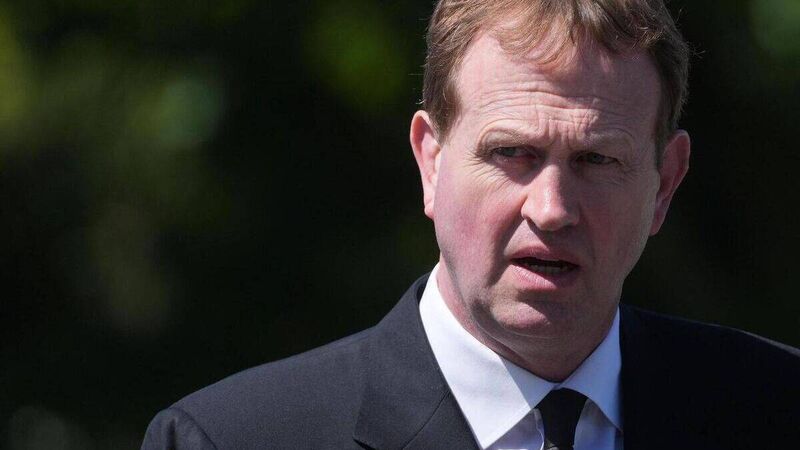
The legislation being brought forward by justice minister Jim O'Callaghan will be 'the most significant reform of Irish asylum laws in the history of the State', according to one senior source. Picture: PA
Cabinet ministers will discuss the “most significant reform of Irish asylum laws in the history of the State” when they meet for the first time in 2026 on Tuesday.
Justice and migration minister Jim O’Callaghan will bring the International Protection Bill 2026 to Cabinet on Tuesday morning.
It comes ahead of the introduction of the EU Migration and Asylum Pact across the bloc from June.
It is expected that the bill will put a new long-term framework in place to manage migration and asylum. This would ensure that policies implemented by the Irish Government are in line with its European colleagues.
It was suggested that the “objective” of the legislation being brought to Cabinet by Mr O’Callaghan is to provide “fair, sustainable, and efficient asylum procedure that is consistent with how asylum laws operate across the EU”.
As part of the legislation, it is envisaged asylum claims will be processed more quickly due to the introduction of a “more efficient decision-making system”.
It is also hoped the legislation will reduce the cost of assessing asylum applications, as faster processing times will reduce the length of time a person will spend in State-provided accommodation.
It will also lead to successful applicants being granted asylum sooner, as well as returning those with unsuccessful applications to their country of origin more promptly.
Senior Government sources stated that the legislation being brought to Cabinet by Mr O’Callaghan will “lead to the most significant reform of Irish asylum laws in the history of the State, in line with the EU Migration and Asylum Pact”.
Last April, Mr O’Callaghan got Cabinet approval for the drafting of the International Protection Bill 2025.
This outlined time limits for how quickly different international protection applications would be assessed.
It suggested that standard applications would take six months, while applications being assessed under the “accelerated” procedure would be looked at within three months.
A three-month decision deadline would also apply if a person seeking asylum had no documents, posed a security risk, or was from a country where approvals were less than 20%.
The legislation discussed by the Cabinet last year also planned to limit the use of oral hearings for asylum seekers who are appealing decisions.
A pilot project was conducted by the department of justice within the International Protection Office and the International Protection Appeals Tribunal last year to assess whether Ireland could fulfil the EU processing obligations that will be introduced under the EU Migration Pact.
Over 300 decisions were handed down to people from Georgia, Brazil, and India within 12 weeks. Mr O’Callaghan told the Dáil in November that within 12 weeks, applicants went through the first stage and appeals stage of the asylum process. Deportation orders were also signed “in many instances”.
The EU Migration Pact will come into effect across member states from June and will tighten immigration rules across the bloc.
It aims to improve burden-sharing of asylum applications across the EU, due to some member states receiving a disproportionate number of asylum seekers.
In 2025, 13,162 people sought asylum in Ireland. This was down from 18,651 in 2024, a decrease of 29%.
Of the applications received in 2025, 2,2021 (15.4%) were made by people from Somalia. Some 1,940 (14.7%) came from Nigeria, 1,680 (14.7%) from Pakistan, 1,292 (9.8%) from Afghanistan, and 925 (7%) from Georgia.