Crackdown planned on 'bogus' schools acting as back door for immigration

English language schools and other institutions will have to meet new quality mark criteria laid down by TrustEd Ireland
Crackdown planned on 'bogus' schools acting as back door for immigration

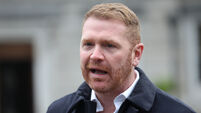
Higher education minister James Lawless said there are good English language schools in Ireland but that there is anecdotal evidence of bogus operations providing visas to would-be immigrants. Picture: iStock

The Government is planning a crackdown on “bogus” English language schools that are acting as a “convenient backdoor for immigration”, the higher education minister has said.

James Lawless has said while there are good examples of English language schools across the country, some are acting as a “tick box exercise” to allow people to get work permits.


“There have been anecdotal suggestions of courses where you’d go into a classroom, there’d be maybe two students there and a class of 100 on the roll,” Mr Lawless said.

The Coalition has previously flagged it is considering a reduction in the number of student visas granted for English language students, with justice minister Jim O’Callaghan engaging with Mr Lawless on the matter.

Mr Lawless confirmed he would be introducing a new “quality mark” for higher education institutions, set to be known as TrustEd Ireland, as part of efforts to clamp down on English language schools.

TrustEd Ireland criteria 

“To enjoy that award, to have that status, you must meet certain minimum requirements and they would include fairly fundamental criteria,” the minister said.

“[Criteria includes] that you are providing a reasonably strong quality course, that you are providing a certain minimum number of hours, that you have a certain degree of students signed up for it, amongst other things. It’s a quality check.”

Mr Lawless said the quality mark is to “ensure these schools are genuinely providing a quality educational service to their students, that they’re not being used as a convenient backdoor for immigration”.

“The quality mark, I suppose, will weed out any providers that are substandard or maybe gaming the system,” he said.

“I would expect that any providers that have achieved the quality mark will have demonstrated that they run a good house and are actually providing high quality education in the manner that they’re expected to.”

Impact on labour market 

However, Mr Lawless did question the impact of such a policy on the labour market, highlighting that students who come to Ireland are permitted to work for 20 hours per week under visa conditions.

He said: “I suppose, if we are going to reduce that pipeline of labour, we just have to consider the economic ramifications. We do have various workforce needs and it’s just something we need to consider.”

Mr Lawless said the impact of the new quality mark would be taken into account in the new year.

It will be rolled out for all colleges and universities which take in international students, Mr Lawless added.

There will be a requirement on colleges to pay a levy for their quality mark, with Mr Lawless describing this as a “test” for English language schools which are not legitimate.

“If a school is not a school, it probably won’t pay the levy and therefore it actually excludes itself in the process,” he said.

Mr Lawless said the levy paid will go back into the higher education sector, being collected against a percentage of student intake.

He said: “It’s actually available in the event that any college was to fail or a class was unable to be provided. It’s a form of insurance within the system.

Instances of schools collapsing 

“We’ve seen in the past where schools have collapsed overnight and students left high and dry. There’s a degree of insuring the system against that kind of market failure.”

Meanwhile, a new report from the National Economic and Social Council has said Ireland should welcome migrants to support the economy into the future if it is to avoid a “vicious circle” where there are not enough workers in order to sustain the State.

The council said Ireland has already passed two significant turning points, “peak baby” in 2010 and “peak child” in 2024, which reflects a sharp and sustained fall in births.

This fall means that Ireland’s population will peak in around three decades’ time, bringing with it an ageing population and puts us at risk of the “vicious cycle” where we don’t have enough workers and tax revenue to support this population.

x

More in this section

Politics

Newsletter

From the corridors of power to your inbox ... sign up for your essential weekly political briefing.

Cookie Policy Privacy Policy Brand Safety FAQ Help Contact Us Terms and Conditions

© Examiner Echo Group Limited