Taoiseach calls for review of Hiqa after RTÉ exposé on nursing home abuse
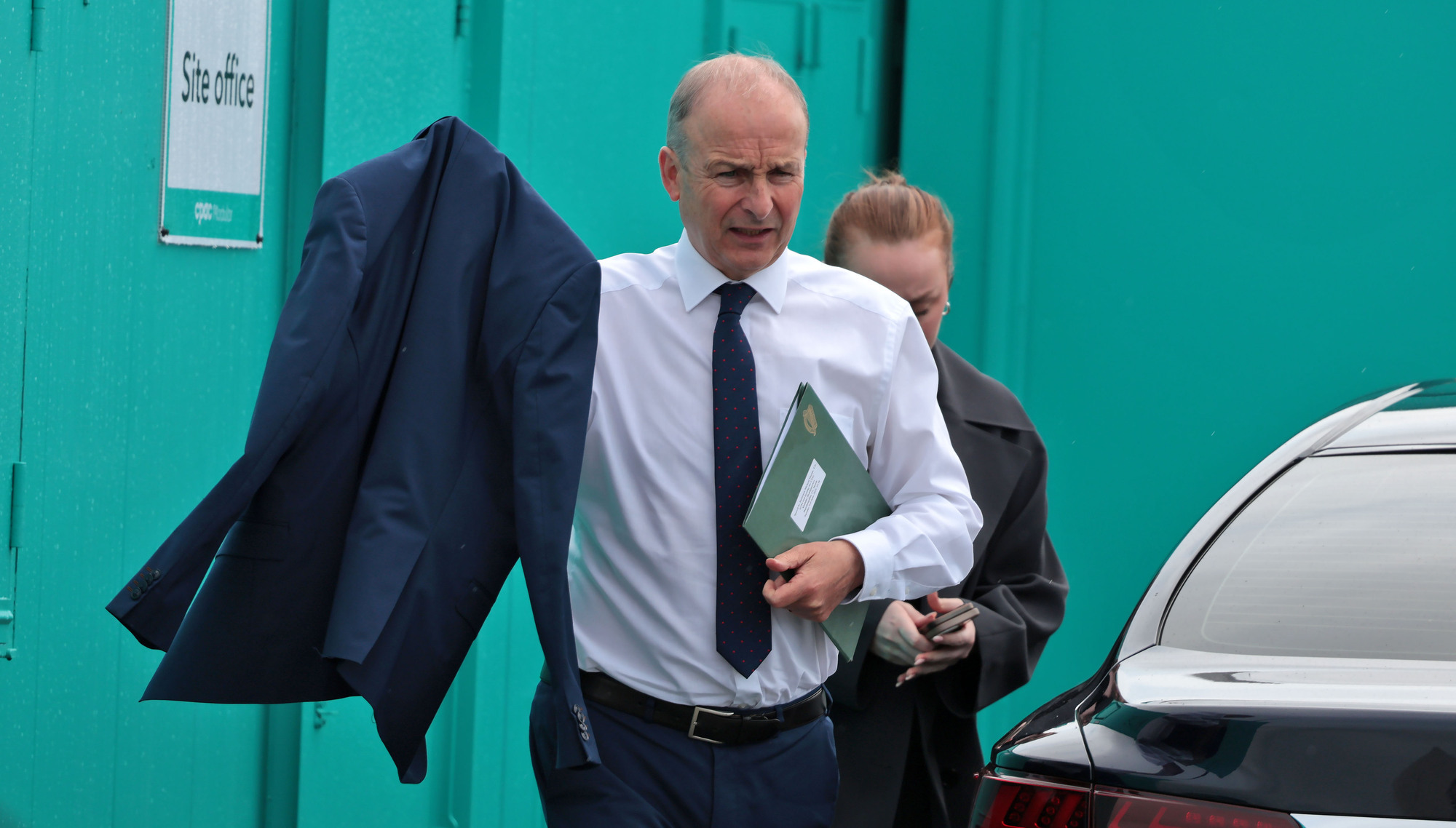
Micheál Martin insisted that the Health Information and Quality Authority (Hiqa) is well-resourced and fit for purpose. Picture: Colin Keegan, Collins Dublin.
The Taoiseach says there must be an investigation into how the health regulator failed to detect some of the abuse uncovered at two nursing homes.
Micheál Martin insisted that the Health Information and Quality Authority (Hiqa) is well-resourced and fit for purpose, but said the Government plans to consider how it can strengthen oversight of nursing homes in the wake of the latest scandal.
“Since its beginning, it (Hiqa) came out of the quality and fairness strategy of 2002, which I published at the time, it was the first ever development in Ireland in terms of quality control and regulation within our health service,” Mr Martin said.
“Over the years its role has expanded. It has been effective and impactful in many areas. That has to be said.
“But certainly there has to be an examination of this situation - the regulatory framework didn’t catch very horrific and shocking behaviour towards elderly people in nursing homes. That has to be taken on board.”
He made his comments in Cork today, as Hiqa begins a review of all nursing homes operated by the Emeis Ireland group.
The Health and Safety Authority is also preparing to carry out inspections at the two centres featured in the documentary, which examined standards of care at Ireland's largest private nursing home provider.
Mr Martin said: “What happened and what was uncovered by was absolutely and absolutely unacceptable.
“It illustrated in terms of the governance of those nursing homes, the ownership, a lack of a clear ethos and ethical framework in terms of respecting the dignity of every human being, of every person living in those nursing homes.
“We think of the families who had to watch that, who placed their loved ones in the care of those homes.
“It is quite shocking. It is not acceptable.”
He rejected claims that the Government had neglected the complex needs of elderly people, pointing to a multi-stranded approach, including a doubling of expenditure on home care to over €800 million and significant investment in community district hospitals over the last five years.
However, he acknowledged shortcomings in Hiqa’s inspection methods.
“I think we have to stand back and take a look at how in one case anyway the inspections did reveal a lack of compliance - in another, not so - and that needs to be examined as to how that came about and are there better ways of getting in under this to make sure that this does not happen again,” he said.
“There will have to be increased vigilance from the regulatory approach and that is something that government will be looking at.”
Despite the criticisms, he maintained that Hiqa remains effective.
“This is fundamentally about regulation and fundamentally about the regulatory frameworks governing both private and public,” he said.
"There are safeguarding policies already in place.
“There is a new national safeguarding policy being developed, and parallel with that and after that obviously, which will take guidance from the strategy, legislation will be passed.
“But that in itself isn’t the issue. It will be an additional help but fundamentally it’s behaviour on a day-to-day basis.
“It is how homes are operated and it’s the regulation then of that that ultimately will still have to be the first response and the key response to situations like this."
He also emphasised the need for future legislation around home care.
"The objective of most families is can we keep our loved one at home for as long as possible and that will be provided for legislatively, it is already provided for, we have doubled home care provision.
“I see that as taking up a significant part of the provision into the future.
“And we have invested very strongly in the public system which people may not realise through the refurbishment of existing community district hospitals across the country over the last 4 to 5 years.
“There will be additional investment in public facilities into the future.
“But it will continue to be a mix of public, private and home care to be absolutely realistic and pragmatic about it given the population growth and the ageing of the population,” he added.
CONNECT WITH US TODAY



Be the first to know the latest news and updates