'They have to pay to vote': GP cert cost slammed as unjust by Electoral Commission
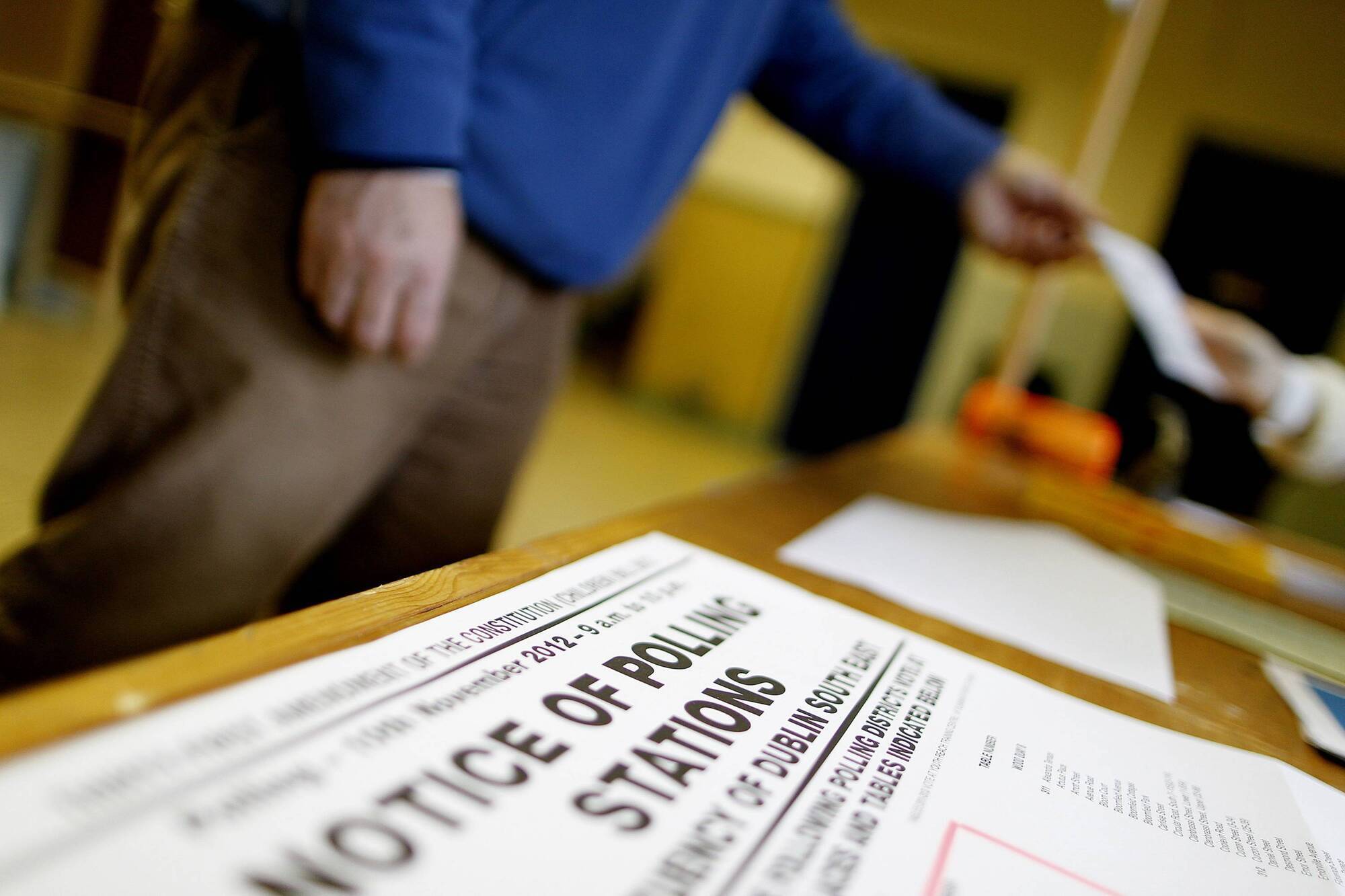
T he Electoral Commission chief executive Art O’Leary says data collected by them after the local and European elections in June 2024 showed 23% of voters with a disability opted against casting a ballot due to their disability. File picture
Requiring people with disabilities to pay for doctor certs to get a postal vote is an “unjustifiable barrier” to electoral participation, the Electoral Commission has said.
The Commission has called on the Government to remove the need for people with disabilities to pay for their certification, with chief executive Art O’Leary saying it should be done in advance of the upcoming Presidential elections.
Mr O’Leary said he wrote to housing minister James Browne about the matter, saying it should be dealt with urgently.
“There is a single cohort of people in this country who have to pay to vote. They have to get a certain certificate from a doctor to say that they are unable to attend a polling station and they have to pay for that certificate,” Mr O’Leary said. “We don’t think that’s fair.”
In the letter, Mr O'Leary says data collected by the Electoral Commission after the local and European elections in June 2024 showed 23% of voters with a disability opted against casting a ballot due to their disability.

“An Coimisiún considers that the current procedures around medical certification imposes an additional cost for many applicants and that this amounts to an unjustifiable barrier to participation.
“Registration for postal voting where medical certification is required should not impose any financial cost on an applicant.”
Mr O’Leary urged the housing minister to waive the charge “without delay” to avoid it becoming a barrier to people with disabilities seeking to register for a postal vote ahead of the presidential election.
Under current requirements, an individual with a disability seeking a postal vote is required to get a GP's sign-off on the request – which is not covered by medical card, unlike other services for people with disabilities.
Emer Begley, director of advocacy for the Disability Federation of Ireland, said the associated costs with getting a postal vote is “not equitable” for people with disabilities.
“There should not be a barrier to exercising your right as a citizen to vote and because you have a disability, you are financially affected by this,” Ms Begley said.
Ms Begley also flagged concerns about the time frame people have to apply for their postal vote, with applications for a vote closing two days after the Dáil is dissolved for a general election.
In particular, Ms Begley said that the Government was contravening the UN Convention on the Rights of Persons with Disabilities by not removing the charge.
A spokesperson for the Department of Housing confirmed that the correspondence from the Electoral Commission was “being considered”.
The Electoral Commission is due to deliver its report on the 2024 general election later this month, which is set to outline issues with accessibility of polling stations. Mr O’Leary said, at present, Ireland does “not make it easy for people to vote”.
“In this country, you have to turn up at a particular place, on a particular day and in between particular hours and if you can’t do that, then you can’t vote,” he said.
He said work is ongoing at present around the issue of voting, with research underway within the Electoral Commission to consider expansion of postal voting or even early voting.
“I think it’s inevitable that when we’re looking at the issue of postal voting, that we will look at alternatives as well,” Mr O’Leary said.

CONNECT WITH US TODAY



Be the first to know the latest news and updates