Confidential review recommended change to prevent possible abuse of Dáil clock-in system
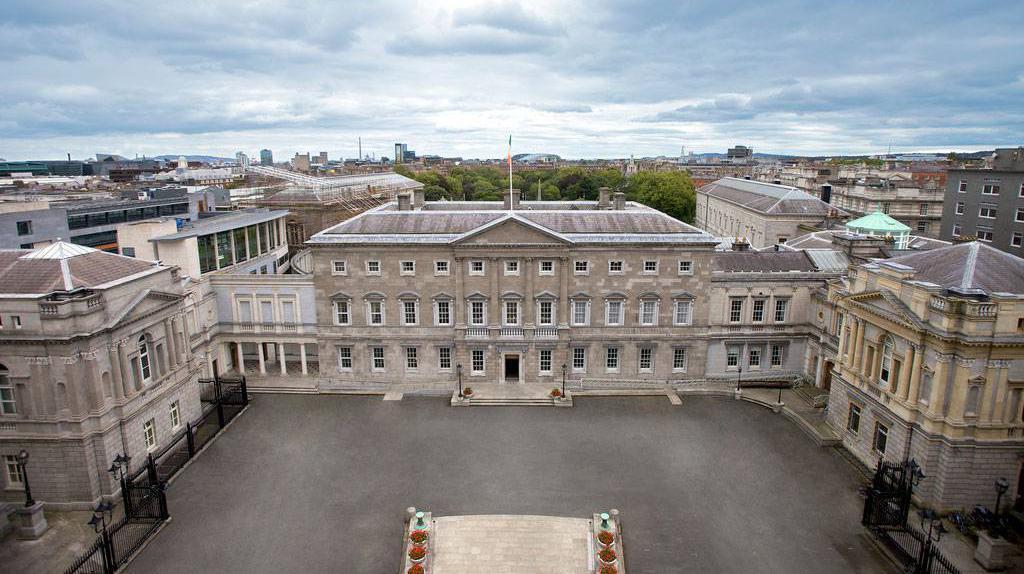
Under the current system, TDs and Senators are obliged to ‘fob’ in for 120 days each year to be paid allowances of between €5,250 and €34,065 depending on how far they live from Leinster House. File picture
A confidential review of how TDs and Senators claim expenses said a system was needed that provided “certainty of identity” to stop politicians from having others clock in to work on their behalf.
The report was prepared in 2021 following media coverage of “alleged abuses” of the system for payment of travel and accommodation allowances to politicians.
Under the current system, TDs and Senators are obliged to ‘fob’ in for 120 days each year to be paid allowances of between €5,250 and €34,065 depending on how far they live from Leinster House.
However, the system was not checked in any way and only required Oireachtas members to clock in without any obligation to clock out on the same day.
The confidential review said public confidence in politics had been in decline and Britain's Westminster expenses scandal had brought an “exceptional focus” on how elected members are paid in salary and expenses.
“Expectations of the public, along with the media, have resulted in less privacy and higher levels of scrutiny of an elected member's actions than at any time previously.
“This is a price that is now having to be paid by those serving in public office and who are in receipt of public funds.”
The report’s author Trevor Reaney said any new system needed to “make it impossible (or as close to impossible as can be) for anyone other than the member themselves to register their identity”.
He looked at 32 different parliaments internationally and said none had a system like Ireland with the majority relying on vouched receipts and self-certified mileage claims. He put forward six options on how the Irish system could be reformed.
Four, which would have involved signing in before an Oireachtas staff member, a signature process watched by cameras, a clock-in system monitored by staff, and a new electronic system, were not given significant consideration.
Instead, two options were recommended — an enhanced system using biometric or facial scanners; and clock-in stations overlooked by CCTV.
The review said both options “would provide certainty of identity and evidence to address any alleged abuses”. Costs for either would be around €25,000.
Then Public Expenditure Minister Michael McGrath said his preference would be for biometrics or facial recognition that would replace the existing ‘fob’ system. However, the Oireachtas opted for the CCTV option which was said to have “maximum potential” to increase public confidence.
The report said: “Even at an indicative cost of €24,000, such an investment would represent less than 0.01% of the total annual expenditure on TAA [travel and accommodation allowance].”
The Department of Public Expenditure had long withheld the report from release under Freedom of Information laws saying it formed part of an ongoing deliberative process. However, it reversed that decision earlier this month and accepted that the matter was no longer under active consideration.
CONNECT WITH US TODAY



Be the first to know the latest news and updates