Local elections: Everything you need to know about the Cork City South West constituency 
With 17 candidates running in the Cork City South West electoral area, and just seven seats to fill, next month’s election in Cork’s most populous area will make for interesting viewing
Local elections: Everything you need to know about the Cork City South West constituency 

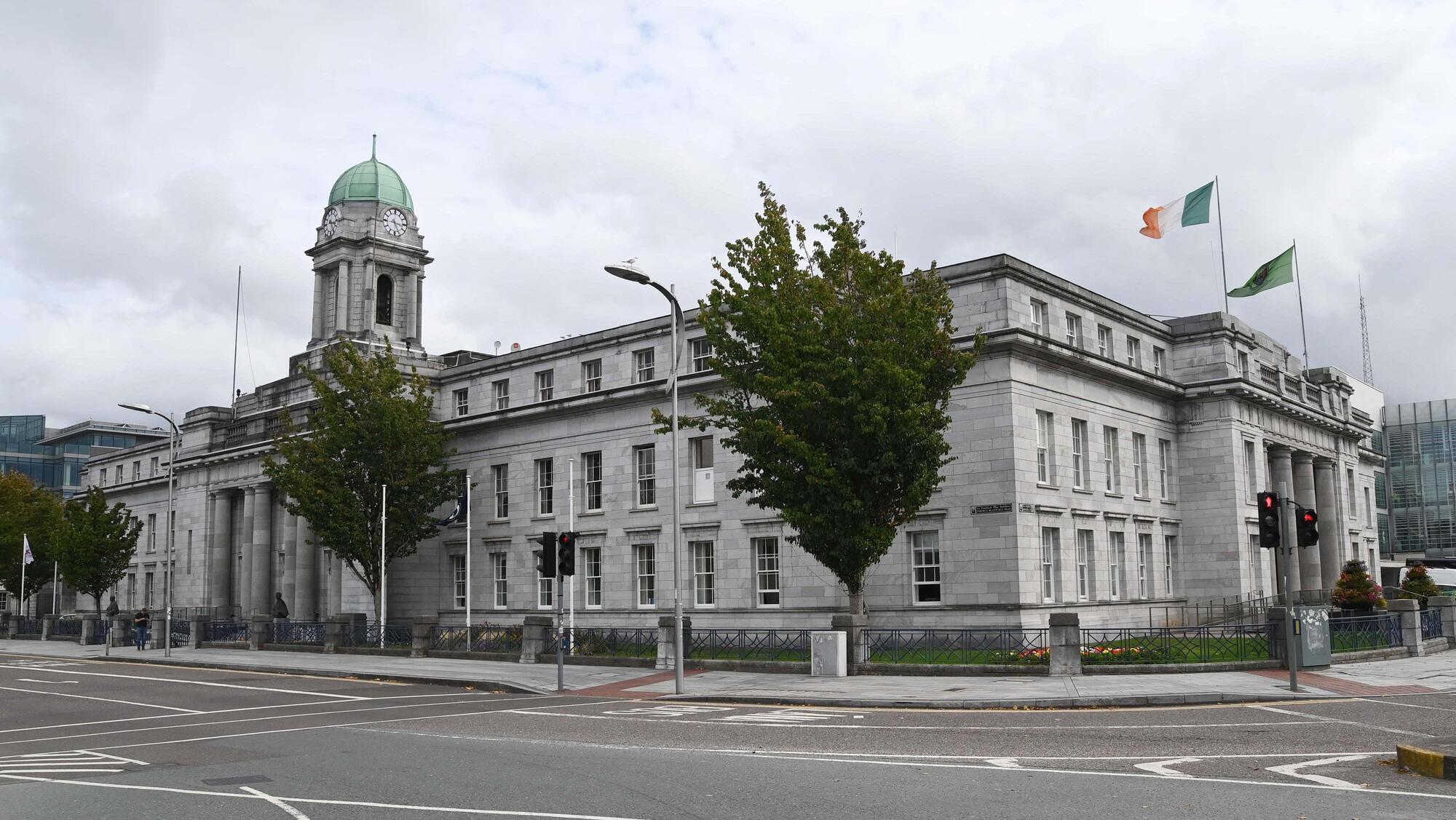
Cork City Hall. Picture: Denis Minihane.

Who is running? 

  • Andrea Christopher-Rea, FG 
  • Terry Coleman, FF
  • Albert Deasy, Non Party 
  • Fergal Dennehy, FF 
  • Colette Finn, Green 
  • Laura Harmon, Labour 
  • Colm Kelleher, FF 
  • Garett Kelleher, FG 
  • Thomas Kiely, Non Party 
  • Joe Lynch, SF 
  • Aran MacDonnchadha, Non Party 
  • Ciarán McCarthy, Soc Dems 
  • Trevor McCarthy, SF
  • Joanne Murphy, Aontú 
  • Gary O’Brien, FG 
  • Orla O’Leary, SF 
  • Olga Shevchenko, FF

Local Authority Area information

Population: 51,063 

Seats:

Population per councillor: 7,294 

Outgoing councillors: Fergal Dennehy (FF), Derry Canty (FG), Colette Finn (GP), Thomas Maloney (Ind), Colm Kelleher (FF), Garret Kelleher (FG), Orla O’Leary (SF) 

What you need to know

Two retirements in the seven-seat Cork South West local electoral area (LEA) have made for an intriguing city council election race.

Cork city's most populous local electoral area, with a population of 52,000, currently has two Fianna Fáil and two Fine Gael councillors, with the Green Party, Sinn Féin and an independent accounting for the other seats.

In 2019, an electorate of just over 34,400, with a turnout of around 46%, returned Fine Gael and Fianna Fáil almost neck and neck - Fine Gael with 20.38% of the vote, and Fianna Fáil with 20.28%.

Veteran Fine Gael councillor, Derry Canty, who has always huge a huge personal vote and topped the poll with just over 12% of the first preference vote, is stepping down after more than three decades of public service, with Fine Gael opting to run three candidates in the hope of retaining two seats.

Two-term Independent councillor Thomas Moloney has also decided not to run, opening the door to another independent, or perhaps to a Sinn Féin, or maybe even a Labour candidate to take that seat.

In total, 17 candidates are in the running in an electoral area which includes the mature residential districts of Togher, Glasheen and Bishopstown and stretches west to include the fast-growing town of Ballincollig, and south to Cork Airport and its adjoining business park, a large employment hub.

It has a young population, with figures from Census 2022 showing that more than half its residents, just over 27,800 people, are aged 40 and under.

The biggest cohort, at almost 4,300 people, is aged between 20 and 24, with just over 6,000 children aged six and under, and a total of 9,455 children of school-going age, between five and 19 years old.

There is a large Polish and Indian community here. Most people own their own homes, most with a loan or mortgage, but closely followed by those who own their home outright, followed by almost 4,000 private rented households, with low levels of local authority housing compared to other electoral areas.

Olga Shevchenko canvassing in Ballincollig for the Cork City South West area. Picture: Eddie O'Hare

And despite the presence of several high-frequency bus routes, including the city’s only 24-hour bus service, it has one of the highest rates of commuting by car, with over 13,321 people relying on the car for trips to school, college or work — just over 12,603 say they rely on the car to get to work, with just 759 biking and 2,705 taking the bus.

It is home to Munster Technology University (MTU) and Cork University Hospital (CUH), both of which are undergoing intense and rapid expansion, as well as some of the city’s largest parks, including the vast Regional Park in Ballincollig, the Lee Fields, Murphy’s Farm and Clashduv Park.

The Local Electoral Area (LEA) includes several city fringe areas including Lehanaghmore in the south and Ovens to the west — areas that became part of the city following the 2019 city boundary extension and which still have a rural feel but which face typically suburban problems such as demand for new housing, traffic and public transport problems.

New residential developments are underway in greenfield areas around Lehanaghmore and near Waterfall just south of Bishopstown, while vast greenfield areas in the Maglin area of Ballincollig have been zoned for housing in the new city development plan, with plans here likely to advance over the lifetime of the next city council.

While the main campus at University College Cork is just over the border in the Cork South Central LEA, the south west LEA feeds a lot of students and workers to UCC, and feels UCC’s impact through traffic and transport issues, most obviously through the demand for and pressures caused by student housing, with several new purpose-built student housing developments built in the area since the last local elections.

Similar issues have come to the fore around MTU’s Bishopstown campus, which secured university status since the last local elections. 

With several new buildings under construction on campus, and an increase in student numbers, student housing, traffic and parking have all become key issues here.

MTU students staged protests last year calling for improved transport links, which led to the establishment of a park and ride service from nearby Curraheen Park greyhound stadium, while residents have objected to plans for new student apartments in the area. Expect these issues to intensify over the next five years.

Public consultation on proposed strategic transport corridors (STCs) as part of Cork BusConnects is nearing completion, and several key routes, including for the 24-hour 220 service, and the 208, both run through parts of this LEA, with CUH set to become a major bus interchange hub within the next year or so.

The transport corridors will require the acquisition of private land, and the 220 also follows the indicative route of the proposed Cork light rail system, with details on the preferred route most likely to be one of the key issues facing the next city council.

Several new cycle lanes have been built in the LEA since the last local election, a major greenway is planned linking the Chetwynd reservoir near Wilton to the Kinsale road roundabout, but some routes have faced opposition, including two in Ballincollig alone — one in the Maglin area and one in Coolroe – both of which have been shelved, or paused, depending on your point of view.

Sign off and delivery of these two projects will fall to the next council.

And while BusConnects is a National Transport Authority project, the new councillors for this LEA can expect to face a lot of public feedback about the new transport corridors — whether it’s motorists complaining about the loss of road space for cars or parking, landowners complaining about compulsory purchase orders, or bus users complaining about ghost buses and an unreliable service.

They will also have to consider climate change into their decisions, especially after this LEA felt the effects of our changing climate last October when Storm Babet lashed the southwest, causing for the first time in more than half a century the Glasheen stream to burst its banks, threatening homes in Riverview estate, opposite Clashduv Park.

It happened despite extensive dredging works in the Glasheen stream river channel in the months before prompted by local concerns about minor flooding during Storm Betty last August, and about high-water levels during Storm Agnes last September.

Ballincollig boasts three of the LEAs seven public representatives and while they were under pressure for several months last year over the closure of the town’s fire station post city boundary extension, the issue has petered out as a political issue.

After 33 years in local politics, 28 in County Hall and the last five in the city, the town's veteran public representative, Derry Canty, announced his retirement last summer, flagging it early with party HQ and giving them ample time to line up a replacement.

Mr Canty secured over 1,800 first preference votes in 2019, more than any other candidate in the LEA, and was elected on the sixth count just 22 votes behind Fianna Fáil Cllr John Dennehy, who topped the poll with 2,055 votes to retain his seat.

Fine Gael's Gary O'Brien, with retiring councillor Derry Canty canvassing in Ballincollig for the Cork City South West area. Picture: Eddie O'Hare

Fine Gael has chosen Ballincollig-born and raised Gary O’Brien, who graduated from CIT with a BA in Community Development and Education in 2018, and from Edinburgh Business School with an MBA in 2022, to join the party ticket alongside sitting councillor, Garret Kelleher.

Fine Gael obviously hopes that Mr Canty’s personal vote will stay with a Ballincollig candidate.

Mr O’Brien has been active in the community for over 15-years, pursuing a career as a family practitioner working with some of the most vulnerable families across the city and county, dealing with housing issues, child protection, advocacy, addiction, and other challenges, and he now manages child and family support services with Childhood Matters based in Bessborough.

He has held several leadership positions in his town, including chairperson of Ballincollig Credit Union, chairperson of Ballincollig Family Resource Centre, chairperson of Ballincollig Community Forum, and he is a designated liaison person for Lakewood AFC.

Mr Kelleher, who will be hoping to retain the seat he first won in 2019, doesn’t court publicity but has garnered a reputation locally for being a solid, straight-talking and dedicated public representative, often working quietly behind the scenes, to find consensus and solutions to local problems.

As chairperson of the Michael Collins Commemoration Committee, he came to prominence nationally, and was widely praised for his key role in the organisation and staging of the Michael Collins Centenary Commemoration from Beal na Bláth in 2022, which was addressed by the then Taoiseach, Micheál Martin.

Councillor Garrett Kelleher, who will be hoping to retain the seat he first won in 2019, doesn’t court publicity but has garnered a reputation locally for being a solid, straight-talking and dedicated public representative, often working quietly behind the scenes, to find consensus and solutions to local problems. Picture: Larry Cummins

The party is running a third candidate, Andrea Christopher Rea, who lives in the Lehanaghmore area on the eastern side of the LEA, but even with two and a half quotas in 2019, the party might find it hard to take a third seat this time out.

Completing the Ballincollig line-up is Fianna Fáil’s Colm Kelleher, who won a seat at his first time of asking in 2019, with 1,989 votes. He went on to be elected Lord Mayor in June 2021, during an historic covid-compliant city council meeting hosted in the sports hall of his former school, Colaiste Choilm, the first election of a lord mayor off City Hall’s campus.

He made the decision soon afterwards to speak publicly about the recovery of one of his brothers from drug addiction, he chaired the city’s joint policing committee for a year, and he has led calls for the development of a supervised injection facility in the city.

In the Togher area, his party colleague, Fergal Dennehy, who lost his council seat in 2009 when the electorate punished Fianna Fáil after the economic crash, but who was re-elected in 2014, winning the fourth seat of what was then a five-seat ward, held the seat again in 2019.

His impressive track record of grassroots community work demonstrated through his involvement with youth cafes and with local sports clubs, especially Togher Boxing Club, combined with his family name – he is the son of former Fianna Fáil TD John Dennehy - should see him retain his seat.

The party is also running first-time candidate Terry Coleman from Bishopstown, and Ballincollig-based Olga Shevchenko, a Ukrainian who has been living in Cork for over 20-years.

Fianna Fáil's Olga Shevchenko and her team canvassing in Ballincollig for the Cork City South West area. Picture: Eddie O'Hare

One of those who literally and metaphorically rode the 2019 Green wave was Cllr Colette Finn. 

The deputy lord mayor, and the party’s only candidate in this LEA, is regularly seen travelling through the area on her bike. 

She is widely regarded as an intelligent and straight-talking no-nonsense public representative who insists it’s better to tell people the truth, rather than what they want to hear, even though it might have been more politically advantageous for her to tell people what they wanted to hear, especially when it came to often locally contentious bus or bike lane projects.

Despite Sinn Féin taking a hit in the 2019 local elections, former councillor Henry Cremin held his seat but he retired from politics in May 2021, leading to two personnel changes for the party in this LEA since.

First, Eolan Ryng was co-opted to take his seat as the country began emerging from the pandemic. He stepped down from council in October 2023, leading to the co-option of Orla O’Leary, a young mother of one, a political activist since her teens, and someone who holds an honours degree in government and a masters in public policy.

She is a daughter of former Sinn Féin councillor and Lord Mayor Chris O’Leary, who is running for election in the south east LEA, and she is a sister of Mandy O’Leary, who is running for the party in the north east LEA.

Orla O’Leary took up her seat on council just last November but has acquitted herself well in the council debates she has contributed to since.

The party is running two other candidates here - Joe Lynch, another Ballincollig candidate, and Trevor McCarthy, from Wilton — but given its recent national polls, it would be doing well to hold this seat.

Independent Cllr Thomas Moloney has, however, decided to call time on politics after a decade of public service.

The full-time manager with youth group, Foroige, whose family home was targeted at one stage after he challenged an individual and his family about anti-social behaviour, said that was a testing time for him and his family, but it was not a factor in his decision to not seek re-election. 

He said he just doesn’t have the time anymore for what is “effectively a full-time job”.

Sinn Féin leader Mary Lou McDonald with Cllr Orla O'Leary and her baby Rhea, during a visit to Cork. Ms O'Leary took up her seat on council just last November but has acquitted herself well in the council debates she has contributed to since.

Perhaps hoping to target this seat are Labour’s Laura Harmon, from Wilton, Thomas Kiely, a non-party carer from Togher, Aran MacDonnchadha, a cleaner from the Mardyke area, barrister Ciarán McCarthy, a Social Democrats candidate from Ballincollig, and Aontú’s Joanne Murphy, also from Ballincollig.

Ms Murphy polled almost 4.2% of the first preference vote in 2019 while Mr McCarthy polled just over 3.5%, and Mr Kiely polled almost 2.5%.

Mr Moloney, who describes himself as a centre left independent, said he believes an independent could take his seat.

“If I was to give any independent candidate advice, it would be to make it about local matters - not the national things. Candidates have to remember that local elections are won on local issues,” he said.

Mr Moloney said between 2014 and 2019, he was able to balance his day job with the demands of being a local councillor.

“But the volume of work, the level of need out there now has seen the workload almost double, especially since the boundary extension,” he said.

“And with Zoom, and Google Meets and all these online meetings, I could have meetings every day, morning, noon or night. I get about 100 emails a week, and messages through Facebook, from people looking for help, support or advice.

“I felt I can't give 100%, then it was time to step back and let someone else have a go.” 

“Obviously rents, housing delivery and childcare matter but local councillors have limited powers, so it’s the things that matter to people in their day to day lives, things like footpaths, public lighting, parks, pools, libraries, disabled persons grants, sports grants, those kinds of things.

“There were big wins, like helping to get someone a house, a housing transfer, supporting someone out of devastating situations, but I will miss the small wins, like getting a footpath repair done, getting a speed ramp in, even just clearing up the local area, and empowering a community to speak for themselves.

“I won’t miss the negativity, people thinking we’re fair game for abuse, the veiled intimidation that comes from some quarters.

"And just because I’m stepping back from council doesn’t mean I won’t be involved in my community. I will continue to support my community. "

x

More in this section

Politics

Newsletter

From the corridors of power to your inbox ... sign up for your essential weekly political briefing.

Cookie Policy Privacy Policy Brand Safety FAQ Help Contact Us Terms and Conditions

© Examiner Echo Group Limited