Europe ratifies Nature Restoration Law despite late opposition
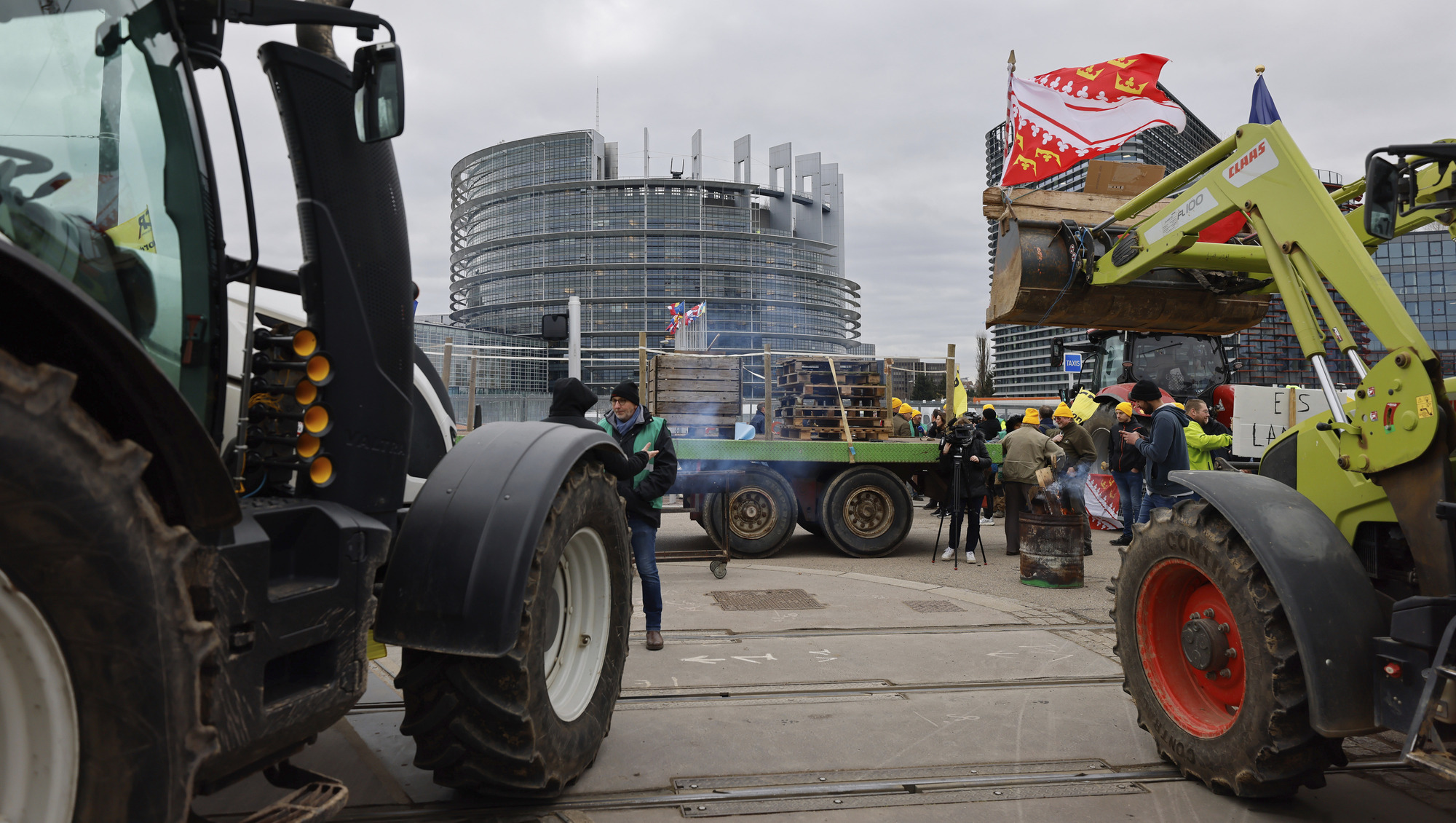
Farmers gathered outside the European Parliament for a protest earlier this month against the European Union's anti-pesticides proposal. Speaking on behalf of the Fine Gael MEPs before today's vote, Seán Kelly said that support will be needed from farmers for Ireland to hit its targets. Photo: AP/Jean-Francois Badias
The European Parliament has ratified the Nature Restoration Law, despite last-minute resistance.
Fine Gael MEPs defied their European grouping, the European Peoples' Party (EPP), and voted in favour of the law which aims to restore at least 20% of the EU’s damaged land and sea areas by 2030, and all ecosystems by 2050. The bill received 329 votes in favour, 275 against, and 24 abstentions, a margin larger than initially expected and led to applause and cheering among the parliament's Greens and socialists.
More than 80% of protected habitats across the EU are in danger, according to the European Environment Agency, with a combined area about half the size of Spain in need of restoration.
Last year, the law became the target of a fierce opposition campaign by conservatives, particularly by the EPP who warned it would damage the livelihoods of farmers.
Ireland South MEP Mick Wallace was one of just seven MEPs responsible for negotiating the Parliament's position in the inter-institutional agreement with the European Council and said that Tuesday's vote was a relief. Mr Wallace said today is "a good day for nature, for everyone who loves nature and who works with it and who works to try to save it. It is also a good day for farmers".
CLIMATE & SUSTAINABILITY HUB
He said: "Many farmers are totally against the regulation, but I absolutely firmly believe they should welcome it. Farmers and landowners should not fear the regulation, but should instead welcome the opportunities it will provide. The regulation is about restoration, not protection, and this is an important distinction.
However, Mr Wallace also said that he was disappointed by the final version of the bill.
"But, I have to say too that I am disappointed with the watering down of the ambition of the regulation. This watering down means the regulation is unlikely to be enough to meet the scale of the biodiversity crisis. So many concessions have been made, and the member states will now be granted so much flexibility in the choice of areas to be restored and measures to be taken."
Speaking on behalf of the Fine Gael MEPs before today's vote, Seán Kelly said that support will be needed from farmers for Ireland to hit its targets.
"My Fine Gael colleagues and I have been clear from the outset that action to restore nature in Ireland cannot happen without the support of the agricultural community and industry. Farmers and fishers are the custodians of our environment and they recognise the need to take action to tackle biodiversity loss.
"It is clear, however, that many in the agricultural community have concerns with the proposed law, so it is important that we get the communication of the flexibilities secured right. Food security is now a central objective of this regulation and this has been assured by amendments from the Parliament.
"It is up to the government to lead on restoration measures, assisted by farmers who can choose to take voluntary measures outside of these areas — and they will be financially assisted if they do so. The government has stated that voluntary commitments by farmers will not impact their eligibility for payments under the CAP or other EU schemes."
Fintan Kelly, Agriculture and Land Use Policy and Advocacy Officer with the Environmental Pillar, said the passing of the law "is a historic day for Europe".
"The Nature Restoration Law is a framework of targets designed to drive the recovery of nature across Europe, both inside and outside of protected areas, across land and sea and into the heart of our cities. The NRL recognises the interconnected nature of biodiversity loss and climate change and the threat that both pose to food security and economic stability.
"We now have the opportunity to reflect on our interdependence with nature and start to build a legacy for future generations.”
CONNECT WITH US TODAY



Be the first to know the latest news and updates