'There’s nothing like this in the world' — Taoiseach has 'sobering' visit to Korean DMZ
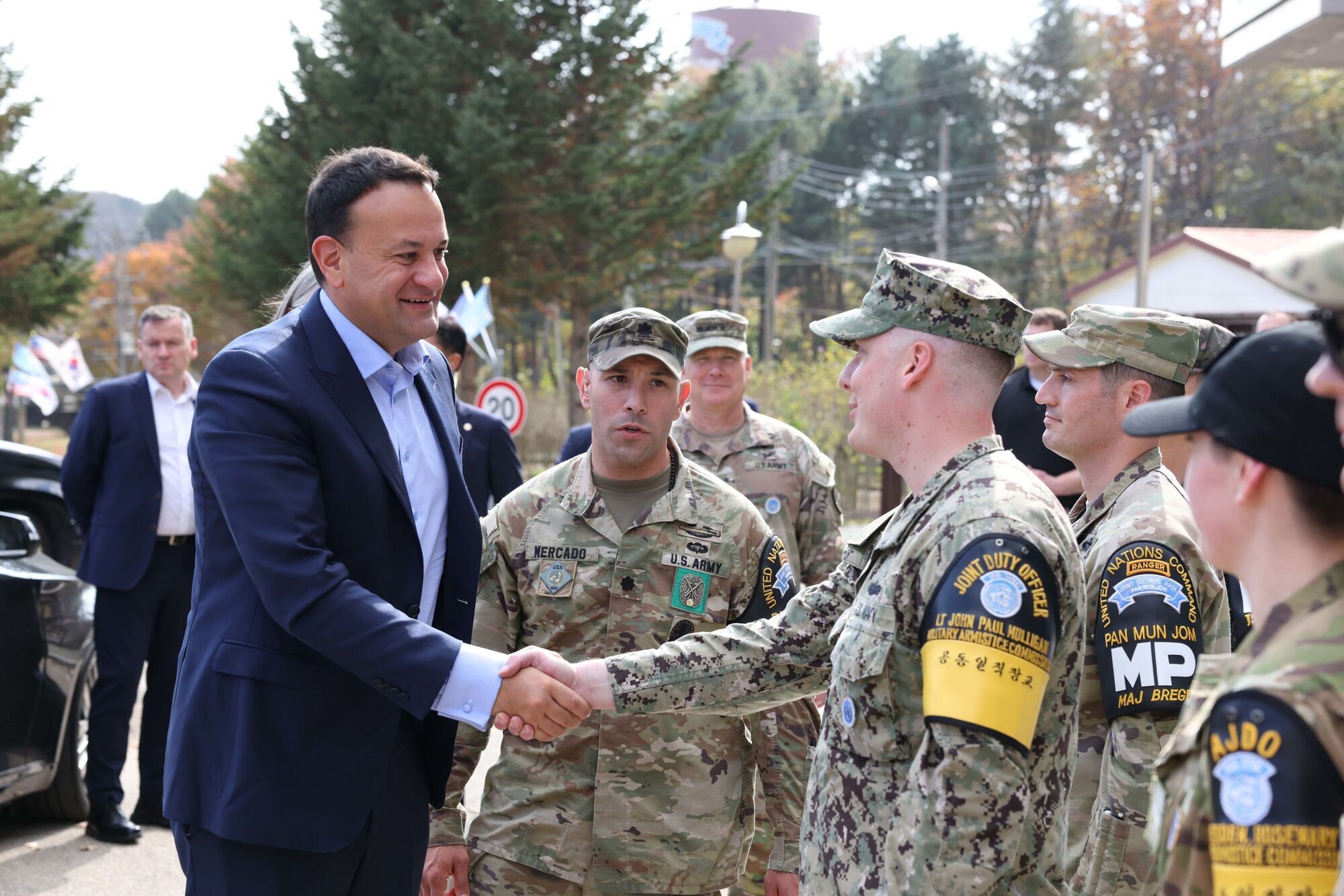
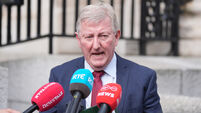
The Taoiseach Leo Varadkar during a visit to the Korean DMZ as part of a trade mission to South Korea. Photo: Shin hyun Kyung/PA
Fresh off a flight, Taoiseach Leo Varadkar was transported to what is considered the most heavily militarised region in the world.
Arriving in South Korea as part of the Government’s trade mission as it seeks to expand trade and create new opportunities for the country, Mr Varadkar headed straight to the demilitarised zone (DMZ). A 4km strip of land that runs across the Korean peninsula, a distance of about 250km dividing North and South.
Irish embassy officials faced numerous queries on when journalists could run the story, a significant one to tell given it’s the first time any Taoiseach has visited the region but we were instructed not to report until he left the region due to significant security risks. And it was easy to see why.
Fifteen minutes outside of the DMZ, young children queued at an amusement park totally unaware that the barbed wire just metres away separated them from North Korea. As the motorcade sped through to the DMZ, an eerie atmosphere was felt as passengers took in the views which indicated we were heading in the direction of a significant military area.
During a 90-minute tour, US military personnel from the United Nations Command—a multi-national force which works with South Korean forces in the DMZ—explained how operations were conducted at the DMZ.
“There’s nothing like this in the world, sir,” Joint Duty Officer John Paul (JP) Mulligan told Mr Varadkar, whose grandfather was from Dublin.
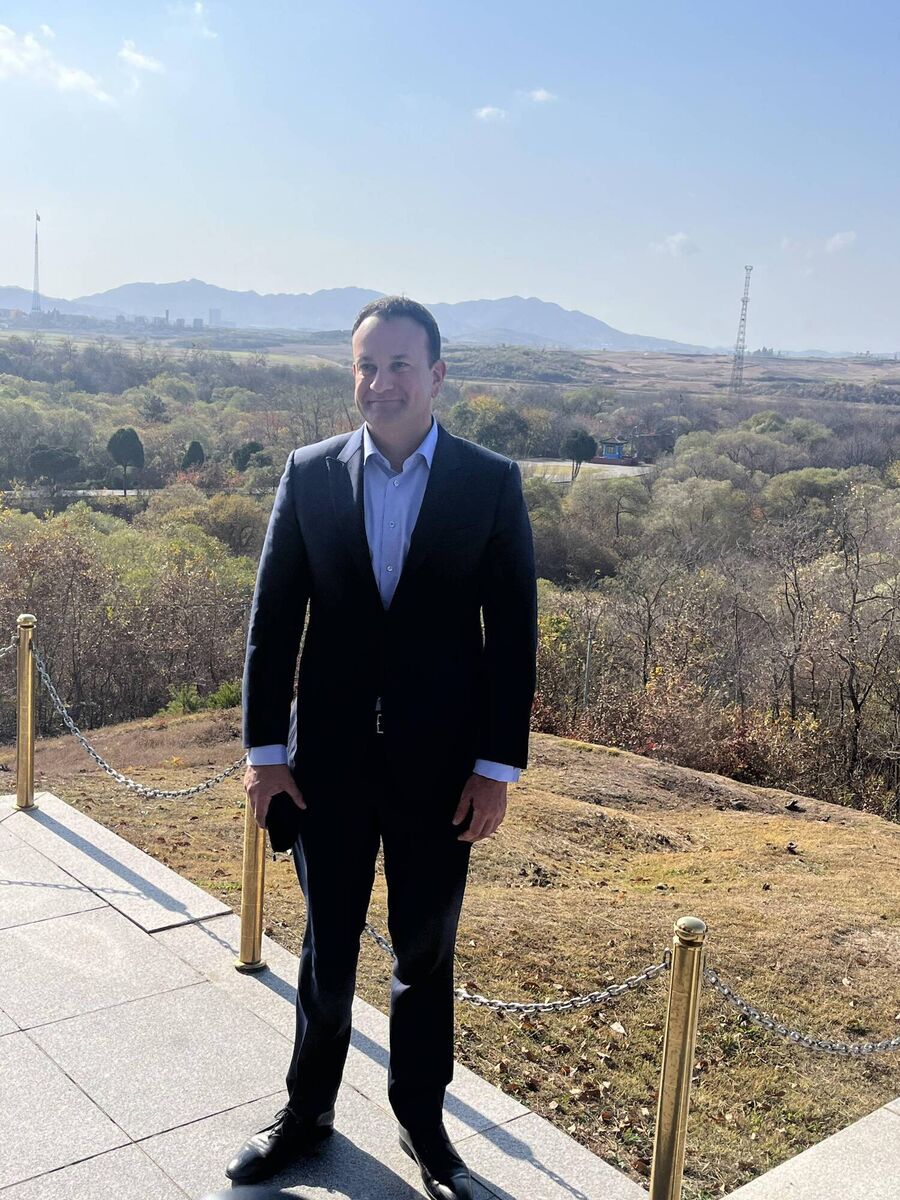
Media were warned not to take any pictures or record any footage while travelling through the DMZ out of fear that North Korea's army, the Korean People’s Army (KPA), would learn of defence mechanisms.
Heavily armed personnel patrolled the roads along the DMZ, troops stood like statues constantly keeping watch through binoculars towards the north, ready for attack. The DMZ was established in 1953 after the armistice, however, both sides are still technically still at war.
En route to checkpoint three, Mr Varadkar was told of the competition between both sides with the South Korean government building a 98-metre flag pole in Daeseong-dong and North Korea responding by building a 160m Panmunjeom flag pole only 1.2km west of the border.
In an unplanned move, military troops gave Mr Varadkar and travelling press access to one of three bungalows that straddle the demarcation line between both sides.
Signaling he would sit for a photograph, the Taoiseach was told by a US military officer “we generally don’t sit in these seats”. The room had been used for talks between officials from the two Koreas.
The KPA were fond of South Korean chocolate pies and American Doritos which were often left on the table in a bid to build a relationship. Nowadays, the room is rarely used and communication between the KPA and UN troops occurs via an old copper wire that runs into North Korea.
Inside, Mr Varadkar briefly stepped into North Korean territory. The conference tables where negotiations occurred had microphones which both sides could listen to.
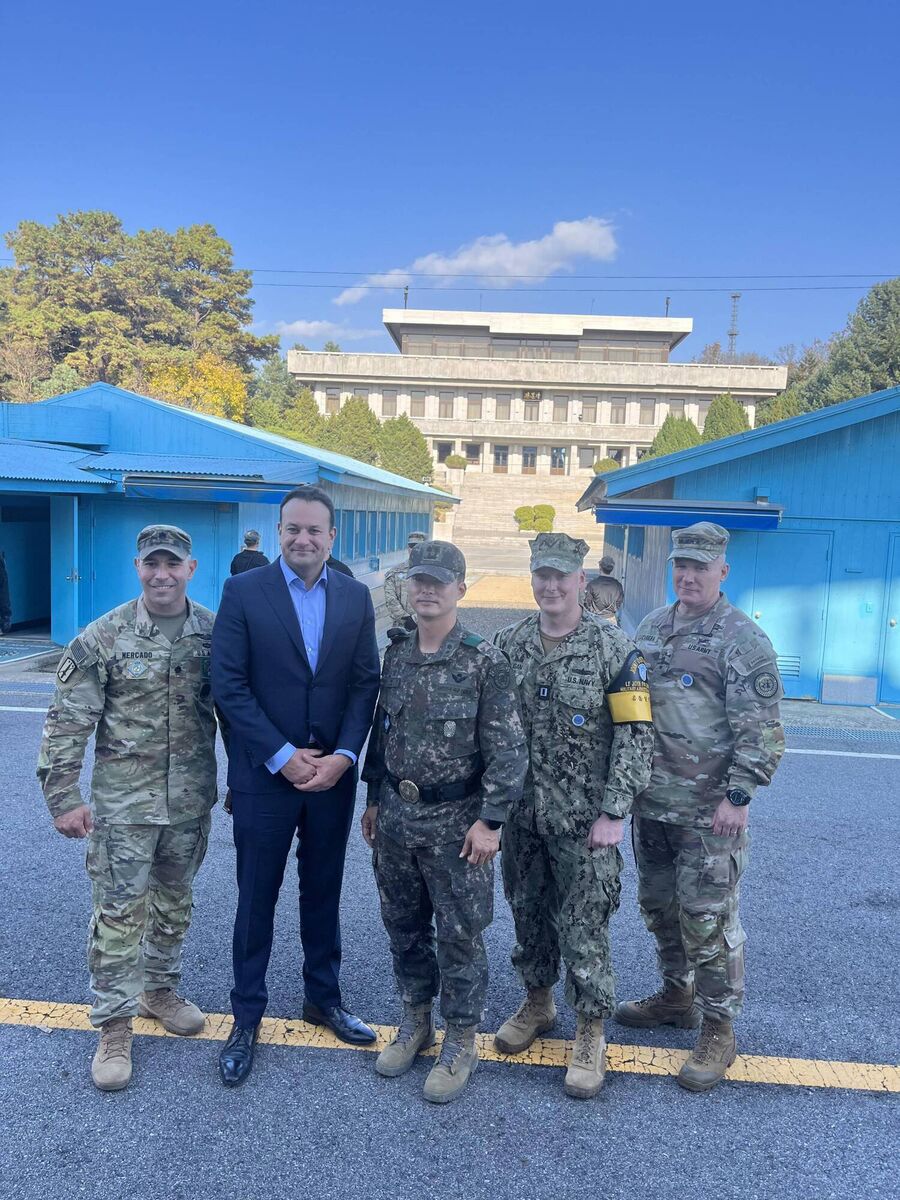
Outside, and back on South Korean soil, the Freedom House building faces the well-recognised Panmungak Pavillion. Curtains were pulled on the three-storey building with troops warning those present not to engage or make a gesture if someone appeared to look through one of the windows.
“They’ll use anything for propaganda,” a US soldier said.
Back in 2019, in a historic meeting, former US president Donald Trump shook hands with North Korean leader Kim Jong-un and crossed into North Korea at the same spot.
Back in Seoul, Mr Varadkar described the experience as “sobering”. He said it was a “tragic situation” where people of the same nationality and no ethnic or religious differences are separated because of politics.
CONNECT WITH US TODAY



Be the first to know the latest news and updates