Tánaiste reluctant to cap number of TDs following increase
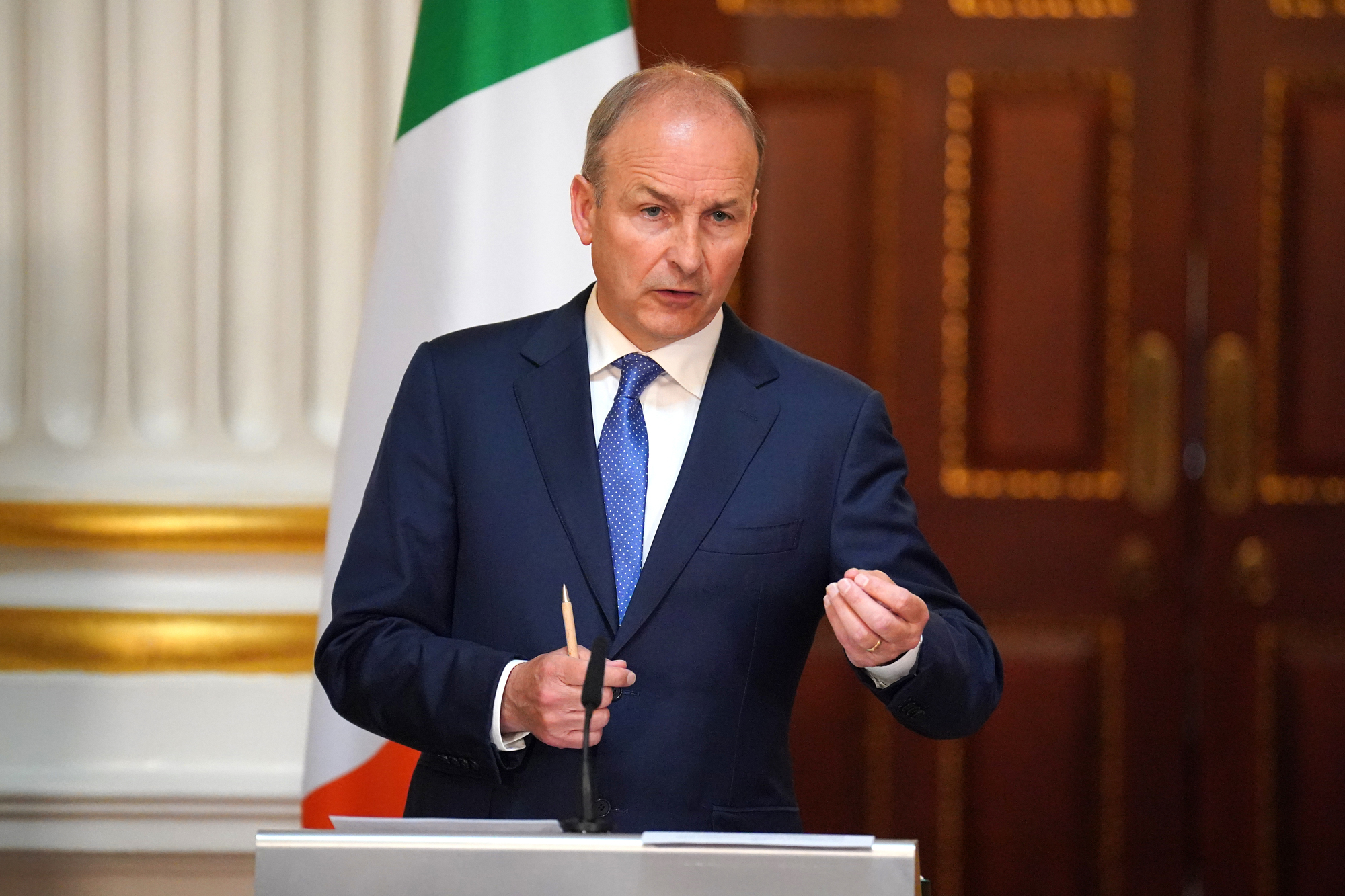
Micheál Martin said the “closeness” between public representatives and people keeps politicians from “losing the run of themselves” as constituents would not be long telling them if that were the case.
Tánaiste Micheál Martin has said he would be “reluctant” to put a cap or “cull politicians” following the Electoral Commission's recommendation to increase the number of TDs.
In line with Ireland’s population increase, the Commission recommended the number of TDs for the next Dáil to be increased by 14 from 160 to 174.
Currently, under the Constitution, there must be one TD for between 20,000-30,000 people, however, with Ireland’s population continuously increasing, the potentially never-ending increase has come under the spotlight.
Speaking this week, Higher Education Minister Simon Harris said the number of TDs should not be increased “ad nauseam” adding that there is “a duty” to question when the growth in TDs should stop.
On the other hand, the Tánaiste said on Friday that he would be reluctant to cap the number of TDs saying Ireland’s democracy “should be celebrated”.
“We have a particular feature of our democracy where public representatives are close to people, people are close to public representatives and there’s an access there,” he said.
Mr Martin said this “closeness” keeps politicians from “losing the run of themselves” as constituents would not be long telling them if that were the case.
However, Mr Martin said, if Ireland’s population continues to increase over the coming decades, “there is space for reflection”. He said the Commission was correct to be “relatively conservative” in terms of its approach to the electoral boundaries and the increase in TDs.
“I think the average is right in terms of the average number of people that TDs will represent across the country, there’s a reasonable balance there,” he said. However, he added that it is “impossible to get it perfect”.
Speaking on Newstalk, Mr Martin said Ireland’s ongoing significant population rise must be reflected in representation in Leinster House. He said while some TDs will be happy with the boundary changes, others will now find themselves under pressure.
“Undoubtedly for some, it will create significant pressures as all electoral boundary changes do and I’m conscious that quite a number of colleagues will be under pressure,” he said.
The Tánaiste said the next General Election is “wide open”, and that “no one is safe”.
“There are very fundamental differences between Sinn Féin and Fianna Fáil in respect of the economy particularly the enterprise-oriented nature of our economy which I think Sinn Féin is instinctively negative towards,” he said.
He said the party will often legitimately argue for investigations into unacceptable activities, and killings by British state forces during the Troubles but rarely “come forward themselves” in relation to “IRA violence”.
“The narrative that is increasingly emerging of endeavouring to not just justify but to celebrate this as some great war to secure freedom for people is, I think, reprehensible and I think is doing damage to relationships on these islands,” he said.