Businesses to receive energy-cost payments in December
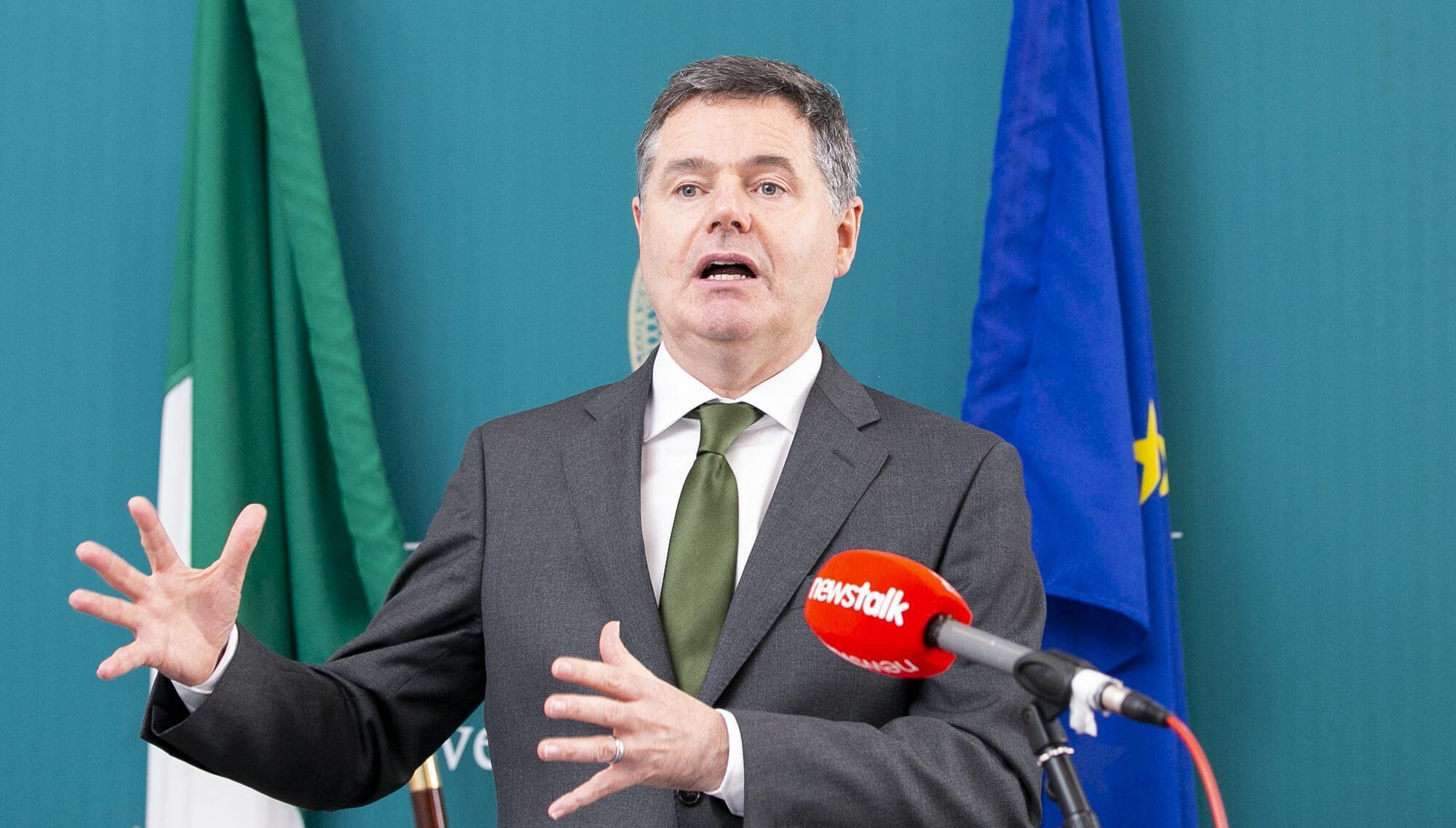
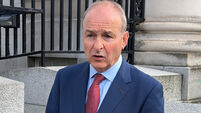
Finance Minister Paschal Donohoe speaks to media following the publication of the Finance Bill 2022 at the Whitaker Room, Department of Finance, Government Buildings, Dublin. Picture: Gareth Chaney/ Collins Photos
Hundreds of thousands of businesses will receive payments in early December under a new scheme to protect companies from spiralling energy costs.
Publishing the Finance Bill, minister Paschal Donohoe said the scheme will be open to businesses including shops, hotels, Montessori operators, accountants, and GP surgeries that have been hit by significant increases in electricity and gas prices.
Mr Donohoe said he has consulted with the European Commission and is confident the scheme is in line with state-aid rules and expects an EU decision will be made very quickly on it.
Under the scheme, a monthly cap of €10,000 will be imposed. However, if a business operates in more than one location, it may qualify for a subsidy of up to €30,000 a month.
The temporary business energy support scheme (TBess), unveiled as part of the budget, had originally only covered so-called Case 1 tax trades, such as restaurants, hotels, and shops. The support has now been widened out to include professional businesses such as dentists and solicitors.
However, Retail Ireland claimed the scheme will not provide effective support for many retail businesses managing dramatic energy-cost hikes.

Retail Ireland director Arnold Dillon said: “While the €30,000 monthly cap in energy supports is significant, for many businesses managing unprecedented energy costs across numerous sites, it will not be enough to ease the pressure.
Mr Donohoe confirmed that data centres will be able to avail of the financial supports. However, he said given these are high energy users, they may be more inclined to avail of a separate scheme that will be published next year.
Strongly defending data centres, which are large consumers of energy, Mr Donohoe said the facilities are linked to major multinational companies that employ thousands of people here.
The finance minister acknowledged that there are a number of enterprises that will be outside the scheme.
"The key criteria for entry into this scheme is that you need to have trading income and a taxation relationship with the Revenue Commissioner," he said.
He added, however, that the Government will be working on separate measures to help these organisations.
Among the other measures in the Finance Bill is the introduction of 0% Vat on newspapers from January.
The bill also provides for an increase in the threshold for cargo bikes under the cycle to work scheme from January.
Cargo bikes can be considerably more expensive than ordinary bikes and even electric bikes, and therefore the threshold for cargo bikes is being increased to €3,000 to reflect this.
The measure incentivises cycling for shorter journeys, including as means for families to transport children to crèche/school as an alternative to the car.
The controversial concrete levy will be halved from the planned 10% to 5%, and will come into effect from September 2023, as opposed to April 2023 as was initially announced.
CONNECT WITH US TODAY



Be the first to know the latest news and updates