Ukraine crisis: United western leaders vow to punish Putin
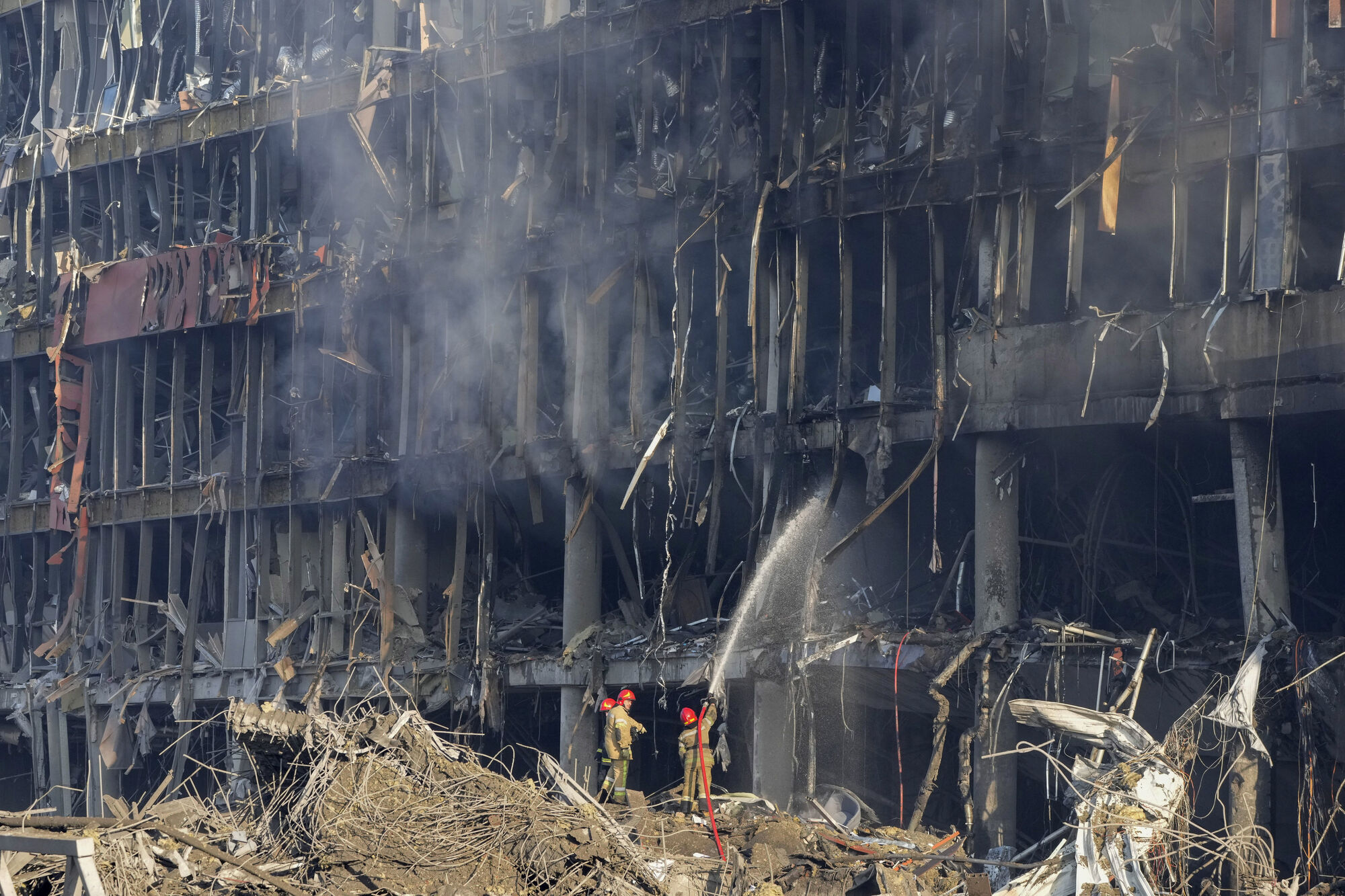
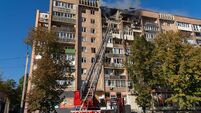
Ukrainian firefighters extinguish smoke after shelling of a shopping center, in Kyiv, Ukraine. Picture: AP Photo/Efrem Lukatsky
Western leaders denounced Moscow's invasion as barbaric and promised new military and humanitarian aid after Thursday's talks in Brussels.
The Taoiseach and other EU leaders last gathered in Brussels for a crunch meeting where a new round of sanctions was top of the agenda.
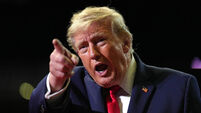
They were joined by US president Joe Biden, who stressed that America and Europe remain united and have vowed to keep punishing Putin, and those who support him.
Earlier in the day at a separate meeting in Brussels, Nato members agreed to bolster defences, particularly in eastern Europe, and will deploy four new combat units in Slovakia, Romania, Bulgaria, and Hungary.
While the West has been in lock-step over the need for paralysing sanctions against Putin, there is not the same clarity at the EU as to the exact makeup of further sanctions.
Poland, the Baltic countries, and Ireland are calling for more hardline action on all energy sources — oil, gas, and coal. But for now, they appear to be an impossibility for countries such as Germany, Italy, and Hungary which have heavy reliance on Russian oil and gas.
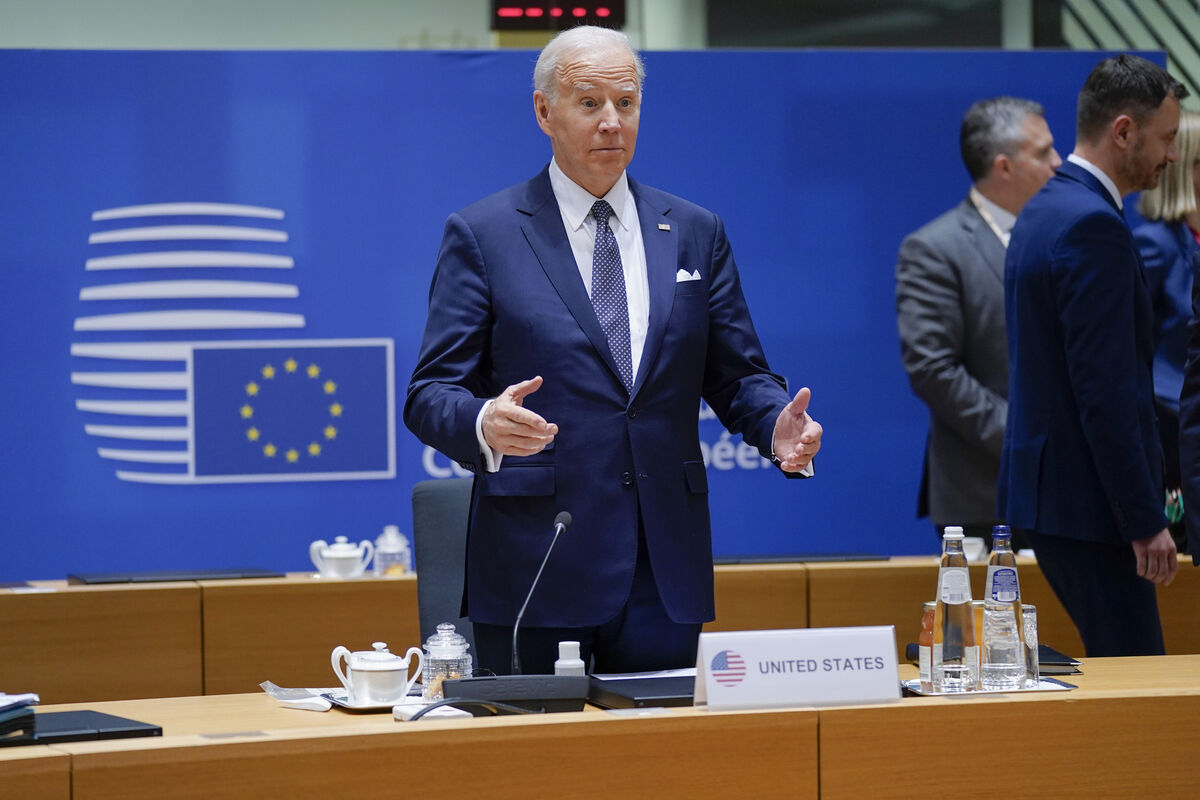
Today, US President Joe Biden goes to Poland to meet experts involved in the refugee response.
The new Western aid stopped short of Ukraine President Volodymyr Zelenskyy's pleas for a full boycott of Russian energy and a no-fly zone over Ukraine where Moscow's bombs have blasted some residential areas into wastelands.
But in a significant escalation in the lethal aid on offer, a senior US administration official said the US and its allies were working on supporting Ukraine with anti-ship missiles that could threaten Russian operations in the south.
Zelenskyy said on Friday that Ukrainians "need to achieve peace" and halt Russian bombardment that has forced millions to flee to countries like Poland.
This morning, Ukraine accused Moscow of forcibly removing up to 400,000 of civilians from shattered Ukrainian cities to Russia to pressure Kyiv to give up, while president Volodymyr Zelenskyy urged his country to keep up its military defence and not stop “even for a minute”.
Attending the trio of high-level summits in Brussels, Mr Biden touted Western “resolve” by delivering on a series of sanctions that would have been unthinkable six weeks ago:
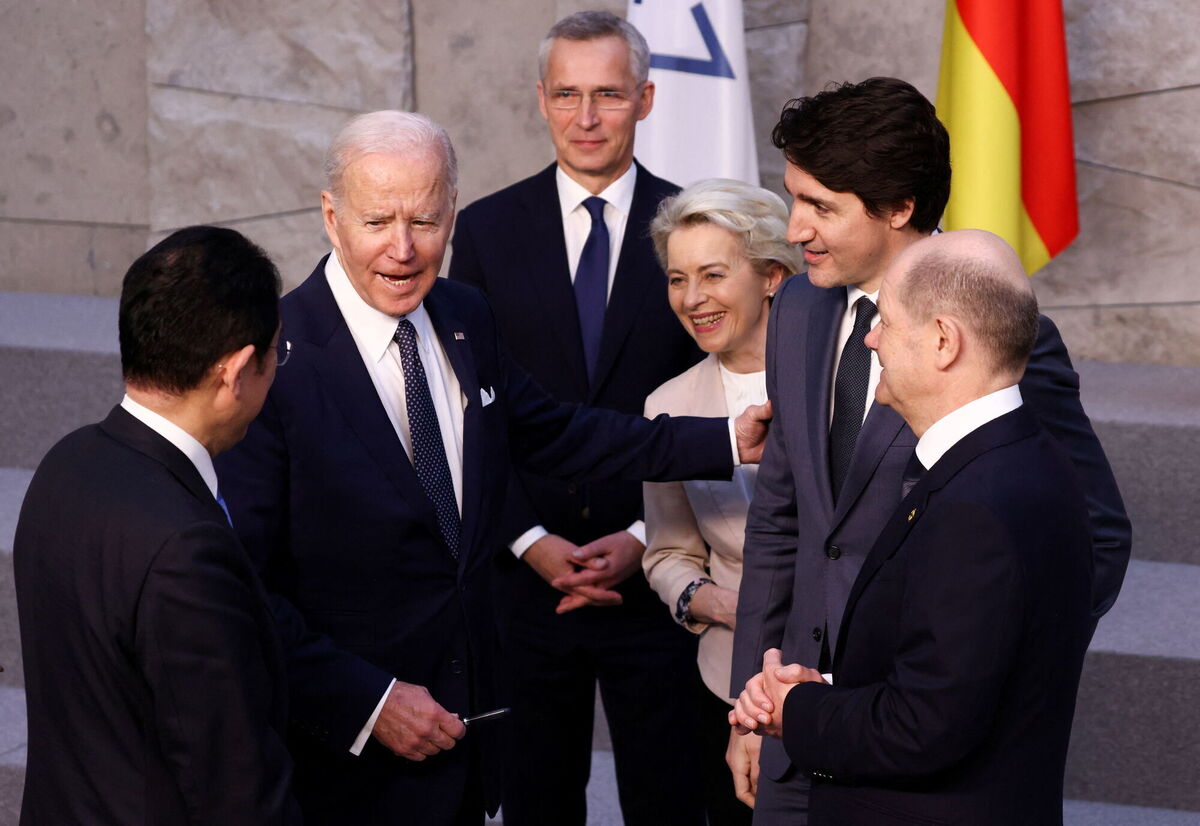
“If you’re Putin and you think Europe is going to crack, we have to stay fully totally united,” he said.
Mr Biden told reporters Russia should be now removed from the powerful G20 group of major economies over its attack on Ukraine.
“My answer is yes, depends on the G20,” Mr Biden said, when asked if Russia should be removed from the group, adding that it had been raised during meetings with world leaders in Brussels yesterday.
Separately, Mr Martin said Ireland is in favour of significantly stronger sanctions, but said the measures already announced must also be fully implemented.
“Obviously, there are implications for other member states in respect of energy and the objective of the exercise fundamentally is to keep the pressure on Russia, to punish Russia severely for its actions, not EU member states so it has to be balanced in relation to that,” he said.
While he said “Ireland is open to more sanctions” he stressed that the current sanctions, which he said are the most severe ever applied by the EU against an aggressive state, cannot be circumvented.
It came amid reports that several EU countries, including Ireland, have declined to specify whether they have frozen any of assets of almost 700 Russians that were added to an EU blacklist.
Mr Martin also hit out at the failure of some countries such as India to condemn Russia’s actions.
“Certain countries need to get off the fence,” he said.
As the EU grappled with further potential sanctions, it was also announced that the US and Britain would work together to ship more liquefied natural gas to Europe. Energy has largely been omitted from sanctions against Russia, the biggest loophole in measures that have otherwise frozen Russia out of world commerce.

CONNECT WITH US TODAY



Be the first to know the latest news and updates