McGrath to donate €200 rebate to charity as ministers defend cost-of-living measures
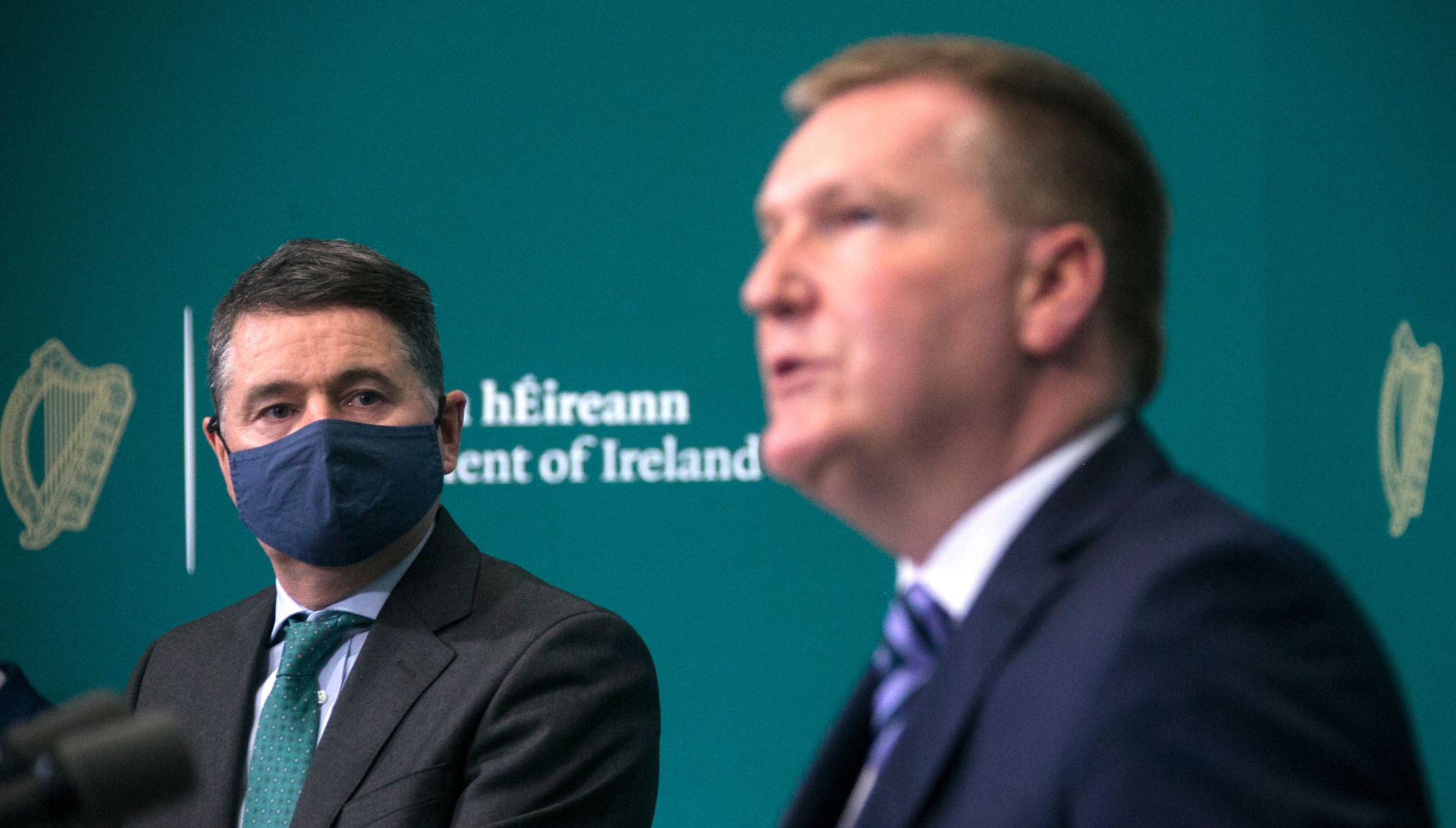
Minister for Finance Paschal Donohoe (left) and Minister for Public Expenditure and Reform Michael McGrath during a press briefing following the announcement of the measures introduced to address increases in the cost of living. Picture: Gareth Chaney /Collins Photos Dublin
The minister for finance and the minister for public expenditure have defended the measures introduced to address increases in the cost of living.
There have been criticisms of the Government's decision not to target the measures towards those who are struggling the most.

Paschal Donohoe said the measures announced on Thursday would bring support quickly to those who need it the most.
“These measures will help families. We are using this money to respond to the real challenges people are facing."
The Government had been determined to get the balance right, he told Newstalk's .
Mr Donohoe acknowledged there were some who had experienced wage growth, but the majority of the measures were geared towards those who needed the most help.
Michael McGrath also defended the universal energy rebate, saying it would help those who fall outside social welfare thresholds.
The Government recognised the measures would not meet everyone’s needs or would solve all the financial problems people were facing, he told RTÉ radio’s .
When asked why the €200 energy rebate wasn't targeted towards those on low incomes, Mr McGrath said the Government felt it was important to act swiftly and it would take a long time to design a scheme that would exclude a proportion of people who don't need the payment.
"Personally, I will be donating it to St Vincent de Paul but that is a matter for every individual who is receiving it but perhaps doesn't need it," said Mr McGrath.
Meanwhile, Mr Donohoe has denied claims that the Universal Social Charge (USC) had been introduced as a temporary measure.
“I never said it was temporary. It was the integration of two levies. The USC will remain an important part of our tax system.”
He said the charge cannot be abolished because if that was done it would have to be explained where else to generate the money it collects every year.