Triggering Article 16 would be a 'big mistake', Varadkar warns Johnson
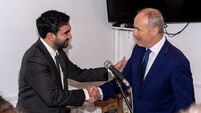
Tánaiste Leo Varadkar has warned UK prime minister Boris Johnson not to trigger Article 16. File Picture: Leah Farrell/RollingNews.ie
Tánaiste Leo Varadkar has warned Boris Johnson it would be a "big mistake" to suspend parts of the Northern Ireland Brexit protocol.
The Government is already preparing for a worsening in Anglo-Irish relations, as fears mount that the UK is set to trigger Article 16 of the post-Brexit trade deal.
However, a UK move to suspend parts of the Northern Ireland protocol could see the EU doing likewise in "retaliation" with the Brexit trade deal, Mr Varadkar has warned.
"The uncertainty that was created by Brexit went on for years. I think it would be a big mistake for the British government now to reopen that uncertainty.
"Any attempt to trigger Article 16 would be bad news for business in Northern Ireland here in Ireland, and indeed in Britain."
Issuing a direct warning to the British prime minister, Mr Varadkar added: "The message I send to Boris Johnson is that we have an agreement in relation to Northern Ireland, we have an agreement in relation to trade with the European Union, don't jeopardise that agreement. You were part of negotiating it, you own it, it was hard won, it's a mistake to think that by escalating tensions by withdrawing from any part of it that you'll end up with a better deal, you won't."
The UK government has set the EU a December deadline to find a solution on the Northern Ireland Protocol, which was agreed as a way to maintain a free-flowing land border on the island of Ireland after Brexit.
However, there is now widespread belief the UK will trigger Article 16 after the Cop26 climate conference.
Mr Varadkar said: "If the British government decides to trigger Article 16, while that doesn't mean withdrawing from the protocol, it does potentially mean retaliatory action from the European Union, which could mean suspending parts of the trade agreement."
He said there would be "uncertainty" for businesses north and south as well as the UK, which up until now have had certainty around tariff-free trading.
"Potentially that could change and I think that would be a big mistake," the Tánaiste said.