Sinn Féin leader says gangs claiming to be IRA should be tried in non-jury courts
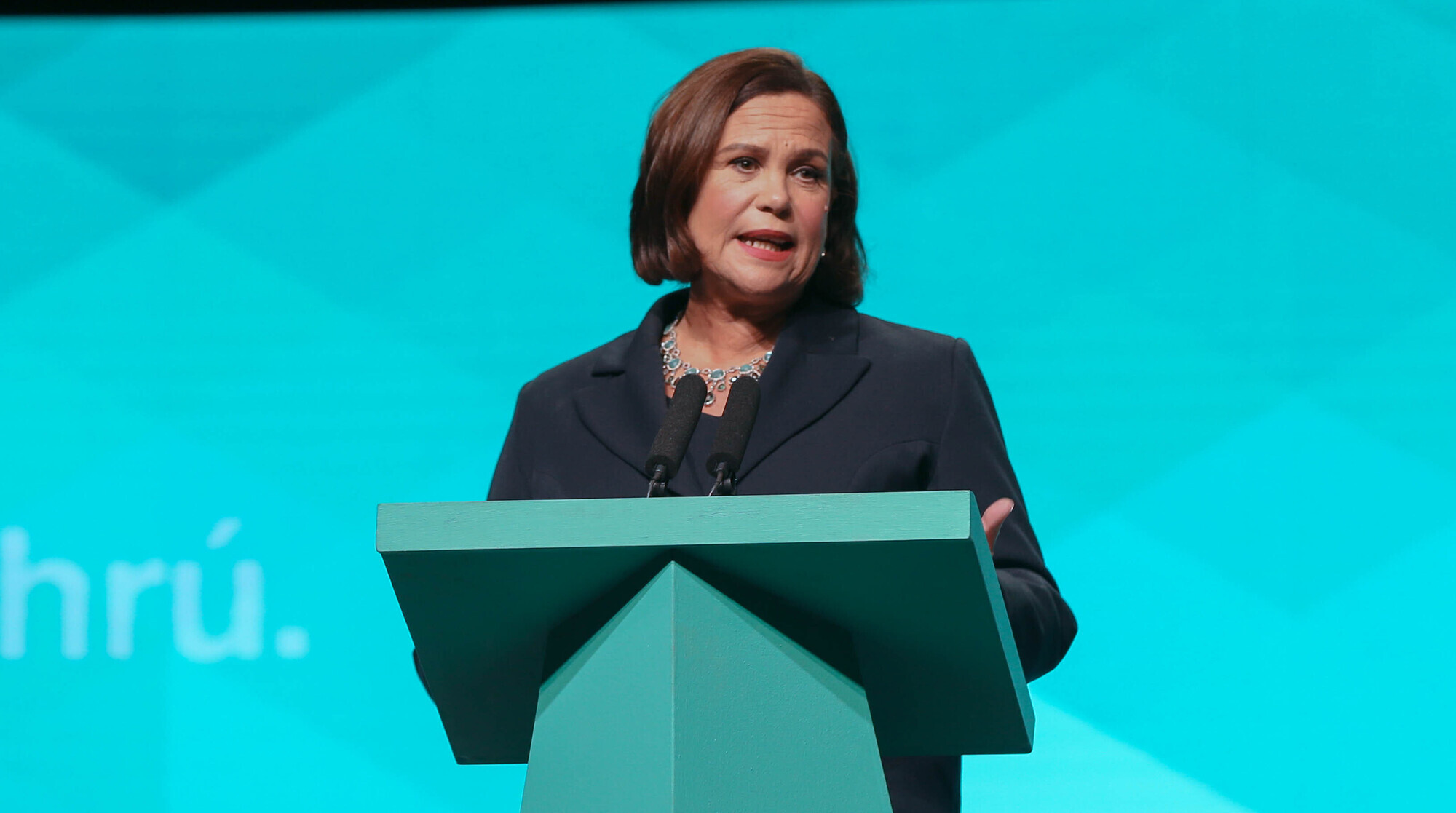
Mary Lou McDonald was speaking one day after her party passed a motion at its Ard Fheis in support of jury-less courts in "exceptional circumstances"
Mary Lou McDonald has said she believes that paramilitary gangs claiming to be the IRA should be tried in a reformed non-jury court.
The Sinn Féin president was speaking one day after her party passed a motion at its Ard Fheis in support of jury-less courts in "exceptional circumstances".
Ms McDonald was asked on RTÉ television whether she would be willing to see IRA-style gangs tried in such a court.
Several human rights organisations including the United Nations, Amnesty International and the Irish Council on Civil Liberties (ICCL) have all voiced serious opposition to the court while the UN has repeatedly criticised the practice.
Younger members in the party told the Ard Fheis it is the "taming" of Sinn Féin by the establishment.
Ogra Shinn Fein member Adrian O'Gallagher from Co Donegal was one of those who spoke against the motion.
He said a non-jury court was something the party "should not advocate for, due to human rights abuses".
"We have seen in the past how non-jury courts were used against republicans," Mr O'Gallagher added "Although things have changed the idea of non-jury courts is still a denial of human rights."
Ms McDonald said the motion was sparked in response to gangland crime.
"I think it's important to state that the conflict is, thank God, over," she said. "We're not in the 1970s the 1980s. We are now in the year 2021, heading into 2022.
"The reality is that we have so-called gangland crime. These gangs think they're untouchable. They use intimidation to cause all kinds of misery to the very communities that we represent.
"The Gardaí and the judiciary have to have all means available to do their jobs in an accountable fashion. They don't have a free run.
"We accept in exceptional circumstances, that will mean non-jury trials."
She said there was a part of the Good Friday Agreement that said the Special Powers Act would be removed, "and that we'd move forward".
"I think where we're at now has taken longer than we may have anticipated, but I think we've made the right decision.
"And let me say this, the best option will always be trial by jury, that will always be your first option. Our policy now sets out that you can have different options including anonymized juries, and so on, but we recognise that in exceptional circumstances that you can have a non-jury option. Where we need to be in that regard is we have to be sure that we have adequate and robust judicial supervision."
Currently, the situation is that the Director of Public Prosecutions (DPP), decides whether a case goes to the Special Criminal Court.
Sinn Féin says in a more fit-for-purpose system that decision would be made by a judge on application by the Director of Public Prosecution.
"It recognises the realities that there can be intimidation of jurors and so on, but it also means that there is a proper robust system and of course, all of this has to be human rights compliant."
Responding to Sinn Féin's shift in position, the Taoiseach said the party were "slow learners".
"I'm reminded of Seamus Mallon quip about slow learners," Micheál Martin said.
"I mean how long does it take to realise that you need non-jury courts to deal with terrorists and armed criminal gangs who really have the capacity to intimidate juries? We know that and these armed gangs are very, very dangerous to the fabric of our society."


CONNECT WITH US TODAY



Be the first to know the latest news and updates