Tánaiste apologises for failure to disclose texts to journalists under FOI law
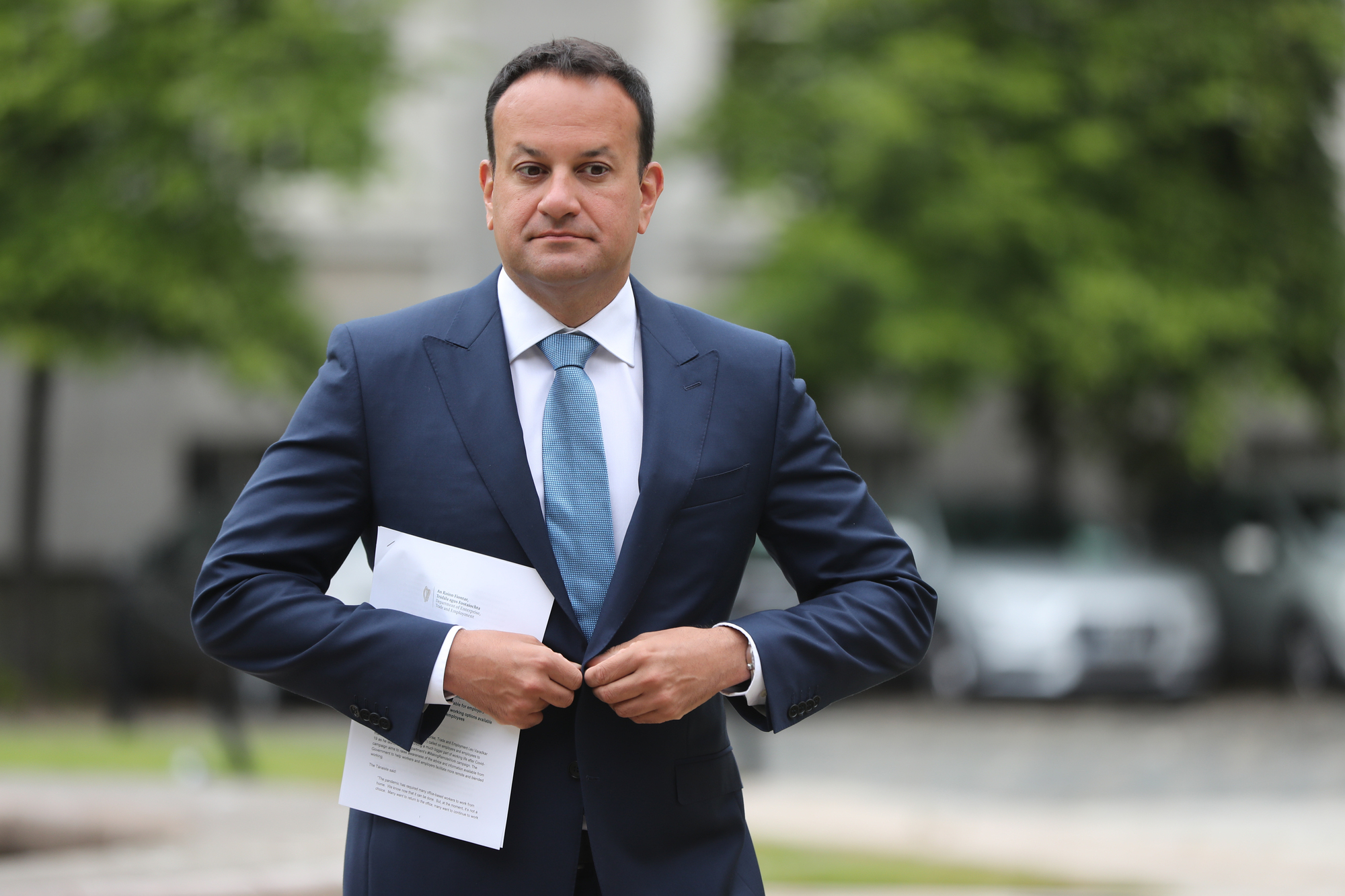
Tánaiste Leo Varadkar has apologised that journalists were told no records existed into the Katherine Zappone affair.
Tánaiste Leo Varadkar has apologised that journalists were told no records existed into the Katherine Zappone affair, only for him to release text messages this week.
Mr Varadkar has moved to clarify why journalists were originally told by his department that no records existed in relation to the Katherine Zappone appointment.
Mr Varadkar's office released a series of text messages on Wednesday betweeen him, Ms Zappone and Foreign Minister Simon Coveney.
However, in recent weeks, journalists who had submitted Freedom of Information requests had been refused on the grounds that no records existed with many taking to social media to highlight the inconsistency.
Moving to quell suggestions of an abuse of process, in a fresh statement issued Thursday morning, the Tánaiste said:
"I have looked into this with my Department. The relevant FOI officer who received the request checked all emails and letters and found no records."
"I was on annual leave at the time the decision was released and I wasn’t contacted to check my phone for records. We’ll put in place procedures to ensure this does not recur. The relevant records are being sent to the journalists. We are, of course, sorry this happened," he said.
Simon Coveney is to write to the Oireachtas Foreign Affairs Committee to make himself available to address lingering questions on the Katherine Zappone affair.
Amid continued controversy over his changing story, Mr Coveney has signaled that his department will also release documents relating to the creation of the UN Special Envoy role and how Ms Zappone came to be appointed.
In Newry, the Tánaiste has said the FOI Officer who rejected journalist queries about the affair on the grounds files did not exist no longer works in his department.
The apology comes after the Taoiseach has said the deletion of text messages by Government ministers was not in keeping with "best practice".
In a statement to the , Mr Martin's spokesman said ministers "all have obligations" to maintain records, in an implicit criticism of Foreign Affairs Minister Simon Coveney.
"Policy states that best practice is for government Ministers and officials to maintain records of communications concerning official matters of enduring organisational interest.
"We all have obligations under the FOI act, and the ICT policy will be reiterated," he said.
He also said the procedures and process around the appointment of a UN Special Envoy on Freedom of Expression (FOI) were raised by the Taoiseach at the time of the Cabinet meeting.
There is an agreement in existence between the three coalition parties that leaders are notified of any impending appointments.
"That did not happen on this occasion and the Tanaiste and Minister for Foreign Affairs accepted this was wrong and have apologised," he said.
On the issue of Mr Coveney's phone being hacked, he said each Minister is provided with cyber security advice and each government department has cyber security arrangements which are reviewed and enhanced on an ongoing basis.
"It’s not the practice to reveal detailed information on these arrangements for obvious reasons of security," the Taoiseach's spokesman said.
Earlier, Foreign Affairs Minister Simon Coveney stoutly defended the deletion of texts from his phone relating to the Katherine Zappone appointment as a “prudent” move.
Having previously insisted the reason for the deletion was one of storage capacity on his phone, speaking in Dublin on Wednesday, Mr Coveney said that on foot of a previous hack, he regularly clears his messages and changes his phone once a year.
He insisted there is “no great mystery” as to what happened in relation to the deletion of his messages. He said he took over two hours of questions at the committee on Tuesday and answered the questions as honestly as he could.
Mr Coveney confirmed that he and the Tánaiste Leo Varadkar were aware of the intention to appoint Ms Zappone as Special Envoy for Freedom of Expression for a number of weeks before the Taoiseach was “blindsided” at Cabinet in July.
However, he insisted he did not brief Mr Varadkar in detail on the matter.
“I got a text from the Tánaiste a number of days before he was to meet Katherine Zappone in Dublin.
"I didn't actually know that it was going to be an event. He texted me to simply say, 'I am meeting Katherine, in a few days time and she said Dublin. Is there anything you want to brief me on'.
“I didn't brief the Tánaiste in any more detail on that. The fact that he was asking me about it. He didn't know anything about it. And that was it. I mean I briefed my Cabinet colleagues before the cabinet.
"I assumed that other parties were doing the same before the last cabinet meeting before we broke up in the summer.
“The mistake that was made was that I should have ensured that the Taoiseach wasn't surprised by the appointment of Katherine Zappone in the Cabinet meeting. It shouldn't have happened and I apologised for that,” Mr Coveney said.
“We made a mistake, though, in terms of how that was brought to government, and I apologise to the Taoiseach for that, and I think he accepts that,” he said.
Asked about the original leak from the Cabinet table to the about the Zappone appointment, Mr Coveney said such leaks from Cabinet are “corrosive” to trust.
“We shouldn't be having leaks in Cabinet. Colleagues should be able to trust each other, to work together to make important decisions for the country. Leaks coming from cabinet are corrosive to relationships in governments and so it shouldn't happen,” he said.


CONNECT WITH US TODAY



Be the first to know the latest news and updates