Rating the Ministers: The Covid coalition's best and worst performers
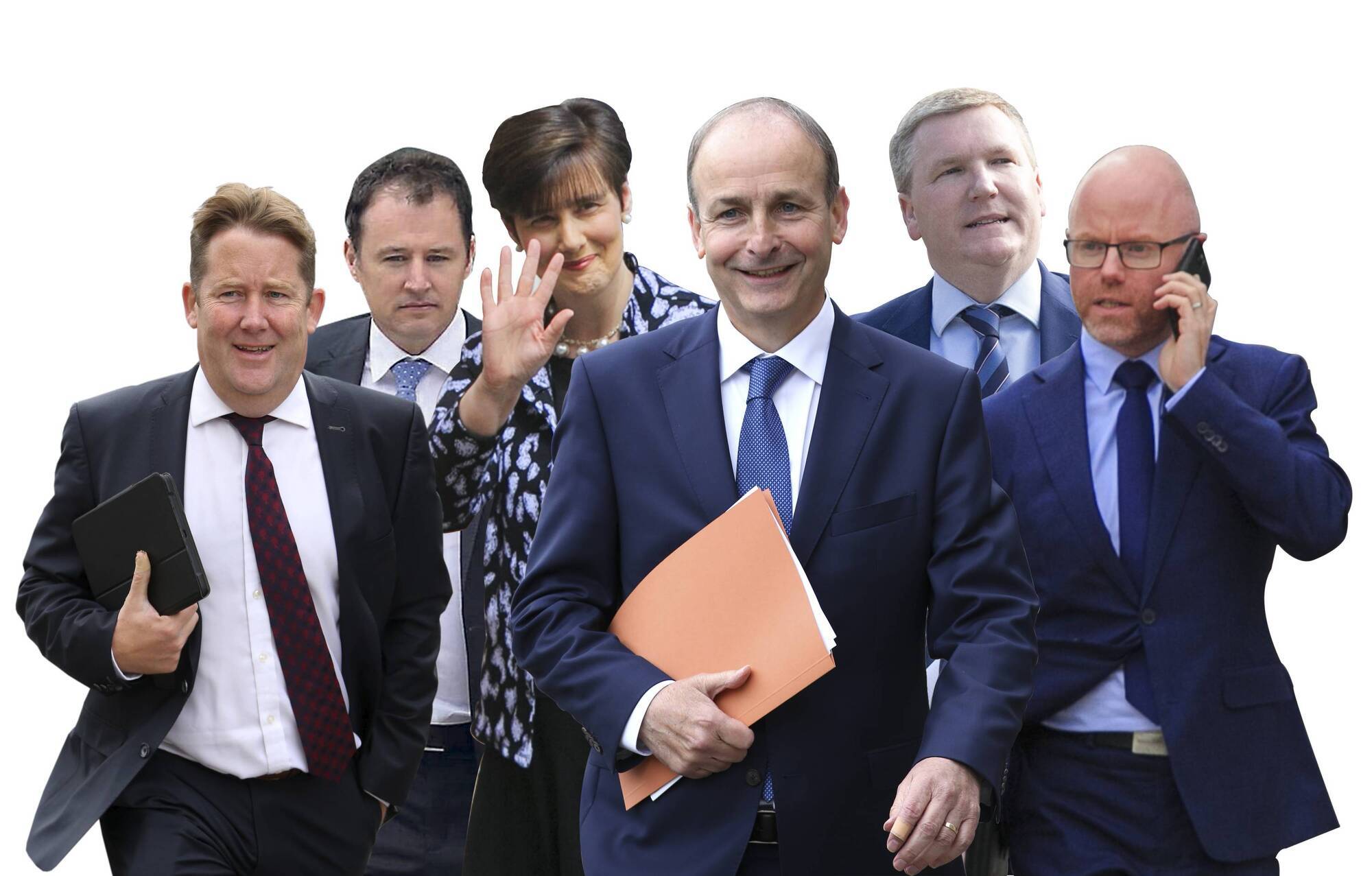
Political Editor L and decide who makes the grade
This weekend marks the one-year anniversary of the formation of the historic coalition between Fianna Fáil, Fine Gael and the Green Party.
Engulfed by the Covid-19 pandemic and battling the fallout from Brexit, it has been a year of tumult and precious little positive news.
Below, Political Editor and Political Correspondent run the rule over the performance of the Cabinet over the past year and give their verdict as to who has succeeded and who has fluffed their lines.

A disastrous start to his term as Taoiseach was marred by one ministerial sacking and one resignation, all before the summer recess was over.
And that was before he even had to deal with Leo Varadkar and Fine Gael who have continued to show they are rotten coalition bedfellows.
Having weathered an awful Spring filled with school closures, teacher mutinies and vaccine delays, the Taoiseach has shown a dogged determination to continue. Poor poll ratings and noisy internal Fianna Fáil criticism aside, he hitched his fate to the success of the vaccine rollout, a gamble which has largely worked.
Despite missing the 80% by end of June vaccine target, the public mood has been transformed as the jabs have gone into the arms. Martin’s position at the one-year mark is far more solid than it was at Christmas.
As Tánaiste and leader of Fine Gael, Leo Varadkar has helped create a narrative of there being two parties to choose from for many people - Fine Gael and Sinn Féin.
As a member of Cabinet, however, Mr Varadkar has had a habit of causing problems for the Government. Just this week, the former master of the National Maternity Hospital said that Mr Varadkar was "100% wrong" about the ethos of the hospital, a mildly distracting sideshow to the wider issue, but one that was completely unnecessary.
He also forced the Taoiseach to defend a pledge for €4 billion in additional spending on health as well as putting out a mind-boggling figure of 40,000 home deliveries at a time when the country is delivering half that.
His shoot-first mentality works when tackling Sinn Féin in the Dáil, but his comments in October about Nphet damaged public confidence in the group ahead of a second lockdown. All the while, a garda investigation into the leaking of a GP contract to a rival union hangs over the once and future Taoiseach.
A rocky year to say the least for the Green Party leader who has become a target of genuine public anger.
His return to Government was marred by a farcical leadership contest with his own deputy leader. Having seen that off as well as winning a mandate to enter government, life in office has been far from plain sailing.
Internal recrimination and division have been constant themes of the year. Divisions with Hazel Chu over her Seanad bid and the Dublin Bay South by-election have surfaced.

His failure to get internal agreement over the Comprehensive Economic and Trade Agreement with Canada, forced the Government to delay its formal adoption, to the great annoyance of Fine Gael. TDs Neasa Hourigan and Patrick Costello have come close to leaving the party over the matter.
He also went to war with Willie O’Dea over a Limerick road only to back down 24 hours later.
Seen by his own to have capitulated on many issues, his big claim is the passage of the Climate Bill which, if implemented, will have huge consequences for Irish society.
As spending minister, Michael McGrath is a serious man for a serious time. The Covid crisis has required the use of every asset at the country's disposal and, thankfully for Mr McGrath, there is plenty of cheap money available to throw at the problem.
However, alarm bells are already sounding and the Cork South-Central man has had to reject suggestions from the Irish Fiscal Advisory Council (IFAC) that the Government's budgetary forecasts "lack credibility" and its spending forecasts are "not realistic".
That those alarm bells are ringing after his first Budget is worrying, but Mr McGrath says that last October's spending forecasts were forward-planned and prudent. His mettle will be tested as the Covid spending is wound down and ministers are forced to do more with less.
Thus far, he has delivered the largest budget in the state's history but the work is now just beginning.
The Dublin Central TD is no longer just a mere cabinet minister. No no, he is of course also now President of the Eurogroup.
He was present at the recent G7 gathering in London which agreed the introduction of a minimum corporate tax rate of 15%, seen as a major blow to Ireland’s 12.5% rate.
Donohoe, who has been a staunch defender of our right to set our own tax base, has also signalled the international move will see a drop of €2bn or thereabouts in our tax receipts.
His stock has certainly waned internally amid sky-rocketing debt levels on his watch and his perceived, botched handling of the 2020 General Election campaign as Fine Gael director of elections.
There have been persistent suggestions he is about to down tools and clear off to greener pastures and such rumours persist.
He remains, however, the Government’s intellectual heavyweight and is a major asset to the coalition.

As Minister for (deep breath) Tourism, Culture, Arts, Gaeltacht, Sport and Media, Catherine Martin has a lot of plates to spin and even more stakeholders to keep happy.
In normal times, this would be the "Minister for Fun" position that would revolve around the disbursement of grants or announcing of new initiatives. As it is, Ms Martin has been forced to try and keep a number of industries afloat, including the vital tourism sector, which has been decimated.
Key figures in that industry say that time is running out for a roadmap back to normality, but most have written off the 2021 summer season. Ms Martin is a reserved figure with the media, but one who frequently makes concerns known at the Cabinet table and has raised issues around lockdowns and financial supports.
Seeing a pilot music event go ahead on a summer's night in Dublin was a boost to many people but told us little of the sector's post-Covid future. A 3,500-person festival next week will be a huge bellwether of Ms Martin's plans.
The missing minister, whose media appearances are as rare as her successes.
The first time TD was one of two surprise inclusions in Micheál Martin's Cabinet and her early days were as rocky as they come as a minister.
To her credit, she had been dealt a bad hand by her Fine Gael predecessor who botched the Leaving Cert and she had to oversee the results and then the return to school in September.
The coding error in relation to the calculated grades was hardly her fault but once again put her in the spotlight.
Her determination to keep going and her manner helped her keep her backbenchers onside and the worst seemed to have passed.
Reform has all but been abandoned because of Covid and the hybrid model for this year’s Leaving Cert appears to have been accepted favourably.
Not a big contributor at Cabinet, sources say, and her inability twice in January to get schools re-opened because of teacher intransigence was her low point.
The former Tánaiste has, according to some colleagues, “zoned out” since the formation of government, As Minister for Foreign Affairs while Ireland is on the UN Security Council, Simon Coveney operates in a strange space.
He is not often in front of the Irish media, save for national radio and his brief often takes him out of the day-to-day limelight. However, the hybrid role of minister/diplomat suits his measured tone and level head. One tweet aside, he was a strong voice on the Israeli bombing in Gaza and called for the international community to be stronger in its condemnation.

His involvement with a cross-party motion condemning Israel meant that the issue was put on the EU agenda.
But at home, it has been more difficult as he and Mr Varadkar have become the villains in the unionist narrative around the Northern Irish Protocol.
A lack of headway in dealing with the revolving door of DUP leaders means that our relationship with the North is strained at a time when collaboration is most needed.
With his legal and academic background, O’Gorman was seen as a good fit for this “ministry for bad news” as described by some of his colleagues.
His tenure in office has been overshadowed by the controversy surrounding the report from the ‘Mother and Baby Home’ Commission and his perceived mishandling of it.
His decision to wind up the Commission while a firestorm raged over its final report, damaged him.
Earlier this month, survivors, politicians and historians rejected the "flawed" and "inaccurate" Mother and Baby Homes Commission report and have called on the Government to immediately repudiate it.
Described as earnest and hard-working, he has been praised by Cabinet colleagues for tackling issues and making decisions that his predecessor Katherine Zappone never went near.
Within Government, O’Gorman is “well liked but inoffensive” and has been guilty of political naivety at times. While his plan to end Direct Provision is ambitious, many doubt it is realistic.
When the American political strategist James Carville was working on Bill Clinton's 1992 Presidential bid, he hung a poster which read "The economy, stupid". Fianna Fáil and Fine Gael may get one that says "Housing, stupid". The issue is the rising tide which will lift all political boats, but the Government has yet to show that it can make the necessary bold moves to reverse the trend of unaffordable housing being the norm.
To his credit, Mr O'Brien does understand that solving housing will not be done with a silver bullet, but tinkering around the edges and announcing initiatives that will deliver hundreds but not thousands of affordable houses will not wrest the narrative on housing from the opposition. Neither will it ensure that housing slips down the agenda.
His ‘Housing For All’ strategy will be delivered next month - 13 months into the lifetime of the Government - and must not be another grand announcement with no delivery for the sake of all in the coalition.

At the Cabinet table now since 2014, Humphreys has proven herself to be a great political survivor.
Described as direct, stern and no-nonsense, she has taken on the role of a giant ATM machine during the Covid pandemic.
Handing out the extraordinary level of supports is one thing, phasing those out and reigning it in is another matter altogether.
Progress on commitments contained in the Programme for Government has been limited. The Commission on Pensions report is awaited and the auto-enrolment pension scheme won’t kick in until 2022 at the earliest.
Humphreys has now stepped into the breach and taken over the reins in Justice, leading to some fears she is stretched too thin.
Still not the world’s most confident media performer, she is a sure vote winner for Fine Gael and a much-needed foil to the Dublin-centric look of the Blueshirt line-up in Cabinet.
A very quiet operator, but has outlasted his predecessors by hundreds of days. Inheriting a portfolio threatened by Brexit was no picnic, but the very public anger of fishermen in particular at the post-Brexit trade deal has meant that Mr McConalogue has a real issue to deal with.
On the one hand, his department is spending €2 million convincing people to eat locally-caught fish and on the other, a flotilla of fishermen is coming up the Liffey to say that its quotas are unsustainably low.
As a TD for Donegal, that is proving a difficult nettle to grasp. More troublingly is that the Mica scandal has hit his county most severely and attracted huge public attention. With two fellow Fianna Fáil TDs threatening to walk if those affected get less than 100% redress, Mr McConalogue will have to fight at the Cabinet table for just that, lest he be forced to make a major decision.
McEntee’s solid performance as European Affairs Minister during the heat of the Brexit madness assured her of a Cabinet slot, despite Fine Gael’s reduced status.
There was some surprise that Varadkar placed her in such a senior and serious portfolio.
However, she has proven herself to be an astute appointment and has certainly been active in her time there.
A legislatively heavy department anyway, McEntee has pursued with vigour the reform agenda of the police force as well as her department.

McEntee is now seen as not only a serious contender at Cabinet, but a serious contender to be Fine Gael leader.
Her deft handling of the unforeseen ban on naming child victims of murder was welcomed by survivors and the media alike.
She too managed with some skill the delicate balance of extending emergency powers to An Garda Siochána during the pandemic.
She is also a history maker in being the first Cabinet minister to have a baby while in office and to secure maternity leave.
Seemingly demoted this time last year, he has used his time in the new Department of Higher Education to cultivate his standing as the heir apparent to the leadership of Fine Gael.
He wants to be leader and will even pretend to like to obtain that prize.
While he backed the other Simon in 2017, Harris clearly feels his time is coming.
His empathetic communications with third-level students, as well as fighting to put money in their pockets, has seen him held in high regard with a demographic with which the overall government is not particularly popular.
His announcement that "college by Zoom" would end in was widely welcomed, as has the announcement of 4,500 extra college places this year.
His continued use of social media, including an earnest but awkward joining of TikTok, continues to set the pace for communications by any minister.
A surprise appointee to ahead of Calleary a year ago, Donnelly’s future at Cabinet remains inextricably linked to that of his party leader.
At times, his tenure in health has resembled a car crash. At other times he has appeared very convincing when delivering the message.
He has sometimes fallen into the trap of reactionary politics, for example when he sought to ban outdoor drinking, only to have to back down amid opposition from his own Cabinet colleagues.
Despite his already manic workload, it was decided by the Cabinet that he should take ownership of the controversial mandatory hotel quarantine system on top of the vaccine rollout and managing the pandemic generally.
He will be licking his lips at the promise from that his budget should retain all the gains offered by Covid, but doubts remain within Government as to his ability to deliver much-needed reform by way of Sláintecare.
CONNECT WITH US TODAY



Be the first to know the latest news and updates